
Students Deserve Better Than Active-Shooter Drills
Until lawmakers decide that protecting our children is more important than protecting access to guns, we’ll continue to see students and their teachers die too soon.
The drive from my daughter’s after-school center back to our house takes only a few minutes. It’s just enough time for her to tell me one thing about her day before we get home. K. is 8, and on most days her news is treat-related. She once earned 29 M&M’s for correctly answering all her math questions. So one spring afternoon, when she began telling me about the reward she got following an “intruder-alert drill” at her school, I found myself willing my expression to stay neutral as her bubbly voice tripped over the words to get them in before we arrived home.
I hadn’t received any notice that her school would be holding such an exercise. But if you’re the parent of a child who has gone through an active-shooter or lockdown drill, you have likely imagined the absolute worst upon hearing about it.
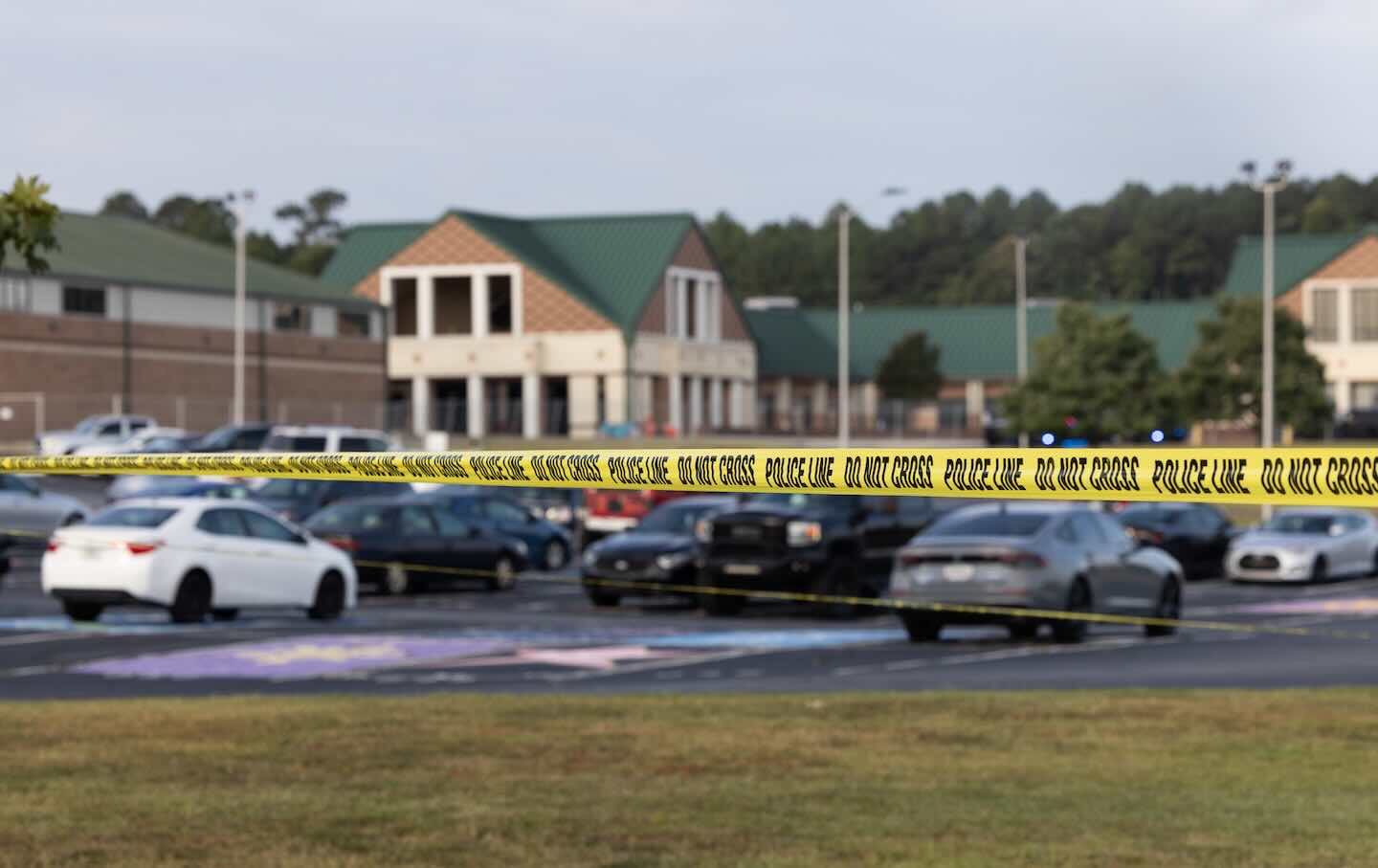
In the hours after the news broke on September 4 of yet another school shooting, this one in Winder, Georgia, just over 100 miles north of my home, I thought about that sunny afternoon when K. recounted her participation in an intruder-alert drill. My daughter and my stepson attend Georgia public schools, just like the one where two 14-year-olds showed up for classes on that typical Wednesday morning, only to be shot and killed by a classmate with an assault-style weapon that his father had reportedly bought for him.
This horrific act, which also took the lives of two math teachers and injured several other people at Apalachee High School, is being described as the deadliest school shooting in the United States in 2024. So far, anyway: As of this writing, most schools are only in the early weeks of their fall session.
The witnesses’ accounts from that awful day are gut-wrenching. “The whole class ran to the back of the classroom, and that’s when we realized that my teacher got shot, and then my other teacher tried to stop the bleeding,” one sophomore told CNN. “She was grabbing rags to stop the bleeding.”
“And then we heard more banging,” the student continued, “and we thought [the shooter] was going to come back, so we turned off all the lights and got quiet.”
Turning off the lights—that’s one thing students practice in intruder-alert drills, which a new state law requires Georgia public schools to conduct annually. (Most states now have similar laws on the books; school shootings are so normalized that officials have built “practice hiding from a potential shooter” into regular programming.) Until K. told me about her school’s drill this past spring, I hadn’t really been aware of what they entailed.
The kids are instructed to hide in the classroom and stay as quiet as they can. The teacher locks the door and covers the windows to block an outsider’s view into the room. Then members of the staff, such as the school resource officer, walk up and down the hallways, banging on doors (“like a real criminal,” K. said).
When I asked her what she did during the drill, she said she went into the bathroom that her classroom shares with an adjoining class and crawled into the small space beneath the sink. “I hid there while my friends hid right outside.”
I couldn’t decide whether to be proud that my daughter thought to secure that spot for herself or devastated for the kids who didn’t.
“The office had to call us to make sure we were still in the classroom,” she continued, “’cause they didn’t know we were actually in there, ’cause we hid so good.”
For doing so well rehearsing how to stay alive, K.’s class was rewarded with cupcakes. And that was the point of her story: She’d scored a treat.
For her, it’s all pretend. School is the place where she spends time with her best friends, buys ice cream at lunch, and learns how to add and subtract numbers in the hundreds. A “bad guy” could never threaten her safety there.
But it could happen. In fact, it did happen at a school not far from hers, and it keeps happening at schools all over the country.
Since the Apalachee High School shooting, I’ve been wracking my brain trying to think of new ways to protect my daughter, as I do in the aftermath of every school shooting. Before she started kindergarten, my husband bought her a bright-pink backpack with a bulletproof insert, but we quickly realized it was too heavy for her to carry. Should we reconsider that option? Should we get her a cell phone? Should we have a frank conversation with her about potential signs to look for, forcing her to grow up too soon?
As I ponder these questions, I can’t help but feel angry and frustrated. It’s clear that the Republicans in Georgia’s government have no intention of saving our kids, and while I can do my part to vote for better leaders and advocate for gun safety measures, that’s clearly not enough. Until lawmakers decide that protecting our children is more important than maintaining (or expanding) access to guns, we’ll continue to see students and their teachers die too soon.
Popular
“swipe left below to view more authors”Swipe →How are we as a society OK with that?
Cupcakes are great and all, but our kids deserve the kind of reward that truly matters: the promise of a country where they don’t have to consider the best place to hide from a shooter.
Support independent journalism that does not fall in line
Even before February 28, the reasons for Donald Trump’s imploding approval rating were abundantly clear: untrammeled corruption and personal enrichment to the tune of billions of dollars during an affordability crisis, a foreign policy guided only by his own derelict sense of morality, and the deployment of a murderous campaign of occupation, detention, and deportation on American streets.
Now an undeclared, unauthorized, unpopular, and unconstitutional war of aggression against Iran has spread like wildfire through the region and into Europe. A new “forever war”—with an ever-increasing likelihood of American troops on the ground—may very well be upon us.
As we’ve seen over and over, this administration uses lies, misdirection, and attempts to flood the zone to justify its abuses of power at home and abroad. Just as Trump, Marco Rubio, and Pete Hegseth offer erratic and contradictory rationales for the attacks on Iran, the administration is also spreading the lie that the upcoming midterm elections are under threat from noncitizens on voter rolls. When these lies go unchecked, they become the basis for further authoritarian encroachment and war.
In these dark times, independent journalism is uniquely able to uncover the falsehoods that threaten our republic—and civilians around the world—and shine a bright light on the truth.
The Nation’s experienced team of writers, editors, and fact-checkers understands the scale of what we’re up against and the urgency with which we have to act. That’s why we’re publishing critical reporting and analysis of the war on Iran, ICE violence at home, new forms of voter suppression emerging in the courts, and much more.
But this journalism is possible only with your support.
This March, The Nation needs to raise $50,000 to ensure that we have the resources for reporting and analysis that sets the record straight and empowers people of conscience to organize. Will you donate today?
More from The Nation
The Real Reason Americans Love Guns The Real Reason Americans Love Guns
With a weak social safety net, a gun offers a false sense of personal power and security.

The Endless Hypocrisy of Bari Weiss The Endless Hypocrisy of Bari Weiss
She claims to be a free speech champion. But as her actions at CBS News keep showing, she seems to think free speech should run only in a rightward direction.
What Will Be Left After the University of Texas Destroys Itself? What Will Be Left After the University of Texas Destroys Itself?
UT-Austin has collapsed its race, ethnic, and gender studies into a single program while a new policy asks faculty to avoid “controversial” topics. But the attacks won’t end there...

The Corporate Media Is Head Over Heels for the Iran War The Corporate Media Is Head Over Heels for the Iran War
Donald Trump’s attack may be surreal, unjustified, and illegal. But that’s not stopping the press from turning the propaganda dial way up.
The Disturbing History of ICE’s “Death Cards” The Disturbing History of ICE’s “Death Cards”
The Vietnam-era practice is yet another example of ICE agents thrilling to the brutality they have been encouraged to cultivate.
The American Universities Programming Israel’s Killer Drones The American Universities Programming Israel’s Killer Drones
Industry partnerships in higher education are pushing STEM graduates into the business of weapons manufacturing and genocide profiteering.

