
The 9/11 Museum Is an Atrocity Exhibition
These New Yorkers want to transform the September 11 museum, but can it be anything other than a purveyor of War on Terror propaganda?
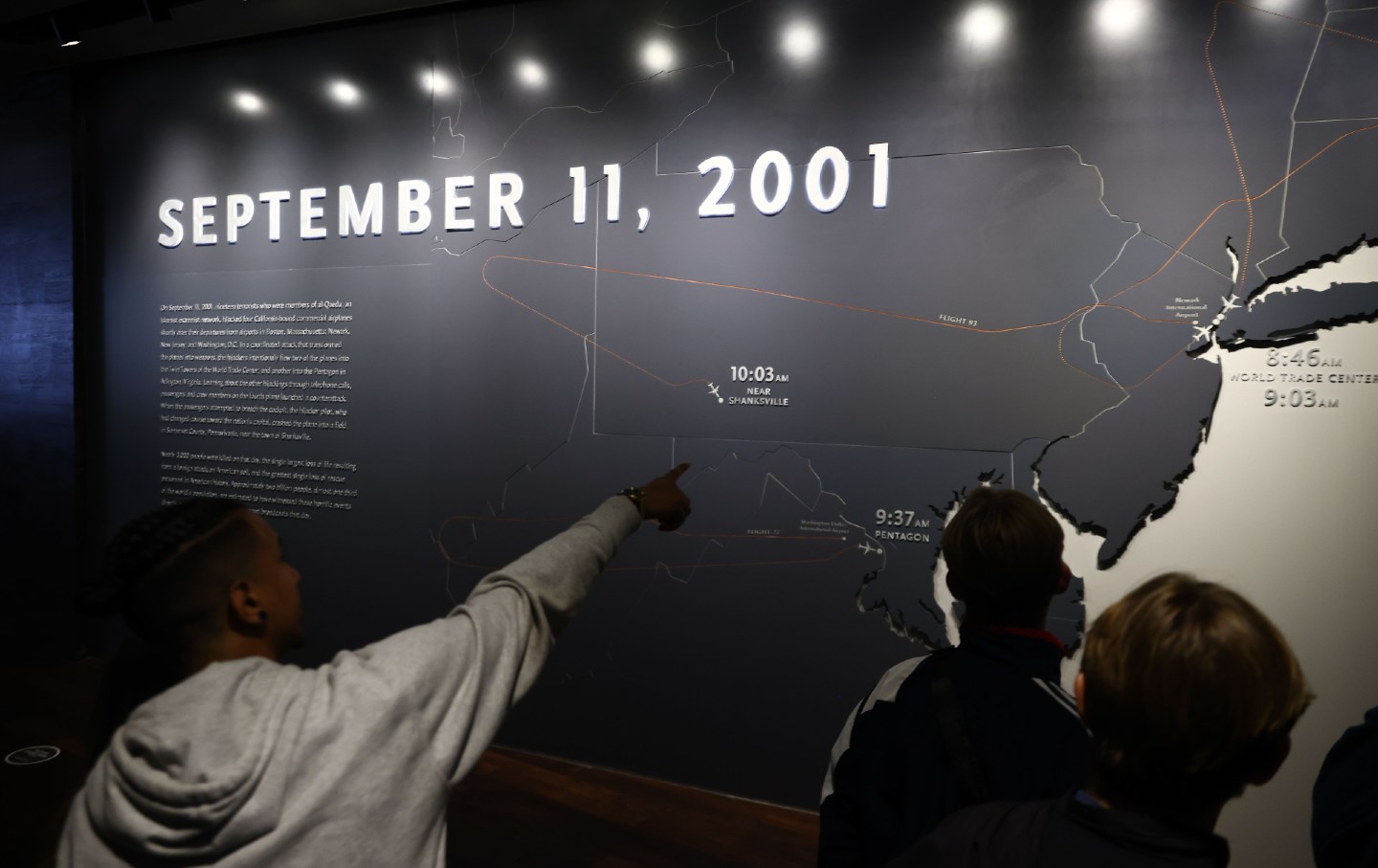
No New Yorker in their right mind—especially one who vividly remembers the horror of 9/11—would want to visit the National September 11 Memorial & Museum. But on a cloudless day shortly after the 22nd anniversary of the attacks, I took leave of my senses and descended into trauma, hate, and fear.
It was a literal descent: The museum is an escalator ride beneath what was Ground Zero, the wreckage of the World Trade Center in Lower Manhattan. My Virgils for this endeavor were two New Yorkers who are trying to push the museum to become something more than an atrocity exhibition. There was Steven Rosenbaum, a documentarian whose donation of the 500-hour CameraPlanet 9/11 archive made him and his wife, Pamela Yoder, the largest contributors of video to the museum; and Debbie Almontaser, the CEO of the diversity, equity, and inclusion company Bridging Cultures Group, who was a target of 9/11-era hysteria that forced her out of her job as a public school principal because of her Muslim background.
In 2023, Rosenbaum, Almontaser, and several others formed the 9/11 Museum Community Advisory Council. The group’s aim, according to an open letter to the museum’s president and CEO, Elizabeth Hillman, is to “deepen and broaden the Museum’s purview, its inclusivity and diversity, and to increase the Museum’s transparency and its responsiveness to community feedback.” The organization met with Hillman on July 24, but the museum has not responded to the group’s request for quarterly meetings about content and programming.
The council’s goal is admirable. But—and this is my perspective, not that of my interlocutors—it was difficult to emerge from the exhibitions without feeling skeptical that the museum is interested in being anything other than a purveyor of War on Terror propaganda.
The dimly lit main exhibition starts history at 8:46 am on September 11, 2001, the moment that American Airlines Flight 11 hit the North Tower—not, say, in 1945, when Franklin Roosevelt met with Ibn Saud aboard the USS Quincy and made a pact that traded repression for oil. Speakers play snippets of radio broadcasts that give way to voicemails of passengers on the doomed planes calling their loved ones. It immediately called to mind the opening of Kathryn Bigelow’s CIA-assisted movie Zero Dark Thirty, which cuts from audio excerpts of people dying on 9/11 to agency interrogators torturing a captive at a black site.
If the exhibition dealt at all with the CIA’s post-9/11 torture programs, I missed it in the dark. Nor could I find the surveillance panopticon that US intelligence agencies created after the attacks; the US drone strikes and raids in Yemen, Somalia, Libya, Syria, Pakistan, and elsewhere; or the Islamophobic backlash carried out by police. Obligatory references to the invasions and occupations of Afghanistan and Iraq neglect to mention that those wars killed at least half a million people. The museum’s aperture is opened just enough to show the agony of a single horrific day, divorced not only from history but from the intensified militarism that followed.
Amid the collections of World Trade Center debris, battered fire trucks, and rusted emergency response tools, there is one exception to the museum’s narrow focus. It is a seven-minute film, The Rise of Al Qaeda, which has outlasted the controversy that erupted when the museum opened in 2014. The film’s emphasis on the terror network’s desire for governments “ruling in accordance with Islamic law” and its minimization of US sponsorship of authoritarian regimes in the Middle East make Al Qaeda seem like the apotheosis of Islam, even with throwaway lines about it representing “fringe elements.” And the implication that 9/11 was a salvo in a clash of civilizations is reinforced by the museum’s display of the so-called Ground Zero cross, a 17-foot girder sheared on 9/11 into the shape of a crucifix and seen as a sign that God was with America.
A shaken Almontaser worried that the museum—and the film in particular—would endanger any visitor who looked Muslim. “It creates a lot of ingrained messages that Islam and Muslims continue to be the enemy,” she said.
Rosenbaum knows the museum’s founders and believes that everyone has good intentions. But, he said, they need to “take out 25 percent” of the displayed artifacts, “turn the lights on,” diversify the voices they highlight, and address the world that made 9/11 and that 9/11 made. “Let’s begin the process of now thinking about 9/11 as historians,” he continued. “That requires access to archives, and research, and theories, and disagreements, and all this messy stuff that’s super-healthy if you live in a democracy.”
Perhaps the museum’s leadership wants that. “The 9/11 Memorial & Museum proactively seeks opinion on content and programming and regularly meets with a wide variety of stakeholders who want to offer constructive input and will continue to do so in the future,” the museum’s director of external affairs, Lee S. Cochran, told The Nation, although she stopped short of committing to the requested quarterly meetings.
To its credit, the museum’s supplementary programming explores the impact of 9/11 on undocumented immigrants and on growing up amid its legacy. But the concerns of the advisory council center on the museum’s displayed materials, not its supplementary ones. And what’s on display preserves the notion of American innocence by carving the attacks out from history. It focuses on the violence America suffered and obscures the violence America inflicts. It discourages critical thinking and operates in the dark.
I also spoke with Elizabeth Miller, a colleague of Almontaser and Rosenbaum on the council’s steering committee. Miller, whose firefighter father died on 9/11 when she was 6 years old, worked as a research coordinator at the museum until the Covid layoffs in 2020. “My big belief is that 9/11 didn’t end on 9/11,” she said. “We have seen the policies, the wars, the abuse of human rights following 9/11, specifically with Guantánamo Bay.” But at the museum, Miller continued, “there’s just very little attention to it.”
Support independent journalism that does not fall in line
Even before February 28, the reasons for Donald Trump’s imploding approval rating were abundantly clear: untrammeled corruption and personal enrichment to the tune of billions of dollars during an affordability crisis, a foreign policy guided only by his own derelict sense of morality, and the deployment of a murderous campaign of occupation, detention, and deportation on American streets.
Now an undeclared, unauthorized, unpopular, and unconstitutional war of aggression against Iran has spread like wildfire through the region and into Europe. A new “forever war”—with an ever-increasing likelihood of American troops on the ground—may very well be upon us.
As we’ve seen over and over, this administration uses lies, misdirection, and attempts to flood the zone to justify its abuses of power at home and abroad. Just as Trump, Marco Rubio, and Pete Hegseth offer erratic and contradictory rationales for the attacks on Iran, the administration is also spreading the lie that the upcoming midterm elections are under threat from noncitizens on voter rolls. When these lies go unchecked, they become the basis for further authoritarian encroachment and war.
In these dark times, independent journalism is uniquely able to uncover the falsehoods that threaten our republic—and civilians around the world—and shine a bright light on the truth.
The Nation’s experienced team of writers, editors, and fact-checkers understands the scale of what we’re up against and the urgency with which we have to act. That’s why we’re publishing critical reporting and analysis of the war on Iran, ICE violence at home, new forms of voter suppression emerging in the courts, and much more.
But this journalism is possible only with your support.
This March, The Nation needs to raise $50,000 to ensure that we have the resources for reporting and analysis that sets the record straight and empowers people of conscience to organize. Will you donate today?
More from The Nation
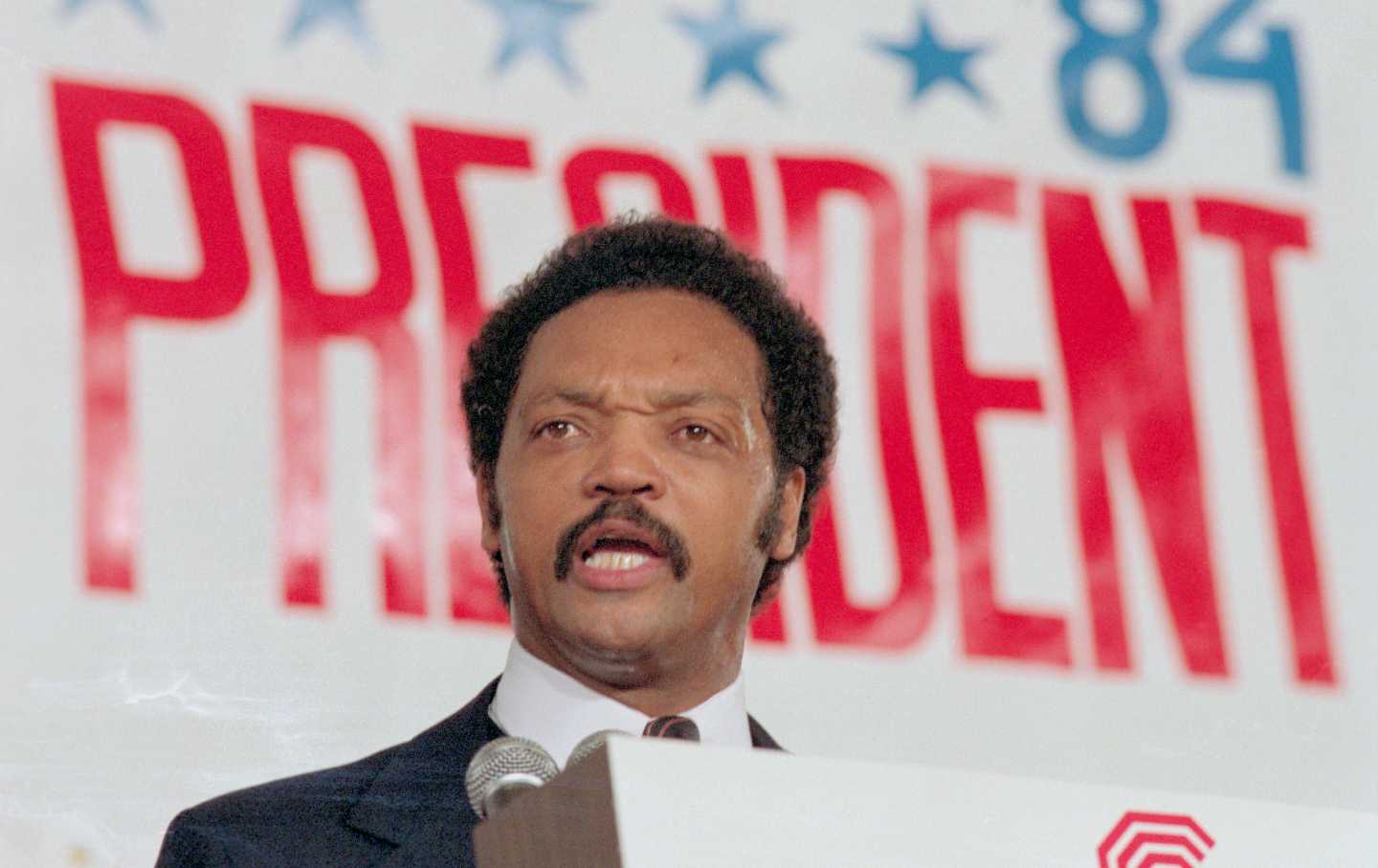
In Memoriam: the Rev. Jesse Jackson (1941–2026) In Memoriam: the Rev. Jesse Jackson (1941–2026)
The civil-rights activist and founder of the Rainbow PUSH Coalition changed what’s possible in politics.
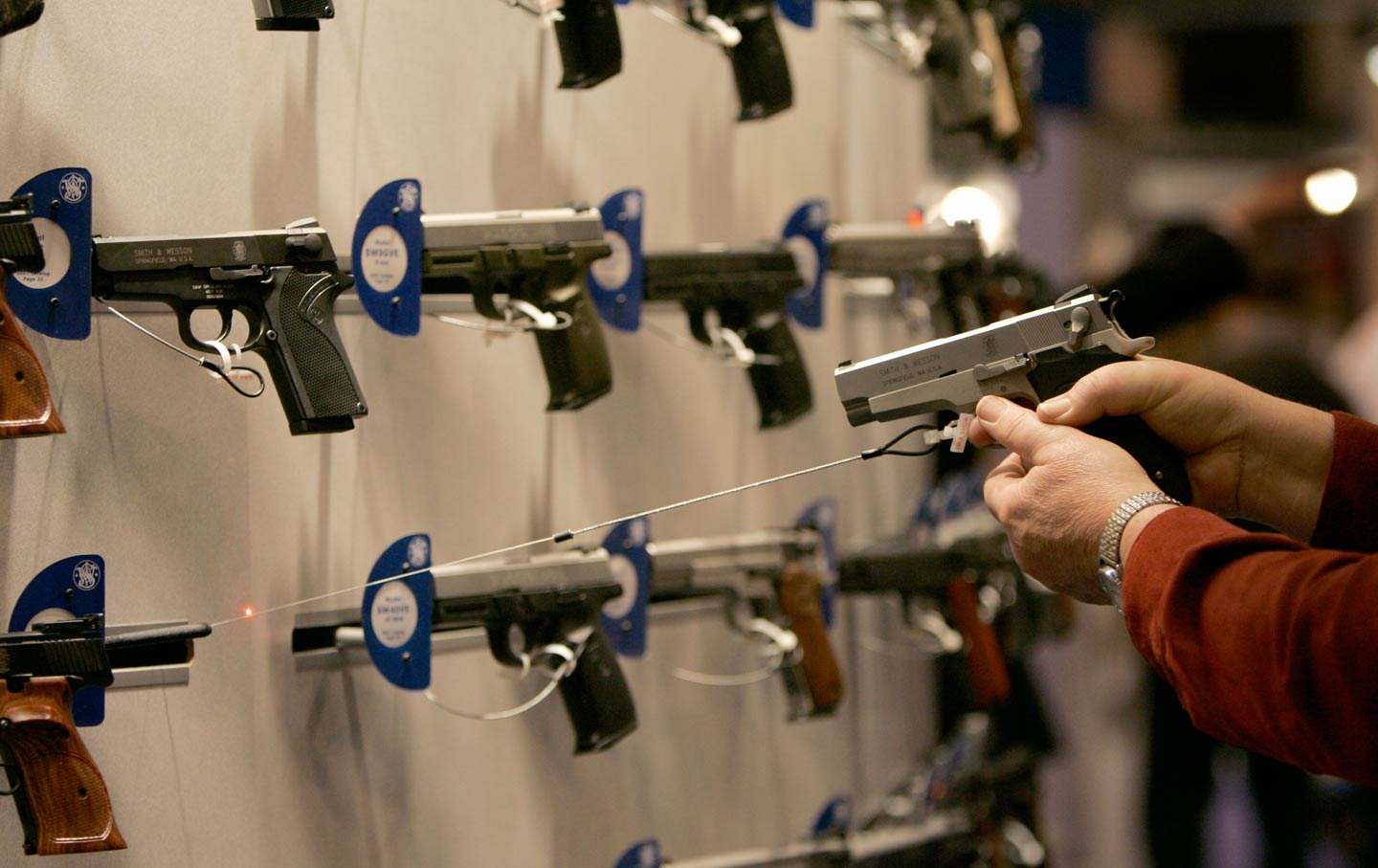
The Real Reason Americans Love Guns The Real Reason Americans Love Guns
With a weak social safety net, a gun offers a false sense of personal power and security.

The Endless Hypocrisy of Bari Weiss The Endless Hypocrisy of Bari Weiss
She claims to be a free speech champion. But as her actions at CBS News keep showing, she seems to think free speech should run only in a rightward direction.
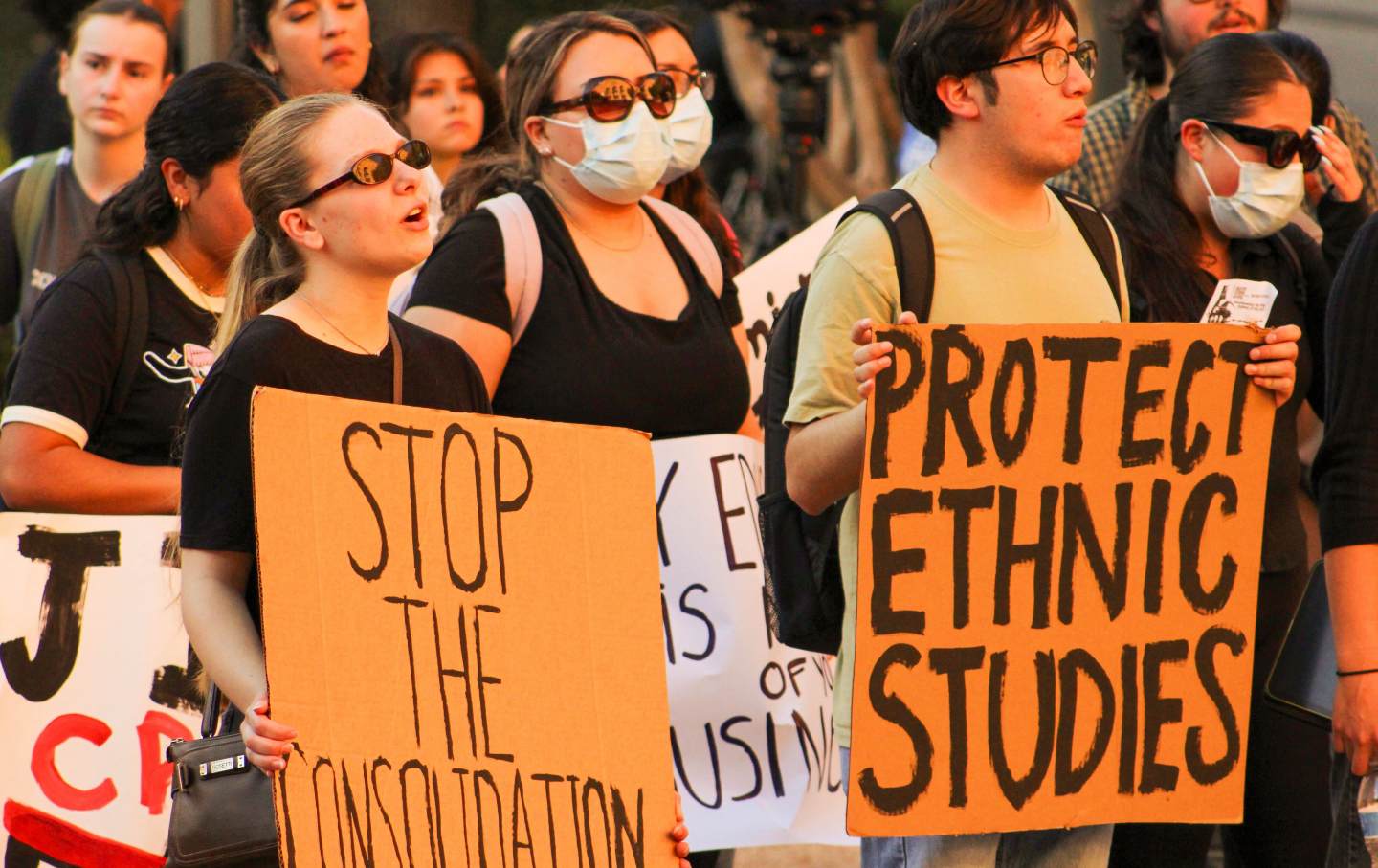
What Will Be Left After the University of Texas Destroys Itself? What Will Be Left After the University of Texas Destroys Itself?
UT-Austin has collapsed its race, ethnic, and gender studies into a single program while a new policy asks faculty to avoid “controversial” topics. But the attacks won’t end there...
The Corporate Media Is Head Over Heels for the Iran War The Corporate Media Is Head Over Heels for the Iran War
Donald Trump’s attack may be surreal, unjustified, and illegal. But that’s not stopping the press from turning the propaganda dial way up.
The Disturbing History of ICE’s “Death Cards” The Disturbing History of ICE’s “Death Cards”
The Vietnam-era practice is yet another example of ICE agents thrilling to the brutality they have been encouraged to cultivate.

