Angie Nixon Is Fighting for the Right to Read
The Florida Senate candidate responded to Republican book-banning schemes by opening a bookstore.
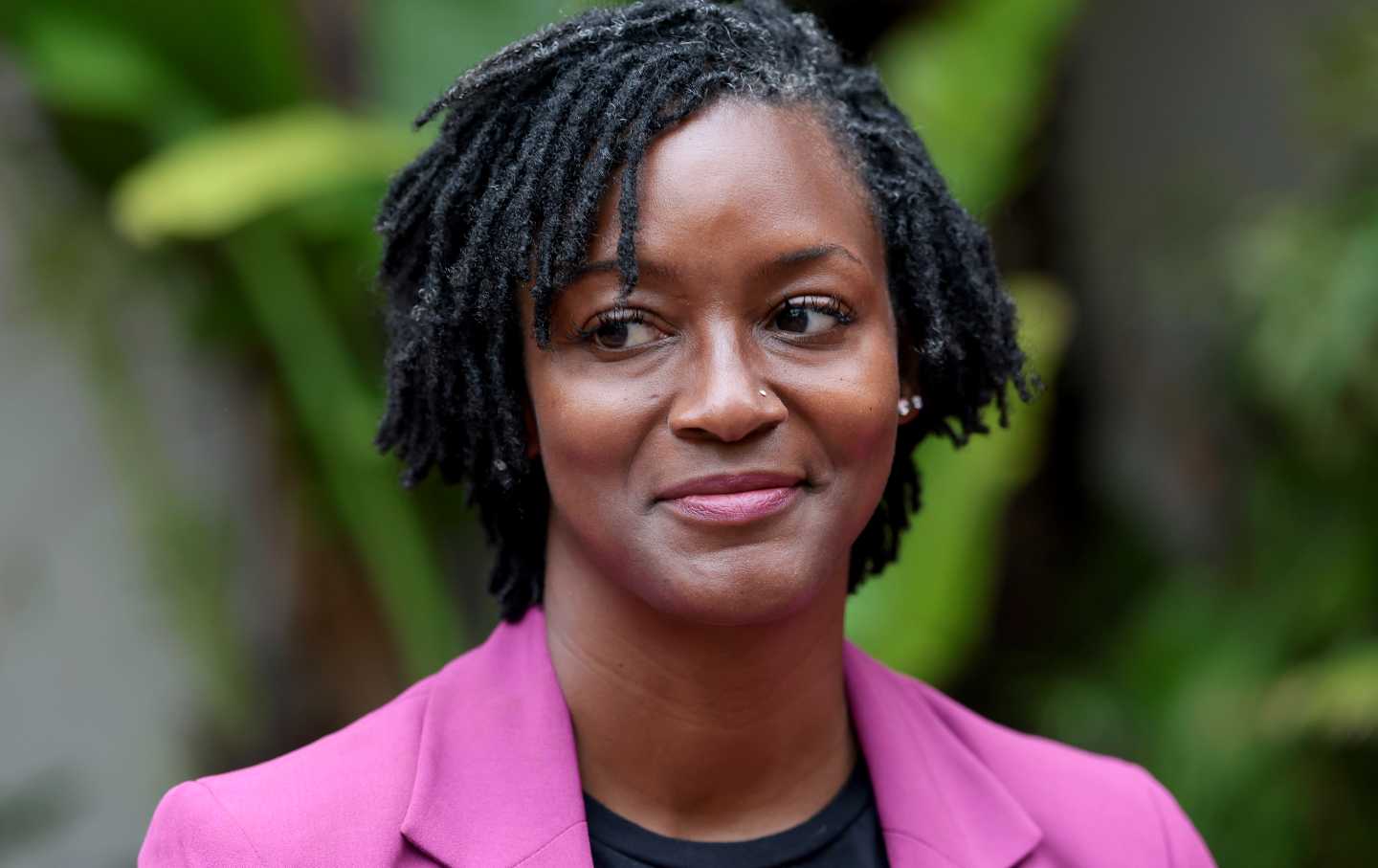
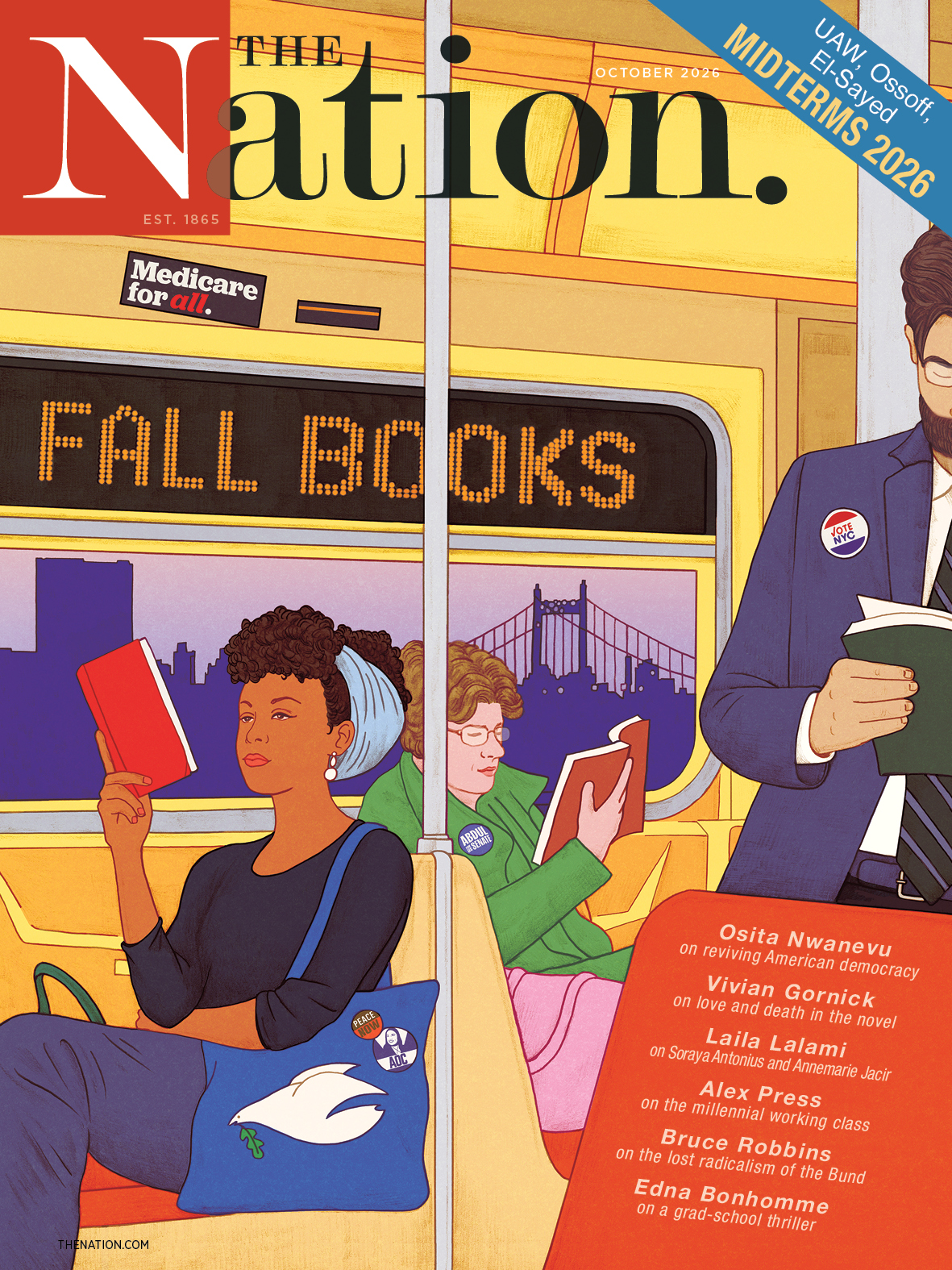
For many years, Angie Nixon has led the charge against the nefarious schemes of Florida Republicans to ban books that present an unfiltered history of the United States. This fight is just a part of what makes the Democratic state legislator an inspiring candidate for the US Senate. But it strikes us as a qualification that deserves special note at a time when the right to read is under attack. As we publish The Nation’s Fall Books issue, we’re thinking a lot about the role that books play in opening up this country’s discourse.
We value texts that reflect on the injustices of the past and the present—and that amplify activism to remedy those injustices. But there are plenty of right-wing politicians who see a threat in books that provide a full picture of the struggle for a more perfect union.
Florida has in recent years been ground zero in the battle over the freedom to read. And Angie Nixon has bravely stood on the right side of history. Long before she won a surprise victory in the Florida Democratic Senate primary on August 19—and, because of her progressive positions and membership in the Democratic Socialists of America, suddenly became a national figure—Nixon started a bookstore in her hometown of Jacksonville that puts banned books front and center on the shelves. In so doing, she offered a contemporary expression of what Frederick Douglass described as “a sublime faith in the great principles of justice and freedom” that has always animated the greatest of American activists and leaders. The story of her bookstore, Café Resistance, is one of courage and words-into-deeds action, and it gets to the heart of how Democrats should position themselves in the so-called culture wars that Republicans always gin up at election time. Instead of cowering, Democrats should take a cue from Nixon’s inspired efforts to embrace and celebrate historically marginalized and oppressed peoples.
Nixon stepped up four years ago, when Florida Governor Ron DeSantis was laying the groundwork for his failed 2024 presidential campaign with initiatives designed to position him as his party’s most ardent critic of diversity, equity, and inclusion. The Florida branch of the ACLU complained that DeSantis “sought to censor Black history in classrooms and called slavery ‘beneficial’ for Black people.” The governor’s assault on the truth included advocacy for legislation that empowered local book-banning schemes and what PEN America Florida has described as “rampant free expression infringements in Florida.” These “speech-constricting laws, policies, and book bans,” PEN argues, advance an agenda with “very real consequences for students, educators, and the freedom to read in this state” and “have become a template for conservative activists and lawmakers behind the movement that has led to nearly 6,000 instances of book bans since 2021.”
Nixon offered an alternative template that defended, as she puts it, “the freedom for our children to learn true history and not have books banned for political purposes.” She was an outspoken foe of the book-banning legislation on the floor of the state House of Representatives, to which she was elected in 2020. And when the Republican majority rejected her arguments, Nixon started the bookstore and community hub. “In 2022, Governor Ron DeSantis signed House Bill 1467, and Florida became the state with the most book bans in the country,” she says. “So I stocked the books they tried to pull off the shelves. And Café Resistance was born. They banned the truth, so we put it right here in the community: free tutoring, coffee, and the books they don’t want kids to read.”
That’s what the owners of independent bookstores do in urban neighborhoods and small cities and towns all over the country. They make their shops havens not merely for books and their authors (including Nixon, who has cowritten a children’s book with her daughter) but also for young readers, many of whom find a sense of possibility in books by and about Harriet Tubman, Rosa Parks, Shirley Chisholm, Angela Davis, and the 1619 Project. The same goes for public libraries and school libraries, where so many librarians have bravely stood up to the red-state politicians who attack the right to read—and the honest discourse that extends from that reading.
We imagine a good many shop clerks and librarians will be cheering Angie Nixon on, because the US Senate has enough establishment politicians. It could use a bookstore owner.