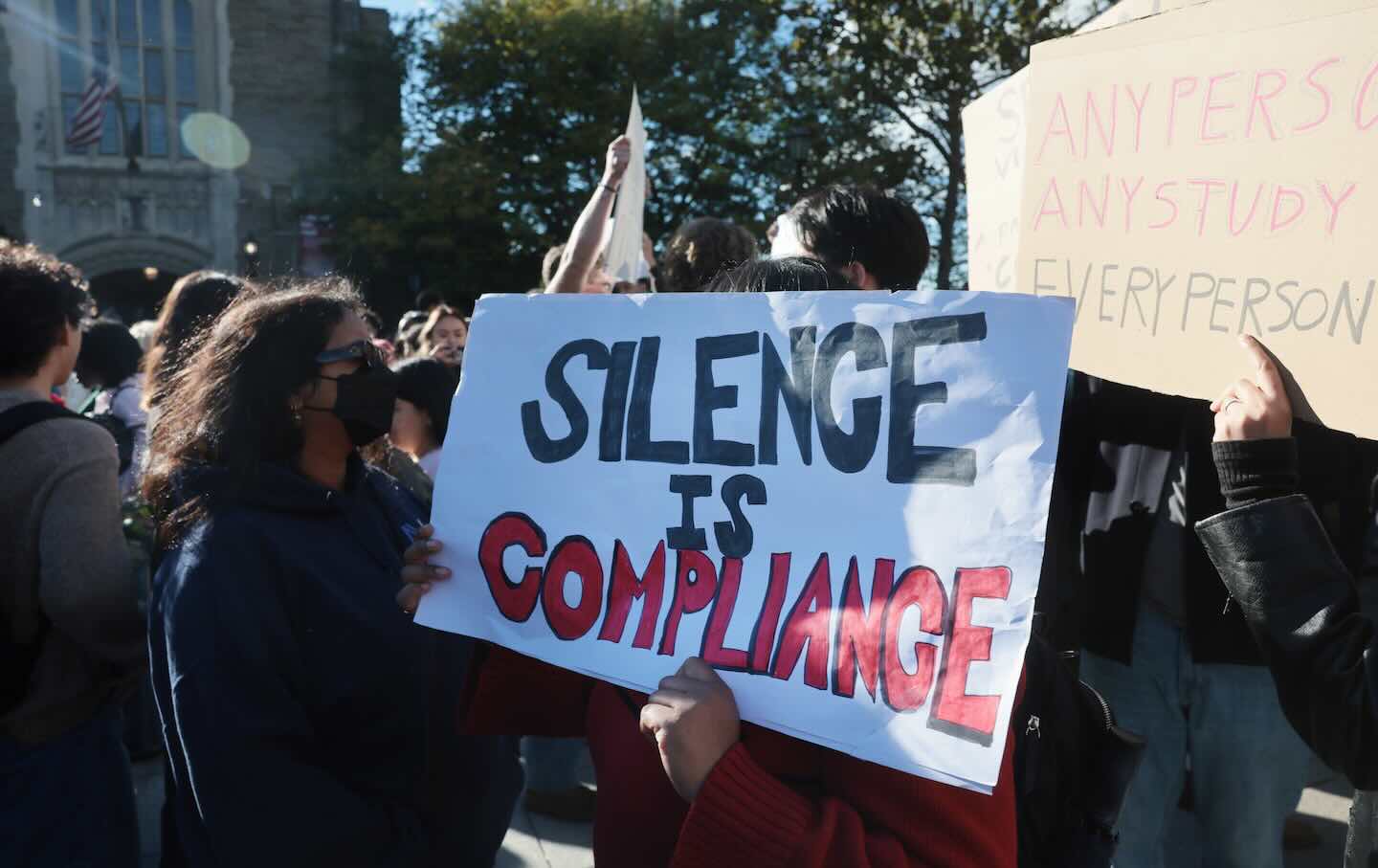
Hundreds of Cornell students participate in a rally against the university’s actions after a student was sexually assaulted at a campus fraternity in 2024, on October 5, 2026, in Ithaca, New York.
(Spencer Platt / Getty Images)The mobilizations around the world in solidarity with Cornell University’s Jane Doe and all survivors of sexual assault and rape have been extraordinary. And locally, as I live close to Ithaca, New York, they have been constant and powerful. Surprisingly, media coverage has been decent and calls for accountability abound, from the streets to the news. What is lacking in the conversations is a more in-depth discussion of what accountability could look like, and in particular, what it can mean to center survivors and focus on deep, long-term accountability and healing, not on the criminal legal system.
So often when people are accused of crimes, they are advised by their legal counsel to “be silent,” to deny what has happened, whether or not they care to accept any responsibility or guilt, and if it comes to it, which the majority of the time it does, take a plea deal that allows them to reduce their legal punishment. For survivors, this system fails to deliver the justice they seek.
Studies show that one of the things survivors of violence often want and need is an acknowledgement of what happened to them. A plea agreement makes this impossible. Prisons do not eliminate sexual violence in our society and do not make accountability, much less bring us closer to healing and amends. So what could do that? How can we think differently about accountability?
I invited Rebecca Solnit and Rabbi Danya Ruttenberg—both extraordinary writers, thinkers, activists, feminists, and scholars—to have a conversation on what accountability might look like, from the broader social spheres to the institutional and individual levels.
Rebecca’s latest book, The Beginning Comes After the End, discusses how far we have come to be where we are today, particularly through a feminist lens, and still how far we must go. Danya’s latest book, On Repentance and Repair: Making Amends in an Unapologetic World, speaks to how institutions and individuals can make amends for harm and violence. And my book, We Make Our Own Justice: Global Alternatives to Policing and Prisons, examines different practices of parallel justice, without focusing on criminal legal systems.
Below is an edited transcript of our conversation on October 5. Watch the full discussion on YouTube.
—Marina Sitrin
Marina Sitrin: To ground us, I know we each want to express solidarity with Jane Doe and all victims/survivors of rape and sexual assault.
Danya Ruttenberg: I want all victim/survivors of all sexual abuse and sexual violence to know that we are with you, that we see you, and that we are fighting to create a more whole, a more safe world together with you.
Rebecca Solnit: Same. To every Jane Doe, there are ways in which we hope you know that so many people care, so many people are with you, both because so many people have suffered the things you’ve suffered, but because so many people are trying to change the system that created, legitimized, trivialized, and swept under the rug that suffering.
MS: I live relatively close to Ithaca, where Cornell is located, and travel downtown each day for my child to go to school. The mobilizations in support of Jane Doe, and against sexual assault and rape, have been so powerful. What have been your impressions of the mobilizations?
RS: It’s interesting seeing how periodically a story of racial violence or sexual violence and gender-based violence rises above the rest to become a flashpoint. Although this time around, what was so disturbing, because we’ve been through this so often, was to see how many people wanted to respond to this as an isolated incident where, oh, there are seven bad men in the world, and if we punish them horribly enough, there will be seven less bad men in the world, rather than responding to this as not an isolated incident. Punishing seven men does not change the fact that there are countless Jane Doe’s in every part of the world.
DR: Yes, all of that. Every so often we get a case that hits the surface. And this [is] coming out nine years after Me Too, and in the context of an administration that refuses to release documentation about its own role in a mass child rape trafficking ring. This story is not only about a woman who was gang raped, but also about the university’s complicity. This is about systemic failure, and it opens up so many questions.
MS: One of the things that I find hopeful in this moment is the language of accountability over punishment. I know both of you have thought a lot about this. For the last several years, I’ve been working on a project, interviewing people around the globe about their practices of parallel justice. These are practices that center the person harmed and do not expel the harm doer, and instead work towards deepening community and healing – beyond the criminal legal system. They are parallel over “alternative” as they center changing and deepening community rather than looking only to reform the various legal systems.
I’d like to invite us to have a conversation on accountability, starting at different levels, like the people who are directly involved, as well as the people who knew about it and were silent. What would accountability look like for Ithaca, for the city, for people in the community as a whole, for the university as a whole, and what would it look like for the institutions? We’re told the only avenue for harm and violence is that people are punished and go to jail. How could accountability look different?
RS: If I can just sort of back up and talk a little bit about what feminism has done and how different a place we’re in than we might have been without feminism.
Something I run into all the time and try and counter is a sense that if this thing happened, then feminism failed, feminism didn’t do anything. I wrote a piece in The Guardian last spring talking about how many people want to write feminism’s obituary. Feminism is young and strong and is not stopping now and has been tremendously transformative. The idea that we should have either completely transformed, not centuries, but millennia of patriarchy in one lifetime is ridiculous and uninformed, but it also fails to acknowledge how profoundly everything—the institution of marriage, employment, so many aspects of law—have been transformed.
One of the other outcomes of what gets called Me Too is more than 3,000 pieces of legislation were introduced, many of them on the state level, many of them passed. I believe that on the national level, sexual abuse-related non-disclosure agreements were, if not outright banned, were changed, because that’s part of how Weinstein got away with all these thing. These contracts legally silenced women, and one of Weinstein’s victims [took great risks] to speak up against him. So actually, a lot of stuff changed, a lot of regulations changed.
We live in a world that’s been tremendously transformed [by feminism]. It has not been transformed enough. And I feel like what we’re facing in the manosphere and with the Trump administration is backlash.
Something I have been saying a lot lately is, we will not punish our way out of this.
What I want to see, and what I think so many of us want to see, is a world in which it does not occur to anyone to desire to do this, because they see it as a repulsive and reprehensible and degrading act for the perpetrator as well as the victim. And that only comes through transformation.
My friend Soraya Chemaly wrote an incredible piece early after the story broke in which she recounted what an incredible feminist anthropologist said, which is that there are rape prone societies and societies without rape. And the difference is how equal, how empowered, how valued women are. And so the real transformation—one that we’ve been working on and that actually has been successful to some extent—[is] there are a lot of men who recognize women’s rights, see women as equal, have changed their behavior in domestic life, in the workplace, in public life, etcetera, from what was considered normal and OK.
And so, and I know it’s frustrating that we haven’t changed everything, but I think this work has to continue. In ruptures like this, this work allows us to not take another step, but maybe a leap forward.
DR: Accountability is hard. What accountability requires is community. You need a community of people to come to the harm doers. In this case, [the harm doers are] the rapists, someone who was on the group chat and did nothing, [the people] in the Cornell administration who didn’t do the right thing, etcetera. You need someone who is in relationship with those people to say to them, “I know that there is another version of you that is capable of something else,” and “I am committed to walking with you until you get there.” That’s how we get to a world without prison. That’s how we get to a version of the story where we don’t just throw people in cages.
The challenge is our culture of individualism. Ideally you have a community of people who surround the person and say, “can we talk about the moral, emotional, spiritual, cultural implications of what you’ve done, and help you figure out how you get yourself right, including how you can sew up this hole in the universe?” And they ask, “What are your obligations to the woman who was raped because of your silence?”
Leaving aside the rapists for a moment, because that’s even harder, but the other 50 guys: do each of those guys have a whole bunch of people who are going to surround them and be in it with them for possibly years while they’re doing whatever that hard work is?
MS: As Rebecca has said, “we can’t punish our way out of this,” and really, we don’t want too either. If we could have a conversation about other ways towards accountability that are not putting people in jail or having them plea out and say they did something that wasn’t actually what they did, what are some options?
DR: I think if people believe that when we offload our responses to harm to the justice system, it’s like, oh, somebody else is worrying about this. It’s not our problem; it becomes somebody else’s. And if I, the person on campus, and I, particularly the harm doer, think of this as my obligation to discharge, (which is very Jewish language), that I’m obligated to deal with, and it’s on me until I do, I need to go looking for ways to address that. And if we, the campus community, feel like it’s on us to figure together, it sort of shifts the dynamic.
MS: How could Cornell behave differently? Even right now, I saw graffiti in a bathroom at Cornell saying, “we keep each other safe,” which is a slogan coming out of the feminist and abolitionist movements, and then phone numbers you can call that aren’t necessarily institutional phone numbers if you want someone to walk with you and accompany you. What sorts of things could Cornell do? How can they support students who are organizing?
DR: You’ve got to own the harm that’s happened. Cornell needs to name all of the ways that they did wrong to this student, and then, this is where it gets tricky, [they must also acknowledge] how many other students they have let through the system in this way. How many other stories are there? How many other victim survivors haven’t we heard about who got similar treatment? They need to own all of that.
The [Cornell] lawyers are gonna say, You can’t possibly because it will open you up to lawsuits and it’ll clean you out. But morally, they need to own what they’ve done. They need to begin to change.
RS: We live in a world in which women have the main responsibility for preventing sexual assault so as not to be the victims. So I think about that as part of this context too.
There’s a lot of things that we can institute, that I think Danya knows so much more about than me—both of you do—about new practices. But I know there’s also a bunch of stuff that we should stop doing, like having these systems that create this violence.
MS: Agreed. It’s both/and. Do either of you have examples for accountability that have worked? Especially for institutions?
DR: I have seen cases where institutions have done profound work.… My favorite institutional transformation case is the University of Michigan Medical Center. Traditionally, medical malpractice suits are “deny and defend.” At a certain point, some folks at the University of Michigan Medical Center decided to come up with a different approach. When something happened, they were at the bedside of the person saying, “This is what happened. We figured out why this went down, [and will] make sure that this mistake doesn’t happen again to somebody else.” And malpractice suits dropped by 50 percent. But the real thing was that people who were harmed felt that their experience was validated when they went to an institution of trust—even though they were hurt. The institution said, “We didn’t do right by you.” There was no gaslighting. And they felt that the next person was protected.
Popular
“swipe left below to view more authors”Swipe →The best case of institutional response around sexual abuse that I have seen from the inside was imperfect, nonetheless. It involved investigations of its institutions, releasing somewhat transparently some of the information, a little heavily redacted, and some things were revealed though some transparency. Then ,after some pushing from victim-survivors and other stakeholders, the institution offered a whole path of restorative justice and other opportunities for people who were hurt by the institution. One was that they hired some really talented experts and said, “OK, we’re going to have some justice circles and we’re offering you some other pathways towards restorative justice and healing.”
They tried to come up with a whole list of things, and it took a number of iterations, but I think they got to a place that was pretty good. And it’s OK for things to be works in progress. If Cornell only serves Jane Doe, they won’t have done it right.
RS: Shifting where the conversations take place is really important, as you’ve both been saying. When we leave it to a criminal legal system, it takes the power not only away from the survivor, the victim, it takes it away from society as a whole. And then we’re supposed to be happy that there’s a plea agreement for a lesser charge than rape, when we know what happened was rape, and someone then goes away for a year, rather than [a focus on] how is society going to change and how are we going to shift things? How do we make institutions change? And how is their assault all of our obligation—how is this victim/survivor all of our responsibility?
DR: I keep thinking about this Native tribal court judge that I quote in On Repentance and Repair, Judge Joseph Flies-Away, who said that when someone causes harm and winds up in his jurisdiction, “He acts as though he has no relatives.”
There are so many things that we need to do to create a world free from patriarchy, a world in which all human beings are regarded with their full dignity and care, and in the interim, we have these cases of people acting as if they have no family. Whether it’s the people on the group chat, the people in that room, the people assigning a fucking essay to get somebody off. We need to create cultures in which we are there for one another, accountable, to say things like, “What are you doing is not who you are, who you should be and there are values that matter.” And we can’t let each other go until we get there.
RS: Something that struck me some years ago was realizing that feminism had always been couched as though it was more women’s work.… I feel like what’s been missing all along is a men’s movement that articulates that while men gain certain things from patriarchy, it comes at a huge cost. bell hooks writes about that so beautifully when she says, the first act of violence patriarchy demands of boys and men is not against women, it’s against themselves.
Patriarchy is requiring a constant renunciation of what you’re not allowed to think, feel, like, say, do. And I see it changing in some ways.… [But] I feel like we’re still waiting for a men’s movement that says we have to distort and deform and abandon part of our souls to be what patriarchy wants from us and we don’t want to do it anymore. Judith Butler said this beautiful thing in their book on violence recently, which is that the best argument against violence is that because we were never separate, when I do violence to you, I do it to myself as well.
More from The Nation
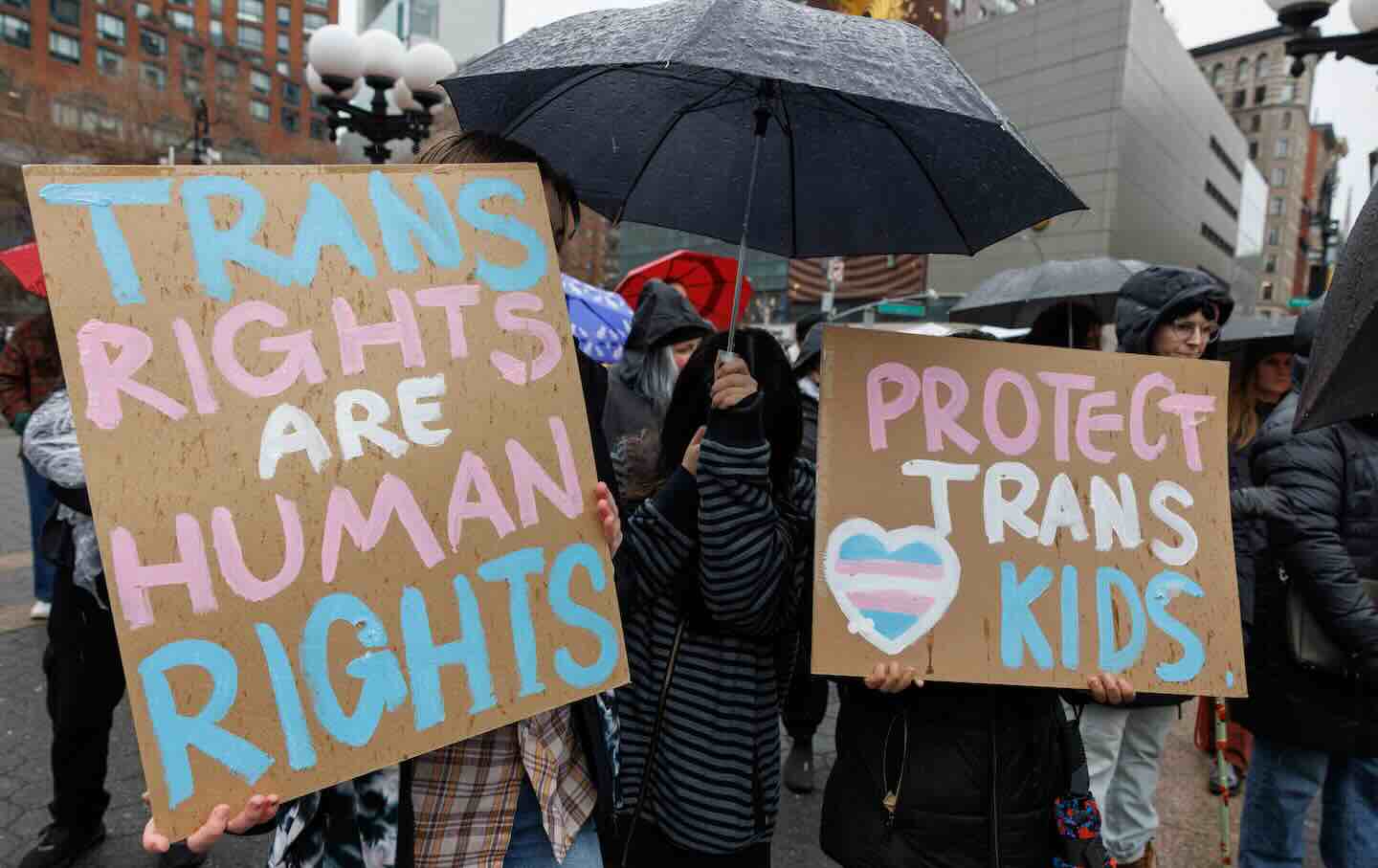
Smoke and Mirrors: The Right's Latest Attacks Against Trans People Smoke and Mirrors: The Right's Latest Attacks Against Trans People
The MAGA movement is redoubling its attacks on trans healthcare in an attempt to win votes this November.
The Real AI Threat Is Already Here The Real AI Threat Is Already Here
Never mind some future apocalypse—AI is being used right now to cause enormous suffering.
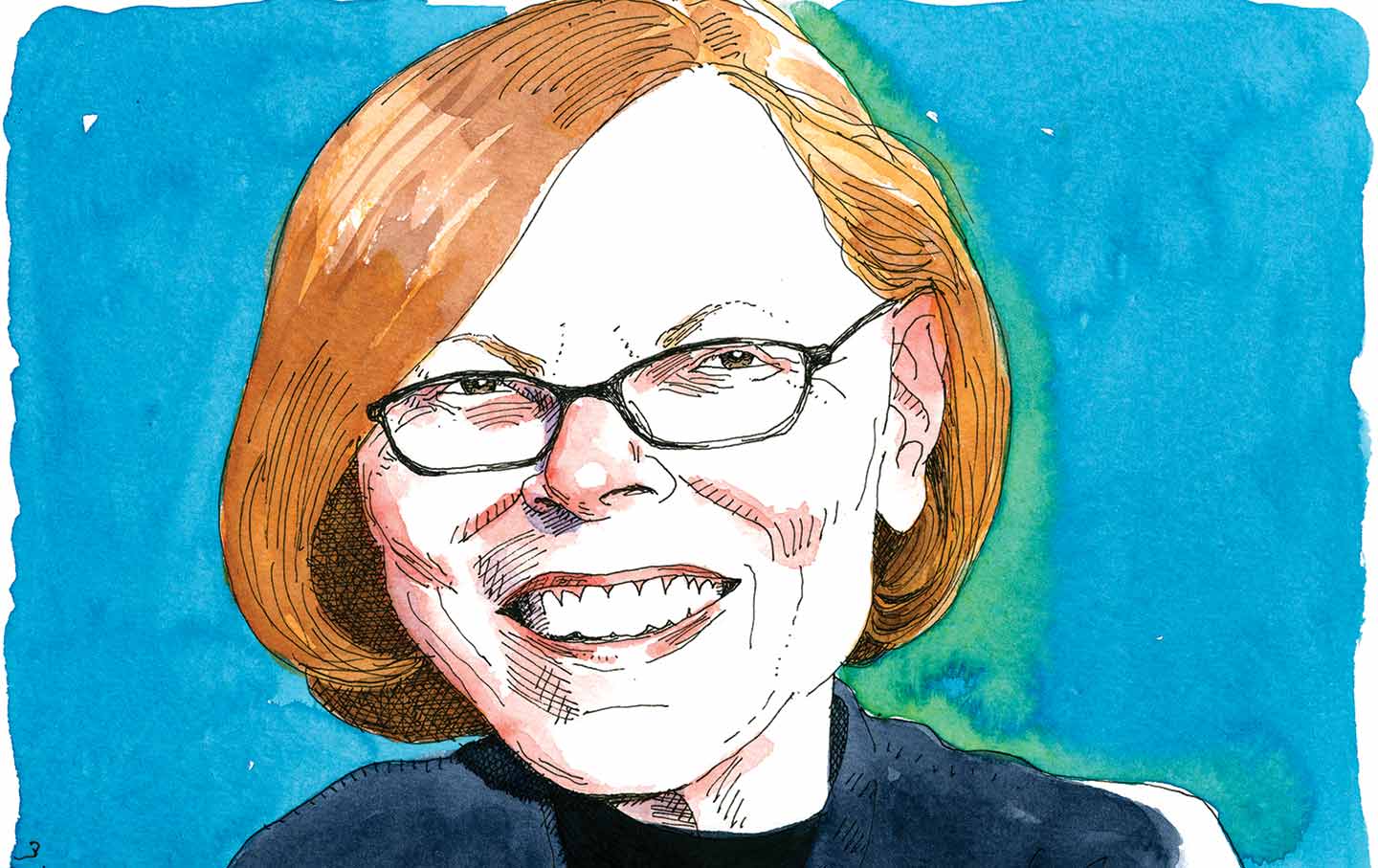
The Many Lives of Janet Malcolm The Many Lives of Janet Malcolm
A new biography tells the story of one of America’s great masters of reportage.
The Plundering Oligarch You Haven’t Heard Of The Plundering Oligarch You Haven’t Heard Of
Private-equity magnate Jeffrey Leerink has been busy pillaging healthcare and the life sciences.
What Role Should the Supreme Court Play in American Politics? What Role Should the Supreme Court Play in American Politics?
A wide-ranging new book by Nikolas Bowie and Daphna Renan examines how America’s highest court often gets in the way of democratic politics.
Monstrous Merger Monstrous Merger
Allowing Paramount to buy Warner Bros. is a capitulation to corporate power and a threat to press freedom.

