Abortion Bans Are “an Assault on the Practice of Medicine”
Restrictive laws don’t just take away the right to choose, say physicians and ob-gyns, but also prevent proper treatment of pregnancies.
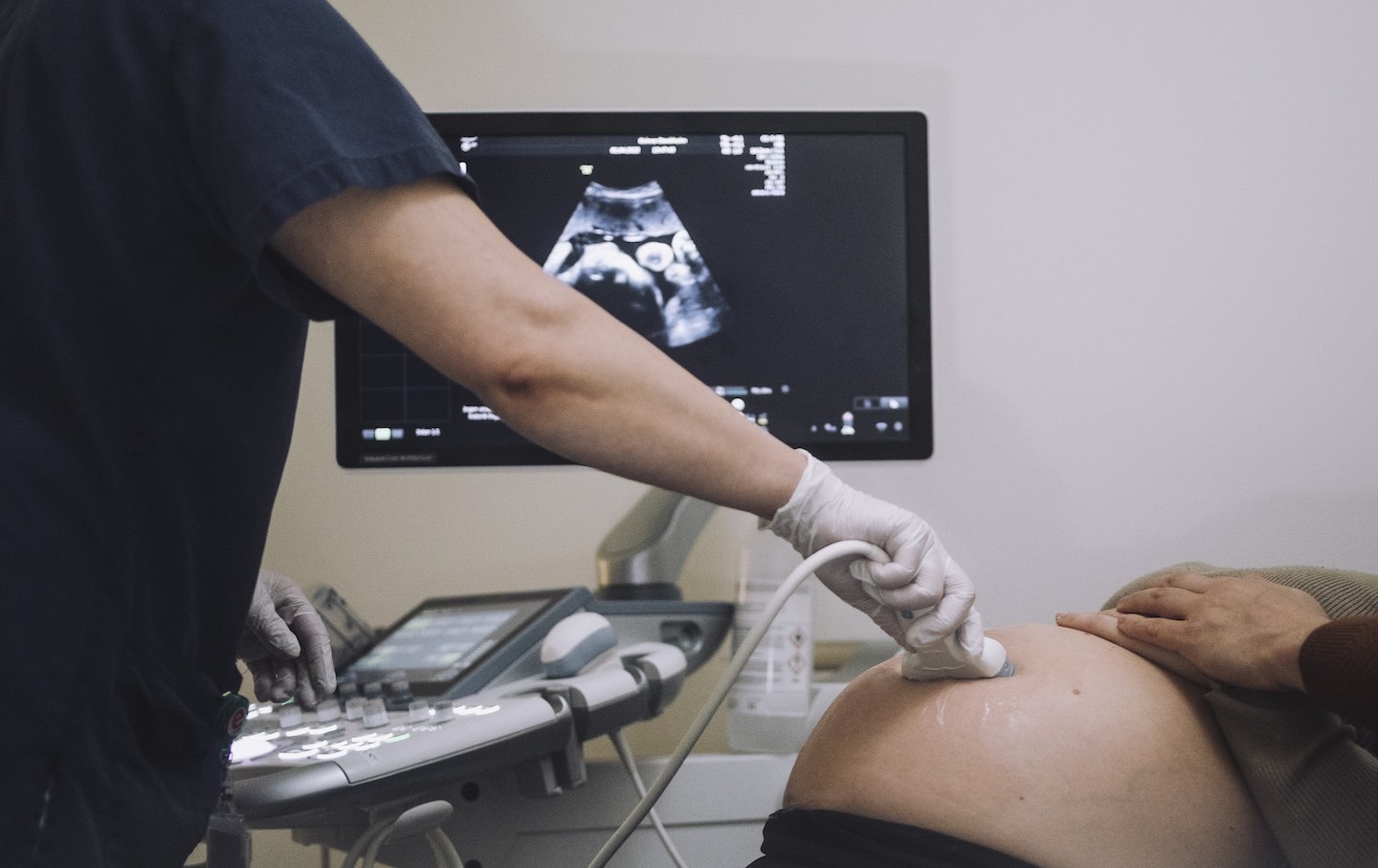
Americans obsess so much about the morality of abortion that it can be easy to forget that abortion is part of basic healthcare. Pregnancies sometimes develop into serious, even life-threatening medical complications that require they be terminated, and quickly. As detailed in a report from the research group Advancing New Standards in Reproductive Health (ANSIRH), abortion bans and restrictions have made treating these conditions much more difficult.
Here’s a sample case from the report, describing a patient who experienced an incomplete miscarriage at between 16 and 18 weeks of pregnancy in a state with an abortion ban. The physician wrote:
I meet her 2 days later in the ICU. She was admitted from the ER with severe sepsis…and bacteremia. Her fetus delivers; she is able to hold [the fetus]. We try every medical protocol we can find to help her placenta deliver; none are successful. She is now on 3 pressors and in [disseminated intravascular coagulopathy]. The anesthesiologist cries on the phone when discussing the case with me—if the patient needs to be intubated, no one thinks she will make it out of the OR. I do a D&C.
After the procedure, the physician noted that the patient “bleeds from everywhere.” She lived, but feared legal retribution. “She asks me: could she or I go to jail for this? Or did this count as life threatening yet?”
Abortion opponents claim these situations don’t exist, because pregnancy is all rainbows and bunnies and part of God’s plan, and besides, state laws restricting abortion care have safeguards built in so that no patients are endangered. This is not true. Exceptions to the bans are so vague—what is “life-threatening”?—and the legal consequences of getting them wrong are so severe, doctors and hospitals are afraid to act. Patients have been forced to carry dead and dying fetuses. Cancer treatment has been postponed. Doctors and nurses have even refused to remove IUDs—after all, doing so could harm a possible pregnancy.
“The practice of medicine isn’t black-and-white,” Dr. Daniel Grossman, ANSIRH’s director, told me when we spoke by phone recently. “There’s a lot of gray.” A law can’t cover every possible complication, even if anti-choice legislators were interested in doing that, which they’re not. Moreover, even when a legal exception exists, getting hospital permission to perform a medically necessary termination is cumbersome and full of delays. Meanwhile, the patient is getting sicker and sicker. “I wouldn’t be surprised if there’s a death,” Dr. Grossman said of such cases.
That was exactly the situation of Savita Halappanavar, whose death in 2012 at 17 weeks of pregnancy from untreated sepsis at an Irish hospital sparked the repeal of Ireland’s abortion ban in 2018. The heartbeat of Halappanavar’s miscarrying, unviable fetus mattered more than her own life. Today, you can get a first-trimester abortion in Ireland with no trouble. “It’s understood as primary care,” says Dr. Wendy Chavkin, cofounder of Global Doctors for Choice and professor emerita at the Columbia University Mailman School of Public Health. “You could be sitting in the waiting room next to someone with a sprained ankle.” Supporters of a 15-week national ban, take note: After Ireland’s 12-week deadline, there are so many restrictions, many patients with crisis pregnancies still have to travel to the UK. “The process of getting permission is so cumbersome, it takes so long, and in the end most procedures are denied. Under today’s rules, Savita might die again.”
These laws aren’t just a matter of local politics, Dr. Chavkin observes, but “an assault on the practice of medicine.” She points out that “they deny the basis of modern medicine, which is to practice care according to science, and also to put patients’ welfare first.” No wonder doctors in some American states are voting with their feet: Idaho, which bans abortion except to save the patient’s life, has lost 22 percent of its practicing ob-gyns and now has fewer than five full-time maternal-fetal-medicine specialists left.
In 2023, applications for residencies in abortion-ban states went down by 10.5 percent. Why would a young doctor sign up to be second-guessed by state legislators so ignorant they think an ectopic pregnancy can be removed and implanted in the womb, as a bill in Ohio demands? As the outraged relative of a woman who almost died in an Ohio delivery room told me by phone, “The same people who think vaccines make you magnetic are making laws about the details of medical procedures.”
We have been here before. Roe v. Wade has been much criticized by feminists and others for the weight it placed on the right of doctors to practice medicine according to their best judgment. Fair enough—women’s interest in controlling their bodies was barely mentioned—but let’s be real. The hostility and indifference of legislators to physicians is a crucial piece of the anti-abortion movement. Even before Roe legalized abortion, doctors could complete miscarriages and remove ectopic pregnancies without fearing the long arm of the law—procedures so routine they weren’t even considered an abortion. Today, that’s gone. The definition of abortion has expanded wildly; according to anti-choice advocates, IUDs are abortion, and so is hormonal birth control, aka “chemical abortions.” According to a notorious Alabama court decision, discarding unused embryos created by in vitro fertilization procedures amounts to abortion too.
Is there a silver lining? The Center for Reproductive Rights is bringing dozens of lawsuits on behalf of women denied medically necessary abortions in Texas, Tennessee, Oklahoma, and Idaho, as well as doctors who claim they can’t practice good medicine under current law.
“What Dobbs has done,” says Carole Joffe, renowned abortion sociologist and ANSIRH researcher, “is give the American people a window into how dangerous pregnancy can be that was not there before.” People can say they don’t care, which is the actual anti-abortion position, but at least now they can’t say they don’t know.
Support independent journalism that does not fall in line
Even before February 28, the reasons for Donald Trump’s imploding approval rating were abundantly clear: untrammeled corruption and personal enrichment to the tune of billions of dollars during an affordability crisis, a foreign policy guided only by his own derelict sense of morality, and the deployment of a murderous campaign of occupation, detention, and deportation on American streets.
Now an undeclared, unauthorized, unpopular, and unconstitutional war of aggression against Iran has spread like wildfire through the region and into Europe. A new “forever war”—with an ever-increasing likelihood of American troops on the ground—may very well be upon us.
As we’ve seen over and over, this administration uses lies, misdirection, and attempts to flood the zone to justify its abuses of power at home and abroad. Just as Trump, Marco Rubio, and Pete Hegseth offer erratic and contradictory rationales for the attacks on Iran, the administration is also spreading the lie that the upcoming midterm elections are under threat from noncitizens on voter rolls. When these lies go unchecked, they become the basis for further authoritarian encroachment and war.
In these dark times, independent journalism is uniquely able to uncover the falsehoods that threaten our republic—and civilians around the world—and shine a bright light on the truth.
The Nation’s experienced team of writers, editors, and fact-checkers understands the scale of what we’re up against and the urgency with which we have to act. That’s why we’re publishing critical reporting and analysis of the war on Iran, ICE violence at home, new forms of voter suppression emerging in the courts, and much more.
But this journalism is possible only with your support.
This March, The Nation needs to raise $50,000 to ensure that we have the resources for reporting and analysis that sets the record straight and empowers people of conscience to organize. Will you donate today?