Trump’s Supposed Unity Message Is a Gloating Threat of MAGA Triumphant
The new president uses shock and awe to claim a mandate over demoralized Democrats.
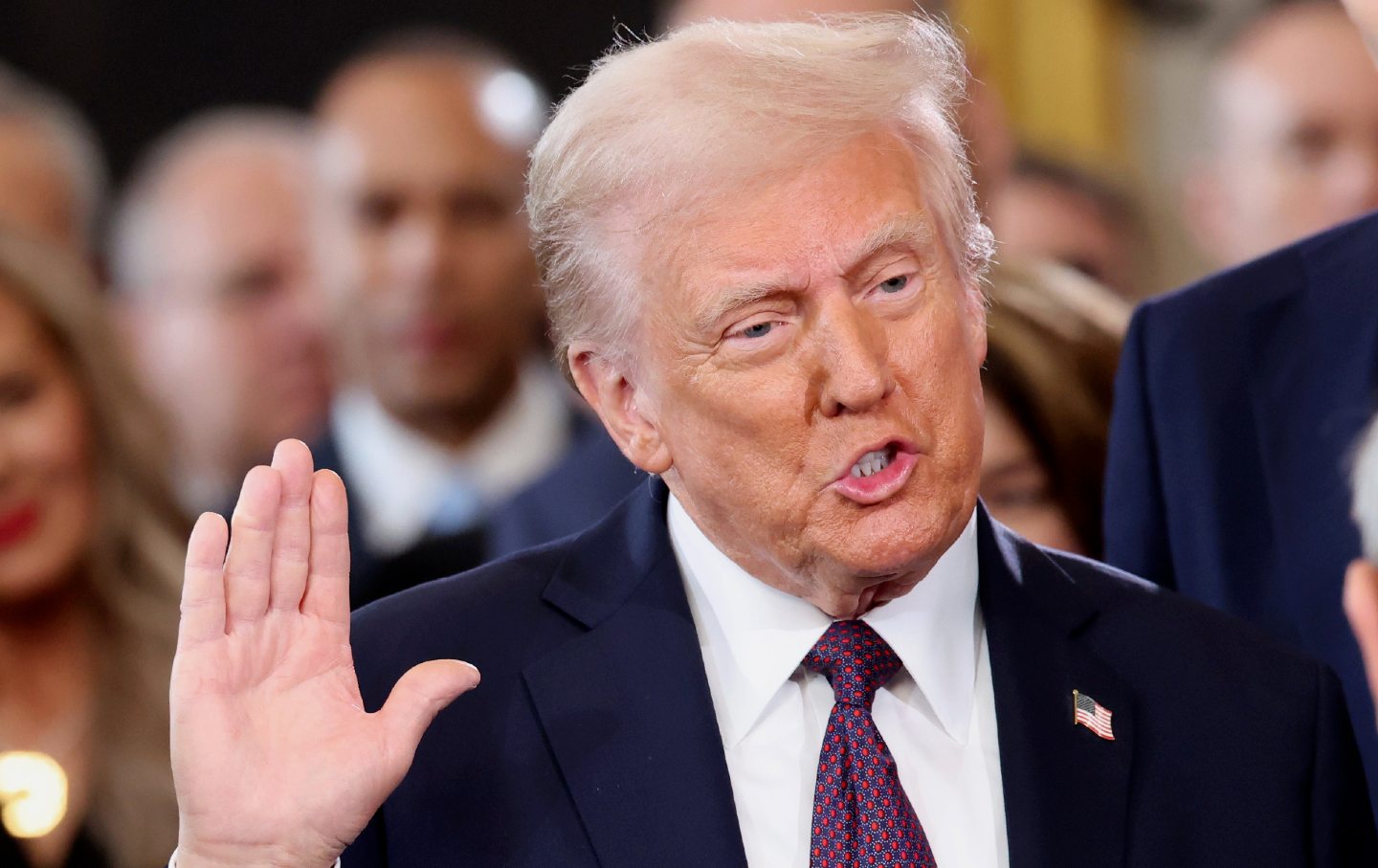
In the run-up to Donald Trump’s second inaugural address, his staff leaked a remarkable promise: that in this speech, we would see a kinder, gentler Donald Trump. This benign Trump would mark a change from the notorious “American carnage” tirade he delivered in 2017 the first time he was sworn in as president. Trump’s “American carnage” inaugural painted a dystopian image of America as a nation going to hell in a handbasket due to a corrupt elite that only he could stop. After listening to the speech, George W. Bush reportedly said, “That was some weird shit.” For Trump 2.0, aides promised a unity message that would heal a nation divided after a bitter election as well as years of political strife.
Anyone foolish enough to expect a new Trump should probably hand over power of attorney for their finances to their family now. Trump is incapable of either change or comity, so it should have come as no surprise that his second inaugural address was not the promised magnanimous gesture of reconciliation but just a new iteration of “American carnage.” Crudeness and repetition are Trump’s stock in trade—and have served him well as a huckster and demagogue. In the second address, we heard the same basic underlying message as the first: Under the corrupt elite represented his opponents, America was becoming a hellscape, but with Trump in charge we’ll now enjoy a new “golden age” of peace and prosperity brought about through an “America First” program of immigration crackdown, protectionism, and foreign policy unilateralism.
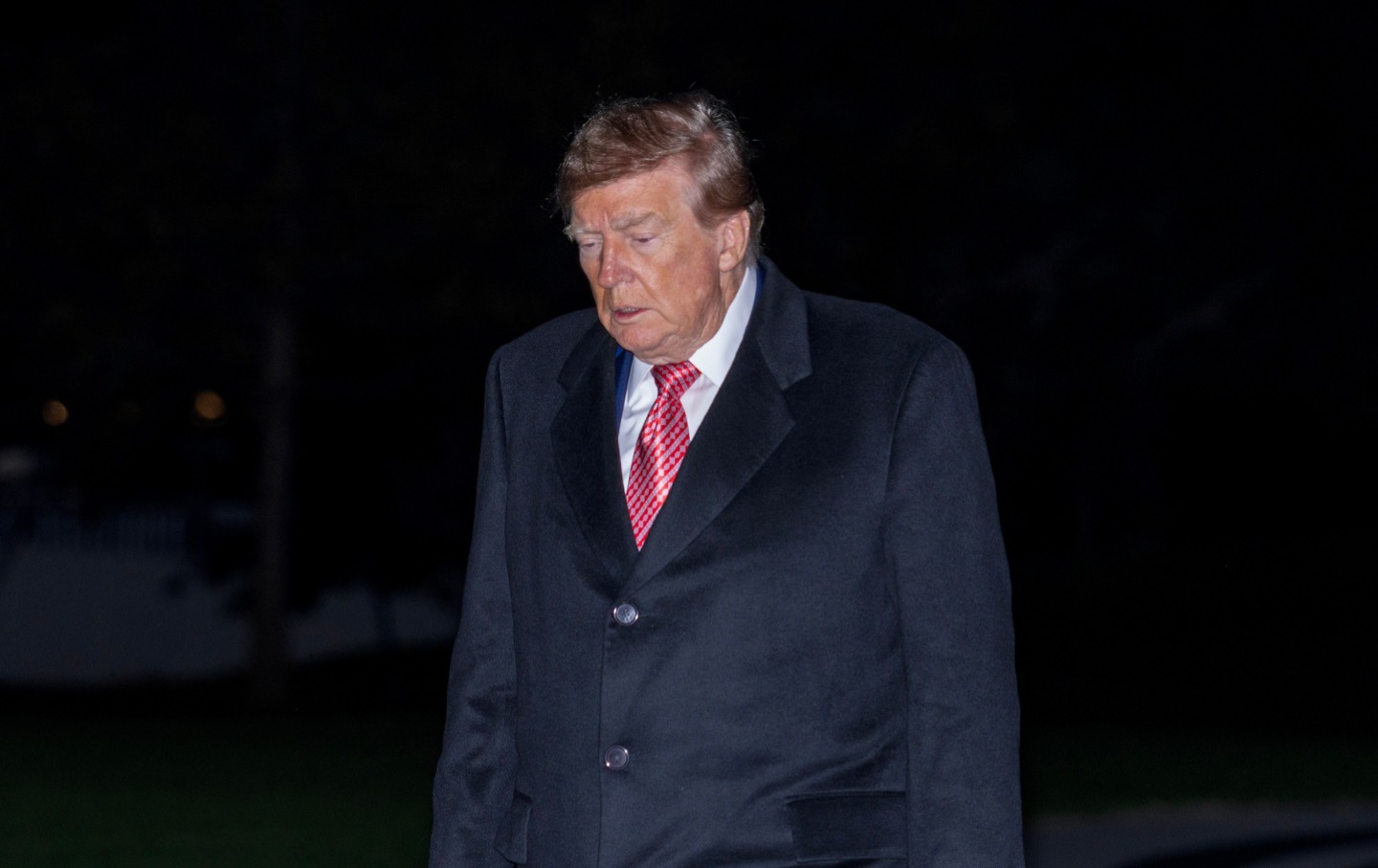
The main differences between the two speeches was a matter of tone and emphasis, as well as the overall level of confidence. Trump’s 2017 speech was memorably angry. In today’s speech, Trump, perhaps suffering from a cold, was much more subdued. In the new inaugural, Trump foregrounded the promise of a new “golden age of America” and in general focused more on what he could deliver—while still airing his grievances over his alleged persecution.
In 2017, Trump was beleaguered even in victory, since he lost the popular vote. In 2025, Trump has much more swagger, thanks not just to a popular vote victory but also the fact that Democrats are not putting up any significant resistance to his policies but abjectly waving the white flag of surrender (seen in the rush of many Democrats in Congress to support the GOP’s anti-immigrant Laken Riley Act).
The New York Times reports that in a meeting last Friday with lawmakers, Trump
said the Democrats were damaged, demoralized and disorganized, according to two people in the room. And while he conceded that “sometimes a wounded animal is the most dangerous,” he signaled that he wanted to exploit their weakness. It was time to go big.
Trump’s speech had the supreme confidence of a leader who knows his rivals are vanquished and licking their wounds. So Trump wasn’t shy about claiming a mandate—not just from the voters but from God. About the election results, Trump said, “As our victory showed, the entire nation is rapidly unifying behind our agenda, with dramatic increases in support from virtually every element of our society: young and old, men and women, African Americans, Hispanic Americans, Asian Americans, urban, suburban, rural, and very importantly, we had a powerful win in all seven swing states, and the popular vote we won by millions of people.”
As always, Trump was overstating his victory, which was narrow in historical terms (as my colleague John Nichols has documented). While he did make impressive gains among many traditionally Democratic groups such as African Americans and Latinos, this was only in comparison to the very low rates he and other Republicans have received from these demographics. But Trump is never any mood to be fact-checked—let alone when he is victorious.
It wasn’t just the voters who wanted him back in power, Trump insisted, but also the creator of the universe. Trump said,
Just a few months ago, in that beautiful Pennsylvania field, an assassin’s bullet ripped through my ear. But I felt then, and believe even more so now, that my life was saved for a reason. I was saved by God to make America great again.
Believing that both American voters and the Almighty are on his side, Trump barged forward with his America First agenda, including an especially strong emphasis on nativism. He promised a militarization of the southern border and a sweeping policy of deportation.
Popular
“swipe left below to view more authors”Swipe →More broadly, Trump is calling for nothing less than a return to the 19th-century notion of Manifest Destiny (a term he explicitly used) in the manner of William McKinley (whom he described as “a great president”).
Trump’s version of Manifest Destiny includes not just old-fashioned imperialism (he even promised to take back the Panama Canal) but also a new expansion into the far reaches of space. According to Trump,
The United States will once again consider itself a growing nation, one that increases our wealth, expands our territory, builds our cities, raises our expectations and carries our flag into new and beautiful horizons. And we will pursue our manifest destiny into the stars, launching American astronauts to plant the stars and stripes on the planet Mars.
Trump’s claim to want to unify America is belied by his deeply reactionary politics, which explicitly aims to roll back the social progress made in recent decades by people of color (he called for an end to workplace diversity programs) and sexual minorities (decreeing that under his government federal policy will be that “there are only two genders”).
Trump’s narrow electoral victory doesn’t come close to giving him a mandate for the sweeping right-wing politics he’s promising. Unfortunately, Trump has judged the moment correctly: As long as Democrats are demoralized, he has a chance to steamroller over them to push his agenda.
The most important political question Trump’s speech raises is whether it will finally shock liberals enough that they will emerge from their funk—and start organizing a proper resistance.