
What Will the New DNC Chair Do to Curb the Role of Outside Money in Democratic Primaries?
This is increasingly an existential question for progressives—and for the party if it’s to revive its commitment to working people.
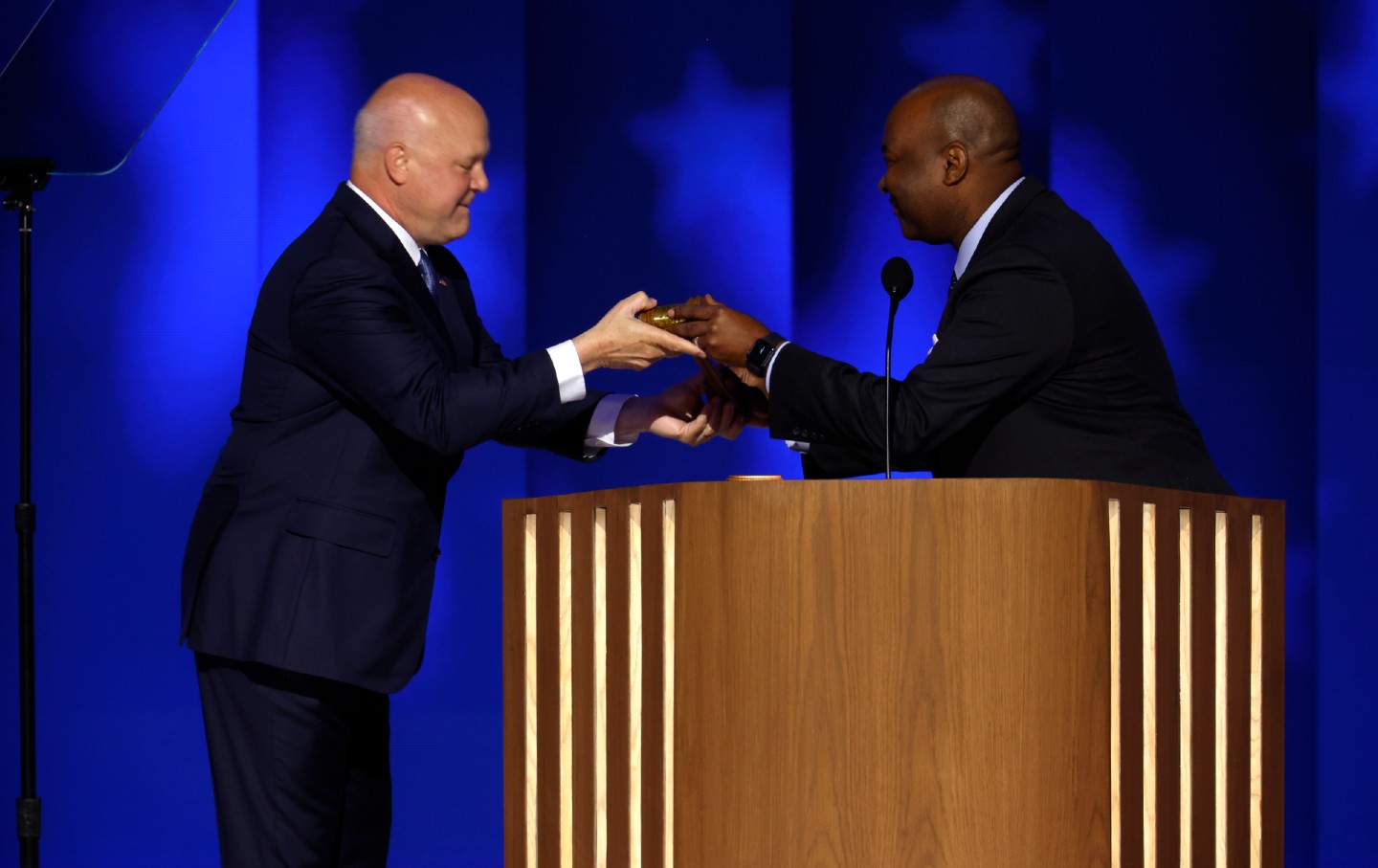
The flood of dark money in Democratic primaries now represents a clear and present danger to a party that is in desperate need of new leadership and a new direction. In the wake of the last election, the upcoming selection of a new chair for the Democratic National Committee—a race without an incumbent president to dictate the choice—has provided the opportunity to debate the party’s direction—and how to respond to the threat posed by dark money. Yet, to date, the candidates and the debate have largely avoided addressing the issue.
The Democratic Party is not a party with a membership that can hold leaders accountable. The head of the DNC doesn’t define party policy or message. The DNC is basically a fundraising and money-dispensing operation.
There are now 10 contenders in the race for chair of the Democratic National Committee, the titular head of the party. These include a former governor (Maryland’s Martin O’Malley), heads of relatively successful Midwestern state parties (Ken Martin of Minnesota and Ben Wikler of Wisconsin), a former presidential candidate (Marianne Williamson), and other lesser-known organizers and electeds.
The candidates echo what has quickly become a mantra for Democrats after the 2024 defeats. All call for better messaging, more grassroots organizing, and a more sophisticated “media ecosystem.” All agree that party needs a message that speaks to working people but seem to assume this is more a question of messaging than of radical policy changes. All express scorn for the ensconced consultants who contributed to the defeats over the past years. Yet the decision on who will lead the party will be made on February 1 by the 448 active members of the DNC itself, including the 73 “at large” members essentially appointed by DNC chair Jaime Harrison. (The names of the 448 were not publicly available until The American Prospect recently published the list, and are, not surprisingly, disproportionately a collection of lobbyists, political operators, organizational representatives, and hangers-on.)
Largely absent from the debate about the party’s reforms and the contest for chair is what progressives consider to be a fundamental question: What will the new chair do to curb the role of outside, dark money in Democratic Party primaries? This is increasingly an existential question for progressives—and for the party, if it is in fact to revive its commitment to working people.
Over the past few cycles, attractive progressive insurgents and incumbents have faced a staggering barrage of negative ads, sponsored by independent political action committees that are lavishly funded with dark money. AIPAC—the powerful pro-Israel lobby—led the way, raising money largely from reactionary Republican billionaires to deploy against progressives with the temerity to question America’s support of Israel’s increasingly indefensible course. In a 2021 special election, Ohio State Senator Nina Turner, the former cochair of Bernie Sanders’s 2016 presidential campaign, was an early casualty, as AIPAC fronts spent nearly $2 million in a concerted campaign to defeat her in a race where she was the favorite. In 2022, AIPAC’s fronts claimed the scalps of incumbent progressives Representative Andy Levin (D-MI) and Marie Newman (D-IL).
In the last cycle, Representatives Jamaal Bowman and Cori Bush were taken out by AIPAC. Bowman faced nearly $10 million and Bush nearly $9 million in negative ads or ads favoring their opponents The cryptocurrency billionaire grifters then copied the AIPAC model, throwing a staggering $40 million into ads in the general election to defeat the progressive Senate Banking Committee chair Sherrod Brown—sending a clear message to politicians not to impede their brazen plot to con the Federal Reserve into embracing crypto as part of the nation’s reserves. They also provided all the money in negative ads to undermine progressive Representative Katie Porter’s Senate bid, elevating a Republican to the final run-off that she might well have won.
“When you take money from Donald Trump donors, Nikki Haley donors, Ron DeSantis donors and then you put it to use in Democratic primaries,” Representative Mark Pocan noted, “clearly it’s a disingenuous use of money.” Yet what AIPAC and crypto have pioneered surely will be imitated by other deep-pocket interests—Big Oil, pharma, military contractors, and the like. Unions, which used to provide some counter to corporate and special-interest money, are no longer able to compete. If progressive incumbents and insurgents are to have a shot at surviving—and if the Democratic Party is to become a party that champions working people once more—outside money, particularly outside dark money, must be curbed.
Despite the existential importance of this question, the leading candidates for DNC chair have had little to say about it. Except for the Congressional Progressive Caucus, few commentators have included it as a priority in the party debates. The DNC candidates are seldom grilled about the issue in their various appearances. When asked about outside money, they generally repair to calling for the repeal of Citizens United, the Supreme Court decision that opened the floodgates to corporate money.
This is simply a copout. It is easy to rail against Citizens United, but its repeal will occur only after progressives capture governing majorities in both houses of Congress and in the Supreme Court.
When asked directly about outside money on a call sponsored by Our Revolution and other progressive groups, Ben Wikler, the Wisconsin state chair and one of the favorites for the post, said the party couldn’t do anything because it can’t pass laws—but this too was, if not disingenuous, clearly wrong.
Each state party is in fact a private organization. While a state party doesn’t govern general elections, it can make its own rules for how it chooses its nominees. If a state party wanted simply to avoid primaries and appoint its candidates, it has the power to do so. It doesn’t have to pass a law, simply issue a rule.
That means state-level Democratic parties could create barriers to outside negative dark-money campaigns. They could ban outside PAC money and enforce that ban by disqualifying any candidate that benefited from such spending. They could require that any organization issuing ads favoring or attacking a candidate in the primary reveal the sources of its financing. They could create matching funds that would match the negative ads of outside donors.
At the level of the DNC, any new chair should, at the very least, promise to investigate the ways outside money can be curbed and/or exposed, and promise to provide state parties with alternatives for their use. In addition, a DNC chair could publish a list of pollsters, ad producers and consultants who work with outside groups to attack Democratic candidates and ostracize them from working with Democratic candidates who seek party support. No Democratic candidate supported by a local, state, or national party body should employ consultants who are part of dark-money operations attacking progressive Democrats.
Ken Martin, the Minnesota party chair and one of the more attractive progressive candidates for the DNC chair, serves as the chair of the Association of State Democratic Party Chairs. That organization surely should sponsor a commission to study all the ways that state parties could limit and or expose outside dark-money spending. Jane Kleeb, the chair of the Nebraska State Democratic Party, is now campaigning to head the ASDPC with a pledge to launch just such a commission.
Popular
“swipe left below to view more authors”Swipe →One thing should be clear. If the Democratic Party is in fact to become a champion of working people, it will require more than better messaging and media strategies. It will take a substantive change in what Democrats are peddling. And it will require the DNC chair and the state party chairs to adopt as a priority the curbing of outside dark money—much of it from Republican billionaires—into Democratic primaries. If the party’s leaders aren’t prepared to take that on, then for all the talk about a new populism, our primaries will increasingly be contests among outside big-money interests and whimsical billionaires.
More from The Nation
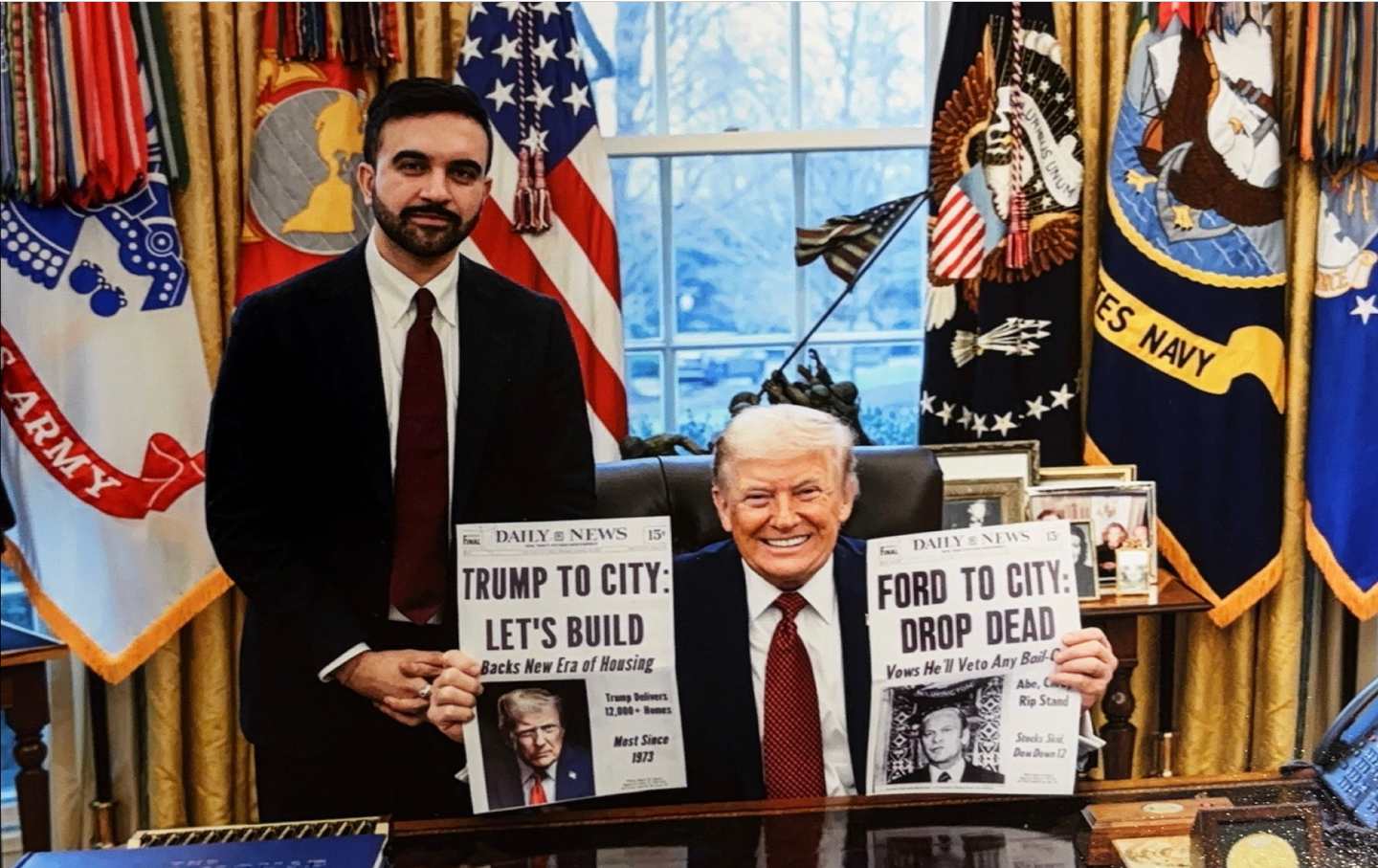
How the Theatrics of Mamdani’s Trump Meeting Backfired How the Theatrics of Mamdani’s Trump Meeting Backfired
By pandering to the president’s vanity, the New York mayor reinforced Trump’s image as a strongman commanding deference—an especially bad look on the eve of Trump’s war with Iran

Students in New York Are Going Hungry. How Can Mamdani Help? Students in New York Are Going Hungry. How Can Mamdani Help?
With plans for city-owned grocery stores and a focus on affordability, the new mayoral administration offers fresh hopes of successfully confronting the food crisis among students...

We Are the Fire That Melts the ICE We Are the Fire That Melts the ICE
Oaxaca, Mexico, street art.
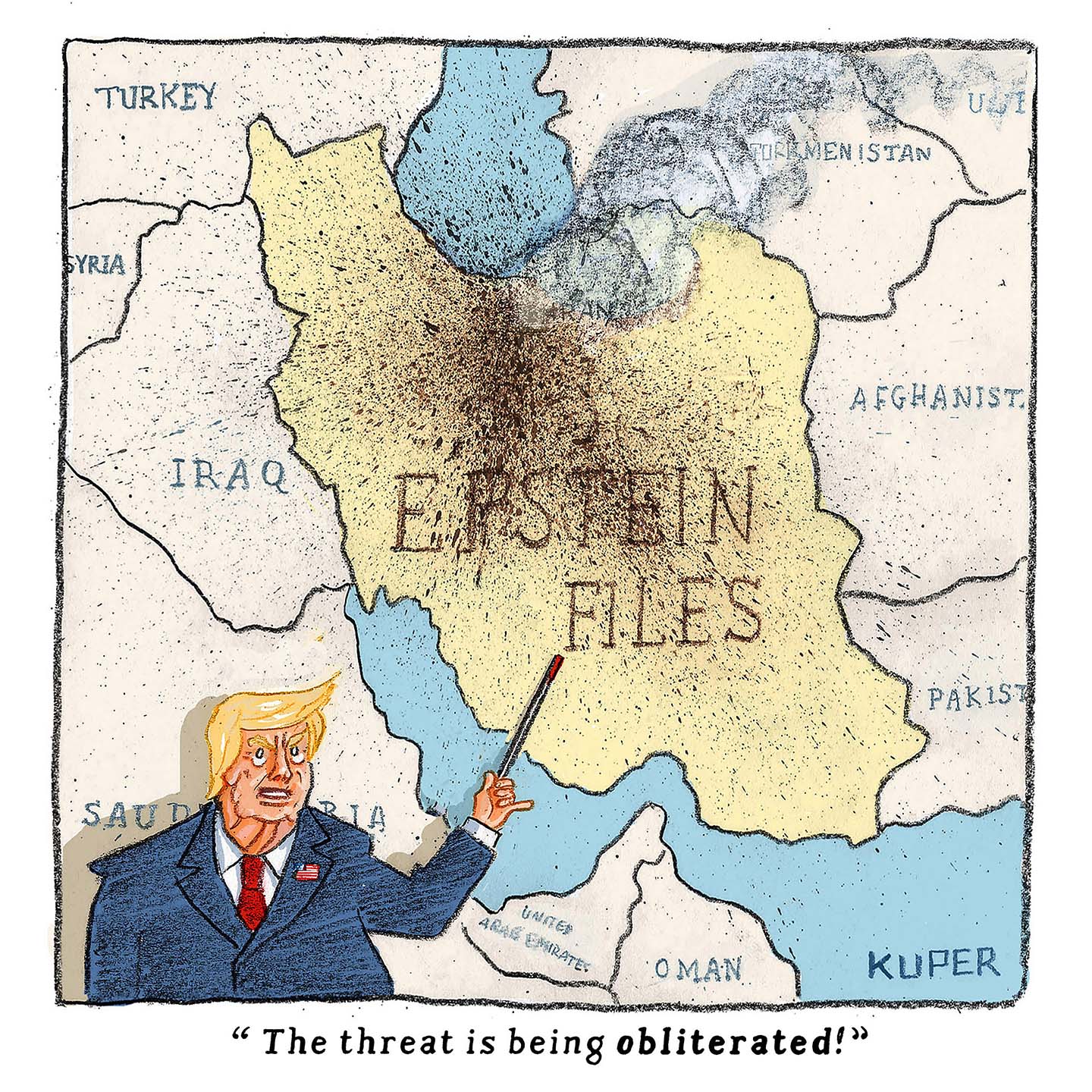
Trump’s Reason for War in Iran? Trump’s Reason for War in Iran?
Obliterating the Epstein files at any cost.
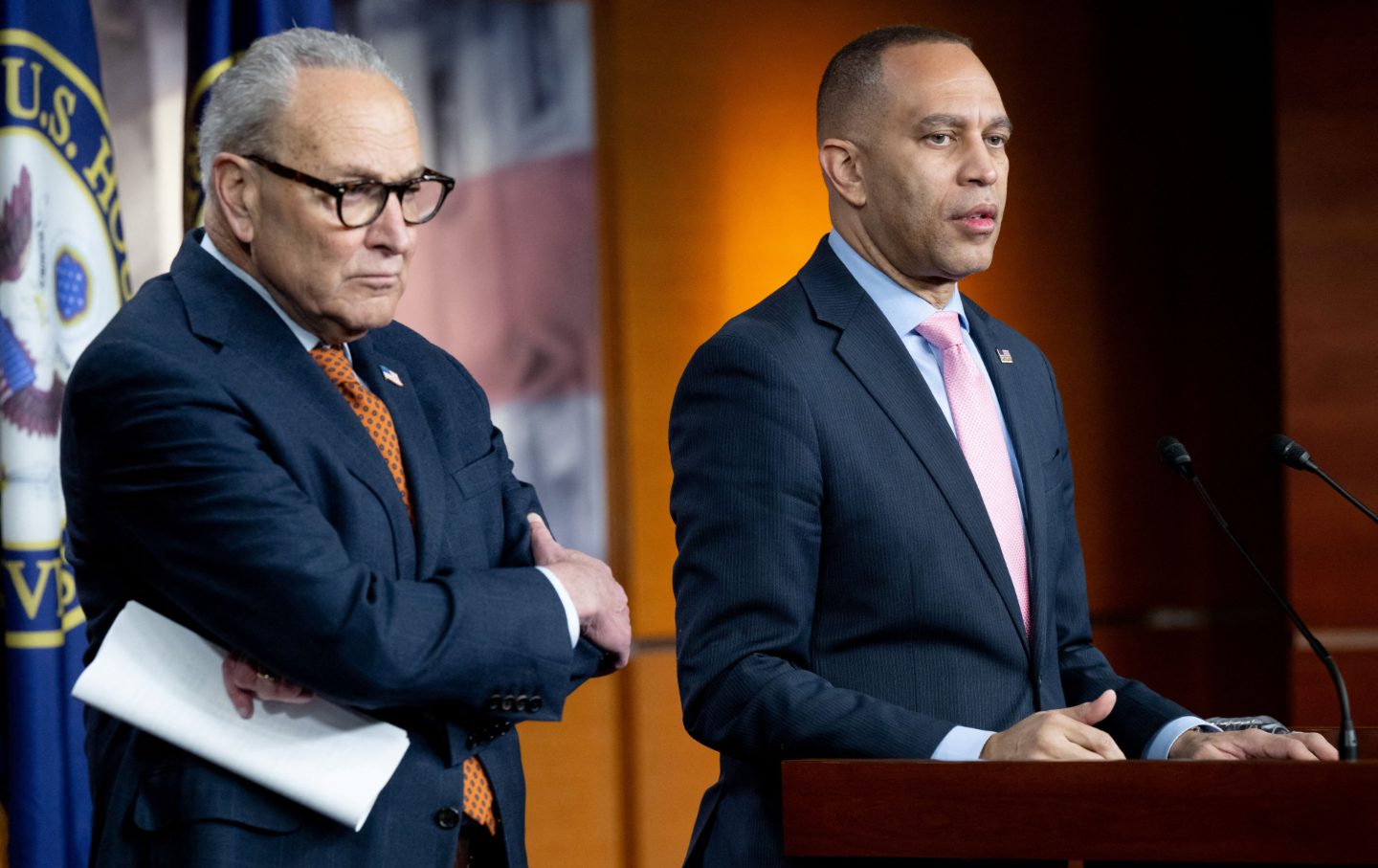
Why Can’t Top Democrats Just Say “No War With Iran”? Why Can’t Top Democrats Just Say “No War With Iran”?
The response to what could be the biggest geopolitical disaster of the 21st century is foot-dragging, silence, and sleepy, feigned opposition long after the deed is done.
This Is an Unnecessary, Unauthorized, and Unconstitutional War This Is an Unnecessary, Unauthorized, and Unconstitutional War
Congress has a duty to take up War Powers resolutions and assert its primacy over matters of war and peace.

