Bezos Does Venice
Back in New York City, Mamdani’s win shows even billionaires don’t always get what they want.

If last week was the best of times for Zohran Mamdani and the working people of New York, it was the worst of times for the billionaires who spent a small fortune trying to stop him from securing the city’s Democratic mayoral nomination. Media mogul Barry Diller, to name just one, donated a cool $250,000 to Andrew Cuomo’s campaign, only to see the disgraced former governor lose by a decisive margin.
But Diller would soon be able to drown his disappointment in Great Gatsby–themed cocktails as he joined Tom Brady, Ivanka Trump, and at least three Kardashians for the cheeriest event on this year’s oligarchic social calendar—the Venetian wedding of journalist Lauren Sánchez and Amazon founder Jeff Bezos.
It was a juxtaposition that even CNN questioned, as the network cut from an interview with Mamdani to coverage of the gilded spectacle. The reportedly $50 million affair booked all nine of Venice’s yacht ports, closed parts of the city to the public, and forced the relocation of hotel guests to make room for the happy couple. It all served as a stark if sumptuous reminder that there is no expense the mega-rich won’t pay to secure their own comfort—except, of course, the toll their extravagance takes on the communities from whom they extract their wealth.
The lovebirds’ choice of Venice alone demonstrates their carelessness. Because the city comprises more than 100 islands in the Adriatic Sea, it’s uniquely vulnerable to rising sea levels driven by warming global temperatures. Though Sánchez claims to be “dedicated to fighting climate change,” and Bezos has called the issue “the biggest threat to our planet,” their guests arrived in the City of Bridges via 96 private jets, the most carbon-intensive mode of transportation. Bezos has also made splashy commitments to fighting climate change, like pledging $10 billion to his Bezos Earth Fund, while Amazon has promised to become carbon neutral by 2040. But emissions from Amazon’s delivery fleet nearly doubled between 2019 and 2023, and its newest data center will guzzle millions of gallons of water and the energy equivalent of a million homes every year.
This disingenuousness is as much a business strategy for Bezos as Prime’s two-day delivery, enabling him to launder his reputation without hurting his bottom line. This pattern certainly played out last year with his ownership of The Washington Post—where, as soon as he felt threatened by an ascendant Donald Trump, journalistic integrity fell overboard more quickly than an inebriated wedding guest on a luxury gondola.
As I covered in a column earlier this year, Bezos killed the Post’s endorsement of Kamala Harris, directed the editorial board to publish op-eds that only support “personal liberties and free markets,” and oversaw the exodus of more than 20 reporters and editors. Pamela Weymouth, granddaughter of trailblazing Post publisher Katharine Graham, described this capitulation in a recent piece for The Nation as endangering “the very thing that makes America a democracy.”
In fairness to Bezos, though, charity-washing is an occupational hazard for billionaires. Mark Zuckerberg initially donated to organizations fighting the California housing crisis that he helped exacerbate, before quietly ending his funding this year. The Gates Foundation gives 90 percent of its funding to nonprofits in wealthy nations rather than the impoverished ones whose GDPs are smaller than its namesake’s net worth. The magnanimity of the über-wealthy tends to produce what journalist Anand Giridharadas has called “fake change,” or efforts that stop short of systemic change because those systems underpin the benefactors’ vast wealth.
That’s why any vision of progressive change cannot rely on Bezos or his celebrity wedding guests to operate against their self-interest. (No, not even Oprah.) A Green New Deal will not come from oligarchical guilt but from mass movements. Like the one that deployed almost 30,000 door knockers and pooled funds from 27,000 donors to share Mamdani’s message of genuine economic empowerment.
His victory on Tuesday added to a growing body of proof that even billionaires don’t always get what they want. Last year, Elon Musk spent over a quarter of a billion dollars electing Republicans, but no amount of money could save him from Donald Trump’s mercurial temper. Nor did his wealth sway the voters of Wisconsin, where he contributed $21 million to a state Supreme Court candidate who ended up losing by 10 points.
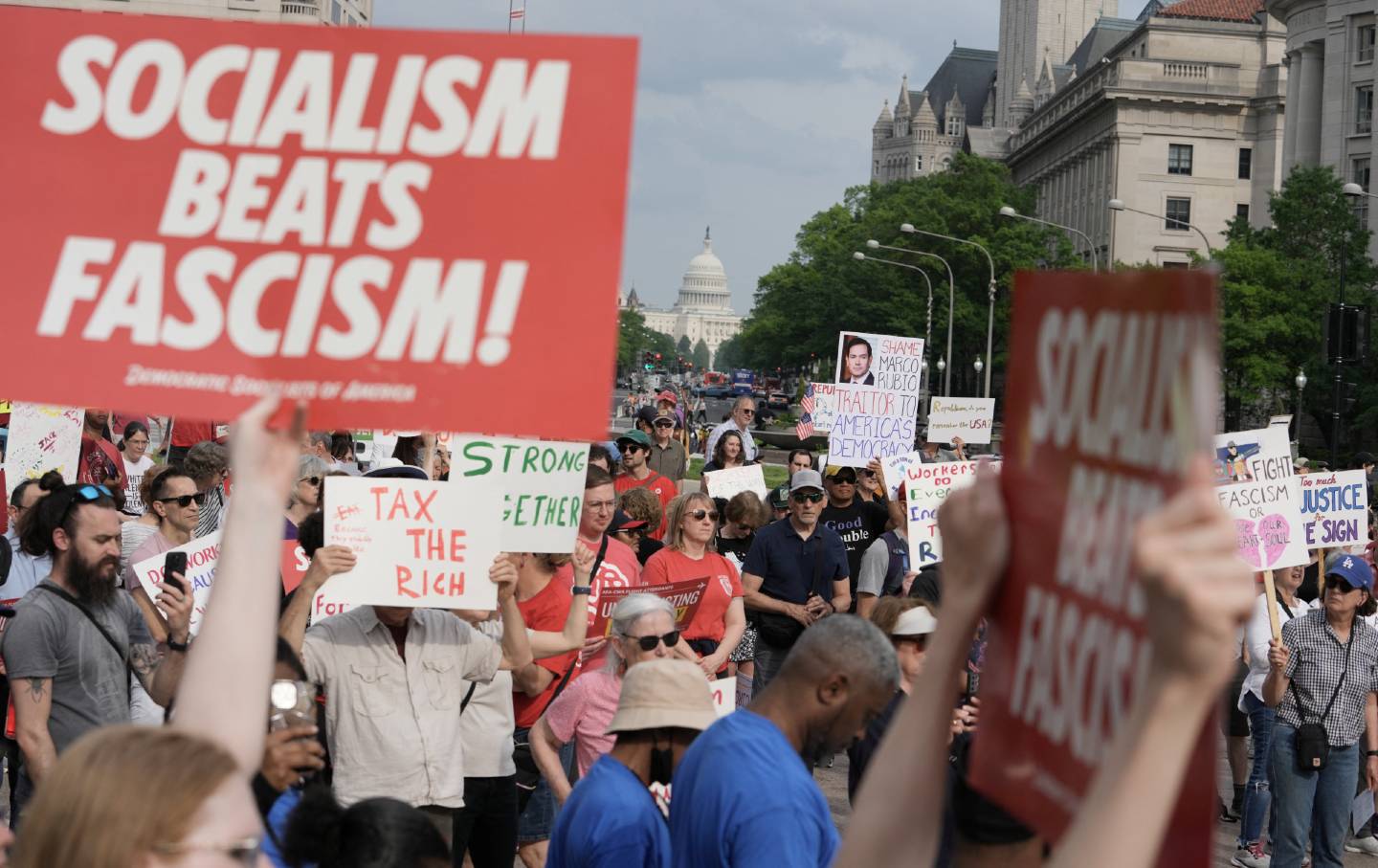
Voters’ growing skepticism of the 1 percent is no doubt being stoked by grassroots activism. Like in Venice, where local protesters threatened to fill canals with inflatable crocodiles, forcing the wedding of the century to relocate to the city’s outskirts. Back stateside, progressives Bernie Sanders and Alexandria Ocasio-Cortez continue to draw record crowds across the country on their Fighting Oligarchy Tour. At a recent stop in Oklahoma—a state Trump won by 33 points—Sanders spoke to a standing-room-only crowd.
Might an anti-billionaire backlash be building? If so, it’s just in time for next year’s midterms.