The Supreme Court Just Pushed Environmental Justice Even Further Aside
The recently paused “good neighbor” rule was the Environmental Protection Agency’s attempt at reducing interstate pollution by making those responsible pay for it.
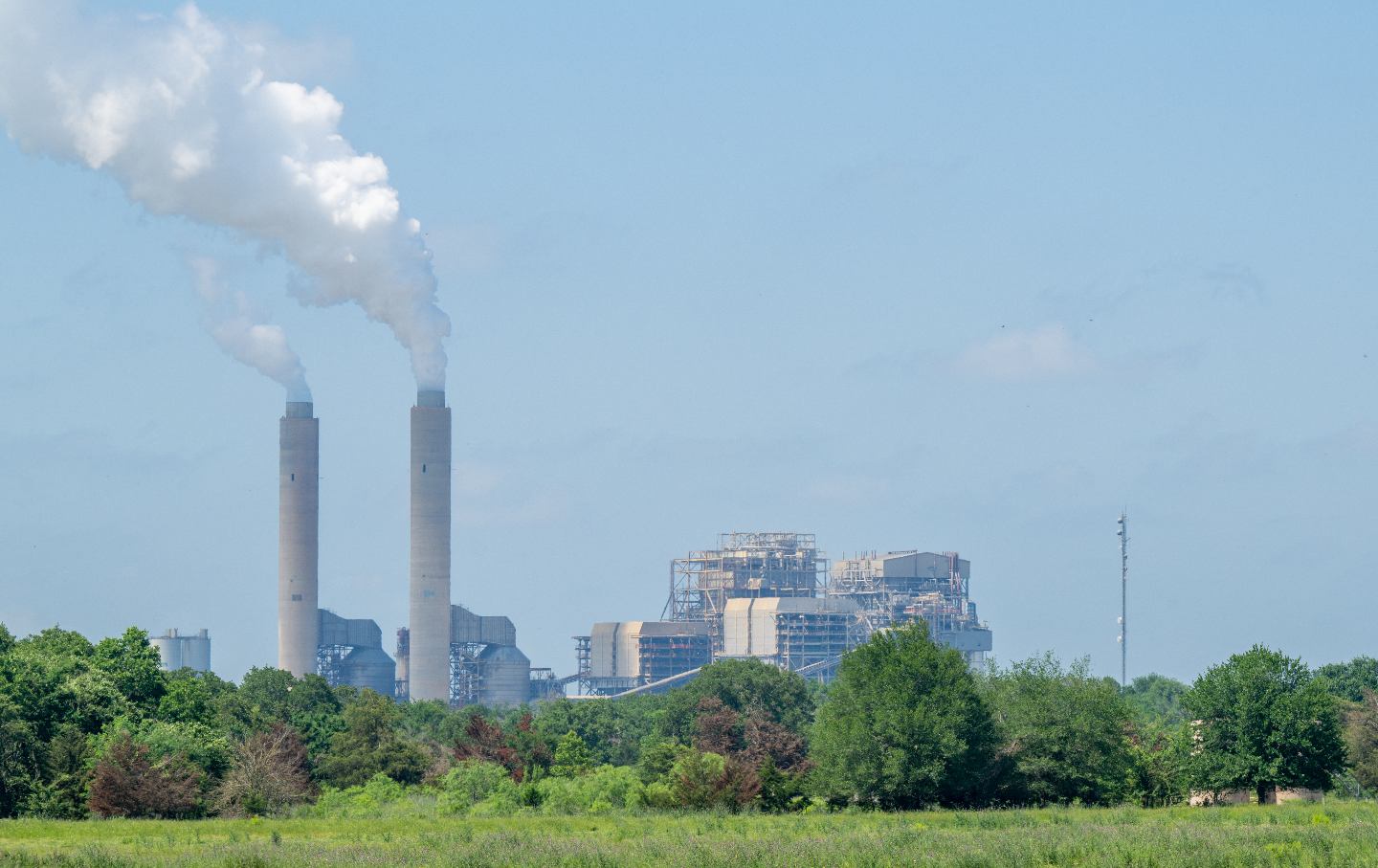
Emissions fume at the coal-fueled Oak Grove Power Plant on April 29, 2024, in Robertson County, Texas.
(Brandon Bell / Getty)
On June 27, the Supreme Court paused the Environmental Protection Agency’s “good neighbor” rule. Introduced in 2015, this provision of the Clean Air Act concerned the fact that pollution—particularly air pollution—isn’t contained to the specific zoning of industrial sites.
The rule dealt with the problem of industrial facilities in upwind states contributing to smog and air pollution in downwind states. In doing so, upwind states put the burden of paying for numerous associated health costs on states that are downwind. In short, it was an attempt by the EPA to make those responsible for pollution pay for it.
Like most EPA rules, the “good neighbor” plan was immediately challenged: Industry joined with Ohio, Indiana, and West Virginia—three states that had been ordered to cut down on their energy-producing emissions—to take the rule to court, arguing that it was ineffective and burdened them with excessive costs. The pause is part of the court’s recent diminishing of government agencies’ regulatory power by the conservative majority, along with the overturning of the Chevron doctrine.
While the rule is litigated—likely for years to come—the court is effectively not only allowing the consequences of downwind pollution to continue harming the overall health of certain states but also imposing severe health risks on low-income communities of color who are disproportionately located near industrial facilities. Even if the rule ends up being upheld in other courts, progress will be delayed.
The rule largely addressed air pollution by targeting electric generator units that contribute the ozone-causing chemicals of nitrous oxide (NOx) and particulate matter. According to Kelly Haragan, Clinical Director of the Environmental Clinic at the University of Texas School of Law, the rule not only helps mitigate ozone impacts that can happen farther away from pollution sources but also reduces near-facility pollution exposure.
Historically, those living near the types of facilities the EPA’s rule deals with—mainly power plants, but also cement kilns, steel plants, petroleum refineries, and other chemical plants—are disproportionately communities with low-income people of color. Black Americans in particular were intentionally zoned into areas of low investment and high environmental hazards by historical processes like redlining that still inform modern socio-geographic data.
In 2016, American Progress reported that more than half of the people living within 1.86 miles of toxic waste facilities in the United States are people of color. For Black Americans, the effects are especially disproportionate. In fact, the National Medical Association found that 40 percent of those living near refineries are African American.
Regarding air pollution, which the EPA’s “good neighbor” rule addressed, Black people suffer from the highest air pollution mortality rate largely because of their proximity to hazardous facilities. In general, communities of color experience 7.5 times higher pediatric asthma rates than their white counterparts, according to a 2024 report by George Washington University’s Milken School of Public Health.
“Study after study after study shows that both low-income people and people of color are more exposed to air pollution than other people, and that as a result, they have great health impacts from air pollution than other people,” Haragan added.
By pausing the “good neighbor” rule, the court effectively imposes a heavier environmental burden on these communities. “There are costs to air pollution, and someone’s going to pay those costs,” Haragan said. “We’re forcing the costs of that pollution onto someone else now, onto people who are less able to pay for it.”
Support independent journalism that does not fall in line
Even before February 28, the reasons for Donald Trump’s imploding approval rating were abundantly clear: untrammeled corruption and personal enrichment to the tune of billions of dollars during an affordability crisis, a foreign policy guided only by his own derelict sense of morality, and the deployment of a murderous campaign of occupation, detention, and deportation on American streets.
Now an undeclared, unauthorized, unpopular, and unconstitutional war of aggression against Iran has spread like wildfire through the region and into Europe. A new “forever war”—with an ever-increasing likelihood of American troops on the ground—may very well be upon us.
As we’ve seen over and over, this administration uses lies, misdirection, and attempts to flood the zone to justify its abuses of power at home and abroad. Just as Trump, Marco Rubio, and Pete Hegseth offer erratic and contradictory rationales for the attacks on Iran, the administration is also spreading the lie that the upcoming midterm elections are under threat from noncitizens on voter rolls. When these lies go unchecked, they become the basis for further authoritarian encroachment and war.
In these dark times, independent journalism is uniquely able to uncover the falsehoods that threaten our republic—and civilians around the world—and shine a bright light on the truth.
The Nation’s experienced team of writers, editors, and fact-checkers understands the scale of what we’re up against and the urgency with which we have to act. That’s why we’re publishing critical reporting and analysis of the war on Iran, ICE violence at home, new forms of voter suppression emerging in the courts, and much more.
But this journalism is possible only with your support.
This March, The Nation needs to raise $50,000 to ensure that we have the resources for reporting and analysis that sets the record straight and empowers people of conscience to organize. Will you donate today?