
Why DeepSeek’s Surprise Breakthrough Shouldn’t Have Come as a Surprise
While America was busy with stock buybacks and quarterly profits, China spent decades building an integrated system linking research, manufacturing, and innovation.
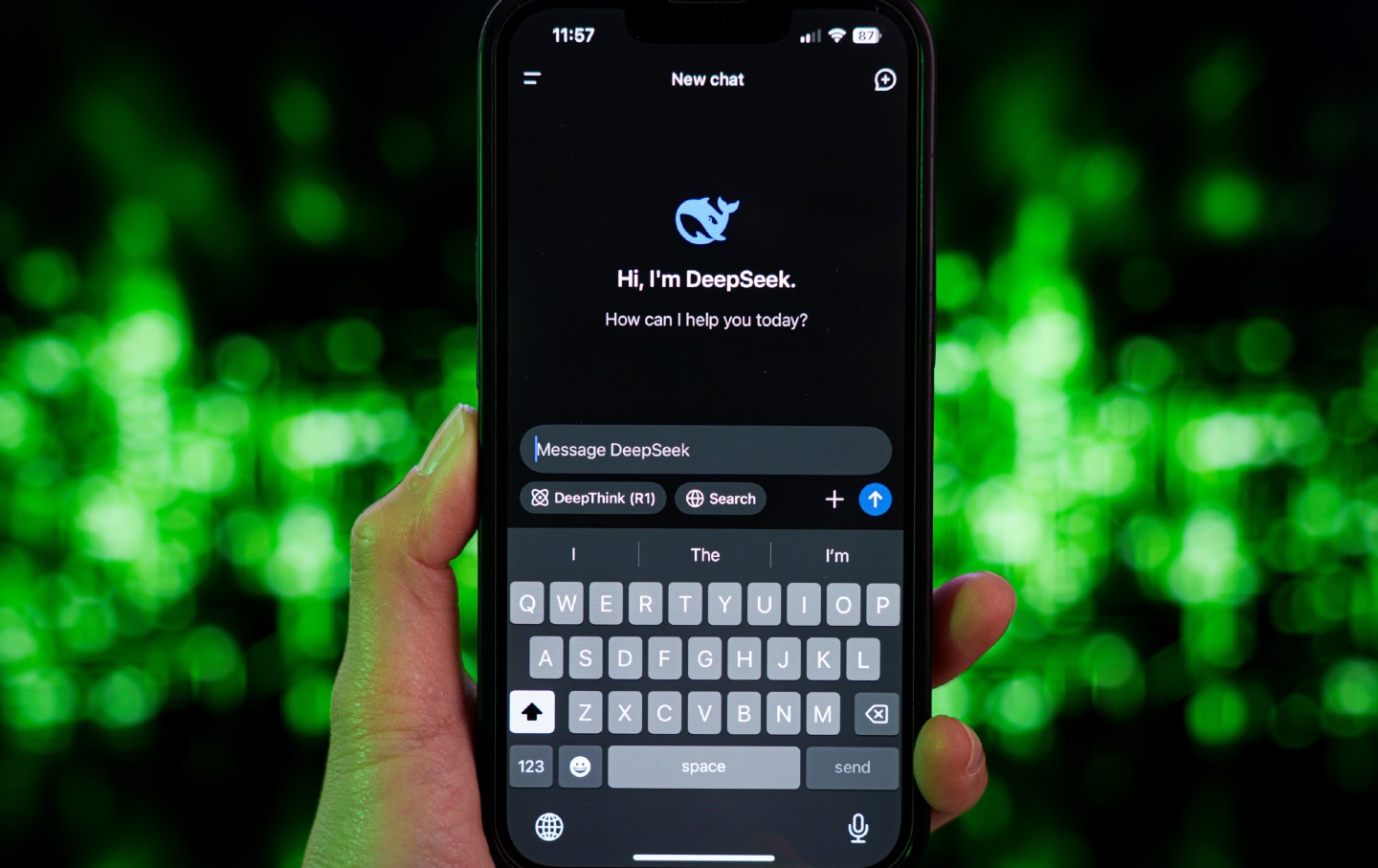
Another day, another wake-up call. This time it’s DeepSeek—a Chinese AI breakthrough that matches Silicon Valley’s best while spending just $5.6 million compared to Meta’s tens of billions. Last week, Gen. Chance Saltzman, chief of operations for the US Space Force, warned Congress about China’s “mind-boggling” military space advancements. China has already captured global EV markets and dominated solar panel production. Beijing’s hypersonic missile test in 2021 literally circled the globe before striking its target, leaving US military leaders stunned. Each time, America’s leaders—both in government and industry—react with the same bewildered surprise, as if China’s achievements were some cosmic accident.
But these aren’t flukes. They’re the inevitable result of a system that works—one that prioritizes national goals, coordinates resources, and rewards results. It’s also a system America pioneered, helping us build everything from the transcontinental railroad to the Hoover Dam, the interstate highway system, and the rural electrification that powered a nation. We abandoned that system, and China has embraced it. They planned and invested, while the United States clung to a failed ideology: the belief that free markets, left to their own devices, will save us.
This worship of markets didn’t come out of nowhere. It started with Friedrich von Hayek, his student Milton Friedman, and the Chicago school of economics, who sold America a seductive story: that government planning was inefficient, that regulation stifled innovation, that the free market would solve everything. They, along with Ronald Reagan, convinced America that government was the problem, not the solution. Their vision of markets as the ultimate problem-solvers spread through Washington, and by the 1980s, administrations from both parties had bought in. From Reagan through Clinton, Bush, Obama, and yes, even Trump, our leaders doubled down on the notion that deregulation, privatization, and globalization would lead to prosperity.
We inherited a nation built by generations of blood, sweat, and tears, then decided to dismantle it for short-term profits. Somehow, we thought the wealth would flow eternally. America’s leaders didn’t understand how our wealth was built, so they didn’t respect what it took. That’s what Friedman and his followers sold us—a fantasy that we didn’t need to do the hard work anymore because markets would take care of it all.
And what did 50 years of market worship get us? A gutted industrial base, a hollowed-out middle class, and an economy that can’t compete. We outsourced manufacturing, neglected our capacity to produce, and left ourselves dependent on fragile supply chains. Markets didn’t save us—they bled us dry. Sure, a few people got incredibly rich. But at what cost to our nation?
Look at the market’s reaction just this week: Nvidia’s stock plunged 15 percent, wiping out hundreds of billions in value, while the tech-heavy Nasdaq had dropped 3.5 percent. Why? Because DeepSeek showed it could match American AI capabilities without relying on our expensive chips or vast computing resources. As one market strategist put it, it was “a big slap in the face” for investors.
China’s rise isn’t just about tech; it’s about building with purpose. Chinese automakers already produce 62 percent of the world’s EVs and control 77 percent of EV battery production. And they’re just getting started—analysts predict they’ll make a third of all vehicles worldwide by 2030. This didn’t happen by accident. China’s exports shot up by 851 percent in just three years, from 2020 to 2023. The same story plays out in infrastructure: Over the past 20 years, China has built tens of thousands of miles of high-speed rail, while California can’t complete a single 500-mile line. While America was busy with stock buybacks and quarterly profits, China spent decades building an integrated system linking research, manufacturing, and innovation.
How are we still shocked? China is using the same tools that built America in the first place: state-led investment, industrial policy, and actually planning for the future. What’s shocking isn’t what China has accomplished—it’s how little we’ve done to keep up.
This isn’t a partisan issue. Donald Trump’s campaigns have rightly pointed out the pain caused by America’s decline: the loss of manufacturing jobs, bad trade deals, and the devastation of globalism. On these points, he’s absolutely correct. But neither Trump nor his advisers understands the root cause. Their solution is to double down on the same free-market ideology that got us here. Trump believes cutting regulations and trusting corporations to “do the right thing” will somehow rebuild America. But this same fantasy has guided every administration since the 1970s—and it’s been a disaster.
Markets aren’t designed to solve national challenges. They’re designed to maximize profits. Left unchecked, they prioritize short-term gains over long-term resilience. That’s why our companies spend more on stock buybacks than on R&D. That’s why our healthcare system costs nearly $5 trillion a year while delivering worse outcomes than those of many developed nations. It’s why our infrastructure projects often cost multiple times more per mile than comparable projects in China.
America wasn’t built by waiting for markets to fix everything. The transcontinental railroad, rural electrification, the arsenal of democracy, the Apollo program—these weren’t miracles of the invisible hand. They were the result of collective action, guided by a clear national purpose.
The Chinese understand this. They have taken our old playbook and made it their own. While we’ve dismantled our capacity, they’ve built theirs. They’ve linked innovation to production, creating systems where engineers, manufacturers, and thinkers work together to solve problems in real time. That’s why they’re outpacing us—not because they’re stealing ideas, but because they’ve embraced the tools we abandoned.
Popular
“swipe left below to view more authors”Swipe →If we want to compete, we need to stop waiting for markets to save us. We need a national strategy to rebuild our industrial base, invest in critical industries, and tie public spending to measurable outcomes. Both government and corporations must be held accountable for delivering results. Most importantly, we need to reject the myth that markets alone will lead us to prosperity.
DeepSeek’s breakthrough is another wake-up call, but it doesn’t have to be the last. America still has the resources, talent, and history to lead. What we lack is the will to act. Leadership doesn’t mean waiting for someone else to fix the problem. It means doing what built America in the first place: rolling up our sleeves, working together, and actually building things again.
The real question is simple: Will we finally wake up and act? Or will we just keep standing around, shocked and surprised, waiting for the next blow to land?
Become a Sustaining Donor This September
Between the reemergence of right-wing red-baiting and Donald Trump’s use of the chilling National Security Presidential Memorandum–7 to criminalize left political organizing, we’re seeing McCarthyism reborn before our eyes.
This assault on democracy cannot be ignored or wished away. Resisting it requires bravery in the face of threats and repression, a steadfast commitment to the truth, and the unwavering belief that we can—and will—overcome this darkness.
We must have an independent media that sets the record straight, unearths corruption and abuses of power, and advances a politics of justice and dignity for all if we’re to win this fight.
That’s why I’m writing to you today. This September, The Nation needs to add 100 monthly donors to sustain our progressive journalism. Your contribution makes the next investigative report, the next truth-speaking column, and the next pathbreaking essay all possible.
I hope you’ll support our work with a recurring donation today. If you donate $10 or more a month, we’ll send you a brand new “Hands Off the Free Press!” sticker to recognise your commitment to our cause. Please, donate today.
Onward,
Katrina vanden Heuvel
Editor and Publisher, The Nation
More from The Nation
The School Behind the Billionaires and the Billionaire Tax The School Behind the Billionaires and the Billionaire Tax
UC Berkeley will inevitably be behind the defeat or victory of Proposition 40.

Dolly Parton Was a Proud Union Sister Dolly Parton Was a Proud Union Sister
Organized labor is celebrating the life and legacy of an artist who championed working women and carried a union card for almost 60 years.
Of Debt and Deficits and the Dollar System Of Debt and Deficits and the Dollar System
By force of preset agendas, conservatives and liberals react to debt headlines like Pavlov’s dogs.

What Happens When 8 Million People Lose Their Student Loan Repayment Plan? What Happens When 8 Million People Lose Their Student Loan Repayment Plan?
As the Biden-era SAVE plan ends, borrowers are facing unaffordable bills, lost payment records, and errors that have falsely put some into default.

David Ellison’s Delusional Stab at Self-Justification David Ellison’s Delusional Stab at Self-Justification
While the Skydance–Warner Bros. merger is in legal limbo, the CEO seeking to pull it off makes a disingenuous case for it in the court of public opinion.
The War on the UAW The War on the UAW
The United Auto Workers called for a ceasefire in Gaza. The union’s federal monitor didn’t like it—and now he’s investigating Shawn Fain, just weeks before union elections.

