
The Gaza Deal Opens a Door. We Can’t Let It Close.
You would be forgiven for having some skepticism about what happens next.
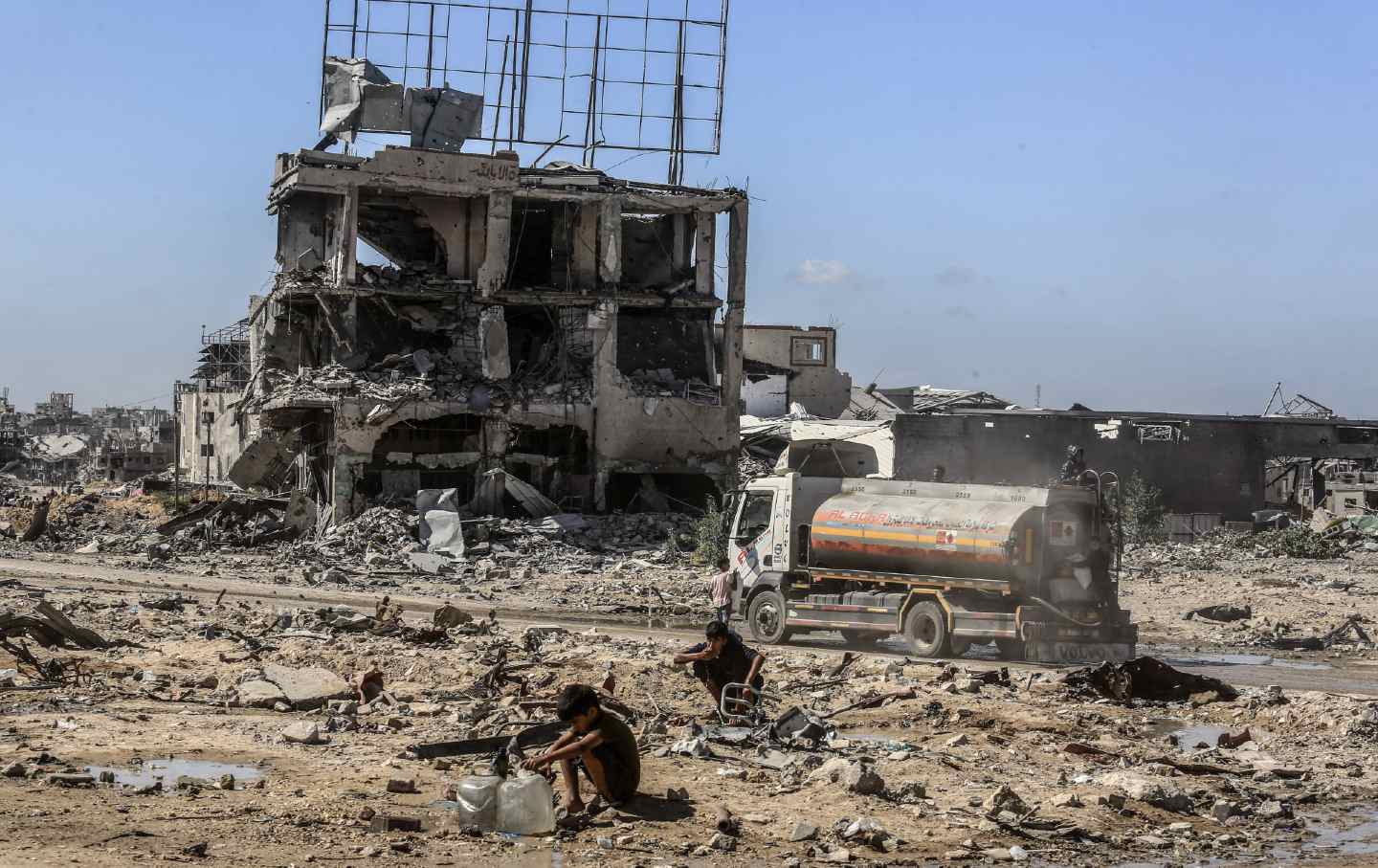
After two long horrible years of death, destruction, and trauma, this weekend Israel and Hamas finally silenced their guns. This was the first step in implementing phase one of what will hopefully become what President Trump has called it: a true and lasting peace deal. The moment marked the initial step toward ending a devastating war and unimaginable human suffering. For the families of hostages finally being reunited, this moment brings relief that has been too long delayed. For the Palestinian people in Gaza, it offers hope that the relentless destruction and death will end, and they can begin to rebuild their lives and their nation.
But relief alone is not peace. Hope alone is not justice. And implementation of the first phase in a 20-point plan does not make its fulfillment inevitable.
If you have been following Israeli-Palestinian relations for any stretch of time, you would be forgiven for having some skepticism about what happens next. We remember that President Trump put forth a 20-point plan at his White House meeting with Prime Minister Netanyahu (but without the involvement of any Palestinian voices) last month. As of now, the Israeli government and Hamas have agreed only to the first phase of this plan. And while this first phase mandates the end of the war, the release of Israeli hostages and Palestinian prisoners, and a surge of aid, it does not define a viable structure for how Gaza will be governed or rebuilt. Nor does it provide for the entry of the International Security Force envisioned in the 20-point plan to take over security responsibilities from Hamas forces.
There is cause for worry that Trump’s deal may unravel at the end of phase one. That would leave Gaza split into two: the urban and beachfront areas of Gaza from which Israel has withdrawn will continue to be governed by Hamas and will lack the resources to begin reconstruction. And the remaining 53 percent of Gaza will remain under Israeli occupation, and Israeli forces would likely resume periodic attacks against what they identify as Hamas infrastructure.
This is a recipe for disaster. The clearest lesson of the October 7 attacks is that Netanyahu’s previous approach to Gazans—locking them up beyond a series of barriers and eschewing any genuine peace process—was not only a moral failure but also a strategic one. The use of military force alone, without diplomatic efforts to deal with any of the core issues of the Israeli-Palestinian conflict, meant that the grievance and anger of the Palestinian public continued to grow. And no barrier, no matter how large, high-tech, or sophisticated can hold a people back forever.
So how do we avoid getting stuck at the end of phase one?
The same way we got to phase one: coordinated and unyielding international pressure on Israeli and Palestinian leaders. Trump’s 20-point plan did not emerge ex nihilo at the White House last month. It was a repackaging of ideas that had been circulating in official and track-two negotiations for at least a year, including from the recent French-Saudi plan.
The White House plan crystallized in the wake of Israel’s failed attempt to assassinate Hamas officials in Qatar in early September. That’s when administration officials started working earnestly with the Qataris to put an end to the war.
Trump did what he does best: He put the squeeze on Prime Minister Netanyahu to agree to the plan, and he made clear that any Israeli violations of its spirit would not be tolerated. The Qataris—along with other regional leaders—applied similar pressure to Hamas leaders.
This deal, as limited and fragile as it is, opens a door that has been shut for far too long. That door could, with a great deal of effort, lead to a genuine peace based on the establishment of a Palestinian state in the West Bank and Gaza. But for us to walk through that door, we need to see Israeli and Palestinian leaders execute on their commitments and continue to agree to a program that can create a better future for their peoples—even when that progress is at odds with their own political interests.
Consider two critical tests: Israel is entering an election year in which the incentive is high for politicians to differentiate themselves. We have already seen far-right politicians chase headlines through provocative visits to the Temple Mount in Jerusalem. Violent settler activity in the West Bank seems inevitable, especially given the far-right ministers now in control of the Finance Ministry, the Civil Administration, and the police. Will Netanyahu put his own political capital on the line to stop them?
On the Palestinian side, both Hamas leadership and Palestinian Authority president Mahmoud Abbas are expected to give up significant influence as part of the 20-point plan. Hamas is expected to disarm and to walk away from political control over Gaza. The Palestinian Authority is to undergo reforms to root out political patronage that is the hallmark of the Abbas regime. Will these Palestinian leaders do what it takes to create a new, effective, and united Palestinian government?
Popular
“swipe left below to view more authors”Swipe →The answer depends on the carrots and the sticks that the international community brings to the table. We’ve seen a willingness to step up from much of the Arab world, notably including the leaders of Saudi Arabia, Qatar, and Egypt. When that was matched by President Trump’s determination, we saw the fighting finally stop. But will President Trump waver after the initial accolades fade away or will he see this through?
For the sake of the Israelis and Palestinians and all who care about them, I hope that America will be there to keep the door open to a better future.
More from The Nation
The Year I Taught in a Former Coal Mining Town The Year I Taught in a Former Coal Mining Town
Teaching in the South of France, I learned that equality was just a story teachers told about themselves.
Why French Students Are Revolting Why French Students Are Revolting
France’s education system is stretched to its limits, as student anger kicks off a hot fall protest season.
Revolution or No Revolution Revolution or No Revolution
Eight years after Armenia’s “Velvet Revolution,” Nikol Pashinyan’s government has deepened the country’s neoliberal trajectory while reorienting Armenia toward the West.
The GOP Sells the Mirage of a Hormuz Victory The GOP Sells the Mirage of a Hormuz Victory
The American action in the contested strait isn’t sustainable—and won’t alter the economic and political fallout from its closure.

Japan’s Far Right Is Courting Young Voters Japan’s Far Right Is Courting Young Voters
Sanseitō has attracted young voters through a robust social-media strategy, Charlie Kirk–like public speaking events, and anti-establishment messaging.
This AI Panic Is Nothing New This AI Panic Is Nothing New
In the 1940s, The Nation asked questions about the atomic bomb we’re asking of artificial intelligence today.

