
The Anti-Abortion Movement Is at a Crossroads
The Dobbs decision was a major victory for the right, but the results of recent ballot initiatives made activists at the 2024 March for Life question the movement’s direction.
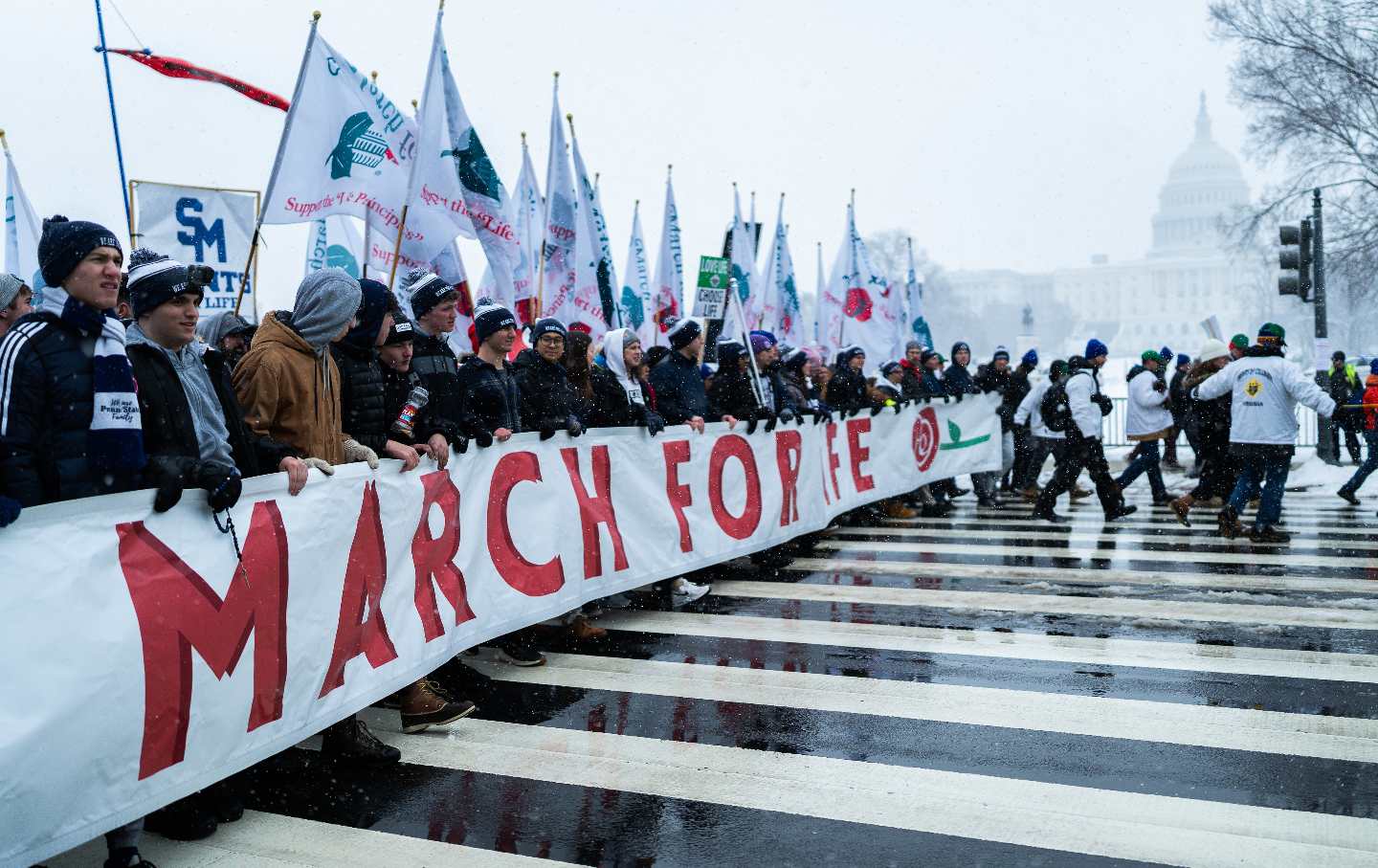
Demonstrators march past the US Capitol during the annual March for Life on the National Mall in Washington, D.C., on Friday, January 19, 2024.
(Tierney L. Cross / Getty)On January 19, American Idol finalist Danny Gokey opened the 2024 March for Life with Christian music and prayer. The stage held a host of religious leaders and anti-abortion organizers, Speaker of the US House of Representatives Mike Johnson, and former NFL tight end Benjamin Watson. “We don’t just care about you being born,” said pastor Greg Laurie. “We want you to be born again.” Signs read “Our salvation began with an unplanned pregnancy” and “Abortion is our national sin.” Student groups carried crucifixes as they marched down the National Mall. The words of the Hail Mary and the soft jingling of rosaries echoed resoundingly as teenagers joined each others’ prayers. In the back, young men held up signs that read “Make More Babies,” garnering uncomfortable looks from the women in their groups. Protesters in MAGA hats took selfies with clergy members.
This was the second march since the Dobbs decision, and the first since the anti-abortion movement was defeated repeatedly at the ballot box. With the 2024 presidential election looming, the anti-abortion movement faces difficult political questions: how to handle upcoming state ballot initiatives on abortion, how to get Republicans to best represent their interests, and how the movement can continue to capture young people’s attention (and votes).
According to recent polling of 18-to-29-year-olds by Harvard’s Institute of Politics, young Americans who support abortion in all cases jumped from 35 percent to 48 percent, with 53 percent of young people saying they were pro-choice and only 26 percent saying they were pro-life.
Concern in the crowd was evident. Young people, in particular, who made up a significant part of the protesters gathered for the event, expressed uncertainty about how the anti-abortion movement will win hearts and minds in 2024.
Students for Life of America, the national organization that promotes student activism at the march, says youth participation is a cornerstone of the movement. These student groups and younger participants represent a major force of anti-abortion activism, with many saying it is, or will be, their top issue as voters.
At the march, Alicia Foreman, the Carolinas regional coordinator for Students for Life, handed out signs near the metro station. The organization’s goal is to “get as many people out,” she said, “to show that the pro-life generation doesn’t stop.”
Despite recent ballot initiative losses, abortion opponents still believe incremental state-level legislation to be their best strategy. But some young people sense that the movement will have to adjust its methods.
Ben Conroy, a PhD student from the University of Chicago who attended the 2024 march and who is part of an anti-abortion organization called the Minimise Project, said that the anti-abortion movement “can’t keep doing the same thing and expecting different results.”
“One thing I think the movement needs to reckon with–and has been insufficient in reckoning with–is the fact that we’ve lost all these referendums,” said Conroy. “I think Middle America is quite pro-choice. All we’ve been doing so far is not enough, we’re not changing people’s minds on this issue. I think the mainstream leaders of the movement are going to have to say, ‘We’re going to have to try something different.’ I think in that gap is a space for nontraditional pro-life groups to gain a greater foothold in the movement.”
Activists like Conroy think that—beyond ballot initiatives—lobbying for legislation on related issues is another potentially fruitful avenue of advocacy. He suggests that many young activists in the movement want to work on more specific issues relating to abortion and pregnancy in the United States, such as making birth free for all Americans, and that “working with people across the aisle should be a bigger part of the movement going forward.”
In this state-level approach, many of the mainstage speakers concerned themselves with another local cornerstone of their activism: crisis pregnancy centers, reproductive care clinics that do not offer abortion services and which are known for discouraging patients from obtaining abortions, often using misinformation and delay tactics. Speakers like Representative Johnson, for example, touted a House bill that would block a federal rule preventing states from using Temporary Assistance for Needy Families—a federal welfare program—to fund crisis pregnancy centers.
Uniting around a more localized approach—with state legislation and support for crisis pregnancy centers at the forefront—meant national concerns often took the backseat.
Popular
“swipe left below to view more authors”Swipe →Republican politicians recently made headlines for backing away from calls for a national abortion ban, instead talking in terms of “limits.” While the 2020 March for Life welcomed former President Donald Trump as a speaker, the 2024 March for Life featured no official candidates and largely shied away from talk of a national ban altogether, grounding itself firmly in working toward local legislation in battleground states.
But the upcoming presidential election remained on the minds of student anti-abortion activists. Students at the march suggested a general dissatisfaction with the current candidates, lamenting the Republican Party’s backing away from a strict anti-abortion stance.
“Personally, I would never be able to vote for a politician who didn’t value life above all else,” said Kenzi Bustamante, president of the Students for Life chapter at the University of Chicago. “And if they are celebrating abortion as is common now, that attitude gives me a lack of hope for other issues I might care about. I feel like abortion is the starting place for gauging whether people value life.”
Some activists, like Chris, a member of Students for Life Colorado, said they are focused on action, but are not hopeful about the results of the 2024 election. “We have to go by the actions the politicians take,” said Chris. “Trump got Amy Coney Barrett into the Supreme Court, and without her, Roe wouldn’t have been overturned. I think a real pro-life candidate is what this country needs, but I don’t think it’s possible in the next election. I think Trump admits openly and publicly that he is not pro-life.”
Amid the talk of state-level legislation and crisis pregnancy centers, onlookers and participants’ voices were drowned out by prayer. Johnson couched his speech in religious terms. Speaking of the inalienable rights to life and liberty, Johnson emphasized that “our rights do not come from government, our rights come from God, our creator.”
As Johnson spoke, Conroy told me how important he thinks it is for the anti-abortion movement to focus on nonreligious arguments against abortion in order to cast as wide a net as possible. “The very explicitly religious tone of some of the stuff at the March for Life has a place, but as the major key, I think a lot of these new pro-life organizations would want to see a move toward more secular arguments being the baseline,” said Conroy. “If we’re serious about this being a human rights issue, then it’s essential to build as broad a coalition as possible.”
Aimee Murphy, who grew up in a liberal household in California and who decided she was against abortion as a teenager, founded Rehumanize International, an anti-abortion organization that follows the “consistent life ethic” and opposes euthanasia, the death penalty and police brutality. They are a nonpartisan and nonreligious nonprofit, like the Consistent Life Network, the Equal Rights Institute, and Progressive Anti-Abortion Uprising, groups that did not make the main stage but that did speak at some of the anti-abortion conferences that were held in D.C. the weekend of the march. Rehumanize is also active in political advocacy, and recently came under fire for its executive director being implicated in a major abortion trial in which several anti-abortion protesters blockaded and intercepted patients at an abortion clinic.
“I had applied for jobs with mainstream social justice organizations and mainstream pro-life organizations, and I didn’t really feel like I fit into either sphere completely,” said Murphy. “I wanted there to be a space where I would have felt welcome as 16-year-old me when I became pro-life. I was and am queer. I was an atheist. I was and am still quite liberal and left-leaning. I didn’t feel at home in this very right-wing, conservative pro-life movement.’”
She hopes organizations like hers can push for bipartisan legislation that would expand healthcare access and provide greater financial support to families. She suggests that the contemporary anti-abortion movement will have to look more broadly and make alliances with organizations and politicians with whom they do not fully see eye-to-eye. “Even if pro-life and pro-social safety net have seemed at odds, I hope that politicians will hear us, that one of the biggest ways we can combat abortion is resourcing families to prevent people from thinking that it’s their only option,” says Murphy. “With the millennial and the Gen Z experience, more people than ever are identifying as LGBT, nonpartisan, no affiliation even religiously, I think we realize—if this cause really is for everyone—we need to be inclusive,” said Murphy.
While marching across the National Mall among throngs of student groups, Bustamante looked on with disappointment at groups of young people holding signs that read, “Make More Babies.” The signs were part of an advertising campaign for the anti-abortion baby supply company Every Life, which has attempted to capitalize on other diaper brands like Pampers and Huggies funding abortion travel for its employees.
“There’s some people who are less developed in their philosophy, who don’t fully understand the core of it, which is that life begins at conception, that human rights are inalienable from the moment of conception,” said Bustamante. “So they might misconstrue that or focus too much on the ‘make more babies’ part, find it funny, not take it seriously as it should be.”
The march was inundated with these kinds of messaging conflicts, with participants still elated with Dobbs, but coming to terms with political losses at the state level and preparing their strategy for the future: a wide-reaching amalgamation of state-level anti-abortion legislation, the dropping of calls for a federal abortion ban, and uplifting the work of crisis pregnancy centers. Anti-abortion activists still believe mobilizing young people is key, but just how they will do so remains unclear. Referencing the recent defeats of the anti-abortion movement at the ballot box, Conroy remarked that “nothing wakes you up like failure.”
Support independent journalism that does not fall in line
Even before February 28, the reasons for Donald Trump’s imploding approval rating were abundantly clear: untrammeled corruption and personal enrichment to the tune of billions of dollars during an affordability crisis, a foreign policy guided only by his own derelict sense of morality, and the deployment of a murderous campaign of occupation, detention, and deportation on American streets.
Now an undeclared, unauthorized, unpopular, and unconstitutional war of aggression against Iran has spread like wildfire through the region and into Europe. A new “forever war”—with an ever-increasing likelihood of American troops on the ground—may very well be upon us.
As we’ve seen over and over, this administration uses lies, misdirection, and attempts to flood the zone to justify its abuses of power at home and abroad. Just as Trump, Marco Rubio, and Pete Hegseth offer erratic and contradictory rationales for the attacks on Iran, the administration is also spreading the lie that the upcoming midterm elections are under threat from noncitizens on voter rolls. When these lies go unchecked, they become the basis for further authoritarian encroachment and war.
In these dark times, independent journalism is uniquely able to uncover the falsehoods that threaten our republic—and civilians around the world—and shine a bright light on the truth.
The Nation’s experienced team of writers, editors, and fact-checkers understands the scale of what we’re up against and the urgency with which we have to act. That’s why we’re publishing critical reporting and analysis of the war on Iran, ICE violence at home, new forms of voter suppression emerging in the courts, and much more.
But this journalism is possible only with your support.
This March, The Nation needs to raise $50,000 to ensure that we have the resources for reporting and analysis that sets the record straight and empowers people of conscience to organize. Will you donate today?
More from The Nation
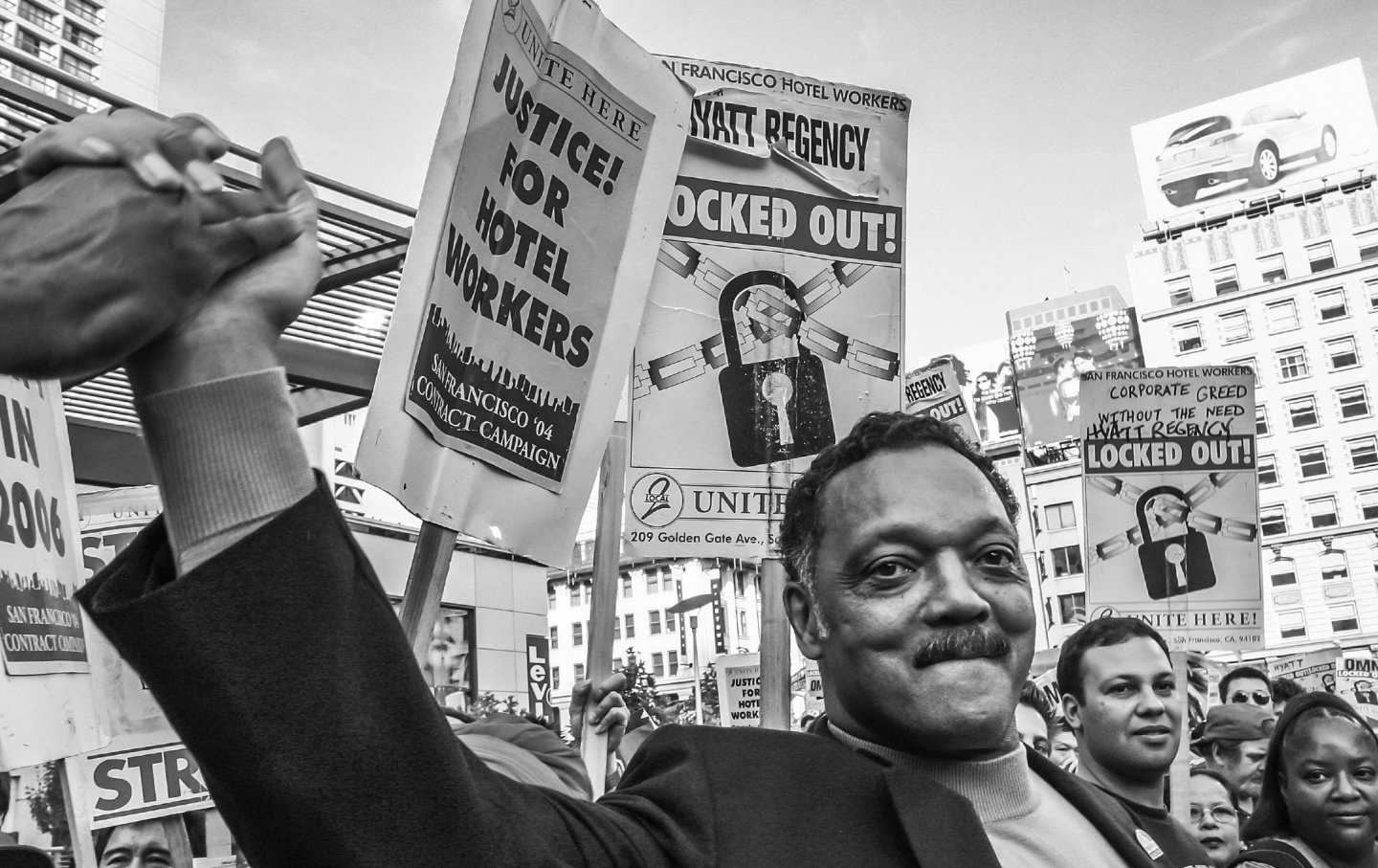
Jesse Jackson Still Provides Light in These Dark Times Jesse Jackson Still Provides Light in These Dark Times
We would be wise to follow the path he forged.
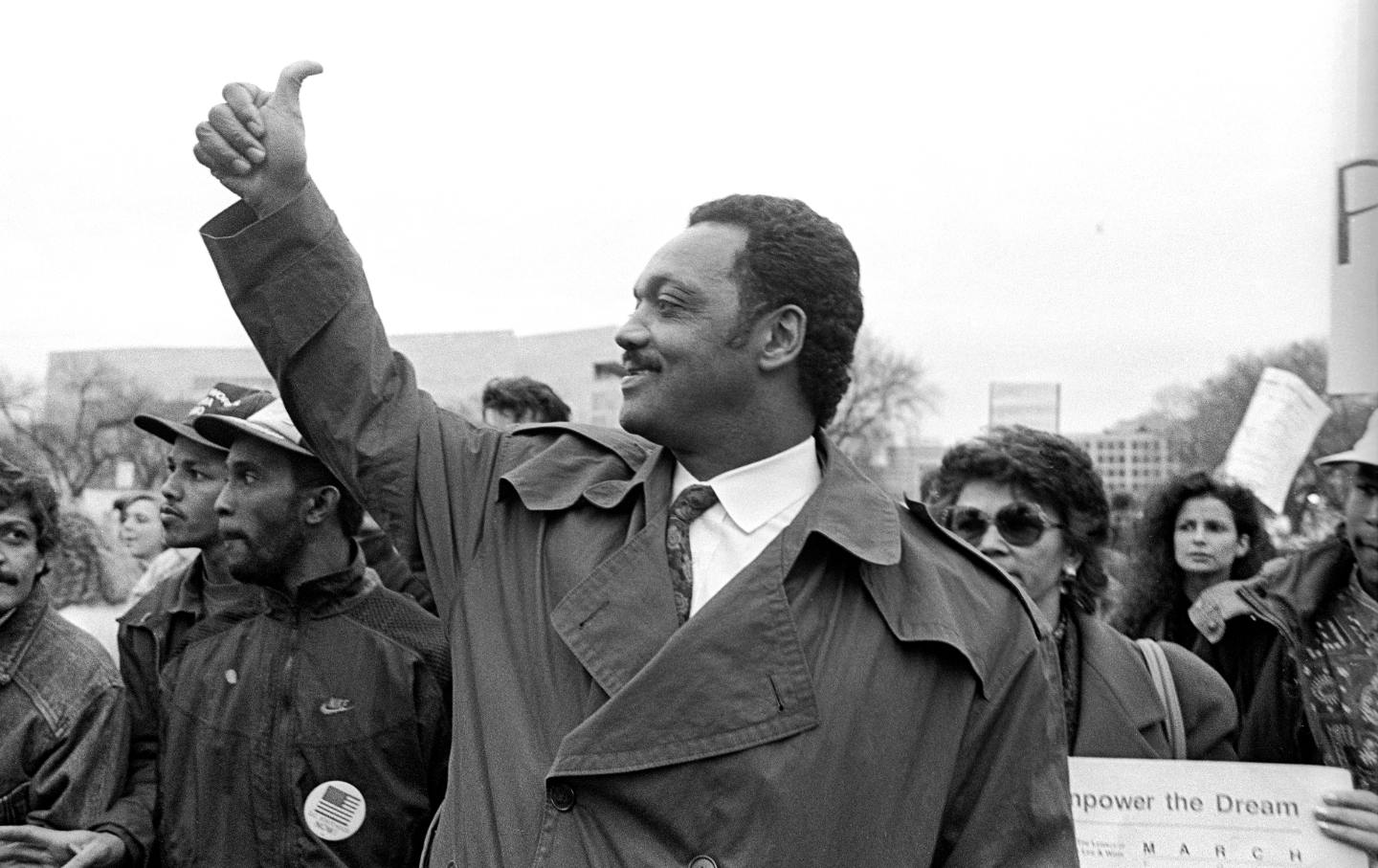
Jesse Jackson Gave Peace a Chance Jesse Jackson Gave Peace a Chance
The iconic civil rights leader, who has died at 84, made anti-war and pro-diplomacy politics central to his presidential bids and his lifelong activism.

ICE Melts in the Minneapolis Winter ICE Melts in the Minneapolis Winter
Now it’s time to abolish the agency and impeach Kristi Noem.

How 2 University Freshman Are Tracking ICE Enforcement Actions Across the Country How 2 University Freshman Are Tracking ICE Enforcement Actions Across the Country
With ICE Map, Rice University students Jack Vu and Abby Manuel hope to help communities understand where immigration enforcement activity is happening and how it unfolds in real t...
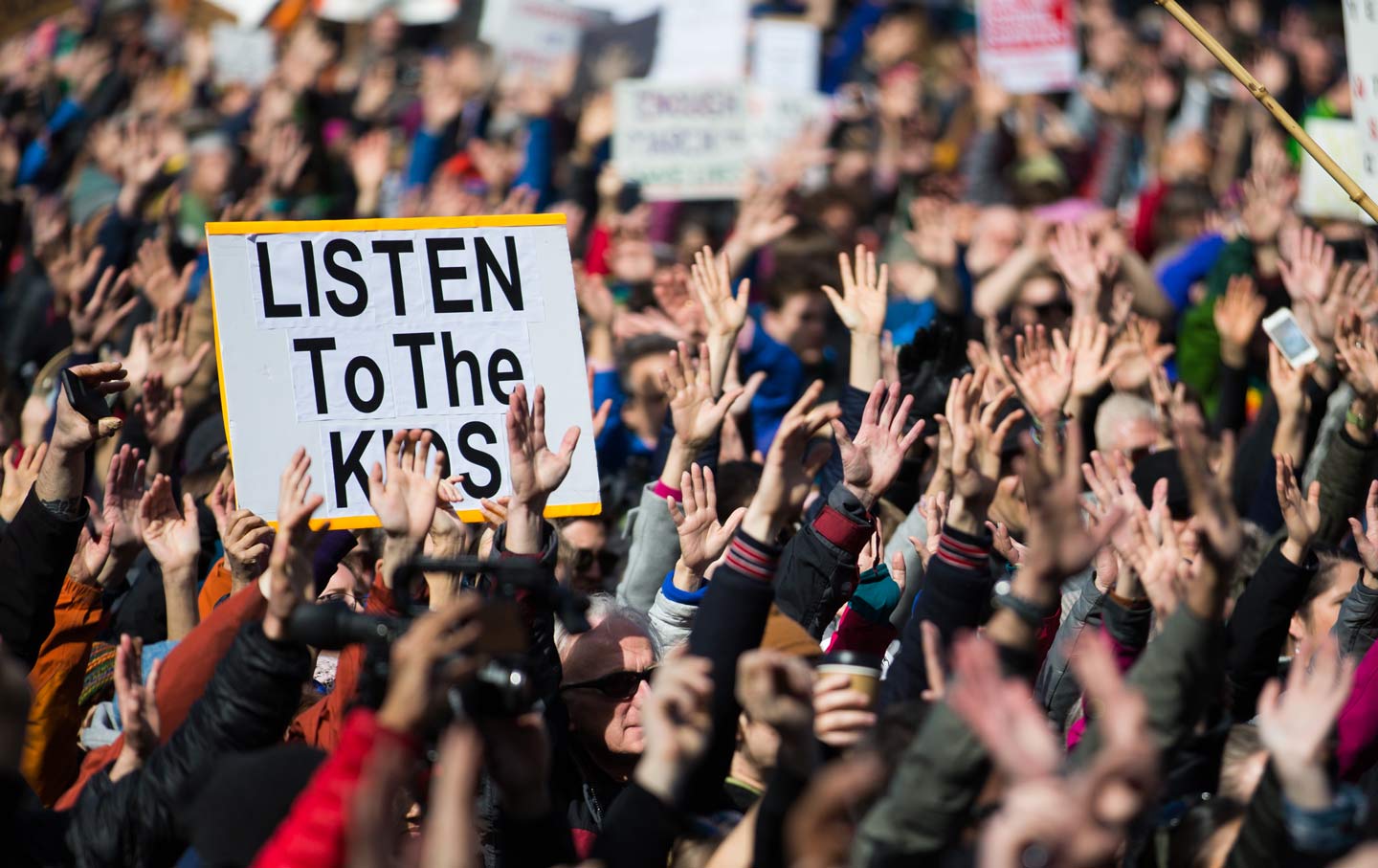
Meet the Young Organizers Survival Corps Meet the Young Organizers Survival Corps
Young organizers from around the country gathered at Haley Farm to study past social movements and train in the tactics of nonviolent resistance and grassroots organizing.
I Fled the US to Escape the Security State. Instead, It Followed Me. I Fled the US to Escape the Security State. Instead, It Followed Me.
My recent detention at Heathrow shows that the architecture of state repression knows no borders.

