
Meet the Young Organizers Survival Corps
Young organizers from around the country gathered at Haley Farm to study past social movements and train in the tactics of nonviolent resistance and grassroots organizing.
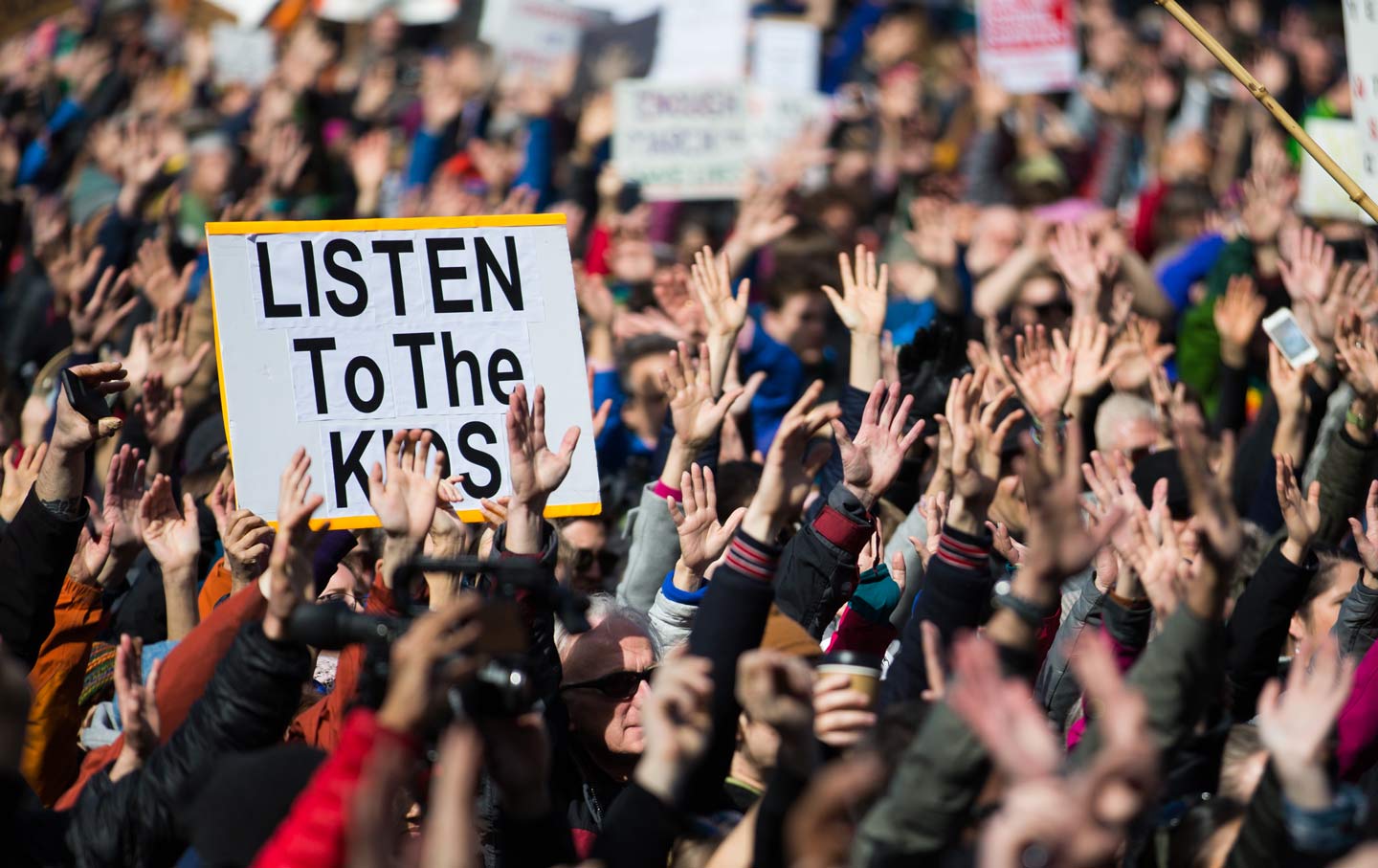
A March for Our Lives rally on March 24, 2018, in Seattle, Washington.
(Lindsey Wasson / Getty Images)This article originally appeared at TomDispatch.com. To stay on top of important articles like these, sign up to receive the latest updates from TomDispatch.com.
Here’s a small suggestion from the two authors of this piece (us): Don’t be young in Donald Trump’s America if you can help it. Being young in America right now means you’ll have to contend with stalling job markets, rampant inflation, deep political and economic instability, and impending climate disaster. If you point these things out, you’re labeled a dangerous (and misguided) radical. If you’re too busy trying to make ends meet for you and your family, you get labeled as lazy, apathetic, and defeatist.
This is not to say that older generations are doing OK. They’re not. But at least they’ll get to receive (and not just pay into) social security, which has to make the fascism go down easier. Before we explain or suggest what the young can do about all that, let us start by introducing ourselves, since one of us is indeed still Gen Z.
The authors of this piece are both co-workers and family members. “Theohari,” as some of our colleagues like to call us. Liz is Sam’s aunt and a longtime antipoverty organizer, mother, pastor, and theologian. Sam is a recent college graduate, student organizer, and law nerd. Recently, we were roommates at The Young Organizers Survival Corps boot camp.
Gathering in the foothills of the Smoky Mountains on a 157-acre farm owned and run by the Children’s Defense Fund (CDF), The Young Organizers Survival Corps kicked off a six-month leadership development program to help prepare the next generation of leaders to resist authoritarianism—something all too crucial in Donald Trump’s America. A hundred young people converged from more than 22 states, representing dozens of campuses and grassroots organizations. Most of them had already been struggling around issues of tenants’ rights, peace and militarism, immigrant rights, abortion rights, mass incarceration, homelessness, healthcare access, LGBTQ+ advocacy, and so much more in this increasingly disturbed country.
In our days at that farm, we studied the hard-won lessons of past social movements, trained young people in the tactics of nonviolent resistance and grassroots organizing, practiced hands-on skills in arts and culture, and learned new methods for and reasons to reclaim the power of our faith traditions.
Movement Education
Haley Farm was the perfect setting for just such a boot camp. The farm once belonged to Alex Haley, the Pulitzer Prize–winning author of Roots and The Autobiography of Malcolm X. Both of those masterpieces educated millions of Americans about African-American history and the importance of genealogy, as well as radical political organizing and thought. Urging readers to investigate their own heritage, Haley used storytelling to make the country’s history accessible and inspiring.
The educational mission of Alex Haley and his farm has endured for decades, long past the era in which he and so many others struggled to discover their own political bearings in the Black freedom movement. Since the Children’s Defense Fund bought the Haley Farm in 1994, it has hosted trainings for CDF Freedom Schools, deepened and inspired faith-based child advocacy, convened children’s authors and librarians, hosted the “National Council of Elders” (where young activists and civil rights veterans are able to strategize about the future), and gathered working groups for the Black Community Crusade for Children and the Black Student Leadership Network—and that’s just to begin a list of its work. A couple of months back, for instance, movement elders and Black organizers convened there for training in how to resist this deepening Trumpian moment of growing violence and authoritarianism.
For decades, the leafy folds of the Great Smoky Mountains in the southern Appalachians have housed other epicenters of movement training as well. Haley Farm is just towns away from the Highlander Research and Education Center (once the Highlander Folk School), another freedom training ground. Highlander was founded by popular educator Myles Horton, whose thinking has shaped the work of generations of grassroots leaders, including both of ours.
The Highlander Folk School first emerged as a cradle for organizing during the late 1930s and early ’40s. Led by the Congress of Industrial Organizations (CIO), it became the official education arm of the industrial labor movement in the South. Over the next two decades, it played an even bigger role in supporting the civil rights movement. Highlander was where the “mother of the movement,” Septima Clark, first experimented with the literacy programs that would become its “citizenship schools”—a network of some 900 community-based schools that taught tens of thousands of Black Southerners to read and pass Jim Crow literacy tests. Highlander was also where a young Rosa Parks studied before the Montgomery Bus Boycott, where the civil rights anthem “We Shall Overcome” was popularized, and where generations of organizers and leaders—especially those from the South and Appalachia—discovered the world of activism into which they had been born.
At the Young Organizers boot camp recently, we adorned our classroom with quotes from various movement elders and ancestors, including Black Freedom movement giants who had spent time at Haley Farm and Highlander. One quote from Highlander founder Myles Horton stuck out to us for its prescience. In his autobiography, The Long Haul, he writes:
It’s only in a movement that an idea is often made simple enough and direct enough that it can spread rapidly. Then your leadership multiplies very rapidly, because there’s something explosive going on. People see that other people not so different from themselves do things that they thought could never be done.… They’re emboldened and challenged by that to step into the water, and once they get in the water, it’s as if they’ve never not been there.… During movement times, the people involved have the same problems and can go from one community to the next, start a conversation in one place and finish it in another.
At our boot camp, it was clear that, amid much pain in this country, young leaders could start conversations about hope and suggest new strategies for community care and social protest. These conversations were possible only because of the leaders’ clarity around connection. From places like Richmond, Indiana, and Ithaca, New York, to Atlanta, Georgia, and Portland, Oregon, they understood that, no matter their backgrounds, they faced many of the same brutal conditions.
A Turning Point?
Consider the social, political, and economic environment that’s producing the multi-layered crises faced by today’s younger generations. In this rich land of ours, about 45 million people regularly experience hunger and food insecurity, nearly 80 million are uninsured or underinsured when it comes to healthcare, and close to 10 million live without housing or on the brink of homelessness, while our education system continues to score near the bottom compared to the other 37 countries in the Organization for Economic Co-operation and Development. Even before Donald Trump reassumed power, young people were affected disproportionately. One year into his second term as president, he and his billionaire lackies have only deepened this suffering.
Indeed, the conditions for discontent among young people are now boiling over. Young workers, students, and children are poised to lose more than any other age group from the Trump administration’s “austerity” policies (which, of course, are anything but “austere” for his billionaire buddies and him). Minors make up two in every five people currently receiving Supplemental Nutrition Assistance Program, or SNAP, benefits, and the young will disproportionately go hungry as that program is further eroded. (The Trump administration is already threatening to withhold such benefits from some Democratic-controlled states!) Low economic growth, rising inflation, and deepening unemployment are hurting everyone. However, young workers, regardless of their educational background, are seeing a steeper rise in unemployment than the average worker. Compounded by increasing costs of living, mounting debt, and ever more ecological disasters, Gen Z and Gen Alpha are projected to be distinctly worse off than their parents.
It’s been this very real pain and insecurity that the MAGA crew and Christian nationalist organizers have successfully leveraged to build a strong base among young workers and students. Organizations like Turning Point USA are now leading massive organizing drives on high school and college campuses, tapping into the real fear and instability experienced by students and other young people. Those groups fob off the real problems of this country (only intensified by Donald Trump) on scapegoats like trans athletes and Somali childcare workers, while offering an alluring vision of an authoritarian Christian future. It matters little that, for most Americans, the vision on offer will be impossible to achieve. And were it to be achieved, it would benefit only the whitest, wealthiest, and “most” Christian Americans. Therein lies both a contradiction and an opening.
Historically, we know that once fascism solidifies power, it can take years of unyielding resistance to revive a democratic society. That means we need mobilization now, while preparing for the fight already at hand that’s likely to stretch on for years to come. Tending to real-time crises while preparing for the long haul will require leadership from many in both Gen Z and Gen Alpha. To stand any chance of successfully fighting back, we must offer a competing and more attractive vision of the future—one in which young people come to believe that they will not only survive, but lead secure, fulfilling lives. And on-the-ground organizing infrastructure must be built up to make that vision a reality.
The Kids Aren’t Alright. But They Could Be.
This moment offers us a heartbreaking reminder of just how vulnerable most young people now are. The young organizers gathered at Haley Farm talked about not being able to afford the basics of life, while some who lived close to the farm asked us to bring leftover food to community members and church friends because so many of them are now living hand-to-mouth.
Popular
“swipe left below to view more authors”Swipe →And such vulnerability and economic precarity are anything but the exception. Dozens of young people indicated that they are hurting in so many ways: by family members being abducted by ICE, by being unable to acquire the healthcare they need, or even by being harassed by the feds for protecting their neighbors from state violence. Avenues of traditional politics feel inaccessible as a means of addressing so many of their problems and, where accessible, regularly proved critically insufficient.
We were astounded by the diversity of people and struggles in that room, but we were even more surprised by the ease with which those young leaders grasped their interconnectedness. They hardly needed convincing that some lessons one might draw from the difficulty of running an abortion fund in the midst of attacks on women and the right to choose could also apply to the needs immigrants have in facing ICE’s militarization of their communities. They knew such things to be true because many had lived through them.
Despite a seemingly endless barrage of think pieces bemoaning the fickleness and apathy of the young, teenagers and young adults have been at the forefront of every significant struggle of this moment. Indeed, young people have long taken leadership roles in bottom-up social movements because they so often bear the brunt of our nation’s social and economic inequalities, with few avenues for relief in traditional American politics.
It’s an underappreciated reality of this century that young people have been showing up in a remarkable fashion, leading on-the-ground movements to ensure that Black lives do matter, dealing vividly with the onrushing horror of climate change, while defending economic justice and living wages, not to speak of abortion access, LGBTQ rights, and an end to gun violence. Just this month, inside Dilley Detention Center in Texas, hundreds of imprisoned children led their families in righteous protest after learning of ICE’s kidnapping of 5-year-old Liam Conejo Ramos and his imminent transfer to Dilley.
The stakes are only getting higher for those of us coming of age at a moment when this country is changing from something like a democracy to Donald Trump’s chilling autocratic version of America. Yet if we know anything from decades of antipoverty organizing, it’s that the unfettered imaginations, moral clarity, and capacity for decisive action of young Americans can always triumph over the misguided political liaisons of their elders. As our communities struggle righteously to wrest this nation from the clutches of full-throated authoritarianism, isn’t it time to cultivate the untapped might of those potentially dispossessed generations?
We need their courageous leadership now more than ever. We have no time to lose!
More from The Nation
The Accidental Activists of Data Center Alley The Accidental Activists of Data Center Alley
These would-be rebels in Northern Virginia joined the fight against data centers mostly to stop the encroachment on their homes and exclusive private communities.
An Effective Movement for Palestine Needs Allies Like Zohran Mamdani An Effective Movement for Palestine Needs Allies Like Zohran Mamdani
In order to build a broad-based coalition, we need to work together—not practice purity politics.
The First Amendment Applies to Concert Stages Too The First Amendment Applies to Concert Stages Too
Protests like that of Macklemore on Palestine should never be silenced by billionaire owners.
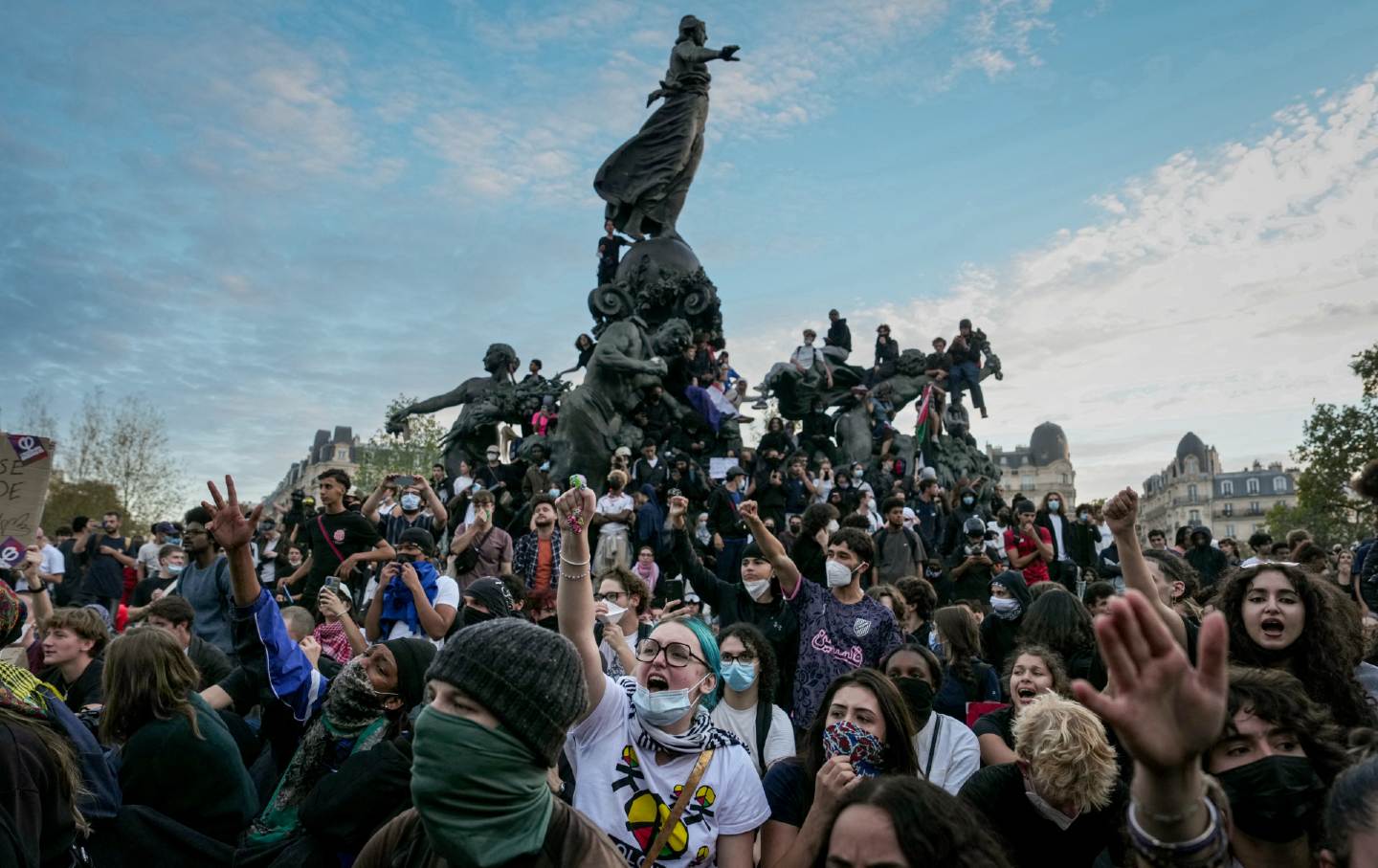
France’s Students Won’t Back Down France’s Students Won’t Back Down
Without full-time teachers, temperature-regulated classrooms, or school nurses, French students are turning their grievances into a national movement.
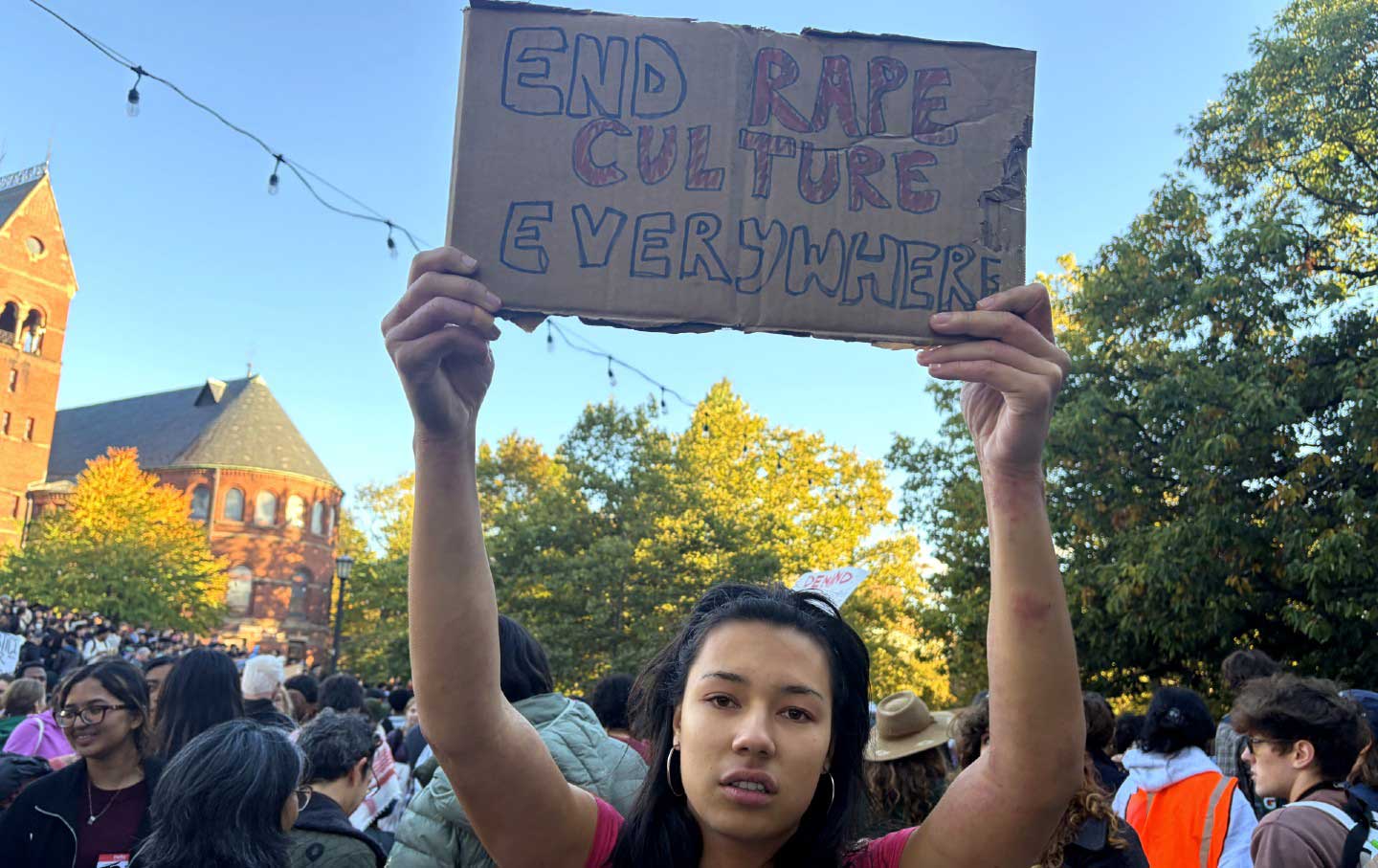
Inside Cornell’s Week of Protest Inside Cornell’s Week of Protest
“We won’t be silenced anymore. Our university needs to start protecting us, like they should’ve with Jane Doe and all other survivors on campus.”
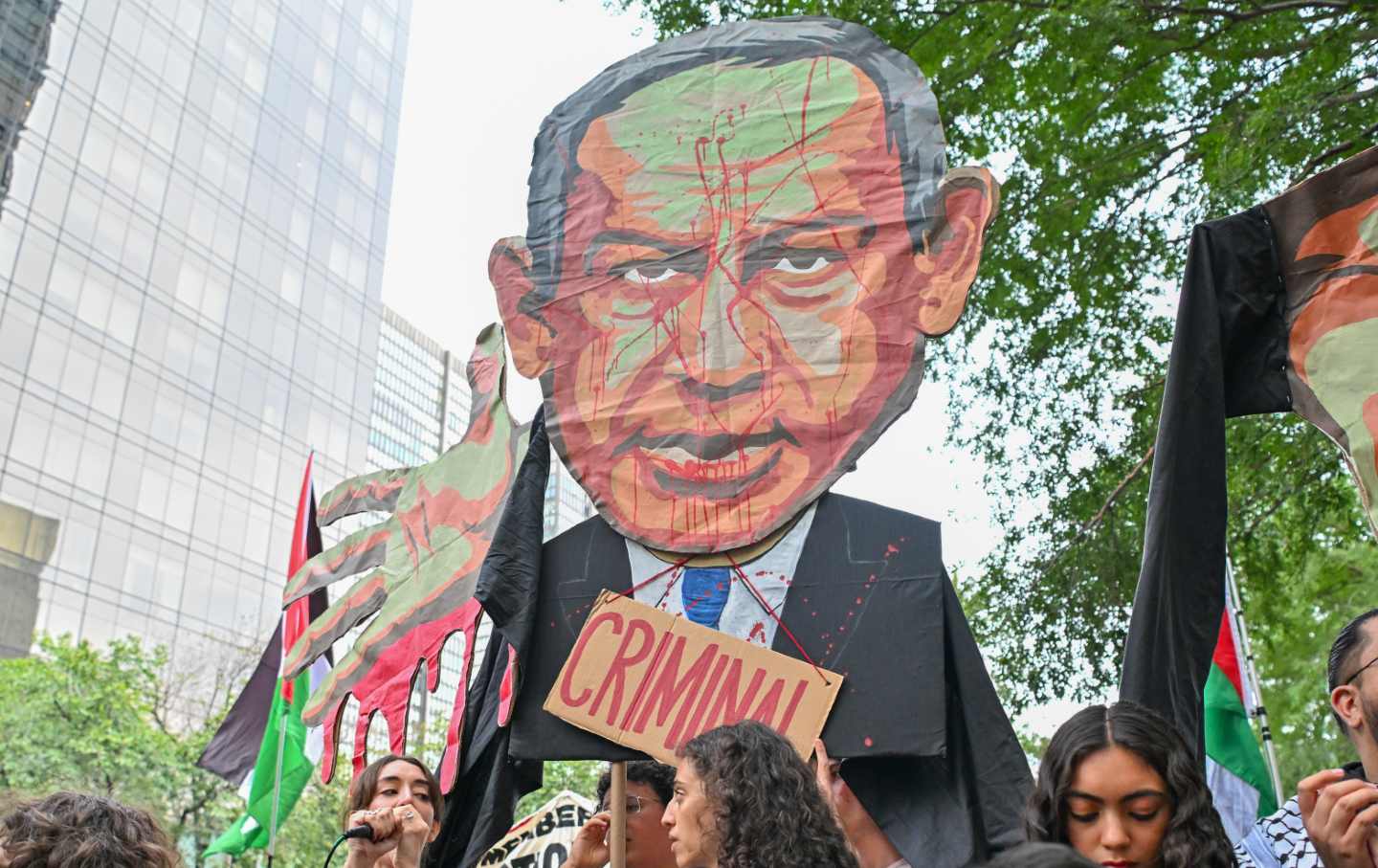
Netanyahu Came to New York. New Yorkers Were Ready for Him. Netanyahu Came to New York. New Yorkers Were Ready for Him.
Scenes from the defiant protest against the genocidal leader’s UN speech.

