
The Conservative Organization Building a New Young Elite
From pro-life summits to Palantir résumé drops, the David Network is discreetly building a pipeline for conservative college students.

Since 2020, the David Network has grown from a collection of pro-life student activists to a burgeoning conservative career network.
(Fatih Altuntaş / Pexels)On the afternoon of March 27, members of the Penn College Republicans mailing list received a last-minute event announcement.
“Dear Patriots,” the e-mail began. “In just a few hours…Theo Wold, a senior counselor at Palantir, will be speaking on Penn’s campus. His talk is titled ‘2006 and the Challenge to Save the West.’”
With just under three hours’ notice, conservative students and prospective software engineers alike scrambled to attend the off-the-record, invite-only event. By 6 pm, the approved students streamed into an unremarkable classroom in Jon M. Huntsman Hall, buzzing with curiosity and excitement.
In the following hour, Wold, who previously served as a director for the Trump-affiliated Claremont Institute, pitched a nativist argument about the decline of Western culture in the United States—due apparently to the birth of “woke” ideology circa 2006—while beseeching students to “save the West” by joining Palantir. The defense-tech giant, initially founded with a venture capital investment from the CIA—has become known for allegedly aiding in mass deportations, Israel’s war on Gaza, and the surveillance of the American public.
Wold then laid out a vision for traditional gender roles, emphasized the need to hire Americans rather than immigrants, and, puzzlingly, asked the audience if they had read Mark Twain.
The Penn talk was part of a larger speaking series that Wold undertook on behalf of the David Network, a conservative organization determined to effect change in the United States by drawing “from conservative ideas, grounded in the Biblical moral tradition, embodied through limited, constitutional government, and strengthened by individual liberty and free enterprise.”
Since 2020, the David Network has grown from a collection of pro-life student activists to a burgeoning conservative career network. According to its website, the group boasts over 5,000 students, alumni, and professionals. It only targets students in the Ivy League, MIT, Stanford, and, more recently, the University of Chicago, and the University of Texas–Austin. Driven by an existential commitment to grievance politics, the network places promising conservative students in positions of influence—one annual conference, private dinner, and conservative hackathon at a time.
According to the attendees I spoke with, Wold’s presentation broached the subject of recruiting. As one recalled, Wold mentioned a student at another university who approached him after his speech. The student, who expressed an interest in both Palantir and the Roman Empire, allegedly had a job interview “within a week,” all because he “actually [talked] to Theo Wold after.” Like several of the students and alumni I interviewed, the attendee requested anonymity, citing fears of professional backlash.
Later, Wold informed Penn students that they could send their résumés to the David Network for special consideration in the recruitment process. Of the two students I spoke with who submitted their résumés, both received a recruiter call after applying.
In a written statement to The Nation, David Network founder and executive director Lucas Cremers claimed that the organization was not aware of Wold’s statements at the event. Palantir did not respond to requests for comment.
The David Network started when Cremers, a Columbia graduate, hosted the organization’s first annual summit with other Ivy League students who had accompanied him to the anti-abortion March for Life protest in 2019.
The summit, which occurred in Washington, DC’s Museum of the Bible, began as a sounding room for social conservatives to debate issues like “the power of Abrahamic tradition” or pro-life activism “post-Roe.” Each year, the event grew in size, attracting conservative students from prestigious colleges seeking reprieve from their liberal campuses.
“I just remember being told that the David Network conference was sort of like [Cremers’] baby,” said Avian Muñoz, a liberal Columbia graduate who attended the 2023 summit as a student reporter. “He cared a lot about it getting popular and being well respected by conservatives, both within universities and the wider conservative civil society.”
At the 2023 event, culture war rhetoric was pervasive, culminating in keynote speaker and then–presidential candidate Vivek Ramaswamy railing against “corporate wokeness.” “They made a big effort to [make] the Other, aka progressives, into this monster Goliath that they had to fight,” Muñoz says.
The event retained its emphasis on social conservatism in the 2025 summit, when one keynote speaker advocated against abortion even in cases of rape, according to Columbia graduate and 2025 attendee Alex Nagin. By this point, however, the David Network had put a new aspect of its mission front and center: the formation of an elite conservative career pipeline.
“Networking was a huge part [of the summit],” Nagin says. Indeed, the event’s career fair included classic conservative organizations like the Manhattan Institute and Federalist Society, as well as Elon Musk’s brain chip company Neuralink, Palantir cofounder Joe Lonsdale’s venture capital firm 8VC, and Saronic Technologies, a naval defense company now valued at $9.25 billion.
The 600-person gathering also featured a keynote speech from Lonsdale. Nagin recalls that he “kept calling the left ‘commies.’”
Today, the bulk of the David Network’s operations sit outside the annual summit. In its monthly newsletters, the organization advertises private chats and job postings in a range of influential industries, including private equity, software engineering, “nuclear,” and law for the Trump administration.
Events this August included a private dinner with tech founders in New York and a fireside chat with House Republican Rich McCormick on “AI and the American Future.” This past September, the organization hosted “an evening with the Office of Strategic Capital,” an obscure Pentagon department helping orchestrate deals between US oil companies and the Venezuelan government.
According to one former student organizer, these private gatherings help attract conservative students who may then receive more personalized recruiting assistance. Because membership is a loose term—as part of the David Network’s mailing list, I suppose I count—young acolytes-to-be are vetted for ideological alignment before they’re connected to a network-affiliated professional—perhaps a tech founder, a federal government official, or an experienced Wall Street trader.
In a report published earlier this year, the David Network claimed to have placed over 200 of its members in organizations like the Council of Economic Advisors, the Manhattan Institute, and Palantir. It also claimed to have 171 employers in its network, including 43 in tech, 32 in finance, and 28 in government. In his statement to The Nation, Cremers wrote that “we have thousands of exceptional members whom we help place in great positions.”
In the same report, the David Network recorded almost $1.5 million in revenue during the 2025 fiscal year and announced a revenue goal of $3.6 million in 2026, with $2 million raised toward that sum.
With its new money and influence, the David Network has become an increasingly active player in the tech space. This past Labor Day weekend, the organization hosted DNHacks, a hackathon seeking members to “pioneer world-class technology built on the foundation of American exceptionalism.”
The hackathon’s industry partners and attendees included the surveillance giant Clearview AI, the $750 million defense tech company Second Front Systems, and the US Navy’s chief technology officer. Though Palantir was not a publicly listed sponsor, one student hackathon competitor informed me that representatives of the company attended the event. The David Network claimed that “Palantir was not actively involved” in their hackathon.
Popular
“swipe left below to view more authors”Swipe →The hackathon projects ranged dramatically in kind and shock factor—the winning team, for example, developed a self-sensing concrete to measure the structural integrity of key infrastructure, while another team engineered an “autonomous kill-chain” drone with cost-effective facial recognition software.
According to the conservative nonprofit Philanthropy Roundtable, the ultimate goal of the David Network is to “build a talent pipeline of principled conservatives who will reshape some of our nation’s leading institutions and industries, akin to how the Federalist Society has reshaped the courts.” Indeed, the same backroom hiring practice that the David Network is setting up today allowed the Federalist Society, another student-founded conservative organization, to stack the nation’s legal system with conservative judges, leading to our current era of civil rights backslide.
It’s certainly not a perfect comparison. The Federalist Society had a clear strategy and goal, manipulating the country’s rigid court systems to advance the conservative legal movement. By comparison, the David Network, with its split industry focus sitting beside its initial, pro-life moral center, seems more committed to a sustained improvisation than a concrete vision.
At the same time, the recruiting network has only garnered more interest from students and employers alike. For now, it seems all the David Network has to do is maintain its upward trajectory and dream of one day killing its so-called progressive “Goliath.” Who knows what will finally signal the death of that boogeyman? Maybe a new legion of killer drones, maybe an absolutist, anti-abortion surveillance state, or maybe just more C-suite executives with whom to make off-color jokes around the water cooler.
When you’re just getting started, anything seems possible.
More from The Nation
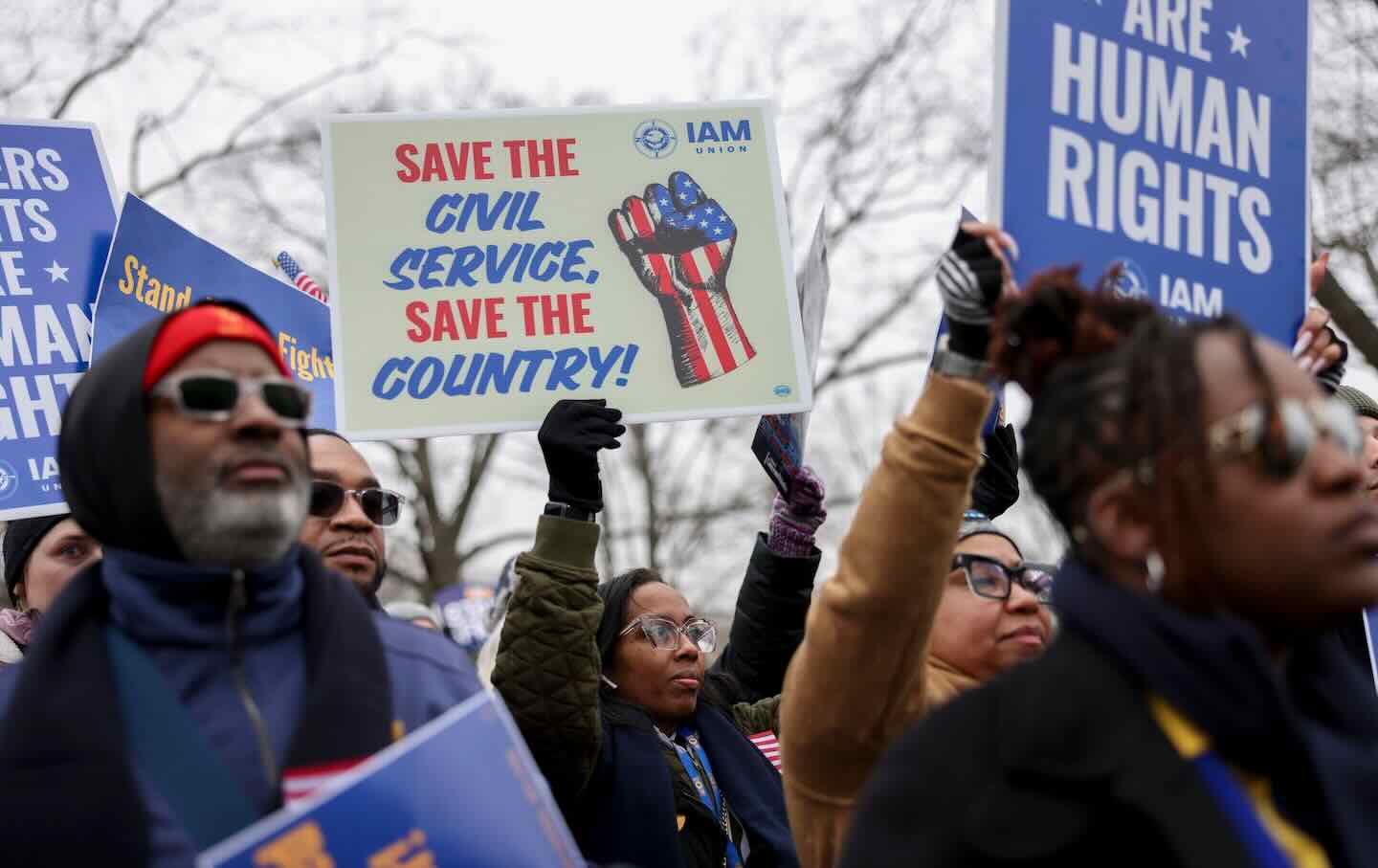
The Unseen Toll: Depression, Anxiety Plague Black Women a Year After Being Fired by DOGE The Unseen Toll: Depression, Anxiety Plague Black Women a Year After Being Fired by DOGE
Trump’s federal workforce cuts dismantled a job pipeline for Washington, DC’s Black community and gutted the well-being of the women who hold up that community.
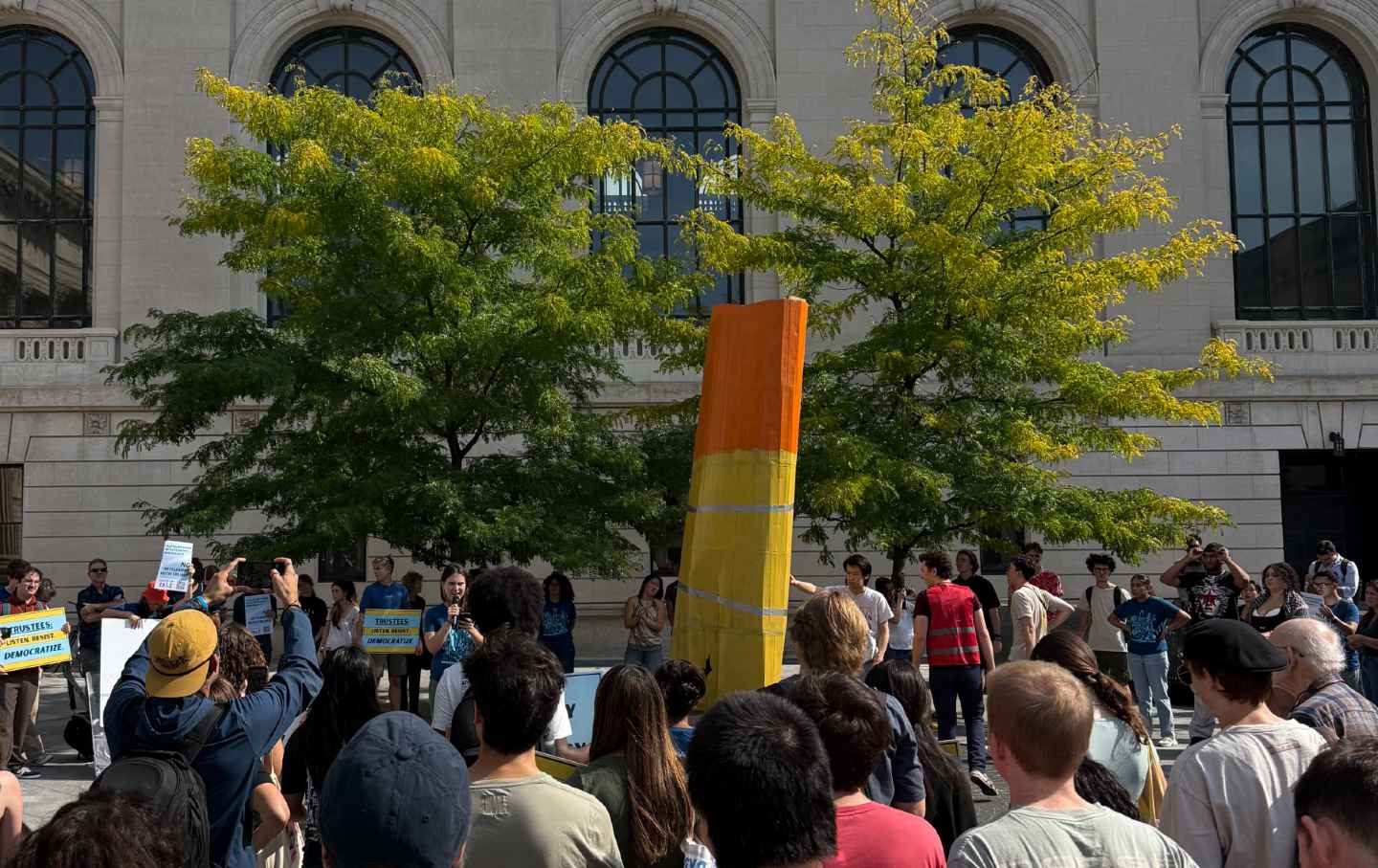
Yale’s Protest Tradition Is Back Yale’s Protest Tradition Is Back
For the first time in more than 50 years, Yale students gathered around an iconic sculpture to protest their university and their government.

Red Vienna Is Still Alive Red Vienna Is Still Alive
The Austrian capital chose not to privatize the commons, and it shows.
How Mexico Proved Mainstream Economics Wrong How Mexico Proved Mainstream Economics Wrong
American analysts have long viewed inequality as a byproduct of technological causes. But Claudia Sheinbaum’s Morena Party has boosted workers’ income without any technological tr...
My Rape, the Cornell Case—and Why We Need Better Approaches to Teaching How Consent Works My Rape, the Cornell Case—and Why We Need Better Approaches to Teaching How Consent Works
I tried to process the experience of being raped by disassociating. We have to show our kids a better way.
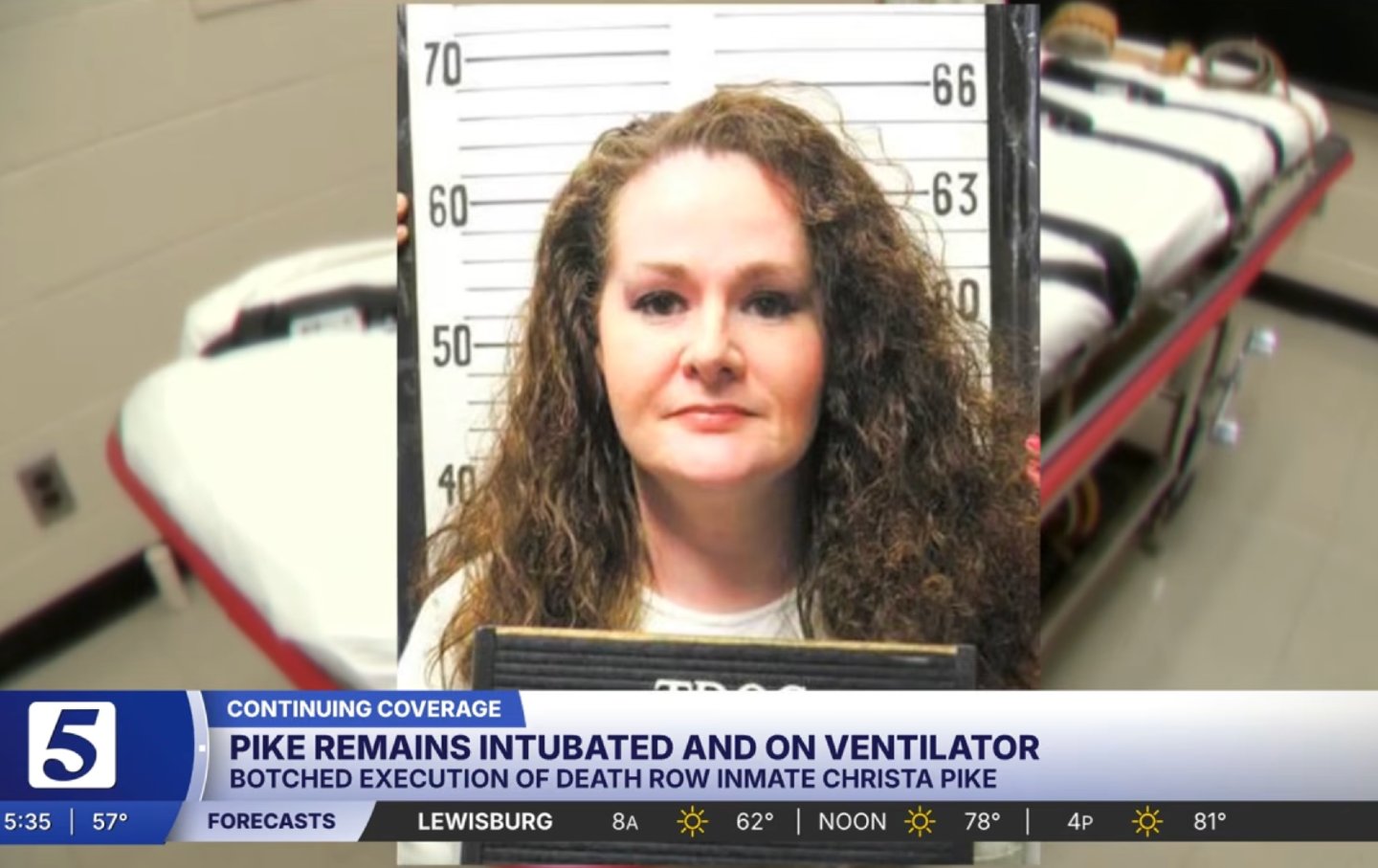
The Death Penalty Has Become a Torture Machine The Death Penalty Has Become a Torture Machine
Christa Pike's botched lethal injection proves there is no humane form of execution.

