
My Rape, the Cornell Case—and Why We Need Better Approaches to Teaching How Consent Works
I tried to process the experience of being raped by disassociating. We have to show our kids a better way.
I was raped in college. This is a fact about me, and not one I think about much because it happened in 1997. It took me a day or two after I was assaulted to even acknowledge it, because I’d shoved it to a corner recess of my consciousness, where I hoped it could disappear forever, shrinking over time into something less menacing. Just a thing that happened. When I finally felt comfortable talking about it, the first thing I learned was that my experience was horrifically common.
Nearly every woman I know in adult life has been sexually assaulted, and for most of us, our first sexual assault—some of us have more than one—happened in college. There is nothing specific about an educational setting that lends itself to enhanced sexual danger for women; it’s simply the first time many of us are out in the world constantly interacting with people our age we barely know. For women, this means initial encounters with men who may or may not have grown up with norms about sex and consent that protect women from predatory behavior. We’re all suddenly adults with complete freedom of movement, and our social lives are ours to govern. We can stay out late, go to parties, drink—do the things adults do, in other words.
It’s not a coincidence that culture warriors on the right like to suggest that this wouldn’t be risky behavior if we all got married and stayed at home right after high school. They do not want women out in the world, educating themselves, making decisions, acquiring power of their own. Some of them view the risk of rape as fair punishment for not staying in the kitchen. Many of the women I know who say they’ve never experienced sexual assault got married as soon as they graduated from high school. They do not socialize with men who aren’t their husbands and do not have much in the way of a social life outside of church. Some are happy, and some are not. Isolation from men is certainly one way to avoid sexual assault, but social confinement shouldn’t be the price of safety for women. When opinion makers on the right talk about it as a kind of protection, they’re not looking out for the women; they’re looking out for the men.
I recently saw a frustrated influencer talking about the Cornell University rape case; she argued that we don’t need more education around consent—that these men knew what they were doing. I agree that they knew what they were doing, in the sense that they intuitively knew it was wrong. You can see that in the way some of the men in the fraternity tried to make amends with the victim before the gang rape’s aftermath escalated into the consequences now belatedly facing its perpetrators.
But I also think about my own college experience and what I was taught before I left my small, heavily conservative hometown. That prompts me to differ with the claim that consent-based education isn’t a viable response to cases like this. Where I grew up, we were educated about sex mostly by our peers, not our parents or teachers. I believe that’s still the case for most American boys, and Internet porn is an aggravating factor, in that it generally doesn’t model consent and gives them an unrealistic idea of what real consensual sex is like.
My school had no real sex ed, mostly because the parents in my largely evangelical community believed it was the job of parents to do that. This all but guaranteed that every one of my classmates got a message of abstinence and no actual sexual education. The one exception was the chapter or two we had on human anatomy and reproduction in biology class. To give a sense of how reproductive issues got discussed there, one of my classmates asked if women could still urinate when they were pregnant.
Otherwise, most of the sex ed was folk knowledge passed among us, some of it correct and much of it woefully wrong. The kid who had the most forbidden knowledge would inevitably disseminate it to everyone else, and as we aged into puberty, some kids my age began to have sex armed only with the knowledge of whatever dumb shit an equally ignorant classmate had passed on.
Consent was never part of the discussion, since it plays virtually no role in an abstinence-only approach to sex education. In a largely gender-segregated social environment, boys acquired the bulk of their understanding of the acceptable ways to treat girls from their peer group. The broader code of silence surrounding sexual matters, which were dogmatically deemed “inappropriate” for kids our age, predictably resulted in teen pregnancies, sexual assaults, and abuse.
I grew up in rural Alabama, but this wasn’t just a red-state or right-wing problem. It still isn’t.
My 11-year-old son goes to a Brooklyn public school that skews very liberal. We were informed that this year students and teachers would be talking about consent “but in an age-appropriate way” that involves using examples like whether you should be able to borrow someone’s phone without asking.
I understand the reticence, but I think 11 is a perfectly appropriate age for frank discussions of sex. Some of my son’s classmates are already capable of having sex and getting pregnant. Every single kid in the class already knows the basics of what sex is because we live in 2026; not only does the kid in the class with the most forbidden knowledge still disseminate it, but all the kids in my son’s class are growing up with the Internet—i.e., exponentially greater access to forbidden knowledge than kids in my generation had. Taking away their phones or restricting their Internet usage won’t meaningfully insulate them from sex, depictions of sex, or talk of sex. They are all ambiently embedded into our stories, our discourse, and nearly all of pop culture.
From the time they’re toddlers, children are taught that girls play with dolls and boys go out and make things and have big narratives in the wider world. This sort of gender programming seems innocuous until you consider that on some level it teaches boys what women are primarily for: making babies. They don’t have to understand anything about sex to absorb the formative lesson that a woman’s worth is about what her body can do, or the accompanying early gender scripts placing her on track to be a mother or a wife, launched into the rituals of playing house.
The educational system can’t, by itself, counterprogram this gender messaging. Nevertheless, schools are often the only place where we can ensure that kids understand consent before they get to college and are apt to encounter fraught situations where their consent is disregarded or never requested in the first place, often for the first time. Yet school-based consent training, while valuable, often fails the core challenge of effectively undoing years of social conditioning as it seeks to model to kids how to treat each other respectfully. For it to take hold, it needs to focus on consequences.
A few months ago, I met Kaitlin Andrews, who runs the Schools Consent Project. The group isn’t a traditional sex-ed nonprofit; rather, it’s a legal organization staffed by attorneys leading workshops for middle, junior high, and high school students. It uses the language of liability to outline for students what is and isn’t appropriate, how to intervene as a bystander, and what is unfortunately a problem for this generation that wasn’t for mine: the legality of distributing nude photos of other minors.
I asked her at what age they were seeing students share nude photos of their classmates. Fifth grade, she said.
This kind of education is important, not just because it happens at all but because it happens early. At Cornell, students are required to attend a mandatory presentation on sexual assault—in part to indemnify the school from accusations that it failed to make these things clear to students at the beginning. But that’s too little far too late, and the first week of college is far from the ideal time to expect students to think soberly about the issue.
None of these interventions by themselves can fix the underlying misogyny that leads to sexual assault in the first place. They can’t reverse in a handful of sessions or seminars the way young men have been socialized to bond over sexual conquests—a coming-of-age rite that inevitably prompts them to objectify and dehumanize women further. These recursive trends are amplified considerably in gender-segregated fraternities, like the one at Cornell, where participants and bystanders in Jane Doe’s rape egged one another on. Way back in 1989, researchers were aware that fraternities were a unique vector for sexual assault. This paragraph from a paper titled “Fraternities and Rape on Campus” could double as an account of what happened at Cornell in 2024:
An analysis of the norms and dynamics of the social construction of fraternity brotherhood reveals the highly masculinist features of fraternity structure and process, including concern with a narrow, stereotypical conception of masculinity and heterosexuality; a preoccupation with loyalty, protection of the group, and secrecy; the use of alcohol as a weapon against women’s sexual reluctance; the pervasiveness of violence and physical force; and an obsession with competition, superiority, and dominance. Interfraternity rivalry and competition—particularly over members, intramural sports, and women—encourage fraternity men’s commodification of women. We conclude that fraternities will continue to violate women socially and sexually unless they change in fundamental ways.
I believe fraternities do more harm than good because of these things. At the same time, though, fraternity reform is insufficient by itself; the interventions have to start earlier because women are in danger earlier. The danger starts as soon as people start sexualizing them, which is usually when they’re prepubescent.
At Duke, I was raped at a frat party. I was 19. The guy was someone I knew peripherally; we had a class together and were friendly in a polite way. Duke does not have sorority houses, but did have on-campus fraternity housing. It was common for parties held in or around the grounds of a fraternity to spill out from public areas and down the halls into the individual rooms of fraternity members. People would often move back and forth from main gathering spaces to bedrooms, usually heading back to the common room for whatever shitty beer was in the keg and drinking hard alcohol in the rooms. (Alcohol was the drug of choice, with the exceptions of a few rich kids who liked cocaine.)
I went to the party with a group of friends and we broke up to mingle. I’d had a couple of beers by the time I ran into the guy who became my rapist (let’s call him Matt). Before long, we were dancing in the main party space where a DJ was playing. He asked me if I wanted to go back to his room to get a drink that wasn’t shitty beer and I said, sure, not thinking much about it.
I let him make me a drink that was stronger than what I was used to, but still not so powerful that it rendered me completely incapacitated. (Thanks to the fallout from the Cornell case, we all now know that in New York State the standard is that only total incapacitation makes you incapable of consent.) He began kissing me and I was OK with that. I wasn’t sure that I was especially attracted to him, but I was having a good time and wasn’t ruling out an attraction either.
Somewhere in my mind, I had registered that he had closed the door. We were sitting on his bed—there was nowhere else to sit, except the floor—and he took my drink and pushed me down into a lying position. I laughed nervously and tried to sit back up, but he climbed on top of me.
I told him I had to meet my friends soon and tried to extricate myself. He ignored it and pushed me back down, covered my mouth with his, kissing me. I was wearing a skirt and he used his weight to hold me down and move my panties aside while he pushed his fingers inside me. I said again that I needed to go and we should stop. I kept saying it and trying to push him off me.
Then he maneuvered inside me and I just froze. I said nothing else; I just waited for it to be over. Soon it was done. There was no line left for him to cross. I just wanted it to be over quickly, so I could get out of there.
Normally, I would have found my friends and probably stayed out. It wasn’t even that late, by college standards. Instead, I went home and straight to bed.
When people suggest that Jane Doe—the survivor of the Cornell gang rape—should have acknowledged what happened to her immediately, they’re telling you they have no personal experience of sexual assault. I couldn’t even process what had happened until a few days later. Any sort of analysis or reflection was drowned out by the fact that I was stunned that it happened, embarrassed that it happened, and ashamed that I let it happen to myself.
I let it happen to myself: That’s what I thought. I didn’t think it in the context of questioning what I was wearing (a perfectly acceptable knee-length skirt, by the way), how much I drank (by college standards, not much), or whether it was a good idea to be a frat party at 10 pm (if it isn’t, isn’t the problem with the frat?) I was angry at myself because I had worked hard academically to get to Duke, and showed up there not knowing a single person. I was the first person in my family to go to college. I was smart. How could I have let this happen?
I don’t think of myself regularly as a rape survivor, in part because I don’t think of myself as the proprietor of a body very often—or even as a woman. My self-conception is best described as “brain in a vat.” I work in very male-dominated spaces. When someone is openly sexist to me, I’m sometimes taken aback, because it reminds me that in treating me as a woman, they view me differently, not just as a peer or equally human person.
How could brain in a vat let this happen to her?
I imagine Jane Doe had some similar feelings. Cornell is an Ivy League school, and I’m sure she’s smart and ambitious. After it happened, I have a feeling she did what I did: tried to reason her way out of it, and felt that the fault was hers.
But it wasn’t. She did not make those men do what they did. It was not her responsibility to keep them from raping her–any more than it was mine to heroically subdue my rapist.
One of the few times I don’t feel like a brain in a vat is when I’m having pleasurable sex. In Miranda July’s novel All Fours, a character describes the way women experience sex as either in the head or in the body. Counterintuitively in my case, brain in a vat experiences it in the body. My over-analytical, perpetually racing brain takes a break for once, and I can just feel, become an animal self, acting only on instinct.
The way that I have coped with sexual assault is by giving it the brain-in-a-vat treatment. That’s what I did when I froze. I let go of my body and let him continue to violate it. I made the experience of being raped separate from my “real” self—my brain. Obviously, my rape hasn’t ruined my ability to have sex for pleasure (which I’ve written about elsewhere) because I resorted to disassociation in order to cope with it. Brain in the vat took over when my rape happened, and brain in a vat is absent when I’m having intense transcendent sex.
This intentional fracturing of the mind and body is not healthy. It is a survival mechanism.
I talked to Kaitlin Andrews as the Cornell story was gaining traction in the media. She had just spoken to a class of ninth-graders in New York City. She asked them if they knew what had happened at Cornell and whether they wanted to talk about it. Hands shot up. All but two of the students were familiar with many of the details. Many wanted to talk about the mentality of the men in the Snapchat thread that unfolded in real time as Jane Doe was being raped. They were under the impression that because Snapchat messages disappear that they’re permanently gone, and Andrews had to explain that they’re discoverable and can be retrieved under subpoena by the company.
Popular
“swipe left below to view more authors”Swipe →But the biggest misconception they had was that false accusations of rape are not only common but frequent. “How often do they think it happens?,” I asked her.
“Eighty percent of the time,” she said.
I wonder how many of the fraternity members at Chi Phi went into college thinking that most sexual assault accusations are false. I suspect it was many of them—not just because of Andrews’s data, but because of the narrative they put out afterward, which cast Jane Doe as a reckless, unhinged woman in the Fatal Attraction mold, out to destroy their standing at the school and their reputations. (This was, after all, the tactic that worked in court when Johnny Depp sued Amber Heard for defamation for writing about his alleged abusive conduct in their relationship—and many women in the social mediasphere sided with Depp.) Even if they absolutely knew what they did was wrong, many of them did not think that they were, strictly speaking, guilty of rape. Neither did the police. Neither did the administration. Neither did the other students at Cornell who slut-shamed Jane Doe as rumors spread.
When I walked back home to my dorm room, I did not want to label what had happened to me, because that would make it serious and real.
But as I get older, my brain in a vat is more protective of my body and willing to acknowledge that what happened to it happened to me.
It’s important that we teach children—and yes, I mean children, 11-year-olds–what rape is and what its consequences are. We have no problem in this country teaching them about violence and guns. We make them do active shooter drills before they’re able to read. They need to know that rape isn’t a rare, outlying crime committed by strangers a back alley—for their own sake.
But we also, and especially, need to do so for the sake of the girls in the class, some of whom will graduate and go to college. If they’re sexually assaulted because their male classmates did not fear the consequences of it, futures are imperiled.
Not the boys’ futures. The girls’. Jane Doe’s.
Mine.
More from The Nation
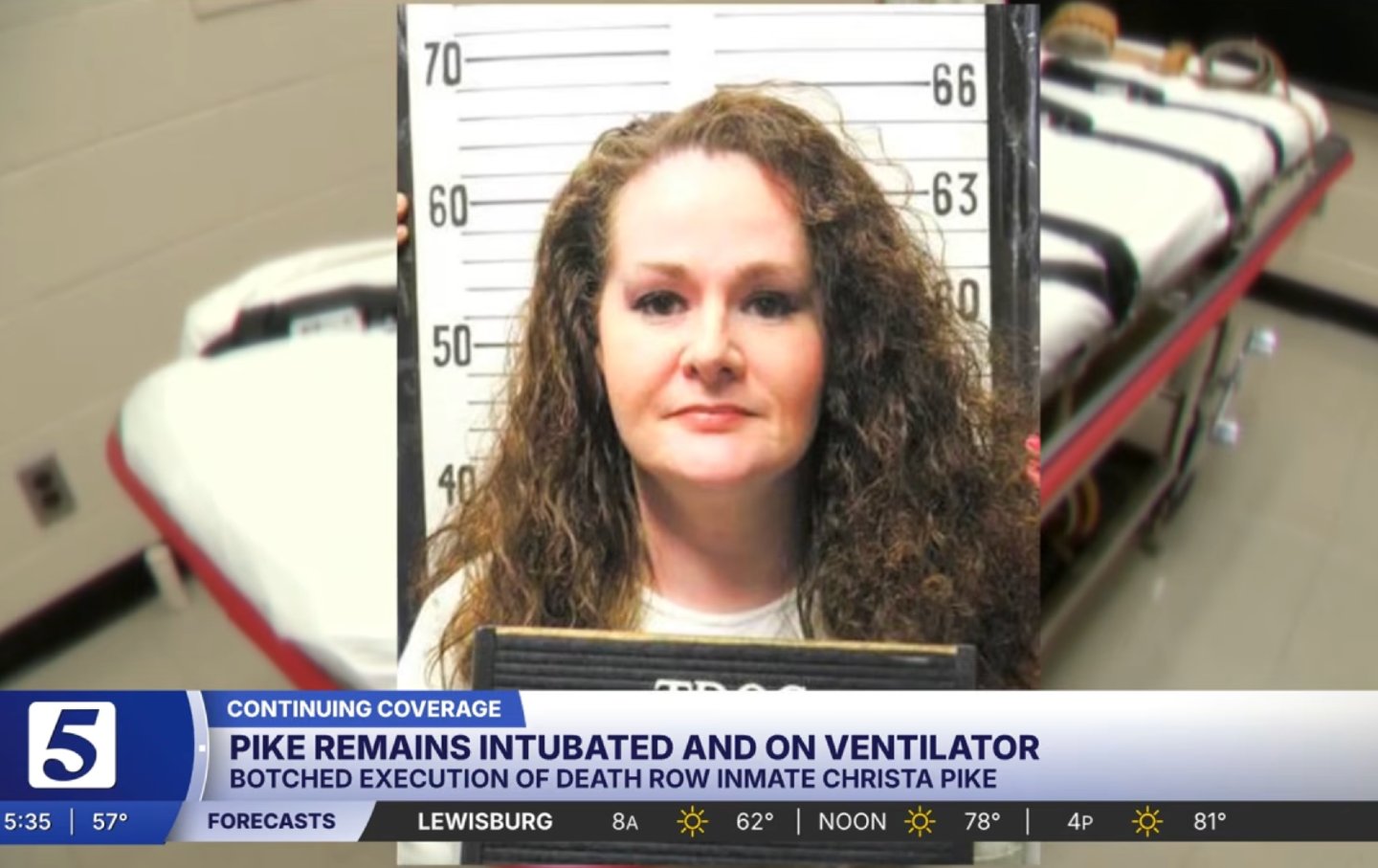
The Death Penalty Has Become a Torture Machine The Death Penalty Has Become a Torture Machine
Christa Pike's botched lethal injection proves there is no humane form of execution.
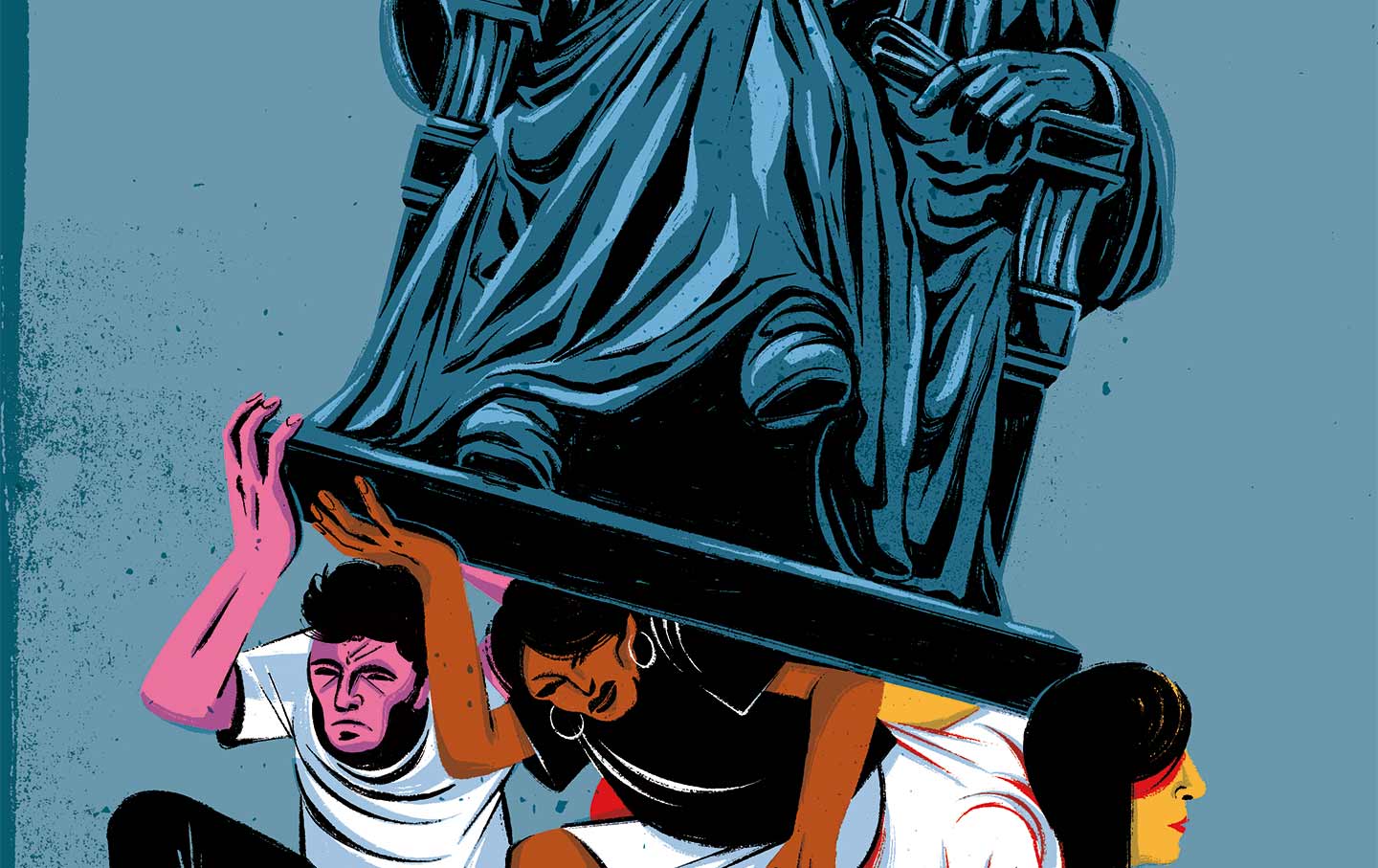
The People vs. the Supreme Court The People vs. the Supreme Court
This term the Supreme Court has plans to trample
even more of our rights. But we, the people, are not powerless
in the face of their power grab.
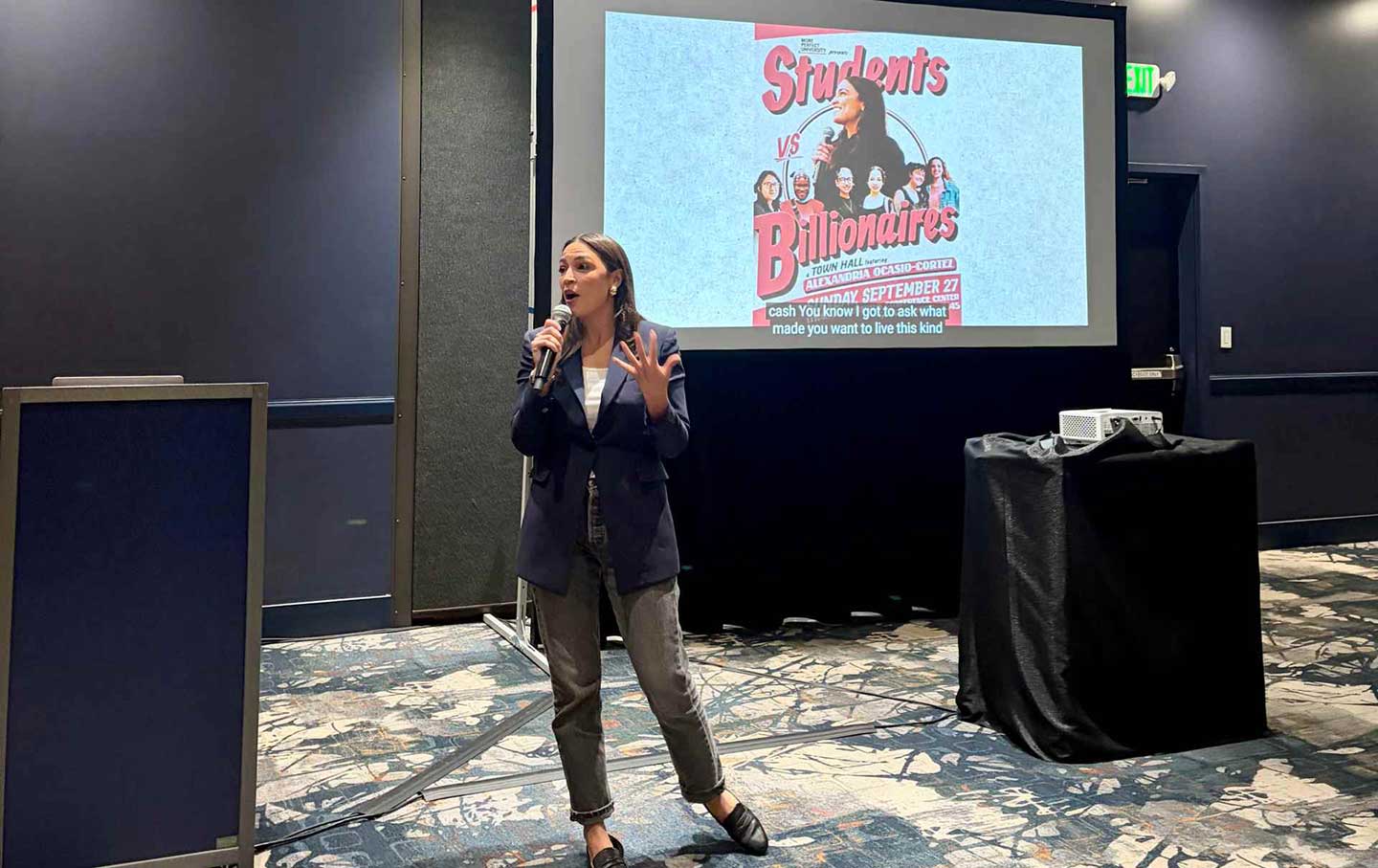
Cornell Students Challenge University Power at a “Students vs. Billionaires” Town Hall Cornell Students Challenge University Power at a “Students vs. Billionaires” Town Hall
Representative Alexandria Ocasio-Cortez spoke to Ithaca students about tuition hikes, sexual violence, free speech, and university governance.

Trump Has Made it Legal to Destroy Endangered Species’ Habitats Trump Has Made it Legal to Destroy Endangered Species’ Habitats
By redefining the meaning of “harm” in the Endangered Species Act, the administration is giving big corporations a gift they have long demanded.
Journalist Meaghan Beatley on Latin America’s Feminist Resistance Journalist Meaghan Beatley on Latin America’s Feminist Resistance
A conversation with the author of Sex and Dissent about what American feminists can learn from the Green Wave movement.

