
We Were Founded on Anti-Monopoly Principles
The premises of the American democratic vision must be applied to the economy if we are to be free in all alreas of life.
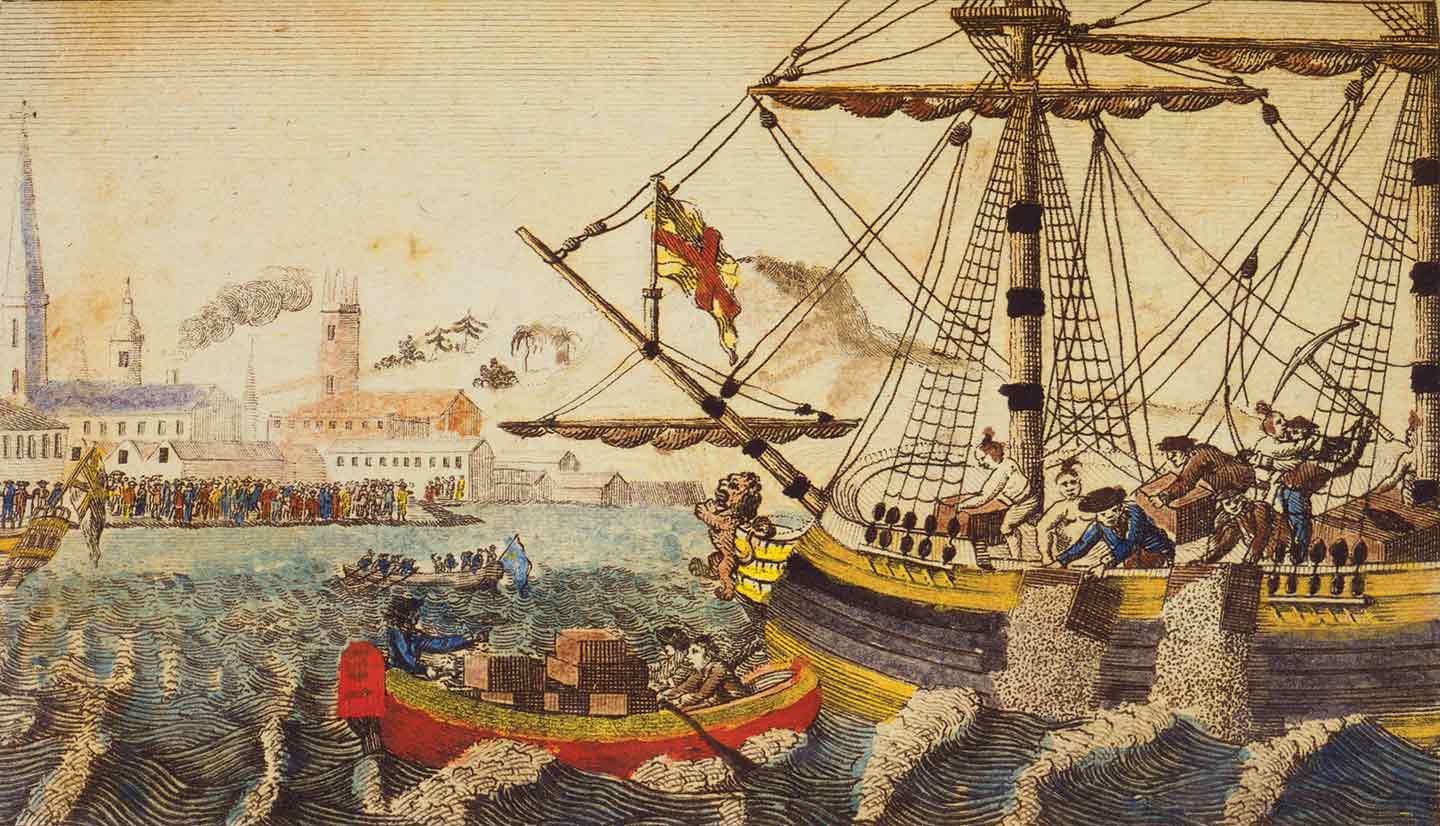
America was conceived in the midst of a fight against monopoly power.
After the British Parliament gave the ailing British East India Company a series of corporate grants to command private armies, collect taxes, and administer its own vision of justice on the Indian subcontinent, it was still struggling. The company was drowning in debt, sitting on 17 million pounds of unsold tea languishing in London warehouses. Parliament decided to bail out this “too big to fail” corporation by passing the 1773 Tea Act, which eliminated competition from American tea merchants.
In revolt, colonists dumped 342 chests, containing over 92,000 pounds of tea, into Boston Harbor. This was the anti-monopoly action that sparked the Revolutionary War. The arguments of the pro-monopoly faction of the time were similar to those used during the 2008 financial crisis: England couldn’t let the monopoly fail; doing so would trigger a credit crisis. Britain’s power was dependent on the success of the East India Company.
250 Years of Searching for a More Perfect Union
The colonists were not moved. Over a decade later, Thomas Jefferson, the author of the Declaration of Independence, wrote a letter to James Madison proposing that the Constitution that was being drafted for the United States needed protections for freedom of religion and freedom of the press, and that it might also be well served by language regarding the “restriction against monopolies.” For Jefferson, freedom meant freedom from the government destroying printing presses and protection against gross corporate power.
While the Constitutional Convention of the new nation decided against adding the anti-monopoly language—treating it as implicit in the basic protection of freedoms—many states were not so sanguine, and they moved to include anti-monopoly provisions in their constitutions.
What they did not anticipate, however, was the arrival of the modern corporation and the Industrial Revolution. There were very few corporations during the early years of the American experiment—around 319 in 1800. Early American corporations received their charters one by one, through special acts of state legislatures. Many of the charters were the topic of fierce public debate: Did we need a corporation to build a turnpike? Should the Bank of North America receive corporate privileges? These charters weren’t routine filings with a secretary of state; they were often corrupt affairs with connected friends obtaining special arrangements.
The processes for obtaining such arrangements began to change in the early 1800s, and those changes accelerated in the 1850s, as democratic reformers joined with investors to push for “general incorporation” laws. With general incorporation, a businessperson did not need to petition the legislature for a special charter. Now anyone who met certain requirements could incorporate by filling out forms and paying fees. However, some statutes passed in the antebellum South excluded non-white people from incorporating. New York was the first state to adopt general incorporation, passing its statute in 1811; Connecticut followed in 1837. By the 1860s, general incorporation was nearly ubiquitous. The number of corporations exploded: Thousands came into being, then tens of thousands, then hundreds of thousands.
Along the way, a new form of monopoly power appeared, threatening both the old freedoms of white landowners and the hard-won freedoms of Black Americans. Under general-incorporation laws, rival railroad and oil and sugar and whiskey and sewing-machine companies proliferated across the landscape—and the new firms colluded with one another. They bought up other companies, formed pools to suppress output, and fixed rates. They engaged in predatory pricing, slashing rates to drive out competitors and then jacking them up once they had established their monopolies. Jay Gould, who controlled the Erie and Union Pacific railroads and countless other properties, kept a special room in Albany for distributing cash to keep state lawmakers quiet while he crushed his competitors without mercy.
Monopoly now took on a new political meaning for populist reformers, becoming a rallying cry to condemn any corporation that had excess power to set prices and terms. The farmers and small-business owners who dealt directly with these monopolies hated them. They poured their energy into organizing the populist crusades of the post–Civil War years, which became one of the greatest democratic movements in American history. By the 1870s, about 800,000 farmers were active in the National Grange of the Order of the Patrons of Husbandry. These class-conscious activists became the core supporters of a great cooperative anti-monopoly movement that spanned lines of race.
On July 4, 1873, the anti-monopolists issued a “Farmers’ Declaration of Independence,” which began by invoking the original: “When in the course of human events, it becomes necessary for a class of people, suffering from long-continued systems of oppression and abuse, to rouse themselves….” It went on to declare that the history of the railroad monopoly was “a history of repeated injuries and oppressions, all having in direct object the establishment of an absolute tyranny over the people of these states unequaled in any monarchy of the Old World, and having its only parallel in the history of the medieval ages, when the strong hand was the only law and the highways of commerce were taxed by the feudal barons.”
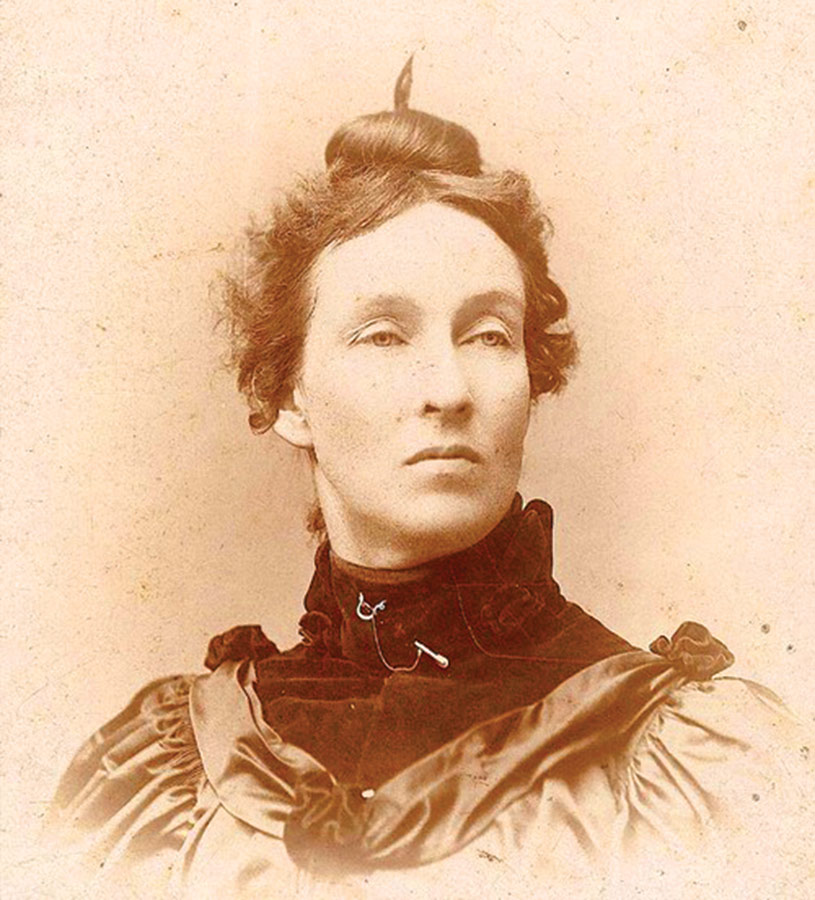
One of the most famous populists was Mary Elizabeth Lease, known as “Yellin’ Mary Ellen,” who traveled the country excoriating what she called private government. “Wall Street owns the country,” she declared. “It is no longer a government of the people, by the people, and for the people, but a government of Wall Street, by Wall Street, and for Wall Street. Monopoly is the master.”
The state and national Anti-Monopoly parties (which later evolved into the People’s Party) had leaders who were pro-civil-rights and supported the direct election of senators, a fair income tax, labor arbitration, and powerful antitrust laws to break up the largest of the combinations.
Long before social media, the Farmers Alliance built a communication system of 40,000 lecturers, from church basements to schoolhouses, creating a network of Americans who knew precisely the threat that monopolies posed to their livelihoods and their democracy.
Their movement and its allies secured the direct election of senators. In 1887, they won approval of the Interstate Commerce Act, the first federal anti-monopoly law, which required railroads to post their prices publicly and charge equal rates. The Interstate Commerce Act and the Sherman Antitrust Act of 1890 were only partial and imperfect responses to the demands of the populist agitators, yet they became a legal foundation that Franklin Roosevelt—and, more recently, Lina Khan—would later build on.
Eventually, Northern finance worked with Southern elites to crush these movements through Jim Crow segregation laws and racist violence. Those elites understood exactly what was at stake: When white and Black farmers organized together, powerful political interests faced the threat of electoral extinction. So Southern Democrats used racist appeals to drive a wedge between Black and white farmers, thwart multiracial populism, and protect the fortunes of the monopolists. By the early 20th century, the question of how to maintain democracy in industrial society was coming to a head.
One faction, represented by the future Supreme Court justice Louis Brandeis and W.E.B. Du Bois, one of the founders of the NAACP, believed in breaking up monopolies and in decentralized capital. Their solution was structural: to take apart the big banks, prohibit interlocking corporate directorates, and build an industrial policy around strong labor and a diverse, flourishing economy.
The other faction, influenced by the author and public intellectual Herbert Croly and President Theodore Roosevelt’s “New Nationalism,” accepted corporate behemoths as the inevitable engines of progress and thought the only problem was that they operated without adequate public oversight and control. The solution wasn’t to break them up or prohibit them from using discriminatory contracts; rather, they wanted expert administrators to steer them in a supposedly more humane, or at least more responsible, direction. Croly’s 1909 book The Promise of American Life envisioned a technocratic state that would manage capitalism for the public good. Top-down rationality would replace the chaos of competition.
In 1912, the anti-monopolists won a partial victory after Brandeis and Du Bois and many of their allies backed the successful presidential bid of Woodrow Wilson, who embraced an anti-monopoly vision in his campaign. Wilson signed the Clayton Act, a major antitrust law that was, in the words of one of its sponsors, designed to “preserve the independence of the man as distinguished from the power of the corporation.” But Wilson would go on to abandon his campaign promises, governing as a rabid segregationist and, in the economic panic caused by the start of World War I, leaping into the arms of big industry.
Franklin Roosevelt came to power in 1933, as the country was in a state of economic crisis. His New Deal coalition mirrored the split that had riven progressives since the Gilded Age—between those who wanted to concentrate power under expert management and those who wanted to break it up. The initial New Deal, according to the historian Arthur Schlesinger, “breathed the spirit of the New Nationalism of Theodore Roosevelt and Herbert Croly.” FDR’s National Recovery Administration attempted to renew the economy with planning and administration from above, setting prices and production targets across industries. These early New Dealers “saw economic concentration as inevitable and national planning as desirable,” Schlesinger wrote. But the later New Dealers breathed “the spirit of the New Freedom of Woodrow Wilson and Louis D. Brandeis.”
FDR and his allies came to the same conclusion that the Grangers had a generation earlier: that concentrated private power and the death of democracy were conjoined. As fascism emerged in Europe, built on the backs of a German and Italian cartel, it became clear that democracy faced a deeper political threat than many had realized. Roosevelt took aim at capital, requiring commercial banks to be separated from investment banks and bringing down the hammer of trust-busting Assistant Attorney General Thurman Wesley Arnold’s Antitrust Division—which brought more cases in five years than had been brought in the previous 50.
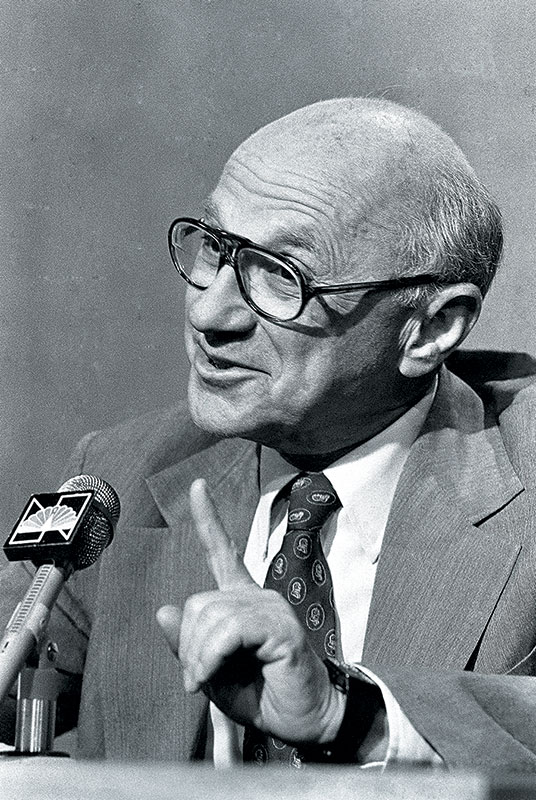
FDR’s influence would continue for decades at the Department of Justice and on the oversight committees of a US Senate where Democrats like Estes Kefauver flexed their muscle. But by the late 1970s, anti-monopoly politics had withered, and antitrust enforcement dropped off a cliff. It wouldn’t recover for the next 40 years. Big business, eager to capitalize on the inflation of the ’70s and the backlash against the progress achieved by the civil-rights movement, pushed a new theory: Antitrust enforcement was merely about prices, not power. As “experts” declared that consolidation wasn’t a problem and that “natural markets” would select the best products, Crolyism suddenly intersected with the University of Chicago economist Milton Friedman’s privatization and deregulation agenda.
Federal officials, armed with papers by Friedman and his Chicago School cronies to justify their actions, radically slowed down challenging mergers and bringing lawsuits against big companies under the Sherman and Clayton acts. Ronald Reagan’s head of the Antitrust Division at the Department of Justice called prior antitrust law “rubbish,” “misguided,” “not well informed,” and announced that he would ignore prior antitrust precedent. Reagan’s deregulation cleared the way for consolidation in many industries, and Bill Clinton’s Telecommunications Act of 1996 did the same for the media. Barack Obama, despite his rhetoric, oversaw some of the largest mergers in American history. All told, between 1980 and 2021, the federal government cheered on hundreds of thousands of mergers—leading to consolidation in every major sector of the US economy, from agriculture and groceries to health insurance and media to telecommunications and the tech industry.
As America turns 250, we are witnessing the rise of a new anti-monopoly movement, with more energy and resilience than we have seen in the past five decades.
This new anti-monopolism has become a part of our federal politics, through the work of Biden appointees like former Federal Trade Commission chair Lina Khan and Jonathan Kanter, the former assistant attorney general for the Department of Justice’s Antitrust Division. And even if the current administration doesn’t do its job, the smart candidates for the presidency in 2028 will be running on anti-monopoly platforms.
Anti-monopolism is a part of state politics as well, with state attorneys general actively looking for ways to enforce laws that address monopolistic abuses by companies like UnitedHealthcare and Amazon. They’re fighting to stop the manipulation of prices and to end the latest manifestations of what is best understood as a 50-year crime spree by some of the largest corporations in the world.
And anti-monopolism is arguably most vibrant at the grassroots level of our politics, where the heirs of the Boston Tea Partiers fight to block billions of dollars’ worth of data-center projects nationwide and reject the grandiose schemes of tech billionaires who claim that they alone can manage the future.
This 250-year fight is just gearing up for one of its biggest confrontations. This time, the foe isn’t John D. Rockefeller or Jay Gould, but the tech lords who have built moats around their power. The robber barons of old have been reborn as the CEOs of companies like Alphabet, the parent company of Google, which owns the largest television network in America (YouTube) as well as a big chunk of the cloud, and which has hoovered up gargantuan federal contracts and maintains a monopoly on both Internet search and online advertising. Google, whose CEO spent a few minutes opposing Trump in 2017 and basking in the resulting liberal adulation, has followed the same path as the industrialists in Italy when Mussolini came to power: initial opposition and then quick pragmatic acceptance—a surrender of principles that sees one of the most powerful companies in the world willingly suppressing social-media content criticizing ICE.
They promise to carry us into the future and that a future without them is no future.
The East India Company made the same promises 250 years ago. The anti-monopoly movement takes the premises of the American democratic vision and applies them to the economy, demanding that we be equal and free in all arenas of life. Without anti-monopoly, and a commitment to people having real economic power as workers and small-business owners throughout America, we can only ever be halfway free.
More from The Nation

The Jewish Case Against AI The Jewish Case Against AI
Haredi rabbis and the secular left agree: This technology is a threat to the entire social fabric.
The Fight for Educational Equality Is Also a Fight for a Just Supreme Court The Fight for Educational Equality Is Also a Fight for a Just Supreme Court
The court has severely weakened our ability to make an education system that fulfills the promise of Brown.
The Fall of “Scientific American” The Fall of “Scientific American”
When the beloved science publication got too political, its corporate owners stepped in. Now its future is uncertain.

The Bookstore Revolution in Taiwan’s Conservative Heartlands The Bookstore Revolution in Taiwan’s Conservative Heartlands
After Taiwan legalized same-sex marriage, gender-themed bookstores are working to build the social acceptance that the law alone couldn’t deliver.
Jalen Hurts Deserved Better. We All Do. Jalen Hurts Deserved Better. We All Do.
In a country that treats workers as expendable parts, Hurts’s playing through a blood clot is just the highest-profile example of the price workers pay in an oligarchy.
The Terrifying Future of States’ Criminalizing Pregnant People Is Already Here The Terrifying Future of States’ Criminalizing Pregnant People Is Already Here
The idea of charging people who have abortions with murder is gaining traction on the right. But a report finds that people are already being prosecuted for their pregnancy outcom...

