
In Gaza, We Are Literally Losing Our Ability to Speak
The human mind, faced with relentless pain, erects invisible barricades. Here, amid genocide, one of them is the ability to express our trauma out loud.
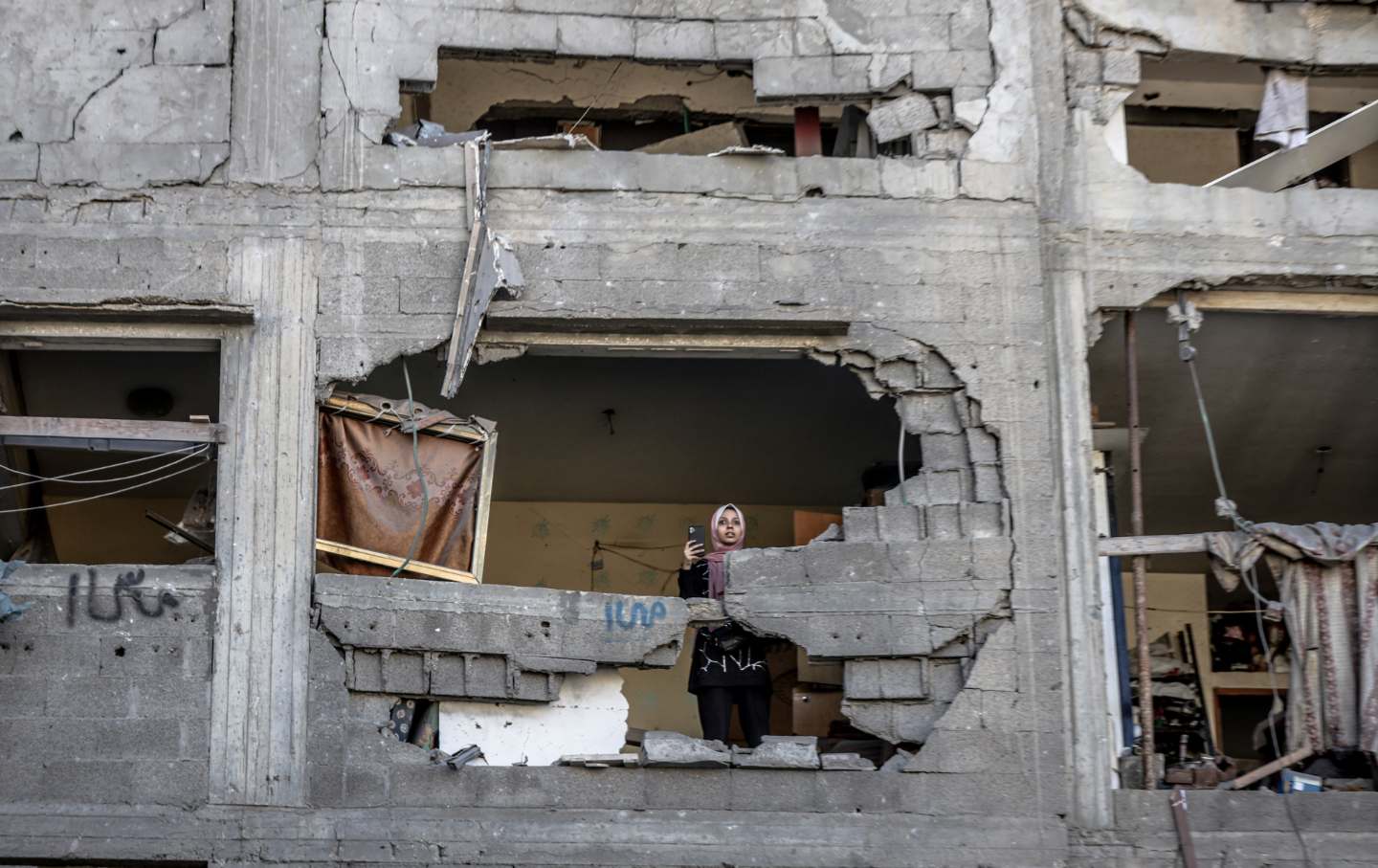
Palestinians search their belongings among the rubble of buildings destroyed by an Israeli attack on Abu Hasira street in Gaza City, Gaza, on September 30, 2025.
(Saeed M. M. T. Jaras / Anadolu via Getty Images)The streets of Gaza no longer hum with the familiar sounds of everyday life. Since October 7, 2023, they have resonated with the sounds of destruction, followed by a silence so profound it feels almost physical—an absence that suffocates words before they can even form. Trapped within Gaza’s crumbling walls, we live inside a storm in which language itself has broken down. Simply put, we are losing our very ability to speak.
I don’t mean that metaphorically. It’s all too real.
In my own life, it feels like there is a constant fog inside me. I often know what I want to say, but the words just don’t come. My thoughts get tangled, and even when I try to speak, my voice falters or dies in my throat. Sometimes my body reacts too—my chest tightens, my hands shake, or I find myself frozen, unable to move forward. It’s not just about grief or fear; it’s the sensation of being muted from within. I feel as if my inner landscape has been shrouded in silence, and navigating even simple conversations or expressing my needs becomes exhausting. Every attempt to speak out loud feels like breaking through an invisible barrier, and the frustration of being trapped in my own mind is overwhelming.
What we face is more than a mere loss of words; it is the collapse of the symbolic system that language represents—the shared framework through which we give meaning to our emotions and experiences. This collapse deepens the silence, making communication feel not only impossible but inconceivable.
Emotional Numbing: The Psyche in Retreat
The human mind, faced with relentless pain, erects invisible barricades. The struggle we face in articulating our pain is a recognized response to extreme trauma. Prolonged and intense exposure to violence, destruction, and loss, such as that experienced in Gaza, often leads to what psychologists term “emotional numbing” or “psychic blunting.” This is an attempt to protect the mind from unbearable pain and terror.
Emotional numbing does more than dull feelings; it fundamentally alters the internal landscape, making familiar words lose their significance as the experiences they represent become inaccessible.
Neurological studies on trauma survivors show that prolonged stress suppresses the brain’s language centers, making verbal expression extremely difficult. We experience this daily: a pervasive inability to summon the right words, as if our internal vocabulary has been diminished. This numbing extends beyond the expression of grief and fear; it dulls perception itself, making the world appear muted, and our own inner landscape difficult to navigate.
The loss of our ability to speak is not merely a cognitive or philosophical phenomenon; continuous shock changes the rhythm of the heart, makes breathing uneven, slows our steps, and etches itself into our faces. Hunger weakens the voice, sleeplessness scrambles thought, and the cold makes lips tremble before they can shape words. We do not fall silent because we cannot find what we mean to say, but because our minds and bodies are too exhausted to carry language.
Relentless trauma reshapes the meanings of words, turning them into hollow shells of anguish. “Home”—once a place of safety, comfort, and family—has become a pile of stone and dust where memories lie buried.
“Friend”—once a source of companionship and support—has been reduced to a whispered name on trembling lips, a fading memory, or a chilling question: Are they still alive?
“Hope”— once an expectation of a brighter future—is now a fragile flame struggling against the howling wind of despair. “Safety” has turned into an illusion, a fleeting shadow shattered by falling bombs or locked doors that cannot keep danger out. What we once called “normal” has dissolved into a lost past, replaced by an unending rhythm of genocides.
I once thought that the reason no words could truly capture our suffering is because I was trying to express it in English, a language insufficient for the depths of our pain. But even our Arabic language, full of rich and nuanced terms, falls short when it comes to conveying the immensity of our anguish. Take, for example, words like qahr, ghussa, and faj‘a: terms heavy with meaning, signifying oppression, a lump in the throat, and sudden grief. Yet even these cannot fully encompass the raw, overwhelming pain we endure. Deep pain surpasses all languages, defying expression and slipping beyond the grasp of any vocabulary.
This shattered lexicon reflects a shattered reality. Language, once a living archive of human experience, now strains to keep pace with a destruction so vast it erases the very foundations of meaning. Words themselves have been eroded, pushing us towards a state of nihilism in which life feels stripped of inherent value. They become a “language of the unspeakable,” a void where communication should be, speaking volumes about the depth of our despair.
Children sit motionless, eyes vacant, as bombs drop around them, their voices swallowed by shock. Mothers clasp empty hands, their grief too vast to speak aloud. Fathers wander the ruins, their words caught in a chokehold of drain and grief. Our brains, overwhelmed by the magnitude of devastation, slow their rhythm, turning language into a flickering candle struggling against an endless night.
The constant state of hyper-awareness, sleep disruption, and intrusive memories inherent in genocide zones sap the cognitive resources necessary for eloquent articulation. This results in what is known as a “psychological lockdown” of language centers, rendering it impossible for us to coherently convey the enormity of our suffering.
In such moments, a profound rupture occurs between one’s very being and the capacity of language to represent it.
Language, at its core, is a tool we use to assign meaning to our experiences, to build narratives, and to connect with others. When the fundamental elements of our existence are systematically obliterated—our homes reduced to dust, our social bonds severed by loss, our sense of identity fragmented—the linguistic frameworks we once relied upon become insufficient, even obsolete. Words that once bore profound weight now crumble into emptiness, incapable of conveying the raw reality.
Philosopher Alan Tormey describes emotions as being intentional—about something real and communicable. Trauma fractures this intentionality. Our emotions lose their clarity, drifting like splintered shards that can’t be fit back together.
The Silent Abyss
The rupture between experience and language plunges us into an abyss where words fail and silence reigns. This quietness is not born of peace but imposed by anguish. It is a silence so heavy it presses down on the chest, a quiet that screams.
This collapse of communication isolates us further. We live behind a wall of unspeakable torment that few outside can penetrate. Our voices feel like faint resonances, lost in the vastness of a world unwilling or unable to listen.
The genocide is not merely a personal struggle; it is a collective one. How can we explain the unending fear, the constant threat, the pervasive grief, when the words themselves feel inadequate? We feel as though we are speaking a different language, one born of trauma and loss, that others fail to grasp.
Many thinkers have argued that pain is an existential state too vast for language; its acuteness, its all-encompassing yet intimate nature, resist the neat boundaries of speech. We feel this every day: our grief is not just hard to express, it is unspeakable by its very nature. And so, we turn to other vessels—silence, the language of our bodies, the unspoken bonds between survivors—not as lesser forms of expression, but as the only mediums able to hold what cannot be said.
We rely on subtle signals and shared understanding. A glance, a touch, a gesture can carry volumes that words cannot. Sometimes it’s the way we hold space for each other in silence, knowing the other person feels the same pain. Other times, it’s the rhythms of daily life—the routines and small acts of care that communicate solidarity. We speak through presence rather than speech, through actions rather than declarations. Even without words, there is a language among survivors that holds what cannot be articulated, a quiet conversation that exists in shared glances, bodily responses, and mutual understanding.
The words we do manage to speak feel like faded images of colors no one can remember, desperate attempts to hold what cannot be held. It not only fails to communicate; it betrays its very purpose, leaving us in a double imprisonment: of agony, and of having no voice to convey it.
Speaking Without Words
On ruined walls, murals bloom—vivid colors defying gray rubble. Children’s drawings, crude but alive, speak of dreams that refuse to die. Songs rise from the ashes in quiet gatherings, threads of memory and resistance woven into melodies. Hands clasp in silence, holding grief and hope in a shared breath.
Popular
“swipe left below to view more authors”Swipe →These nonverbal languages—art, ritual, shared silence—become lifelines. They hold what words cannot. They weave a fragile thread from the invisible wounds within to the world outside.
Bearing Witness: Writing as Resistance
Surrounded by a silence heavy with loss and grief, many of us, including myself, turn to writing in a desperate attempt to bridge the gulf between our inner experience and the external world. Yet, even this act reveals the profound limitations of language. My words, and those of others, often feel too small to contain the immensity of the pain, the weight of witnessing and experiencing the systematic dismantling of a people.
We persist in the illusion of language, knowing it will never fully encompass our truth. Despite all this, it is also an act of profound resistance to the trauma’s grip, an attempt to reclaim some humanity and ensure that our story, however difficult to articulate, does not remain unheard. We write not to pretend the pain can be contained, but to keep the door slightly ajar between the world we inhabit and the world beyond the siege.
A Collective Cry: Learning to Listen
Gaza’s silence is a call. To hear this silence is to recognize a shared humanity stretched thin by suffering.
The world outside often engages with snippets—statistics, headlines, fleeting images—but misses the depths beneath. Silence challenges us to listen differently: to attend to what is unspoken, and to understand language’s limits. Only then can solidarity move beyond words, becoming an authentic response to human pain.
I don’t want those outside Gaza to simply read the news and move on with their lives as if nothing happened. Instead, pause for a moment. A child has been killed. Think beyond the headline. Consider what is left unsaid: the dreams of this child, their friends, their family, the life they imagined, the things they hoped to achieve. Every person has a story, a life, and aspirations—not just a statistic or a fleeting news item. True solidarity comes from honoring that human reality, taking a moment to acknowledge their existence and their dreams.
Silence Speaks When Language Fails
Though language falters, the human spirit endures. Beneath the silence lies a fierce, stubborn heartbeat refusing to be silenced. We carry the weight of memory and loss, yet trust in the divine plan that guides the future. We hold tight to the hope that one day, “home” will again mean safety and warmth. That “friend” will return as a smile, not a ghost. That “hope” will blaze bright and unbreakable.
Our silence holds memory, loss, and hope, and speaks volumes to those willing to hear. It reminds us that expression transcends speech and that resistance takes many forms, including the profound language of silence.
It says: We are still here. We endure. Listen—not just to our words, but to what lies between them. In that silence lies the truth of Gaza.
Become a Sustaining Donor This September
Between the reemergence of right-wing red-baiting and Donald Trump’s use of the chilling National Security Presidential Memorandum–7 to criminalize left political organizing, we’re seeing McCarthyism reborn before our eyes.
This assault on democracy cannot be ignored or wished away. Resisting it requires bravery in the face of threats and repression, a steadfast commitment to the truth, and the unwavering belief that we can—and will—overcome this darkness.
We must have an independent media that sets the record straight, unearths corruption and abuses of power, and advances a politics of justice and dignity for all if we’re to win this fight.
That’s why I’m writing to you today. This September, The Nation needs to add 100 monthly donors to sustain our progressive journalism. Your contribution makes the next investigative report, the next truth-speaking column, and the next pathbreaking essay all possible.
I hope you’ll support our work with a recurring donation today. If you donate $10 or more a month, we’ll send you a brand new “Hands Off the Free Press!” sticker to recognise your commitment to our cause. Please, donate today.
Onward,
Katrina vanden Heuvel
Editor and Publisher, The Nation
More from The Nation
Israel’s Election Can’t Fix What Netanyahu Broke Israel’s Election Can’t Fix What Netanyahu Broke
The fundamental problem is not the name of the prime minister, but rather the actions of the Israeli government and the urgent issues that need to be addressed.
The AfD’s Rise Isn’t Just About East Germany The AfD’s Rise Isn’t Just About East Germany
The Alternative für Deutschland has a stable national poll lead, including in the former West Germany. Its rise owes to much more than Eastern grievances.
Chinese Development Is the Betrayal Washington Cannot Forgive Chinese Development Is the Betrayal Washington Cannot Forgive
The prospects for Xi Jinping’s visit are dim because American leaders are blaming China for the failures of globalization.
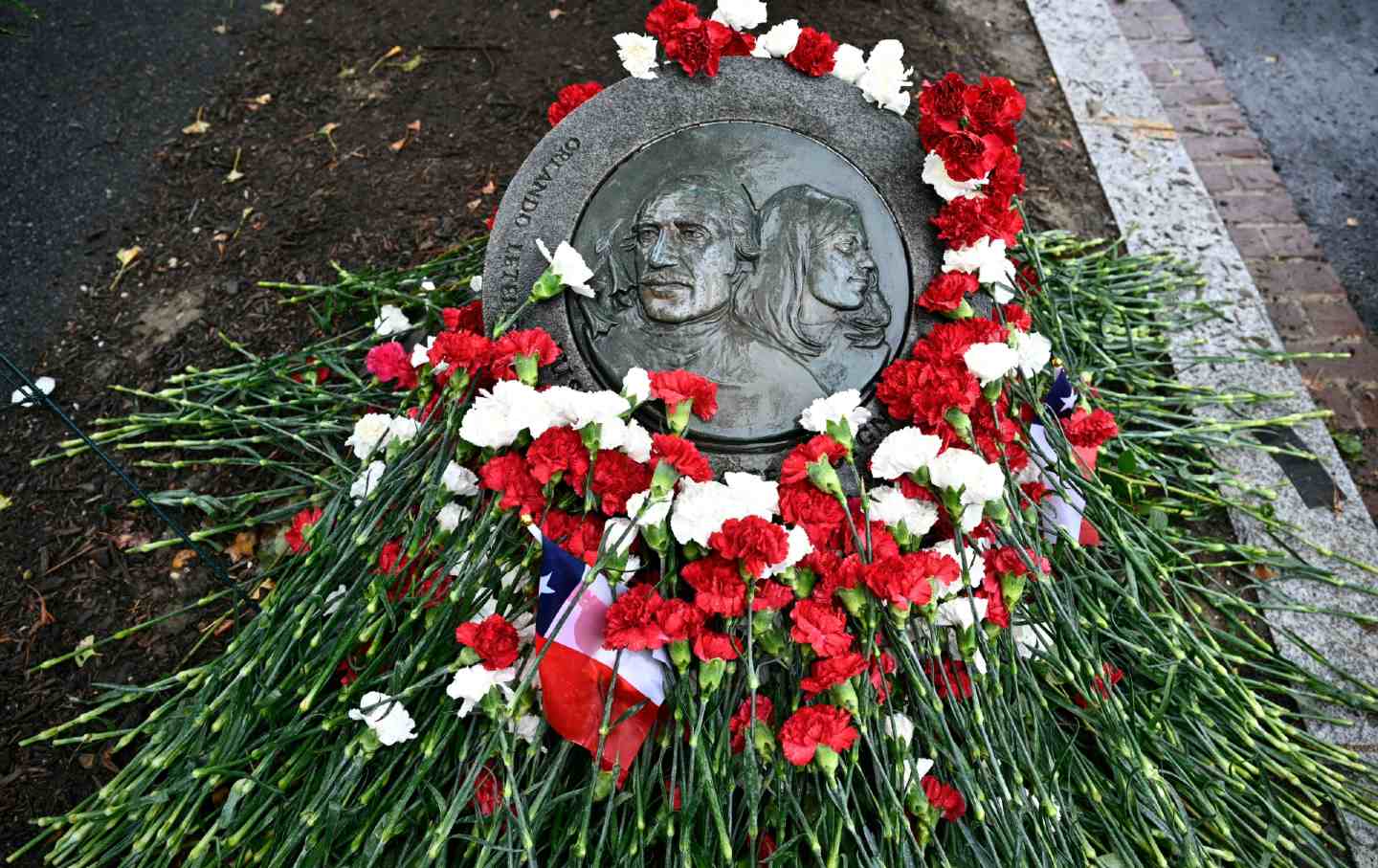
Pinochet: The Verdict of History in the Letelier-Moffitt Case Pinochet: The Verdict of History in the Letelier-Moffitt Case
An act of international terrorism on the streets of Washington, DC, still reverberates 50 years later.
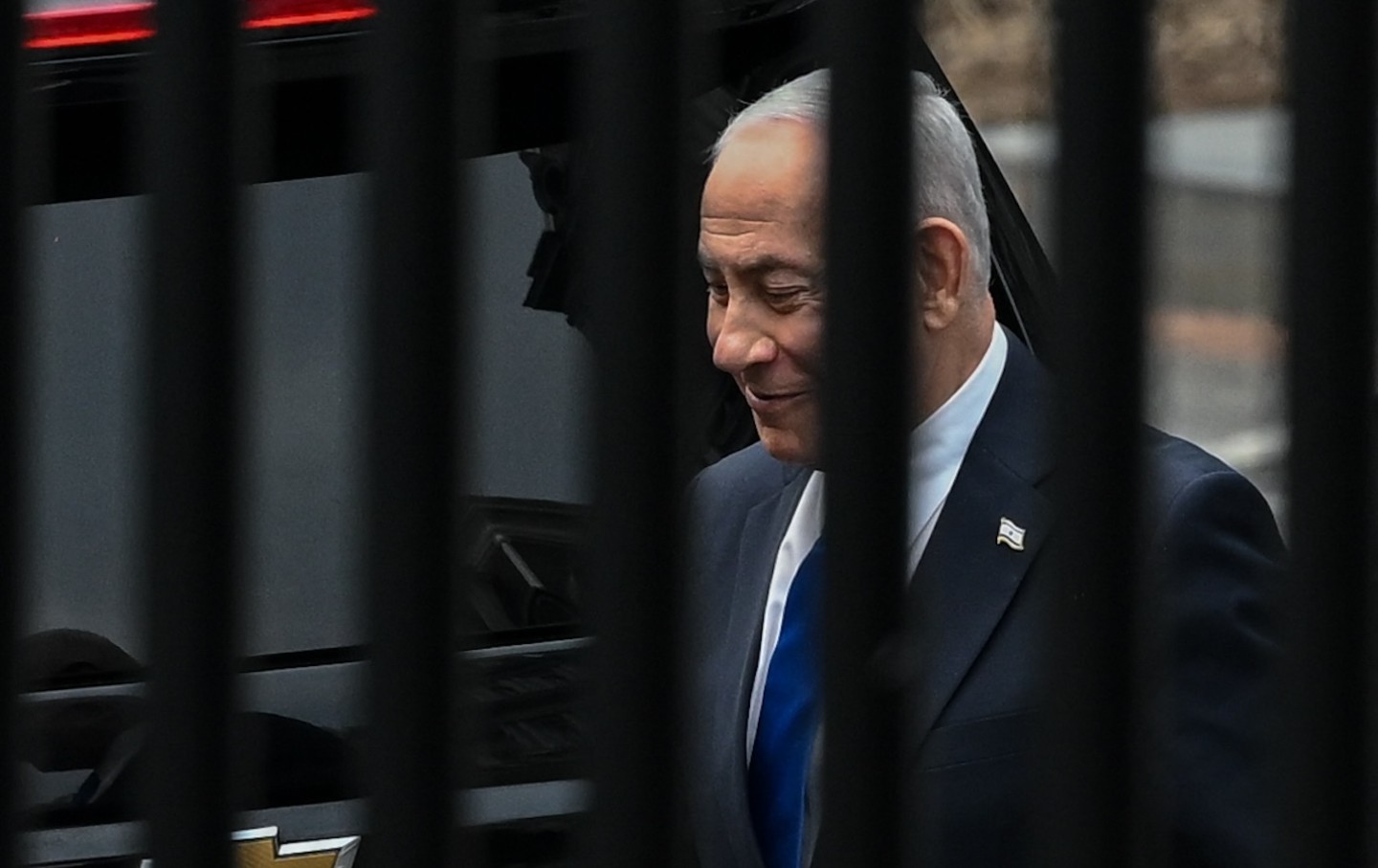
How to Arrest Benjamin Netanyahu How to Arrest Benjamin Netanyahu
Make no mistake: The United States can seize Netanyahu for crimes under US law and prosecute him in US courts when he is in New York City this week.
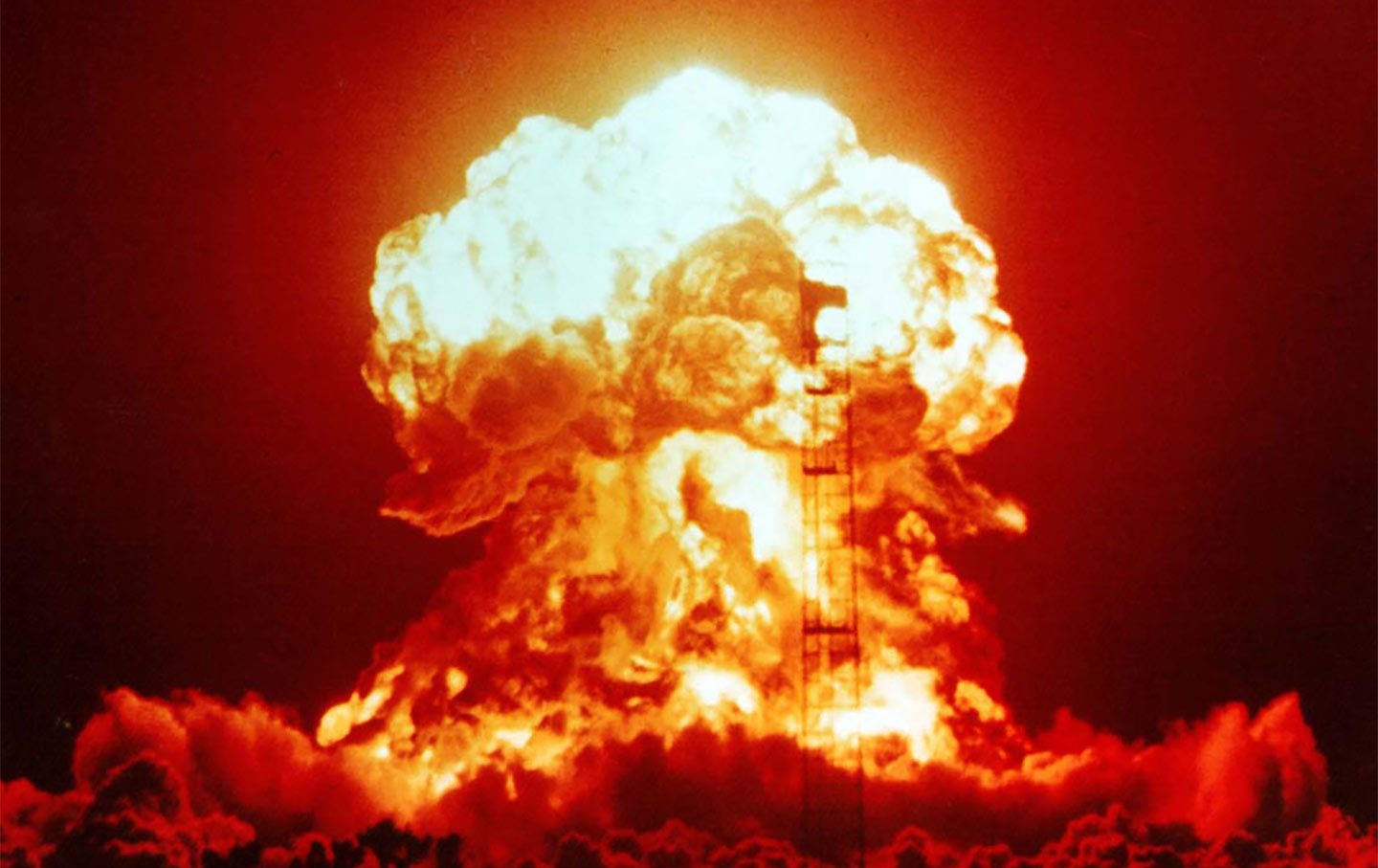
In the Age of AI, Nuclear Weapons Abolition Is a Renewed Imperative In the Age of AI, Nuclear Weapons Abolition Is a Renewed Imperative
As long as we have nuclear weapons, the job of ending humanity will continue to be as easy as the push of a button—or an AI agent hacking into a nuclear command-and-control system...

