As Federal Chaos Ensues, Trustbusters Rise in the States
With Trump’s antitrust appointees more concerned with scoring points in MAGA culture wars than restraining corporate abuses, officials in the states are keeping up the fight.

Since Donald Trump took office in January, state officials who enforce laws on corporate power have been looking for signs about what kind of partners they can expect at the federal anti-monopoly agencies. Federal enforcers during the Biden administration teamed up with their state counterparts on major monopoly and merger prosecutions, but with the incoming administration’s more favorable view of corporate power, state enforcers have been wondering how seriously the feds might take their trust-busting duties.
The answer became clearer last week. The Federal Trade Commission, under Trump-appointed chair Andrew Ferguson, cleared a merger between advertising powerhouses Omnicom Group and Interpublic Group, creating the world’s largest advertising company, with control of more than half of the industry. Ferguson’s FTC cleared the deal only after the companies agreed to allow their clients to advertise on any platform—most obviously Elon Musk’s X—regardless of its political proclivities. As Ferguson said of the nominally independent agency, ensuring that advertisers don’t boycott conservative media platforms “is a top priority of the Trump-Vance FTC.”
The decision to impose such blatant political goals on an otherwise anticompetitive merger dovetails with the agency’s work since Trump took office. In March, President Trump illegally fired the two Democratic members of the FTC, Alvaro Bedoya and Rebecca Kelly Slaughter, gutting the agency’s ability to carry out some of its core duties while furthering Trump’s campaign to strip federal agencies of their independence. Although the agency has found the capacity to hold workshops on the perils of gender-affirming care for minors, when it comes to combating corporate abuses the message to state officials is clear: You’re on your own.
The good news is that state leaders around the country are rising to meet the moment. Lawmakers and law enforcers from Rhode Island to Minnesota to Arizona are taking action to protect a public increasingly bullied, ripped off, and scammed by a cabal of predatory corporations. They are penning and often passing new laws aimed at checking corporate power and its harms—high prices, shuttered stores, lost jobs—and are dragging monopolists to court for their villainy.
In Rhode Island, residents of Woonsocket, an urban enclave that straddles the Massachusetts state line between Providence and Boston, have struggled without access to fresh, healthy food for years. In the state’s largest and most persistent food desert, the city’s single supermarket sits miles from where most folks live. A full third of Woonsocket residents receive federal food assistance.
Sabina Matos, the state’s lieutenant governor, began working with independent grocers to better understand why a new store hadn’t taken root in one of the city’s many vacant storefronts. What she found was something prevalent in Rhode Island and throughout the country: Food deserts and folks struggling to both access and afford fresh food, in part because small grocers face bullying by supermarket giants like Walmart and their massive suppliers, forcing them to charge customers more just to survive.
So Matos and her team helped craft a package of state bills that would ban the restrictive deeds big supermarket chains use to stop new stores from opening; preserve good union jobs in the industry; and, supporters hope, help spur new fresh-food options in the state. One key Rhode Island bill would close loopholes in the Robinson-Patman Act—a federal law that bans retail price discrimination—and empower state enforcers to go after abuses by huge grocers and their suppliers. Similar bills, supported by the independent grocers’ group the National Grocers Association, have been introduced in Maine and Minnesota.
Matos says states are fundamentally important in the fight against corporate power, regardless of what the feds are or aren’t doing. “Consolidation of corporate power starts on your block,” Matos told me in an e-mail. “National dominance is built at the local level. The only way to fight back on that is to have regulators who are on the ground, who know their community and are ready to respond quickly to safeguard it.”
Residents in Arizona have likewise suffered through a Venn diagram of corporate ripoffs and abuses. The cost of rent in places like Phoenix and Tucson is drastically higher than it was just a few years ago. Pandemic-era price hikes never went back down. Shoppers have fewer options for groceries after waves of supermarket mergers, and they get nickled-and-dimed at the stores that remain.
When supermarket giants Kroger and Albertsons threatened to merge two years ago, the state’s attorney general, a longtime journalist and public servant named Kris Mayes, wanted to know what folks thought. So she traveled across the state on a listening tour, where she found people worried about lost jobs, food deserts, and even higher prices at whatever stores would remain post-merger. “You can’t let this happen,” one resident of Prescott, Arizona, told Mayes at a town hall there. “You have to protect the people that you’re responsible to.”
So Mayes took action, joining the FTC’s lawsuit against the deal, which the government eventually won in court. Mayes has also used her power as a trustbuster to fight massive rent hikes in places like Phoenix, where rental prices have increased by 76 percent since 2016, and Tucson, where rents are up 30 percent. Mayes discovered—and sued to end—an alleged plot to increase rental prices driven by a company called RealPage, whose pricing algorithm allows landlords to collude on rent increases. When Mayes learned of Amazon’s schemes to allegedly rip off shoppers and lock them into their Prime memberships, Mayes sued the company twice in state court using Arizona’s own, homegrown laws.
“Frankly, people are hurting out there,” Mayes tells me. “They’re experiencing price increases that they know are not normal, and they suspect aren’t legal.” For state law enforcers, she says, taking on corporate abuses where and when they happen “is absolutely core to the job.”
The state movement to fight back against corporate power has spread far beyond Rhode Island and Arizona. In Minnesota, state Attorney General Keith Ellison has made fighting monopoly a central focus of his office. That focus has found partners in the Minnesota statehouse, where anti-monopoly champions have introduced and passed a number of bills supported or crafted by Ellison’s antitrust team. Lawmakers in New York and Massachusetts have proposed important reforms to (and in New York’s case, a first-ever) monopolization law that, if enacted, would strengthen enforcers’ ability to identify and stop monopoly abuses. In April, Washington became the first state in the country to demand that companies report major mergers to state enforcers. And state AGs from red and blue states alike have sued to fight Google, Meta, Ticketmaster, and other runaway monopolies.
“I think antitrust really has the answers to a lot of the economic questions that are bothering people,” Ellison said at a recent event hosted by my organization, the Institute for Local Self-Reliance, and the State Innovation Exchange. “Why are wages stagnant? Why do we have disappearing pharmacies around our state? Why are grocery prices up, why are rental prices up? I think there’s one overriding answer, and that’s the consolidation of markets.”
As with most states, Mayes and Arizona have often partnered with the federal antitrust agencies when suing to stop dangerous conduct and mergers. But Mayes acknowledged that, as much as she values her fellow trustbusters in DC, the continuation of aggressive federal antitrust enforcement is, at the moment, doubtful at best.
Popular
“swipe left below to view more authors”Swipe →Despite lip service to critics of corporate power, the current FTC appears more concerned with kowtowing to conservative culture-war issues than doing its core job of enforcing laws against corporate abuses. Meanwhile, at the antitrust wing of the Justice Department, new chief Gail Slater’s embrace of so-called “MAGA Antitrust”—in which the agencies wield the antitrust laws in support of conservative goals—suggests the division may also focus more on cultural grievances than on checking monopoly abuses. Workers, small businesses, and shoppers will suffer.
At the moment, federal cases against Amazon and RealPage continue. But there’s no certainty they’ll survive. The only guarantee now is the willingness of Mayes and other state regulators to take on corporate abuses within their borders. More and more, the same sentiment lives in state legislatures and justice departments coast to coast. “We’re always going to err on the side of being aggressive in these cases,” Mayes says. “Sometimes that means we’re going to go it alone.”
Disobey authoritarians, support The Nation
Over the past year you’ve read Nation writers like Elie Mystal, Kaveh Akbar, John Nichols, Joan Walsh, Bryce Covert, Dave Zirin, Jeet Heer, Michael T. Klare, Katha Pollitt, Amy Littlefield, Gregg Gonsalves, and Sasha Abramsky take on the Trump family’s corruption, set the record straight about Robert F. Kennedy Jr.’s catastrophic Make America Healthy Again movement, survey the fallout and human cost of the DOGE wrecking ball, anticipate the Supreme Court’s dangerous antidemocratic rulings, and amplify successful tactics of resistance on the streets and in Congress.
We publish these stories because when members of our communities are being abducted, household debt is climbing, and AI data centers are causing water and electricity shortages, we have a duty as journalists to do all we can to inform the public.
In 2026, our aim is to do more than ever before—but we need your support to make that happen.
Through December 31, a generous donor will match all donations up to $75,000. That means that your contribution will be doubled, dollar for dollar. If we hit the full match, we’ll be starting 2026 with $150,000 to invest in the stories that impact real people’s lives—the kinds of stories that billionaire-owned, corporate-backed outlets aren’t covering.
With your support, our team will publish major stories that the president and his allies won’t want you to read. We’ll cover the emerging military-tech industrial complex and matters of war, peace, and surveillance, as well as the affordability crisis, hunger, housing, healthcare, the environment, attacks on reproductive rights, and much more. At the same time, we’ll imagine alternatives to Trumpian rule and uplift efforts to create a better world, here and now.
While your gift has twice the impact, I’m asking you to support The Nation with a donation today. You’ll empower the journalists, editors, and fact-checkers best equipped to hold this authoritarian administration to account.
I hope you won’t miss this moment—donate to The Nation today.
Onward,
Katrina vanden Heuvel
Editor and publisher, The Nation
More from The Nation
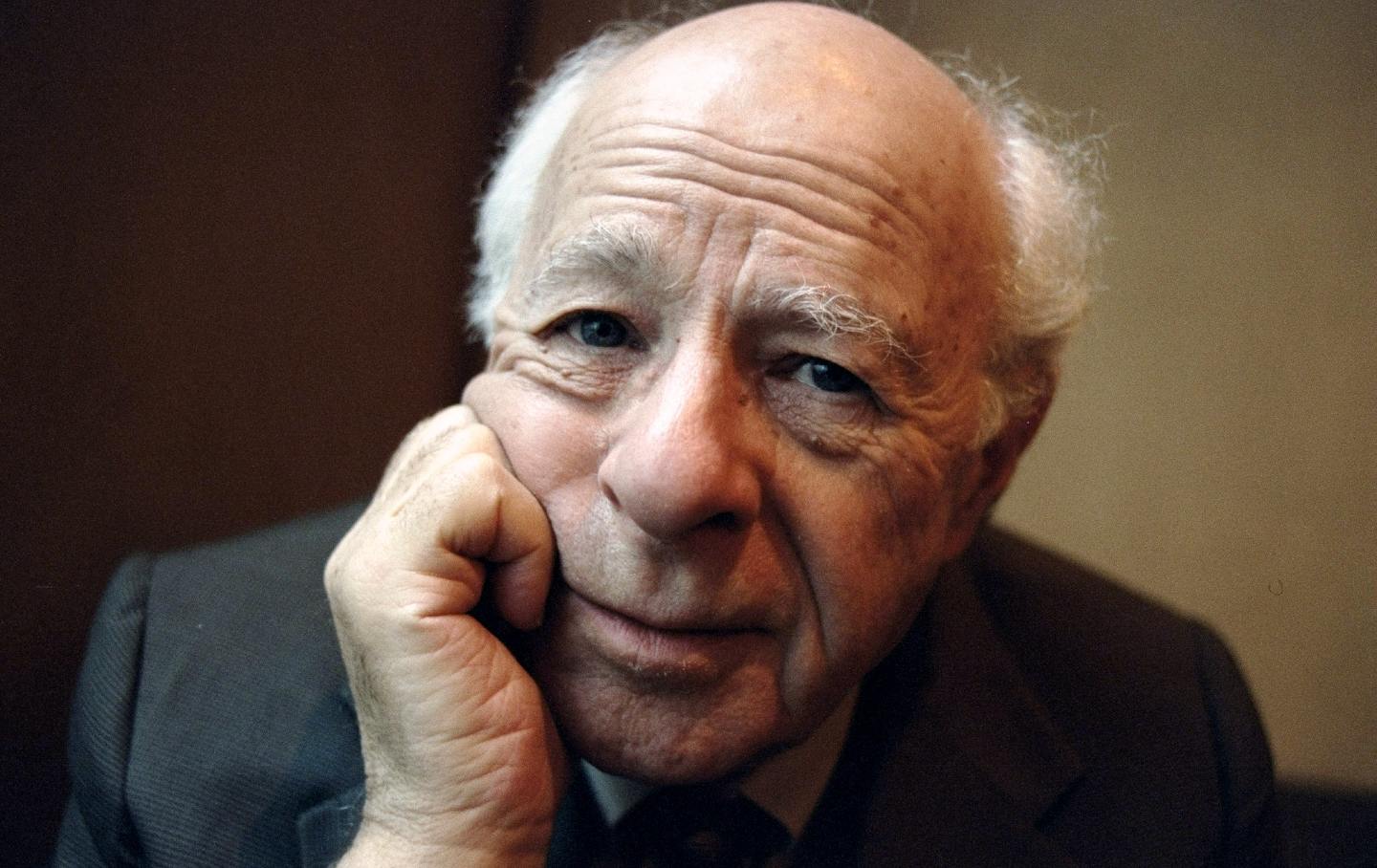
The Longest Journey Is Over The Longest Journey Is Over
With the death of Norman Podhoretz at 95, the transition from New York’s intellectual golden age to the age of grievance and provocation is complete.
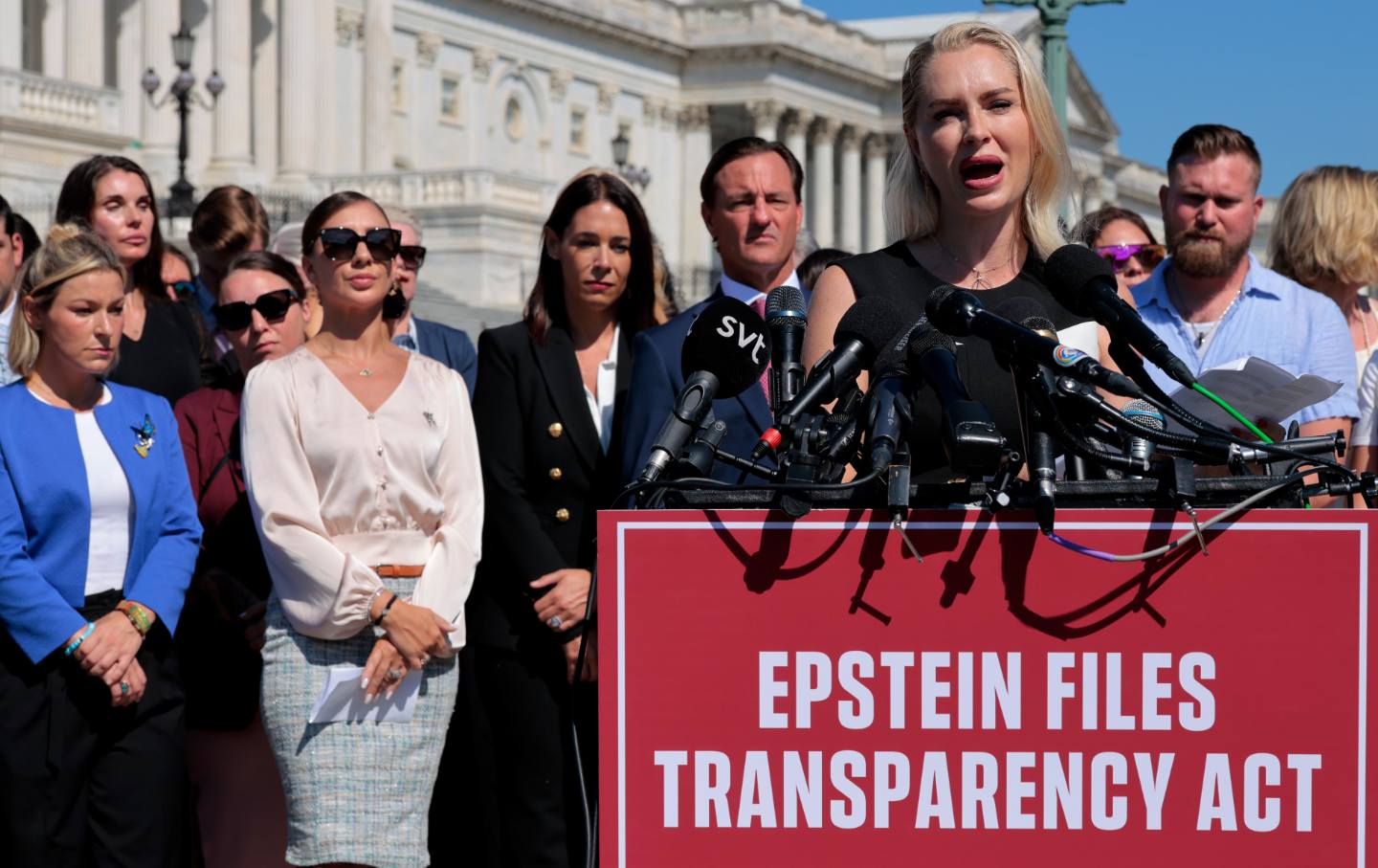
The Epstein Survivors Are Demanding Accountability Now The Epstein Survivors Are Demanding Accountability Now
The passage of the Epstein Files Transparency Act is a big step—but its champions are keeping the pressure on.

The Fight to Keep New Orleans From Becoming “Everywhere Else” The Fight to Keep New Orleans From Becoming “Everywhere Else”
Twenty years after Katrina, the cultural workers who kept New Orleans alive are demanding not to be pushed aside.

Breaking the LAPD’s Choke Hold Breaking the LAPD’s Choke Hold
How the late-20th-century battles over race and policing in Los Angeles foreshadowed the Trump era.

Mayor of LA to America: “Beware!” Mayor of LA to America: “Beware!”
Trump has made Los Angeles a testing ground for military intervention on our streets. Mayor Karen Bass says her city has become an example for how to fight back.
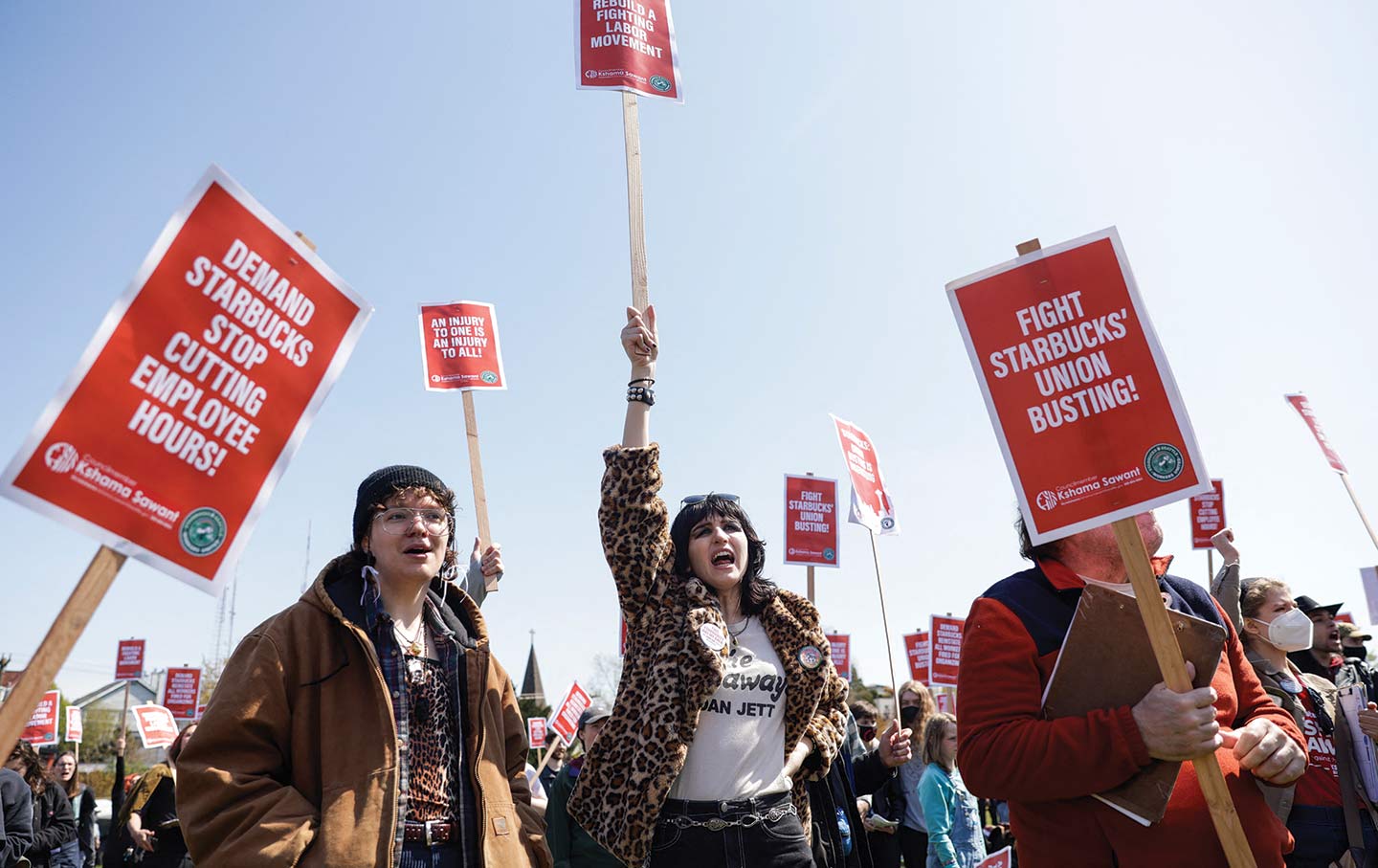
Organized Labor at a Crossroads Organized Labor at a Crossroads
How can unions adapt to a new landscape of work?

