
India’s Attack on Pakistan Was a Strategic Flop
It was a conflict with no winners. But in the end, India lost.
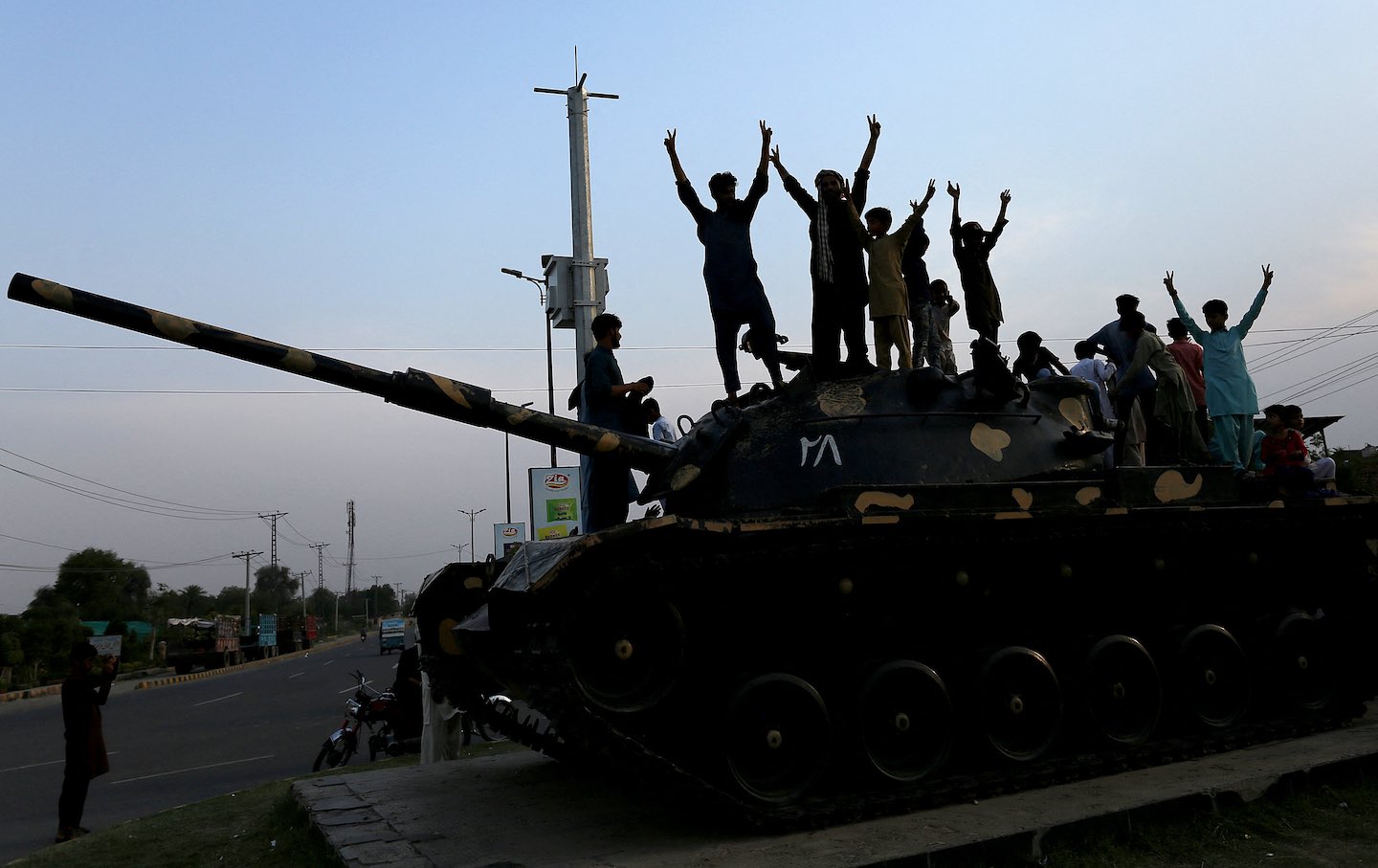
Yesterday, President Donald Trump announced that he was willing to find a solution to the long-standing dispute between India and Pakistan. “I will work with you both to see if, after a ‘thousand years,’ a solution can be arrived at concerning Kashmir,” he posted on his Truth Social platform—no doubt to the consternation of Indian Prime Minister Narendra Modi, who has treated the status of the territory as a settled issue.
For the last decade, military conflicts between the two countries have proceeded according to expectations. In the simplest possible terms, they go something like this: Pakistan, being the smaller of the two countries by every conceivable metric, can give as good as it gets to its Eastern neighbor, provided that the engagement is short and defensive. For India to assert its dominance as the larger military power, however, the conflict must progress to a full-blown war. In such a scenario, where Pakistan faces an existential threat, or believes that its territory is about to be overrun, it may decide to “go nuclear”—even at the risk of self-destruction.
The latest test of this pattern arose in the aftermath of a terrorist attack in Indian-Administered Kashmir on April 22. Quick to accuse Pakistan of orchestrating the attack, which had led to the deaths of 26 tourists, India announced a set of measures to punish its Western neighbor. These included an announcement that it was holding in abeyance a water sharing treaty that has been in place since 1960. Pakistan maintained its innocence and demanded an independent inquiry into the attack. Then, on the night of May 6 and the morning of May 7, India launched a series of missile strikes on Pakistani territory, claiming that it had killed around a hundred militants.
Pakistan says these missiles were aimed at mosques and resulted in the deaths of more than 30 civilians. In its own counteroffensive, Pakistan says it shot down six Indian warplanes. It also claims that it was able to hit 26 military installations across the Line of Control, including in the disputed area of Jammu and Kashmir. Both sides have claimed victory—just like they did in 2019, when the Pakistani Airforce responded to an Indian bombing raid in northwestern Pakistan by capturing an Indian pilot.
By the time a US-brokered ceasefire was reached on May 10, it was clear that the status quo was still in place. Over three days of intense fighting, neither side was able to land a decisive blow.
On the surface, it would appear that nothing much has changed. A terrorist attack in Indian-Administered Kashmir has once again led to a limited conflict, with both sides claiming victory for what appears to be a stalemate. Given what we know about this engagement, Pakistan’s triumphalism is a little easier to fathom: Islamabad came into this war with no other objective than to prove that it has the ability to defend itself. The onus has always been on India to justify its aggression. And the early indications are that it has failed to meet its objectives.
One of the consequences of India’s rise as an economic power is that it is compelled from time to time to test the status quo. The calculation seems to be that as India’s economy flourishes and Pakistan’s recedes, the former will be able to spend much more on defense than the latter. Ergo, a time will eventually come when India is able to subdue Pakistan even in these short-term engagements. When that happens, New Delhi will get the signal to expand its military ambitions with the eventual aim of annexing the part of Kashmir under Pakistani control—indeed, in March, Indian External Affairs Minister S. Jaishankar claimed that India is “waiting for the return of the stolen parts of Kashmir.” To prevent Pakistan from using nuclear weapons in such a scenario, New Delhi will rely on international pressure from countries that are too heavily invested in the country to countenance such destruction.
But the events of the previous week have shown that now is not that time. India’s attack on Pakistan on the night of May 6 came at the cost of at least four fighter jets that were lost in battle. These include at least one Dassault Rafale warplane whose induction into the Indian Air Force was heralded as a “game changer” by Indian Defense Minister Rajnath Singh. So one-sided was the result of the aerial battle that Le Monde described it as having exposed “the weaknesses of the Indian Air Force.” The fact that Pakistan was able to down these jets using Chinese weapons is an added cause of concern for the government in New Delhi, which has long considered Beijing a rival and an antagonist.
There have been other failures too. The Indian offensive has managed to rehabilitate the Pakistan Army in the eyes of a public that has spent the last several years questioning its role in politics. As The Nation has previously reported, by pitting itself against the country’s most popular political party, the Pakistan Tehreek-e-Insaaf, and by imprisoning its leader, the charismatic populist Imran Khan, the Pakistan army has rapidly hemorrhaged support. In the aftermath of the Pakistani counteroffensive, however, every major city in Pakistan has erupted with rallies in support of the armed forces. In other words, Pakistan is more united as a result of Indian action, and the military better equipped to consolidate its grip on power.
But perhaps most significant of all, the conflict has brought the dispute over Kashmir back into the spotlight, something Pakistan has wanted and failed to achieve for decades. The Muslim-majority region, which is claimed by both Pakistan and India, has been the casus belli for several wars between the neighbors, ever since the British partition of South Asia in 1947. Indian-Administered Kashmir, in particular, has seen decades of armed rebellion against Indian rule. But with the emergence of India as an economic powerhouse, the dispute has receded from international attention. That changed overnight, with the region suddenly catching the eye of America’s self-proclaimed dealmaker in chief.
In the end, the Indian claim of victory seems to hinge on the argument that by striking deep into Pakistani territory, it has shown itself capable of hurting Pakistan. But Pakistan is not Israel, with its feted Iron Dome. Nobody has ever doubted India’s ability to launch these strikes.
The question is whether by doing so India has served its interests. The global community will decide if destroying a handful of mosques in Pakistan has made India stronger or safer, or if it might have been better served by doing nothing at all.
Become a Sustaining Donor This September
Between the reemergence of right-wing red-baiting and Donald Trump’s use of the chilling National Security Presidential Memorandum–7 to criminalize left political organizing, we’re seeing McCarthyism reborn before our eyes.
This assault on democracy cannot be ignored or wished away. Resisting it requires bravery in the face of threats and repression, a steadfast commitment to the truth, and the unwavering belief that we can—and will—overcome this darkness.
We must have an independent media that sets the record straight, unearths corruption and abuses of power, and advances a politics of justice and dignity for all if we’re to win this fight.
That’s why I’m writing to you today. This September, The Nation needs to add 100 monthly donors to sustain our progressive journalism. Your contribution makes the next investigative report, the next truth-speaking column, and the next pathbreaking essay all possible.
I hope you’ll support our work with a recurring donation today. If you donate $10 or more a month, we’ll send you a brand new “Hands Off the Free Press!” sticker to recognise your commitment to our cause. Please, donate today.
Onward,
Katrina vanden Heuvel
Editor and Publisher, The Nation
More from The Nation
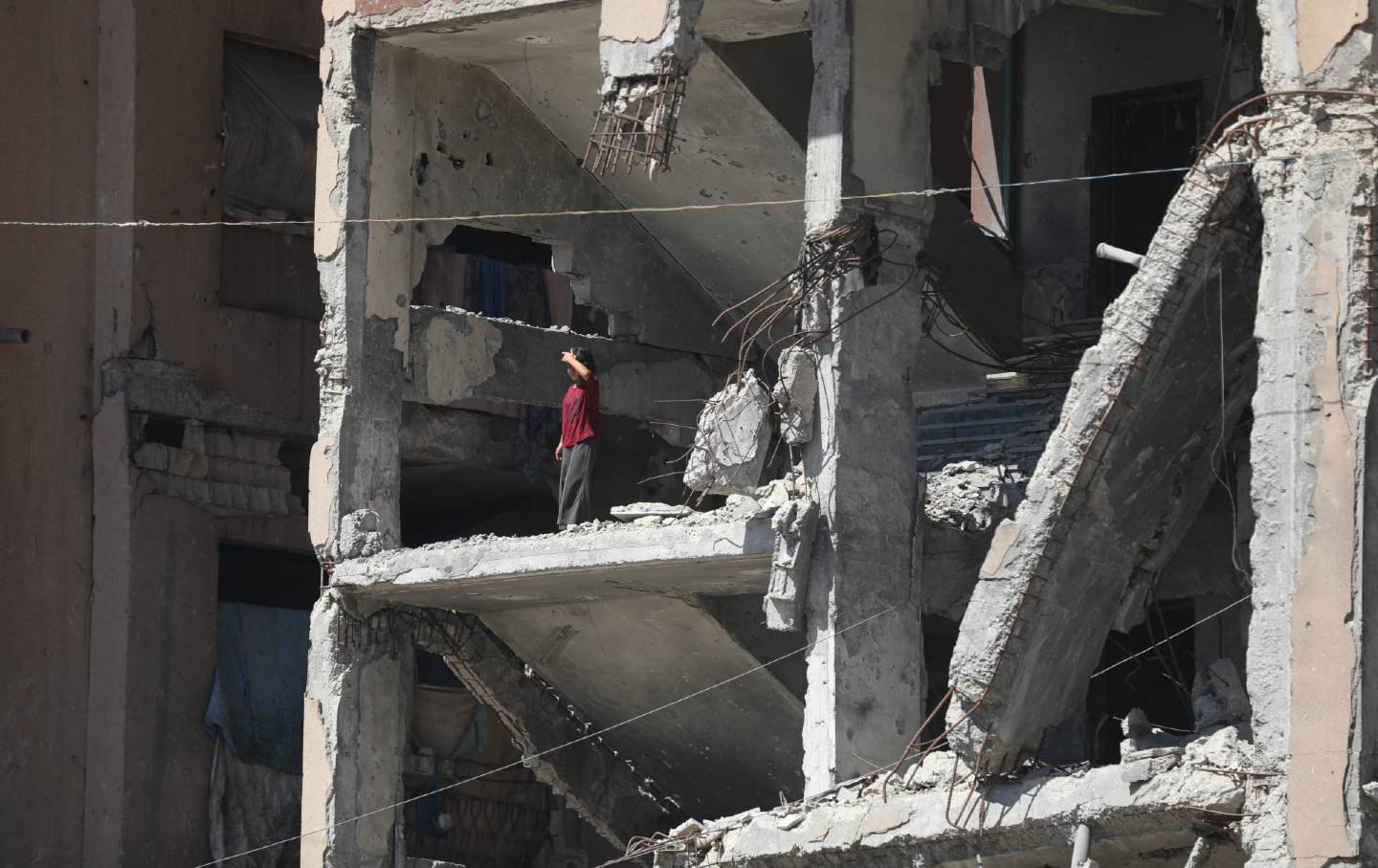
Israel’s Election Can’t Fix What Netanyahu Broke Israel’s Election Can’t Fix What Netanyahu Broke
The fundamental problem is not the name of the prime minister, but rather the actions of the Israeli government and the urgent issues that need to be addressed.

The AfD’s Rise Isn’t Just About East Germany The AfD’s Rise Isn’t Just About East Germany
The Alternative für Deutschland has a stable national poll lead, including in the former West Germany. Its rise owes to much more than Eastern grievances.
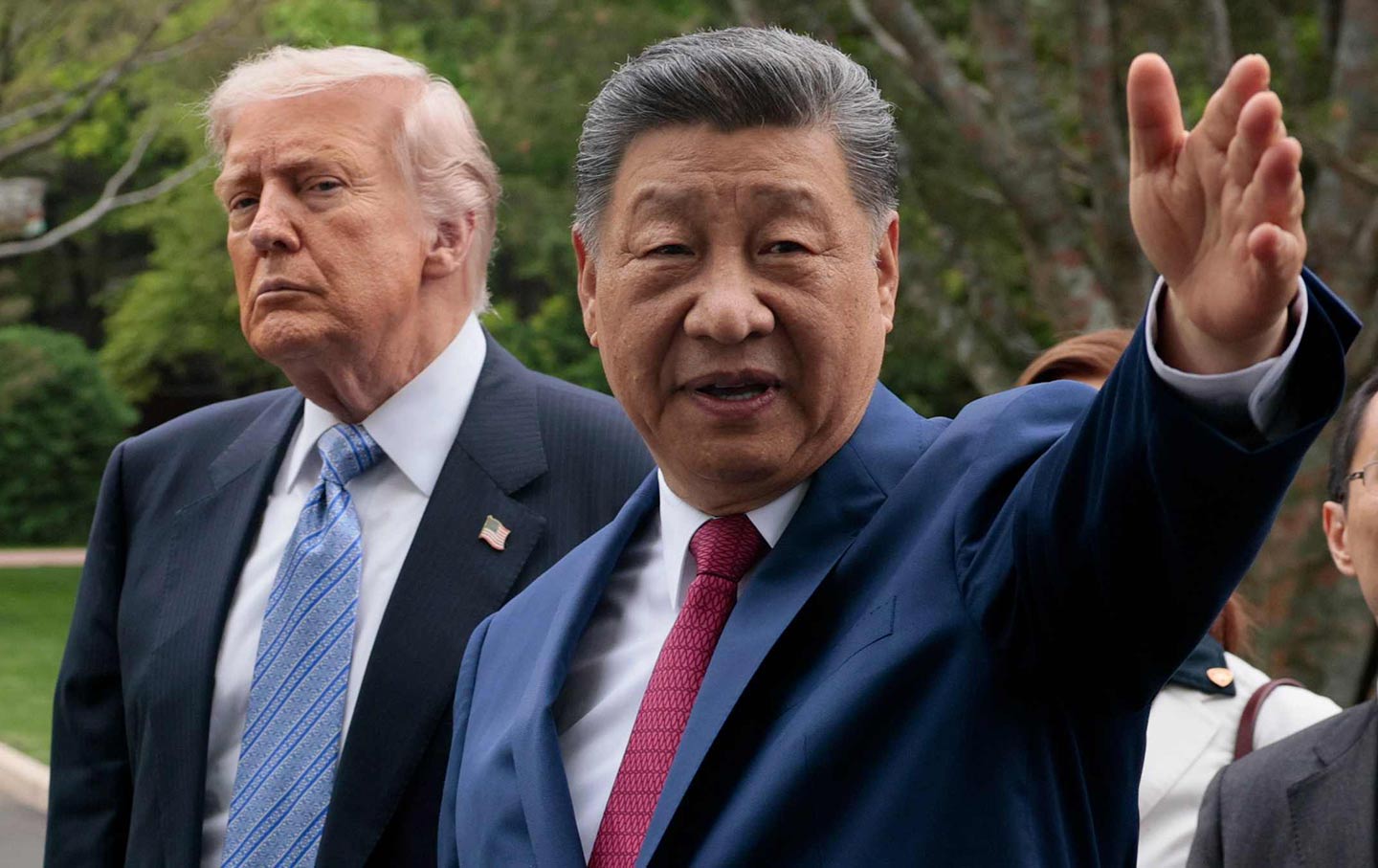
Chinese Development Is the Betrayal Washington Cannot Forgive Chinese Development Is the Betrayal Washington Cannot Forgive
The prospects for Xi Jinping’s visit are dim because American leaders are blaming China for the failures of globalization.

Pinochet: The Verdict of History in the Letelier-Moffitt Case Pinochet: The Verdict of History in the Letelier-Moffitt Case
An act of international terrorism on the streets of Washington, DC, still reverberates 50 years later.
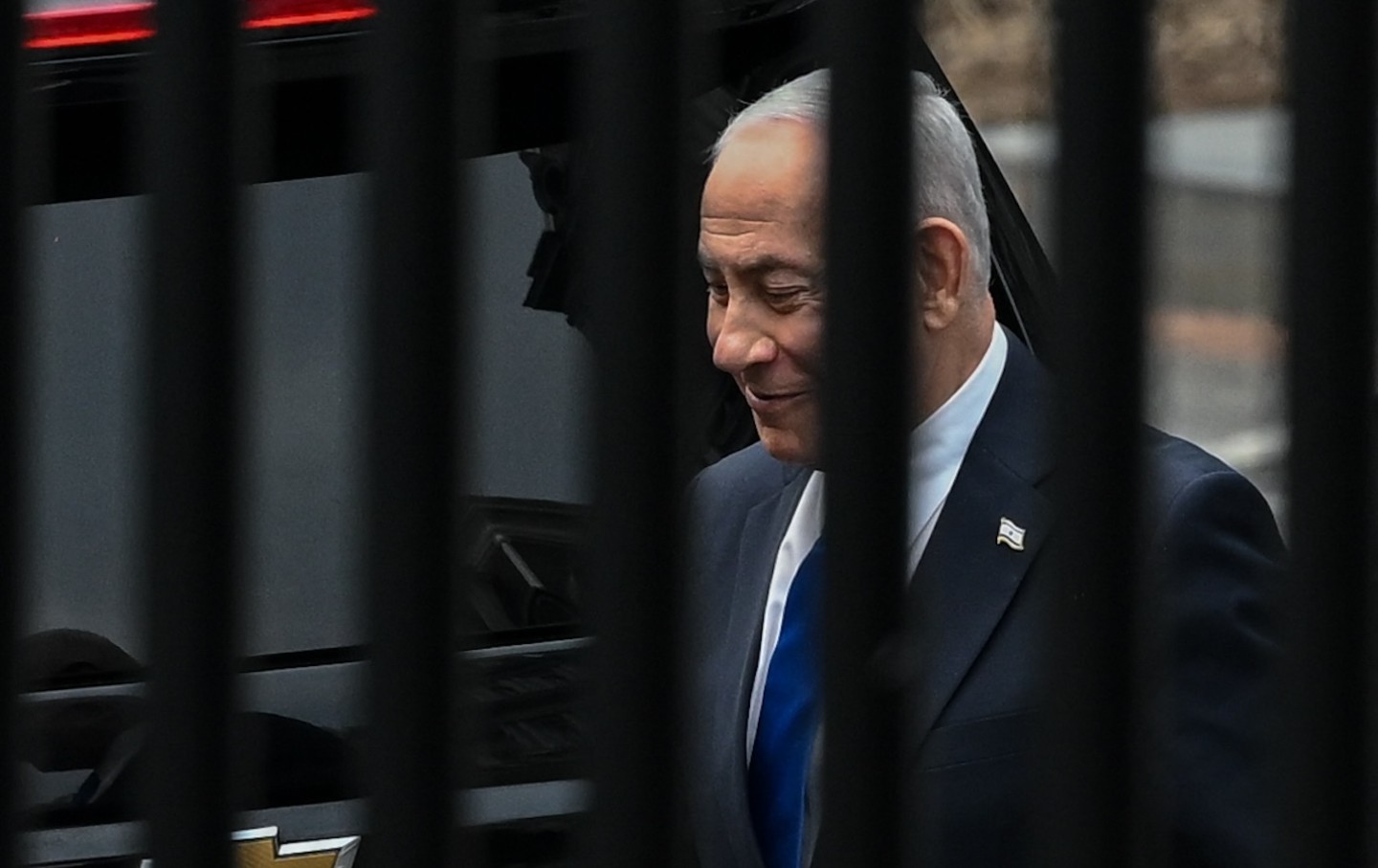
How to Arrest Benjamin Netanyahu How to Arrest Benjamin Netanyahu
Make no mistake: The United States can seize Netanyahu for crimes under US law and prosecute him in US courts when he is in New York City this week.
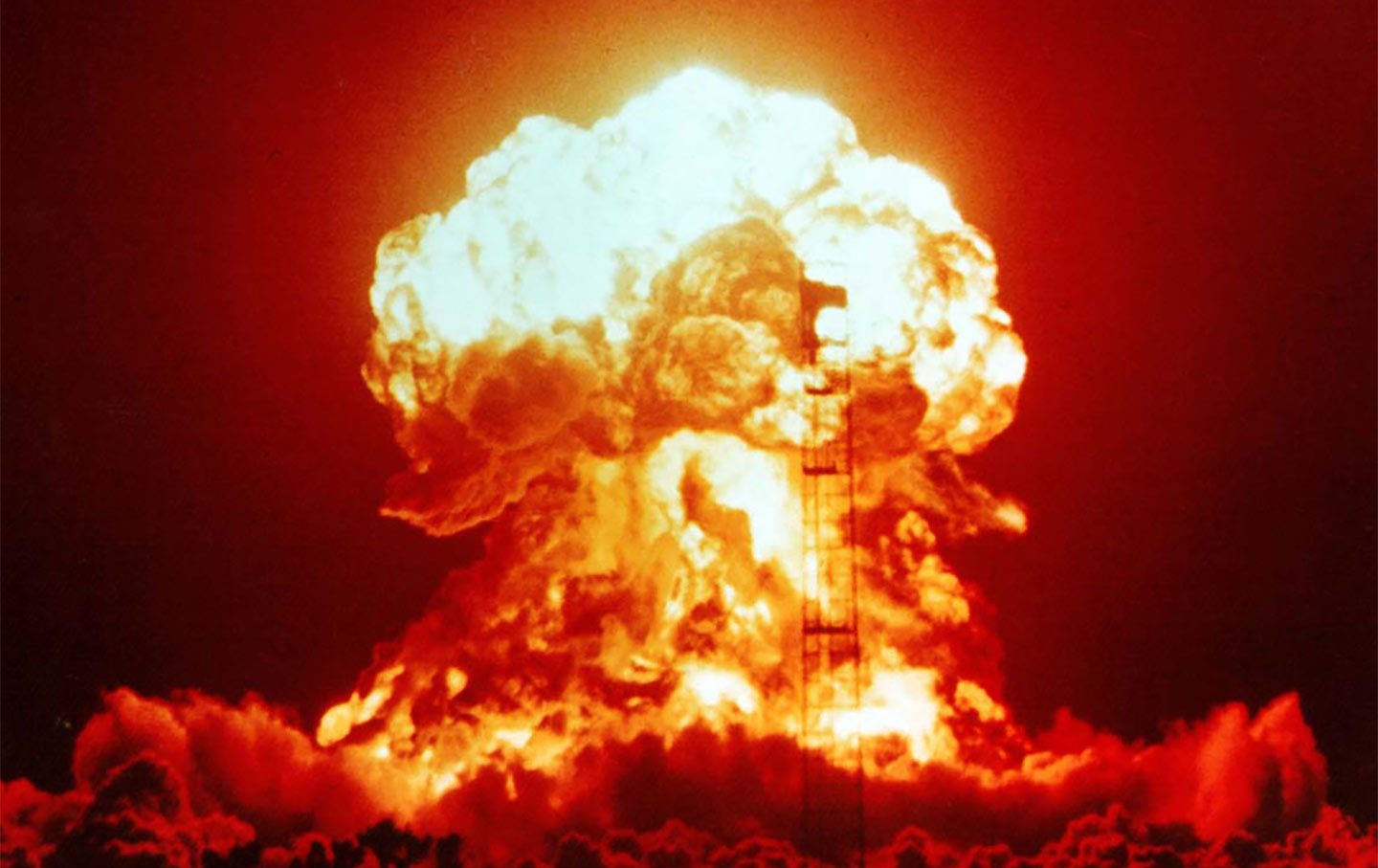
In the Age of AI, Nuclear Weapons Abolition Is a Renewed Imperative In the Age of AI, Nuclear Weapons Abolition Is a Renewed Imperative
As long as we have nuclear weapons, the job of ending humanity will continue to be as easy as the push of a button—or an AI agent hacking into a nuclear command-and-control system...

