
India’s Attack on Pakistan Was a Strategic Flop
It was a conflict with no winners. But in the end, India lost.
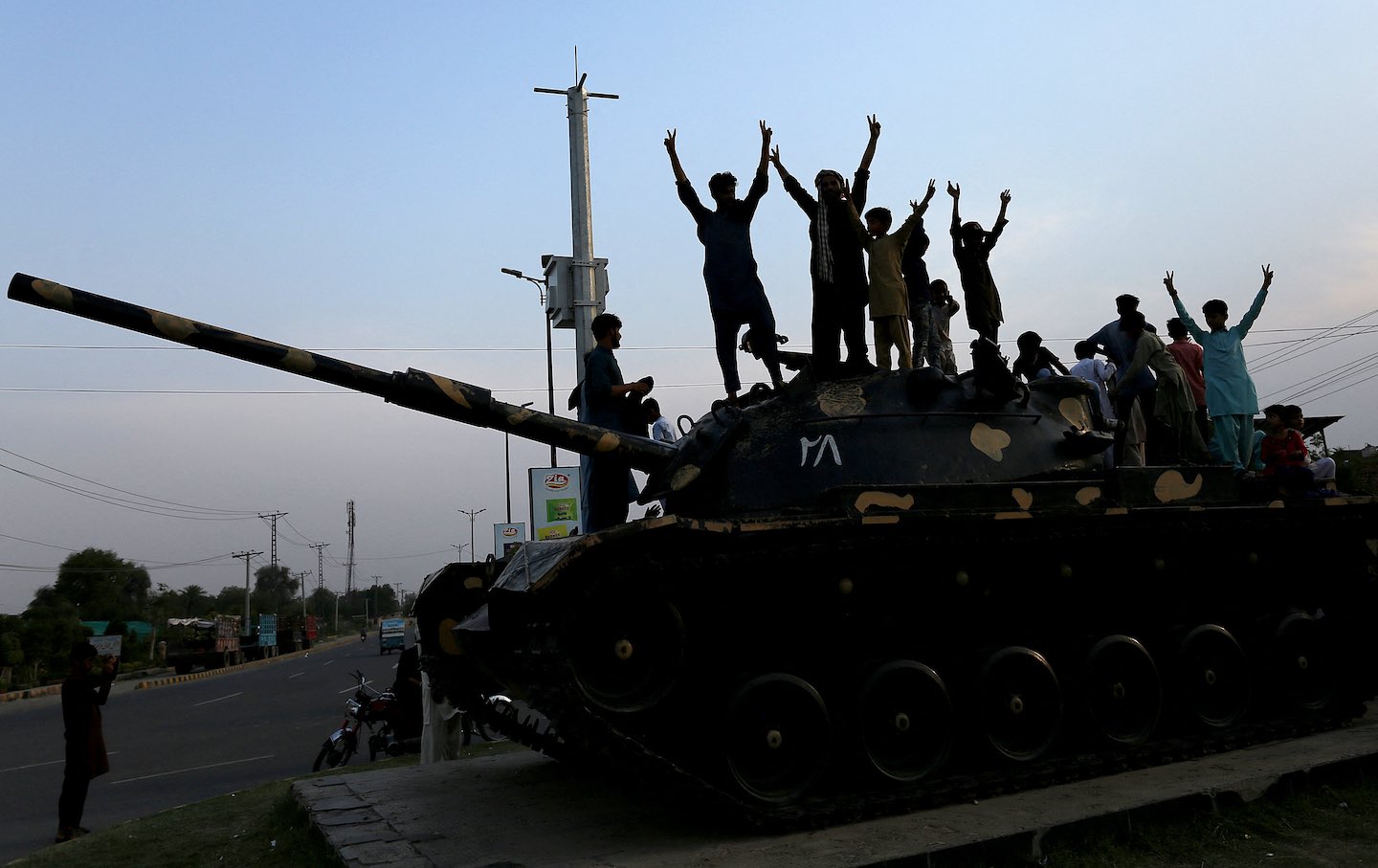
Yesterday, President Donald Trump announced that he was willing to find a solution to the long-standing dispute between India and Pakistan. “I will work with you both to see if, after a ‘thousand years,’ a solution can be arrived at concerning Kashmir,” he posted on his Truth Social platform—no doubt to the consternation of Indian Prime Minister Narendra Modi, who has treated the status of the territory as a settled issue.
For the last decade, military conflicts between the two countries have proceeded according to expectations. In the simplest possible terms, they go something like this: Pakistan, being the smaller of the two countries by every conceivable metric, can give as good as it gets to its Eastern neighbor, provided that the engagement is short and defensive. For India to assert its dominance as the larger military power, however, the conflict must progress to a full-blown war. In such a scenario, where Pakistan faces an existential threat, or believes that its territory is about to be overrun, it may decide to “go nuclear”—even at the risk of self-destruction.
The latest test of this pattern arose in the aftermath of a terrorist attack in Indian-Administered Kashmir on April 22. Quick to accuse Pakistan of orchestrating the attack, which had led to the deaths of 26 tourists, India announced a set of measures to punish its Western neighbor. These included an announcement that it was holding in abeyance a water sharing treaty that has been in place since 1960. Pakistan maintained its innocence and demanded an independent inquiry into the attack. Then, on the night of May 6 and the morning of May 7, India launched a series of missile strikes on Pakistani territory, claiming that it had killed around a hundred militants.
Pakistan says these missiles were aimed at mosques and resulted in the deaths of more than 30 civilians. In its own counteroffensive, Pakistan says it shot down six Indian warplanes. It also claims that it was able to hit 26 military installations across the Line of Control, including in the disputed area of Jammu and Kashmir. Both sides have claimed victory—just like they did in 2019, when the Pakistani Airforce responded to an Indian bombing raid in northwestern Pakistan by capturing an Indian pilot.
By the time a US-brokered ceasefire was reached on May 10, it was clear that the status quo was still in place. Over three days of intense fighting, neither side was able to land a decisive blow.
On the surface, it would appear that nothing much has changed. A terrorist attack in Indian-Administered Kashmir has once again led to a limited conflict, with both sides claiming victory for what appears to be a stalemate. Given what we know about this engagement, Pakistan’s triumphalism is a little easier to fathom: Islamabad came into this war with no other objective than to prove that it has the ability to defend itself. The onus has always been on India to justify its aggression. And the early indications are that it has failed to meet its objectives.
One of the consequences of India’s rise as an economic power is that it is compelled from time to time to test the status quo. The calculation seems to be that as India’s economy flourishes and Pakistan’s recedes, the former will be able to spend much more on defense than the latter. Ergo, a time will eventually come when India is able to subdue Pakistan even in these short-term engagements. When that happens, New Delhi will get the signal to expand its military ambitions with the eventual aim of annexing the part of Kashmir under Pakistani control—indeed, in March, Indian External Affairs Minister S. Jaishankar claimed that India is “waiting for the return of the stolen parts of Kashmir.” To prevent Pakistan from using nuclear weapons in such a scenario, New Delhi will rely on international pressure from countries that are too heavily invested in the country to countenance such destruction.
But the events of the previous week have shown that now is not that time. India’s attack on Pakistan on the night of May 6 came at the cost of at least four fighter jets that were lost in battle. These include at least one Dassault Rafale warplane whose induction into the Indian Air Force was heralded as a “game changer” by Indian Defense Minister Rajnath Singh. So one-sided was the result of the aerial battle that Le Monde described it as having exposed “the weaknesses of the Indian Air Force.” The fact that Pakistan was able to down these jets using Chinese weapons is an added cause of concern for the government in New Delhi, which has long considered Beijing a rival and an antagonist.
There have been other failures too. The Indian offensive has managed to rehabilitate the Pakistan Army in the eyes of a public that has spent the last several years questioning its role in politics. As The Nation has previously reported, by pitting itself against the country’s most popular political party, the Pakistan Tehreek-e-Insaaf, and by imprisoning its leader, the charismatic populist Imran Khan, the Pakistan army has rapidly hemorrhaged support. In the aftermath of the Pakistani counteroffensive, however, every major city in Pakistan has erupted with rallies in support of the armed forces. In other words, Pakistan is more united as a result of Indian action, and the military better equipped to consolidate its grip on power.
But perhaps most significant of all, the conflict has brought the dispute over Kashmir back into the spotlight, something Pakistan has wanted and failed to achieve for decades. The Muslim-majority region, which is claimed by both Pakistan and India, has been the casus belli for several wars between the neighbors, ever since the British partition of South Asia in 1947. Indian-Administered Kashmir, in particular, has seen decades of armed rebellion against Indian rule. But with the emergence of India as an economic powerhouse, the dispute has receded from international attention. That changed overnight, with the region suddenly catching the eye of America’s self-proclaimed dealmaker in chief.
In the end, the Indian claim of victory seems to hinge on the argument that by striking deep into Pakistani territory, it has shown itself capable of hurting Pakistan. But Pakistan is not Israel, with its feted Iron Dome. Nobody has ever doubted India’s ability to launch these strikes.
The question is whether by doing so India has served its interests. The global community will decide if destroying a handful of mosques in Pakistan has made India stronger or safer, or if it might have been better served by doing nothing at all.
Support independent journalism that does not fall in line
Even before February 28, the reasons for Donald Trump’s imploding approval rating were abundantly clear: untrammeled corruption and personal enrichment to the tune of billions of dollars during an affordability crisis, a foreign policy guided only by his own derelict sense of morality, and the deployment of a murderous campaign of occupation, detention, and deportation on American streets.
Now an undeclared, unauthorized, unpopular, and unconstitutional war of aggression against Iran has spread like wildfire through the region and into Europe. A new “forever war”—with an ever-increasing likelihood of American troops on the ground—may very well be upon us.
As we’ve seen over and over, this administration uses lies, misdirection, and attempts to flood the zone to justify its abuses of power at home and abroad. Just as Trump, Marco Rubio, and Pete Hegseth offer erratic and contradictory rationales for the attacks on Iran, the administration is also spreading the lie that the upcoming midterm elections are under threat from noncitizens on voter rolls. When these lies go unchecked, they become the basis for further authoritarian encroachment and war.
In these dark times, independent journalism is uniquely able to uncover the falsehoods that threaten our republic—and civilians around the world—and shine a bright light on the truth.
The Nation’s experienced team of writers, editors, and fact-checkers understands the scale of what we’re up against and the urgency with which we have to act. That’s why we’re publishing critical reporting and analysis of the war on Iran, ICE violence at home, new forms of voter suppression emerging in the courts, and much more.
But this journalism is possible only with your support.
This March, The Nation needs to raise $50,000 to ensure that we have the resources for reporting and analysis that sets the record straight and empowers people of conscience to organize. Will you donate today?
More from The Nation
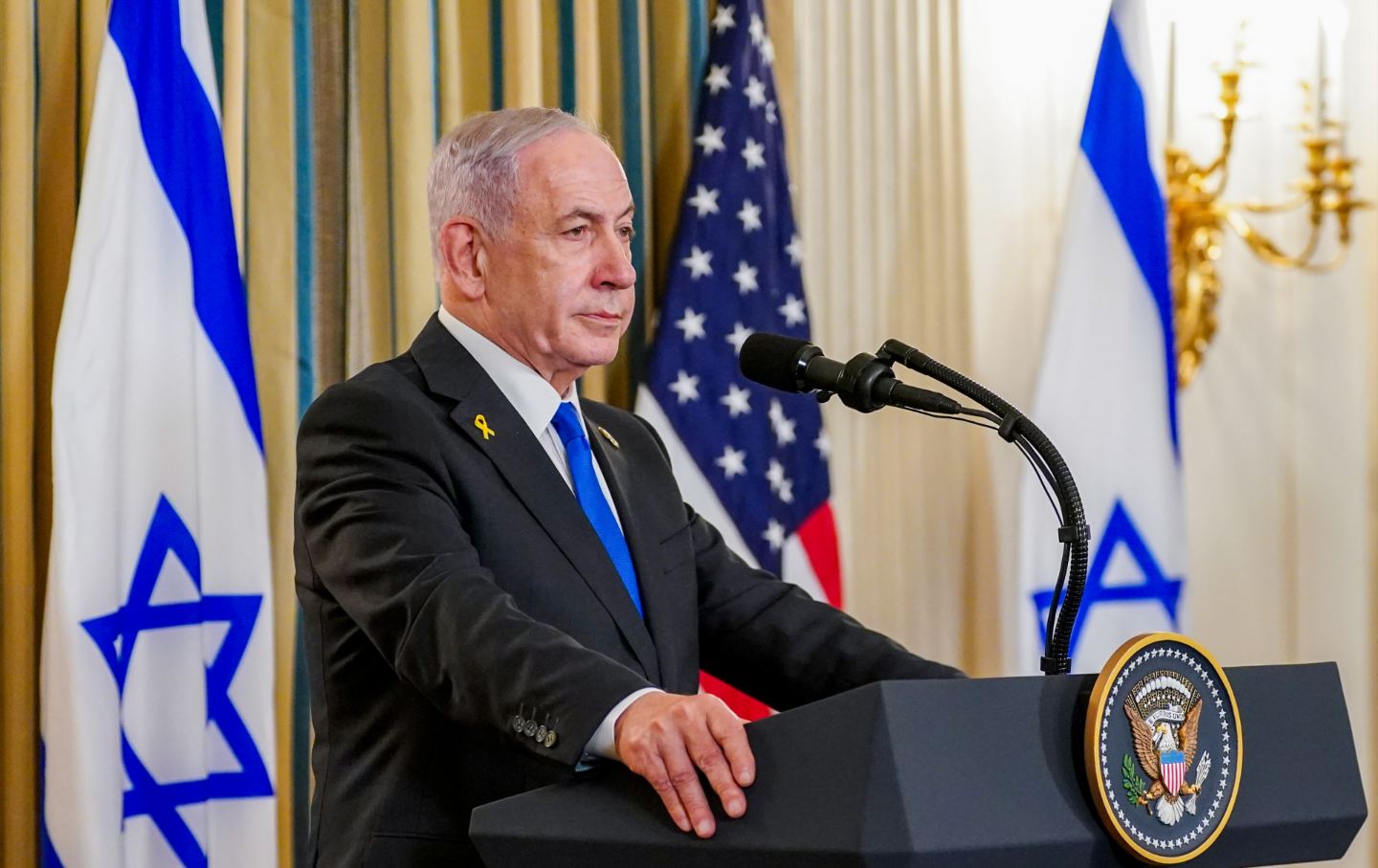
Israel Is Using Its Genocidal Gaza Playbook on Iran Israel Is Using Its Genocidal Gaza Playbook on Iran
Just as in Palestine, the Israeli government is framing its latest conflict as a holy war of extermination.
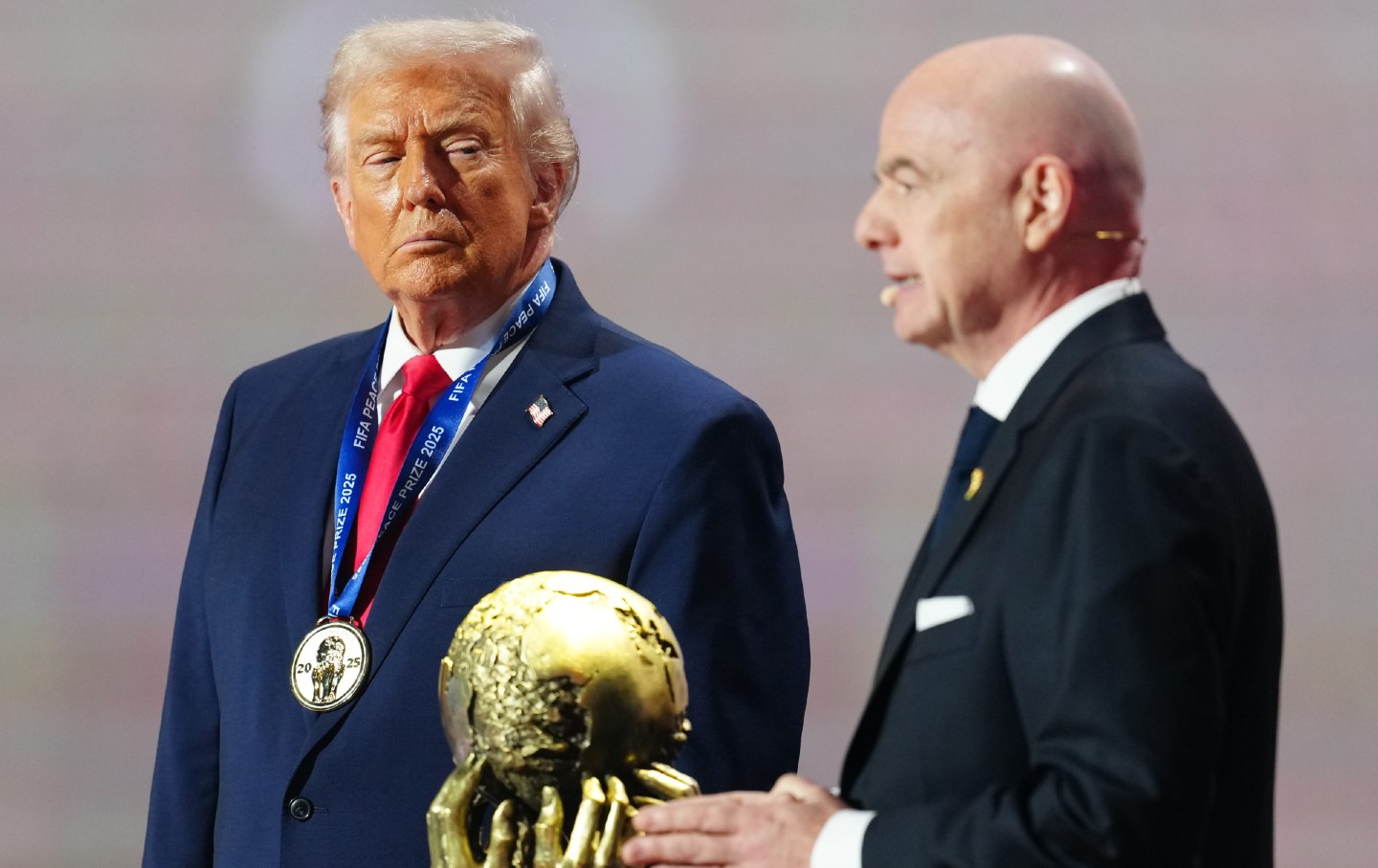
Trump and His Soulless Cronies Have Managed to Suck the Joy Out of the World Cup Trump and His Soulless Cronies Have Managed to Suck the Joy Out of the World Cup
Not even soccer is immune from Trump’s reverse Midas touch.

Garbage In, Carnage Out Garbage In, Carnage Out
The harrowing lessons of the Pentagon’s recently dissolved partnership with Anthropic.
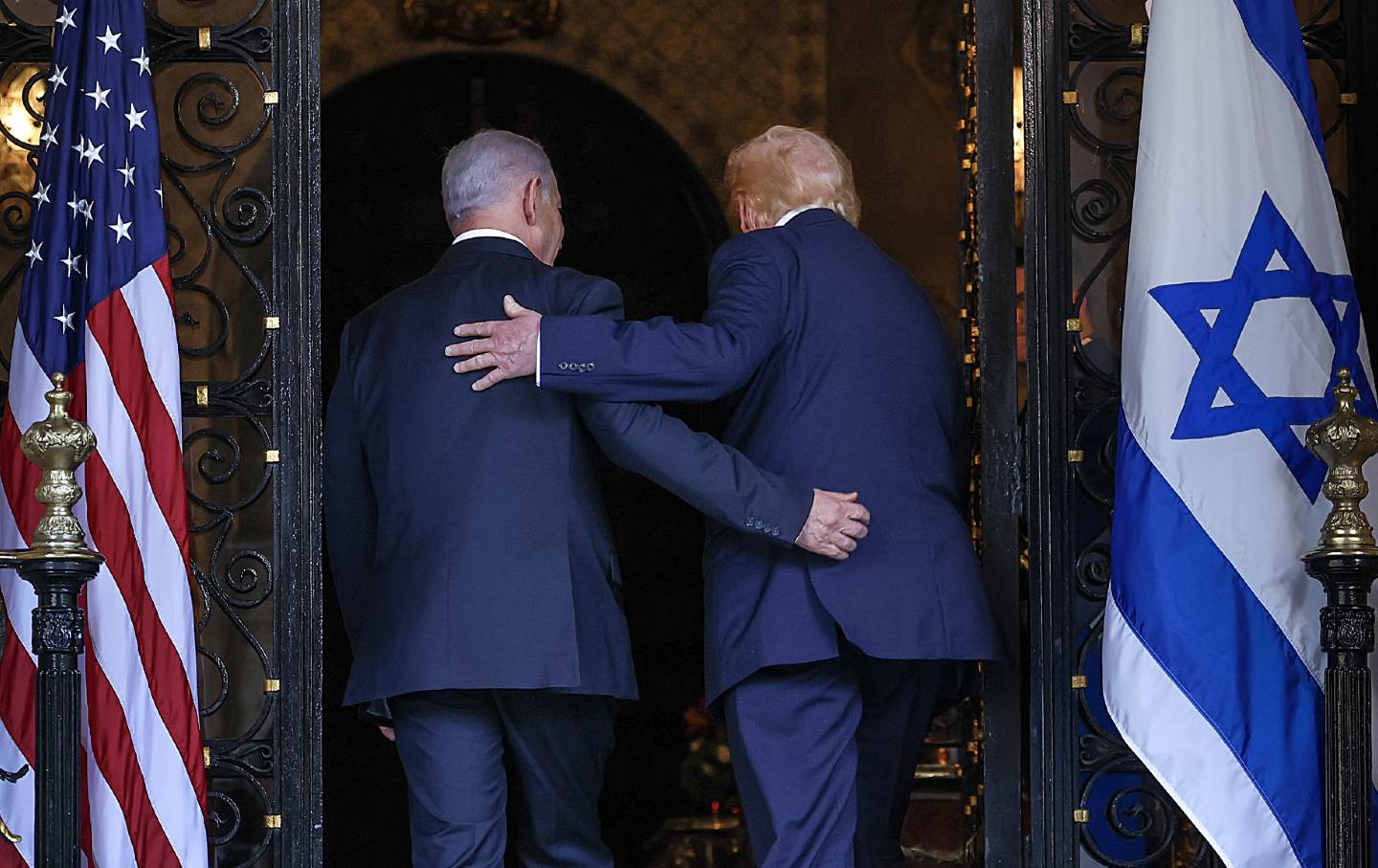
The Iran War Could Be Catastrophic for the US-Israel Alliance. Good. The Iran War Could Be Catastrophic for the US-Israel Alliance. Good.
As Israel’s role in pushing the war with Iran comes into ever sharper focus, it’s up to us to turn outrage into change.
An Unlawful War An Unlawful War
The precedent being set by the US in launching this war of aggression against Iran will long live in infamy.
Trump and Netanyahu Want to Turn Iran Into a Failed State Trump and Netanyahu Want to Turn Iran Into a Failed State
This war looks designed to cause maximum chaos and instability. The world will pay a high price.

