A Day for Gaza / February 10, 2026

Gaza Is Still Here

Despite a “ceasefire,” Israel’s killing has not ended. Neither has the determination of the Palestinian people to survive.
Rayan El Amine, Lizzy Ratner, and Jack Mirkinson
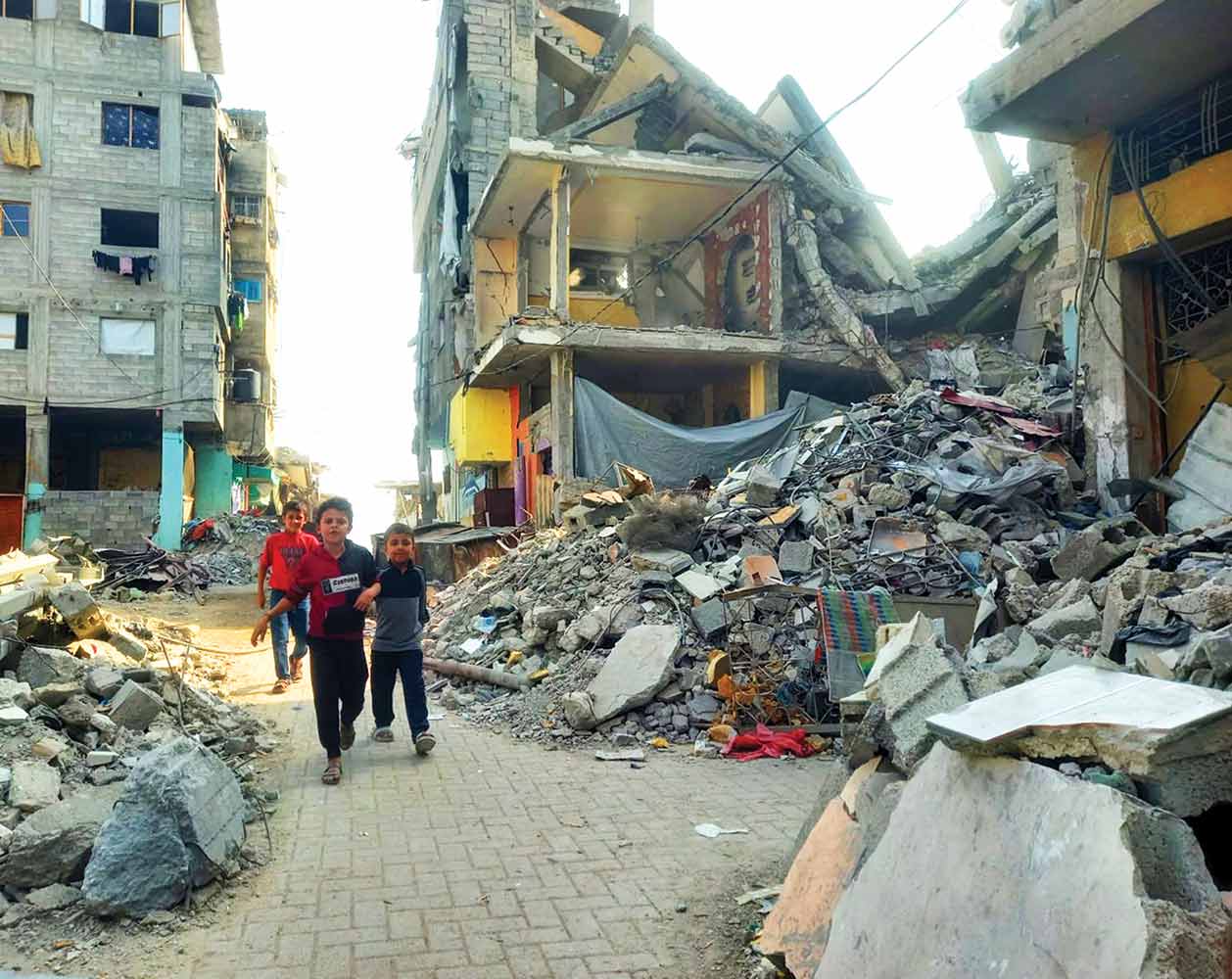
(Ali Skaik)

Gaza has been suspended in a bloody limbo for months. The so-called ceasefire with Israel has not brought peace. The bombings and demolitions persist, and Israel’s expanding occupation continues unabated. Since October 10, 2025, when the ceasefire was declared, more than 440 people have been killed and more than 2,500 buildings destroyed. Israel has only allowed a fraction of the essential equipment needed for cooking, heating, and construction to enter the Strip. Gaza is now buried beneath 680 million tons of rubble. Ninety percent of the population has been displaced, many of them several times. Hundreds of thousands live in threadbare tents.

The “ceasefire” is meant to breed apathy among us; the spectacle of modern genocidal warfare has been replaced by the slow bureaucratic proceedings of ethnic cleansing. Washington’s hollow promises to bring “technocratic governance” to Gaza mask a colonial project imposed on a people with no say: a people left to die, forgotten by the world.

This, then, is where we return. In early February, The Nation gave over its website for a day to writers from Gaza. We did this to make it clear that we will remain focused on Gaza and the Palestinian people. No diplomatic proceedings or political distortions will subdue our demand for their right to self-determination—or their right to speak for themselves.

The pieces in this series are an affirmation of that right: a record of Gaza’s refusal, in the face of the world’s neglect, to be exterminated.

—Rayan El Amine, Lizzy Ratner, and Jack Mirkinson
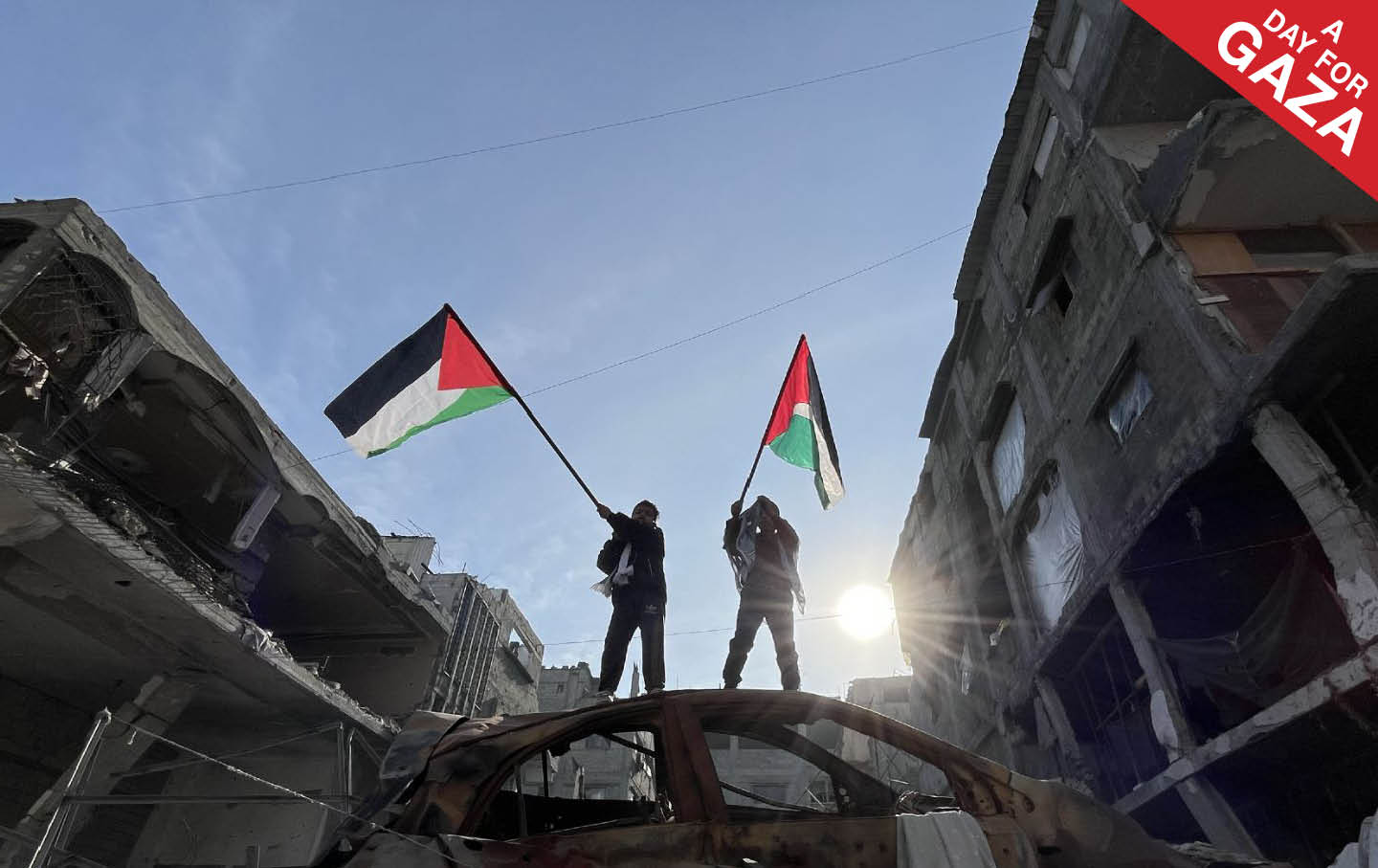
Two children are waving Palestinian flags on a wrecked car as displaced Palestinians start to return their houses past damaged houses in Jabalia and Beit Lahia regions
(Ferial Abdu / Anadolu via Getty Images)

Rayan El Amine, Jack Mirkinson, Lizzy Ratner

Today, The Nation is turning over its website exclusively to stories from Gaza and its people. This is why.
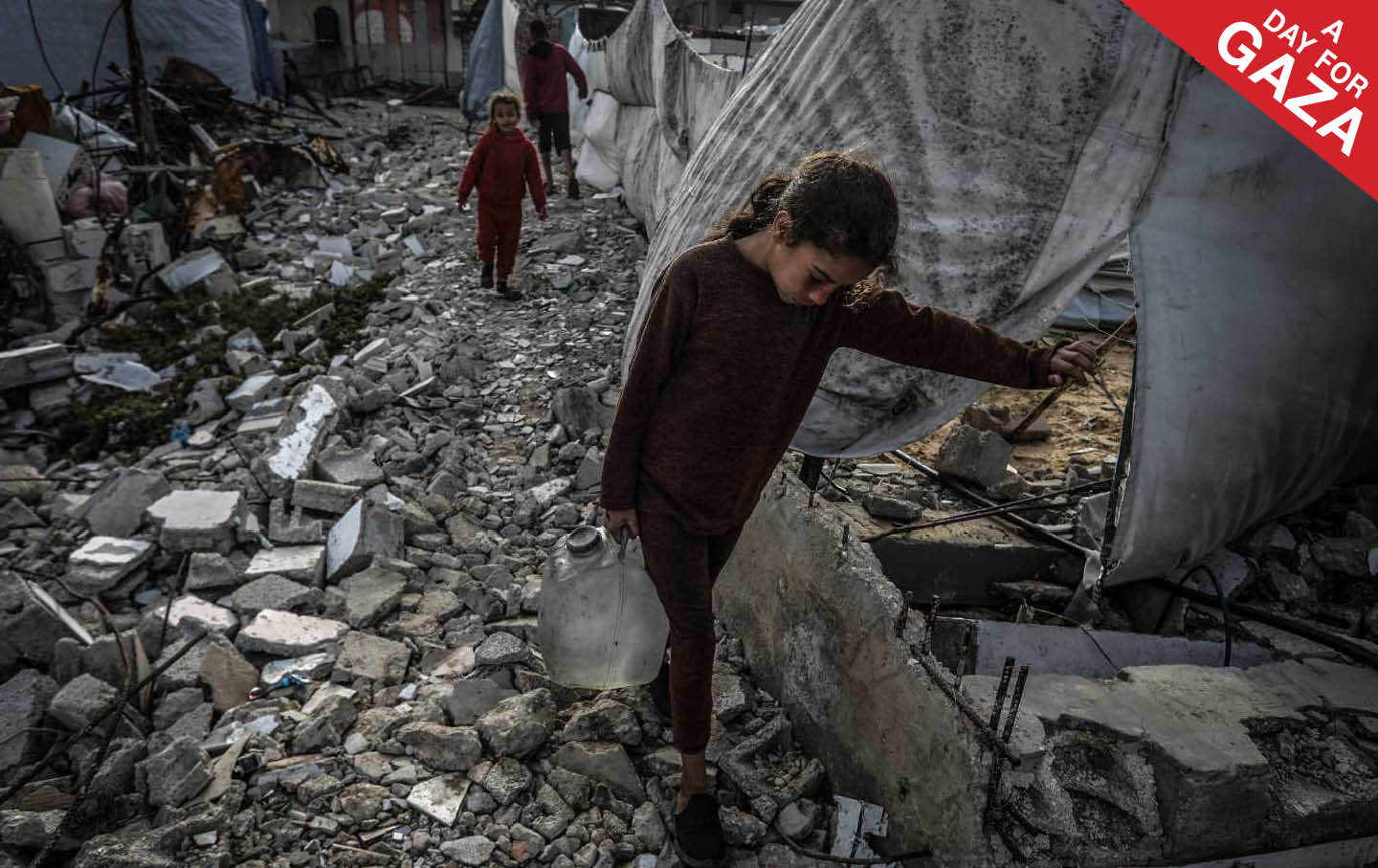
A Palestinian girl carries a gallon of drinking water she filled from a water truck in Khan Younis. Palestinians in Gaza are suffering from a severe water crisis due to the destruction of water wells by Israeli air strikes.
(Abed Rahim Khatib / Picture Alliance via Getty Images)

Mohammed Mhawish

The language of ceasefire has been repurposed in Gaza: It no longer describes a pause in violence but rather a mechanism for managing it.
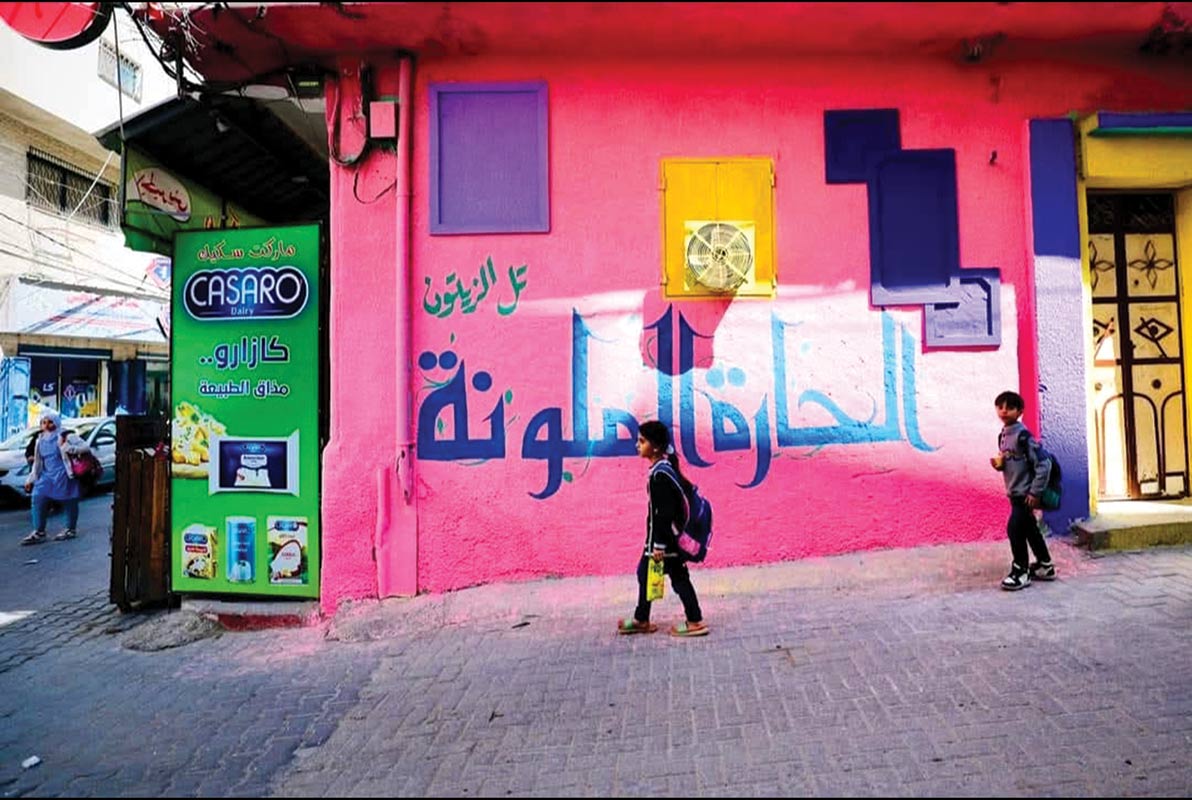
Before Israel's genocide began, the Colorful Block hummed with vibrancy, a symbol of the pride of the people of Gaza.
(Atia Darwish)

Ali Skaik

What I saw walking one block in Gaza.
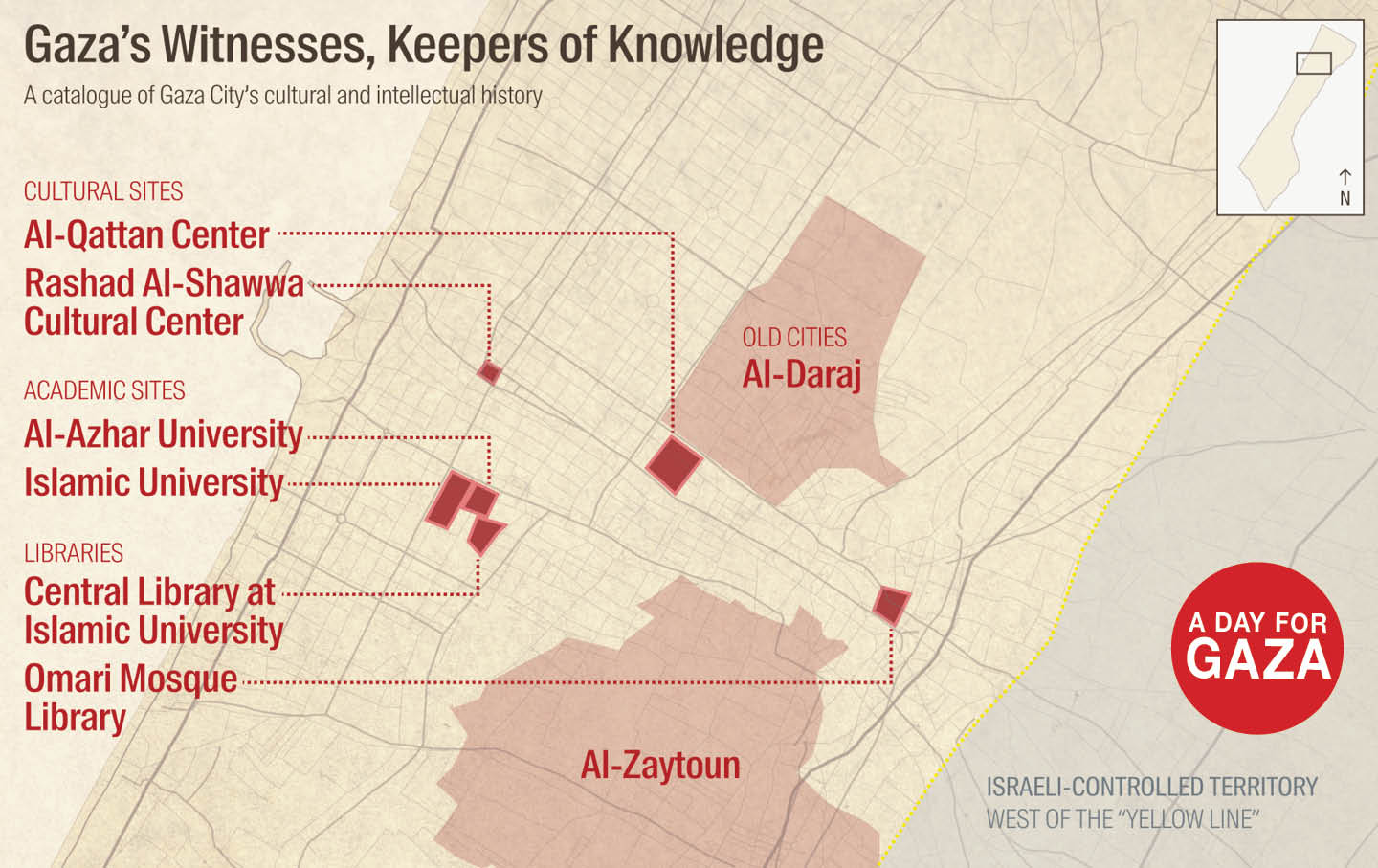
Deema Hattab

Recording what has been erased—and making sense of what remains.
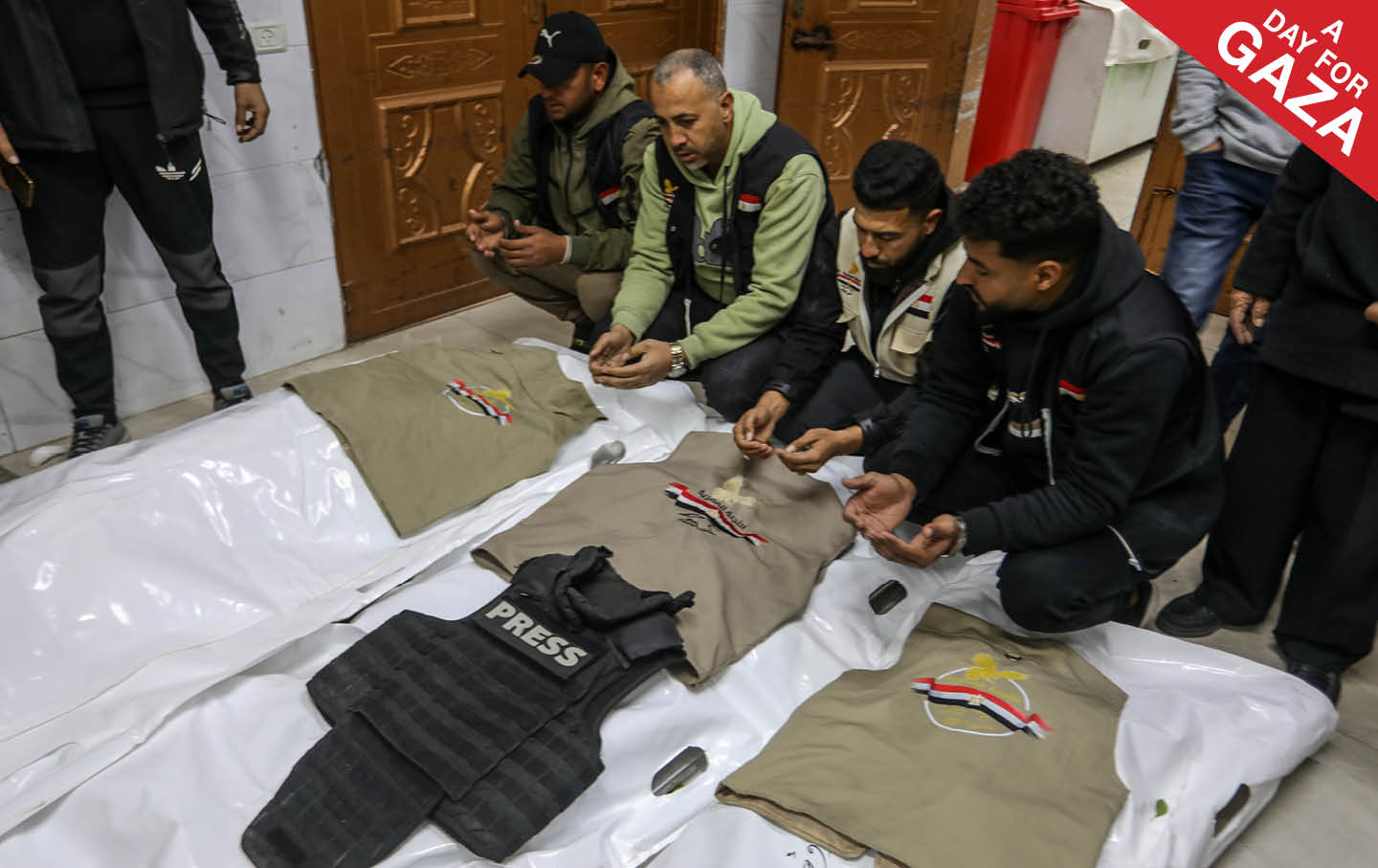
Relatives and colleagues bid farewell to Palestinian journalists Abdel Raouf Shaath, Mohammed Qashta, and Anas Ghoneim, who were killed in an Israeli air strike.
(Abed Rahim Khatib / Picture Alliance via Getty Images)

Ola Al Asi

Journalists in Gaza have bartered their lives to tell a truth that much of the world still doesn’t want to hear.
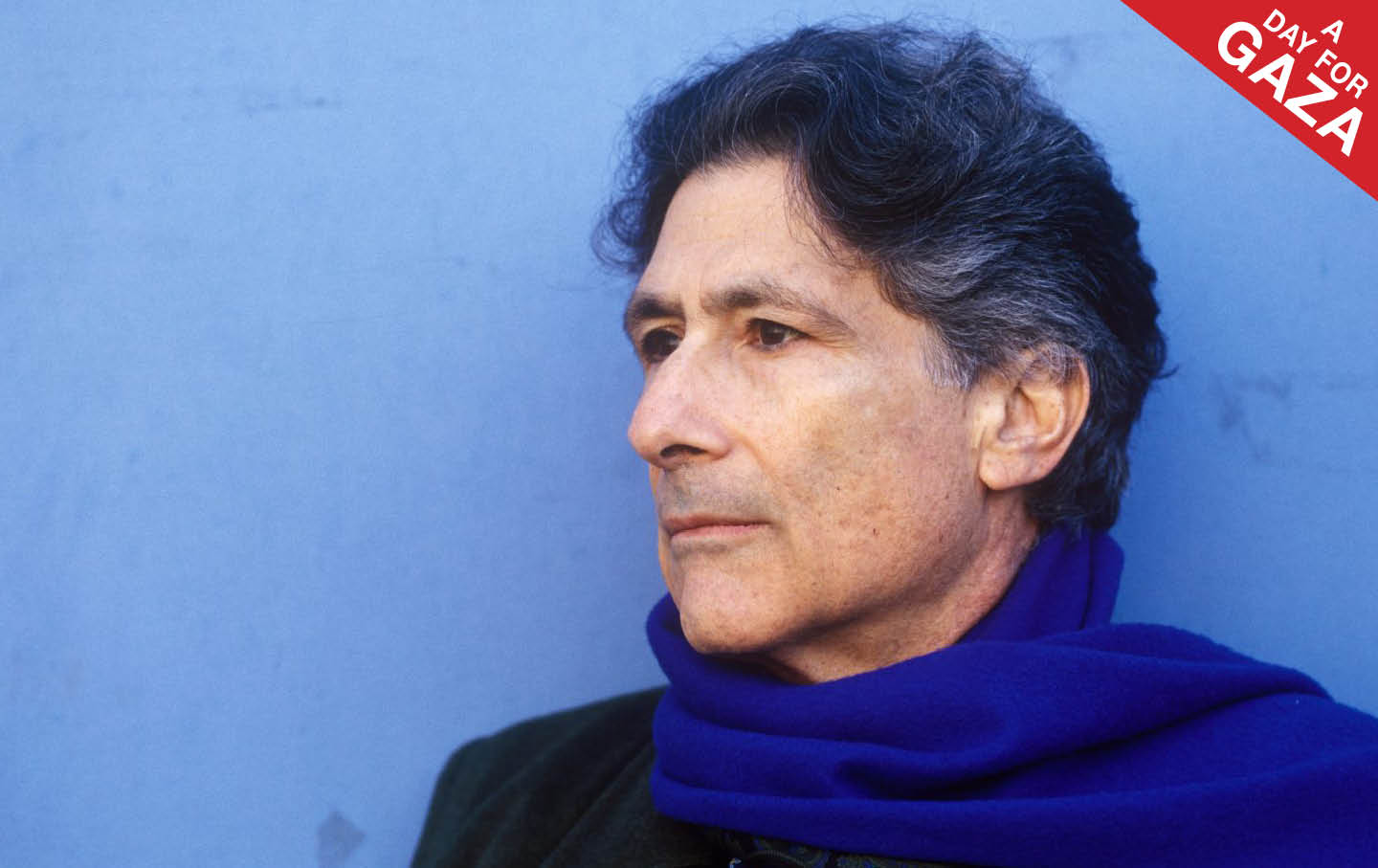
(Ulf Andersen / Getty Images)

Alaa Alqaisi

On Palestine and the geography of vanishing.
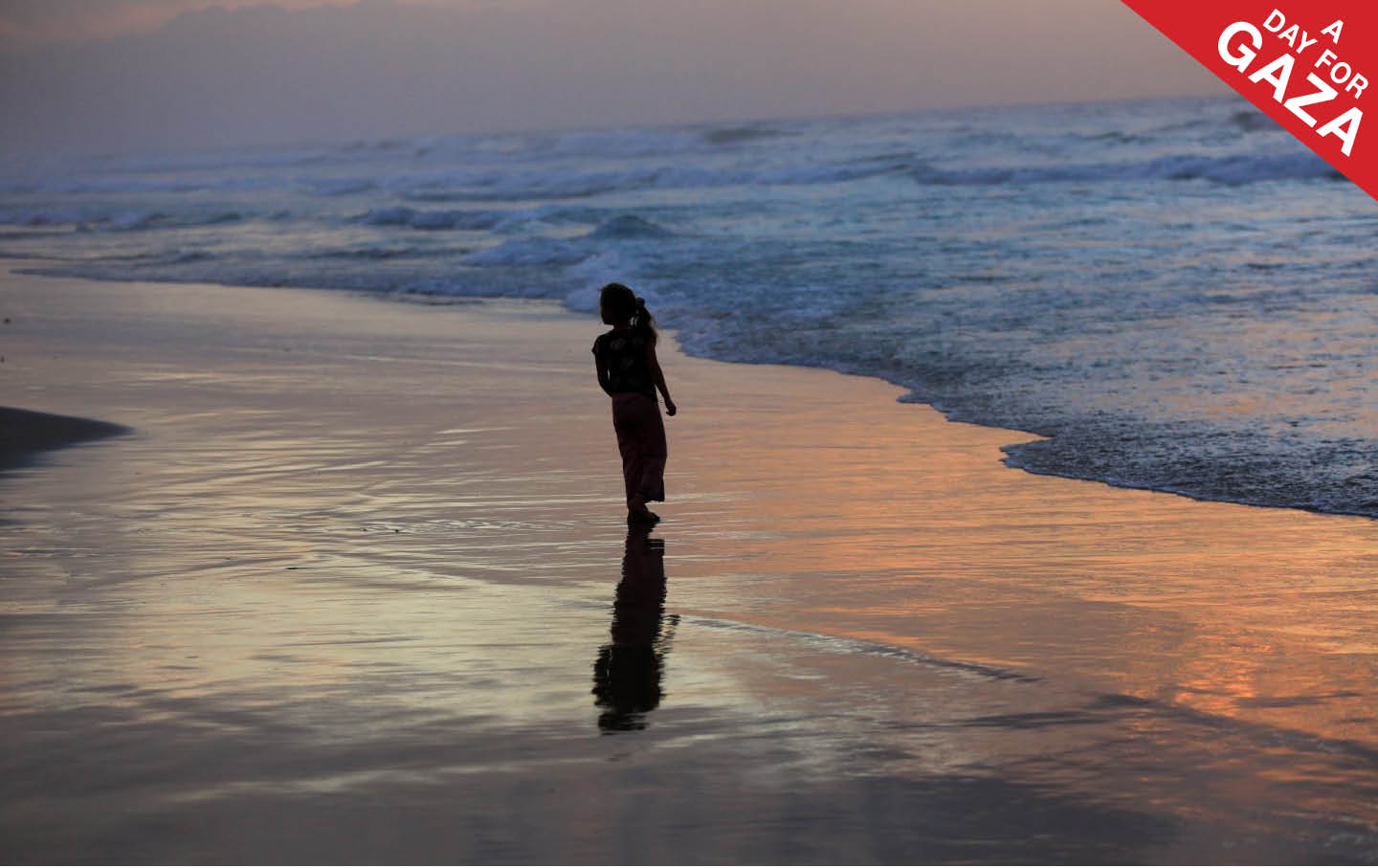
Gaza City, December 8, 2025.
(Abdalhkem Abu Riash / Anadolu via Getty Images)

Asmaa Dwaima

Rewaa was killed by an Israeli bomb. Her absence has broken me in ways I still cannot describe.

(Moatasem Abu Aser)

Huda Skaik

These pictures are records of a genocidal war, but they are something more, too—they are fragments of Gaza itself.
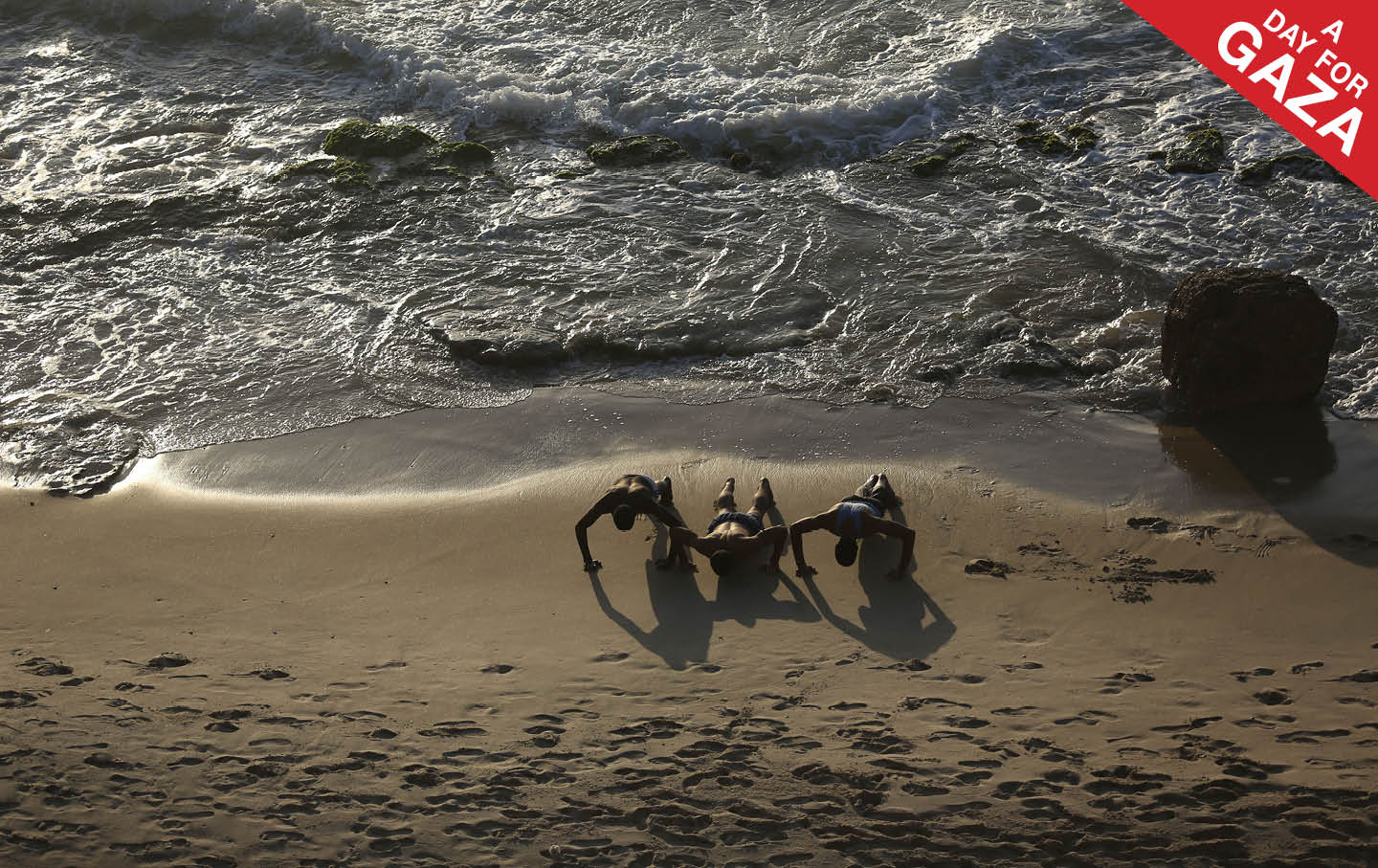
Palestinians exercise on a beach in the Deir al-Balah Palestinian refugee camp on June 14, 2023.
(Mohammed Abed / Getty Images)

Engy Abdelal

Faced with endlessly narrowing possibilities, I return to my diary in an attempt to dream, to imagine a future.
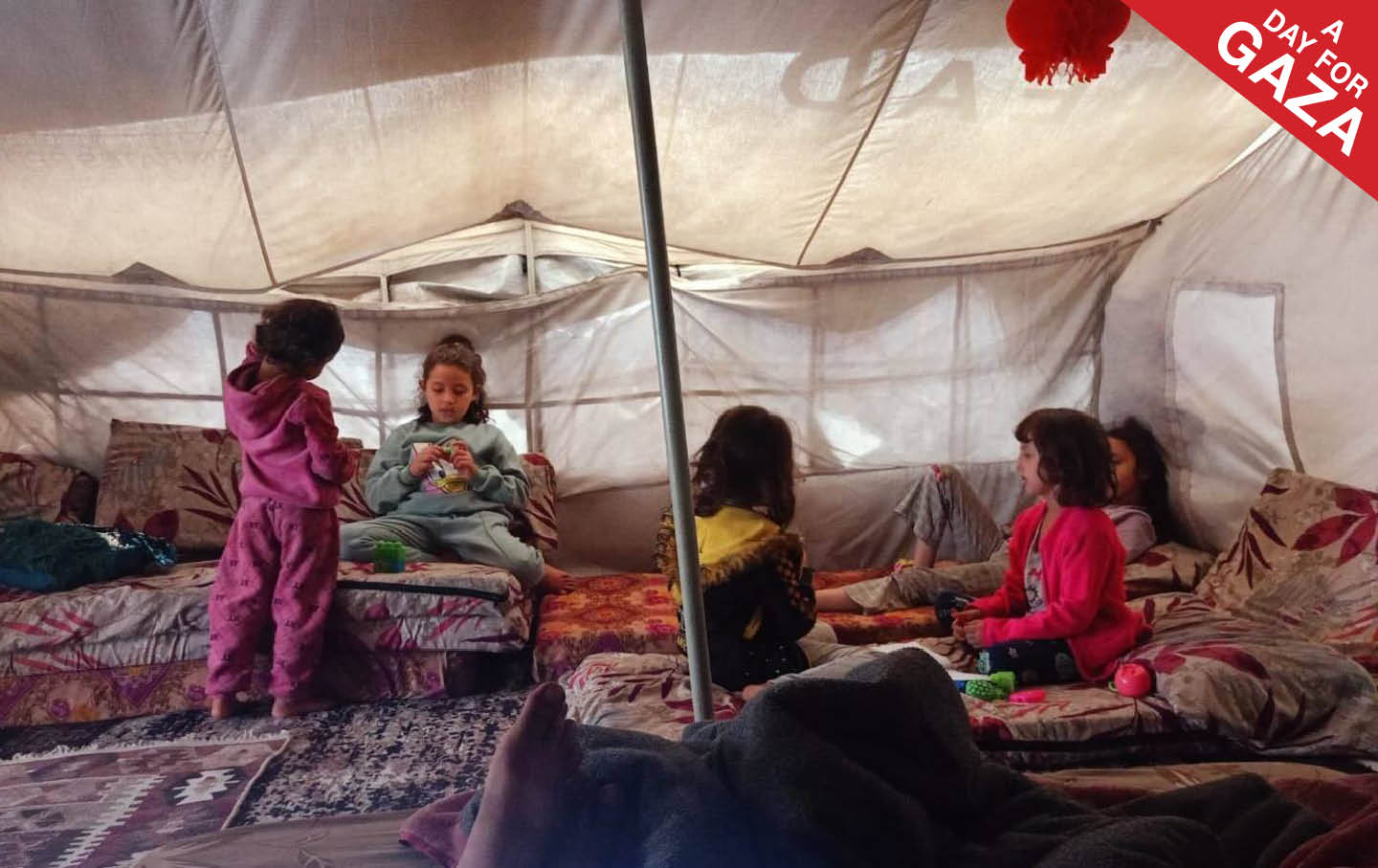
(Rasha Abou Jalal)

Rasha Abou Jalal

After their home was obliterated, Rasha Abou Jalal and her family remain determined to build a new one, even if it must be built out of nothing.
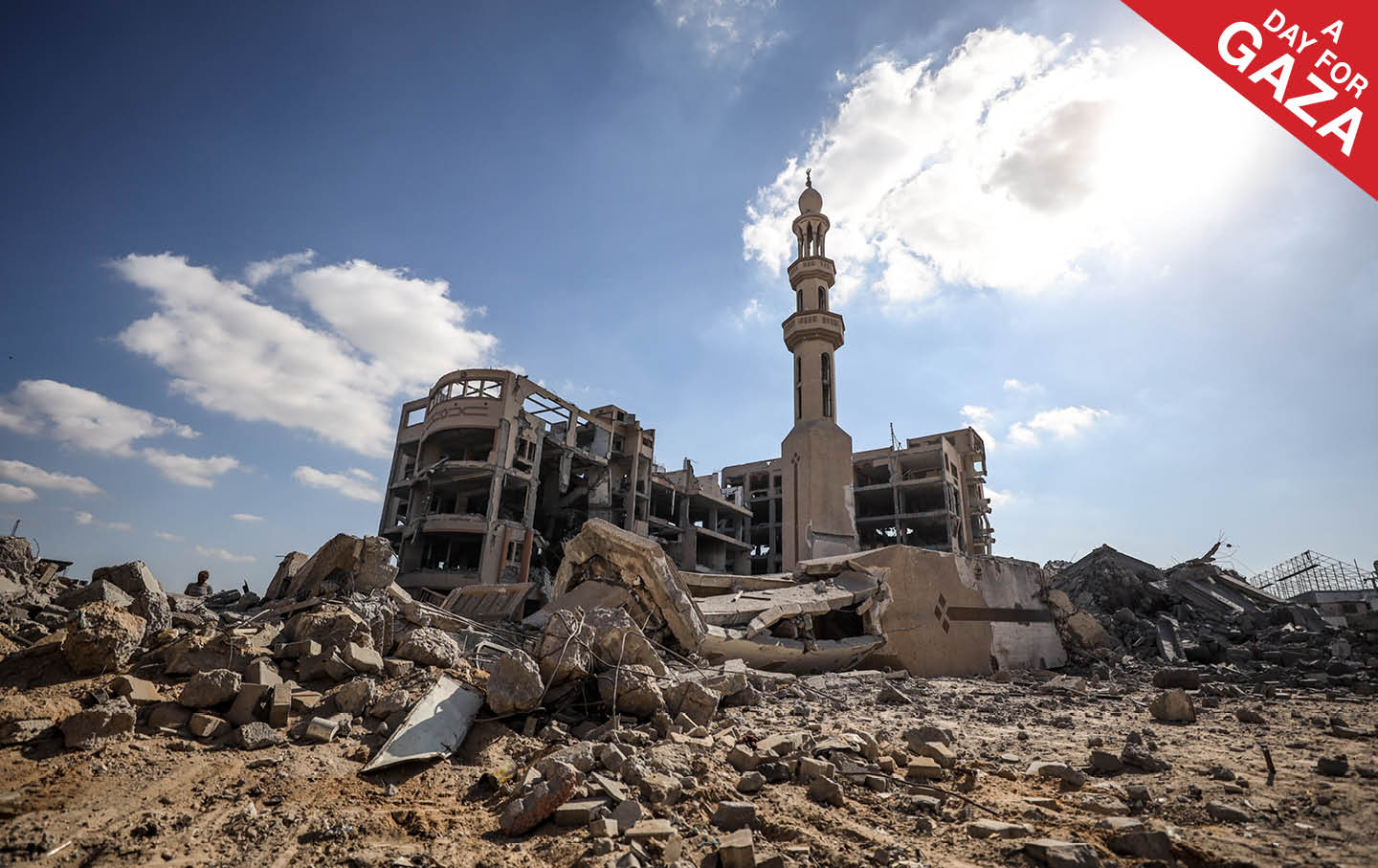
(Khames Alrefi / Anadolu via Getty Images)

Ismail Nofal

Hamada Abu Layla spent 22 years gathering three university degrees. Now they mock him from a garbage dump.


Support independent journalism that does not fall in line

Even before February 28, the reasons for Donald Trump’s imploding approval rating were abundantly clear: untrammeled corruption and personal enrichment to the tune of billions of dollars during an affordability crisis, a foreign policy guided only by his own derelict sense of morality, and the deployment of a murderous campaign of occupation, detention, and deportation on American streets. 

Now an undeclared, unauthorized, unpopular, and unconstitutional war of aggression against Iran has spread like wildfire through the region and into Europe. A new “forever war”—with an ever-increasing likelihood of American troops on the ground—may very well be upon us.  

As we’ve seen over and over, this administration uses lies, misdirection, and attempts to flood the zone to justify its abuses of power at home and abroad. Just as Trump, Marco Rubio, and Pete Hegseth offer erratic and contradictory rationales for the attacks on Iran, the administration is also spreading the lie that the upcoming midterm elections are under threat from noncitizens on voter rolls. When these lies go unchecked, they become the basis for further authoritarian encroachment and war. 

In these dark times, independent journalism is uniquely able to uncover the falsehoods that threaten our republic—and civilians around the world—and shine a bright light on the truth. 

The Nation’s experienced team of writers, editors, and fact-checkers understands the scale of what we’re up against and the urgency with which we have to act. That’s why we’re publishing critical reporting and analysis of the war on Iran, ICE violence at home, new forms of voter suppression emerging in the courts, and much more. 

But this journalism is possible only with your support.

This March, The Nation needs to raise $50,000 to ensure that we have the resources for reporting and analysis that sets the record straight and empowers people of conscience to organize. Will you donate today?

Rayan El Amine

Rayan El Amine is a writer and journalist from Beirut, Lebanon, who lives in New York City. A former Victor Navasky fellow at The Nation, he served as a guest editor on "A Day for Gaza."

Lizzy Ratner

Lizzy Ratner is deputy editor for print at The Nation.

Jack Mirkinson

Jack Mirkinson is a senior editor at The Nation and cofounder of Discourse Blog.

More from The Nation

Peter Thiel speaks during a news conference in Tokyo, Japan, on November18, 2019.

Welcome to the Era of the AI-Powered War Machine Welcome to the Era of the AI-Powered War Machine

How a clique of unhinged techno-optimists is putting humanity at risk.

Janet Abou-Elias and William D. Hartung

Palestinians, mainly children, wait to get hot food distributed by a charity organization as food shortages continue amid restrictions on the entry of aid.

How a Rocket in Iran Reverberates in Gaza How a Rocket in Iran Reverberates in Gaza

As Israel bombards Iran with rockets, it is sealing off borders across Gaza and the West Bank, halting the flow of food, aid, and bodies.

Hassan Herzallah

Israeli Prime Minister Benjamin Netanyahu and Finance Minister Bezalel Smotrich listen to a speech given by Indian Prime Minister Narendra Modi at the Knesset, in Jerusalem, on February 25, 2026.

How the Israeli Tail Wags the American Dog How the Israeli Tail Wags the American Dog

The US attack on Iran may be less about American security than about the priorities of Israel’s government.

Eli Clifton and Ian S. Lustick

An oil tanker in the Strait of Hormuz as viewed from the town of Al Jeer in the United Arab Emirates, on February 25, 2026.

What to Expect From a Mammoth Disruption of Global Oil and Gas Supplies What to Expect From a Mammoth Disruption of Global Oil and Gas Supplies

And why was the Trump team so unprepared for shock waves?

Stanley Reed

The Man Who Would Be the Face of the Anti-Trump West

The Man Who Would Be the Face of the Anti-Trump West The Man Who Would Be the Face of the Anti-Trump West

Mark Carney has put himself forward as one of the sharpest Western critics of Trump’s neo-imperial order. What’s less clear is what he’s offering in its stead.

Feature / Jeet Heer

The “Rules-Based Order” Is Gone. Let’s Not Bring It Back.

The “Rules-Based Order” Is Gone. Let’s Not Bring It Back. The “Rules-Based Order” Is Gone. Let’s Not Bring It Back.

Trump has destroyed a global system that mostly benefited the rich and powerful. We need to create something completely different in its wake.

Feature / Robert L. Borosage