Wendell Berry’s Unrelenting Vision
The poet wrote for The Nation for decades, always demonstrating conscience and prescience.
The beloved poet and essayist Wendell Berry died this summer at the age of 92. In an essay in The Nation in 2019, Jedediah Britton-Purdy observed that Berry was one of those rare figures who received positive attention in both left-leaning journals like Dissent and right-leaning ones like The American Conservative. He lauded Berry for writing “against all forms of violence and destruction—of land, communities, and human beings.” Through all of Berry’s work, Britton-Purdy wrote, ran a consistent note of “praise for what he admires: the quiet, mostly uncelebrated labor and affection that keep the world whole and might still redeem it.”
Starting in 1961, Berry contributed more than two dozen poems, essays, and book reviews to The Nation. Again and again in his work, Berry observed that a healthy democracy depended on a healthy land, and vice versa. He always made his case in elegant, clear, and compelling language and with homespun common sense. Among his first Nation contributions was a poem that ran in December 1963, a month after John F. Kennedy’s assassination. It began: “We know the winter earth upon the body of the young President, and the early dark falling….”
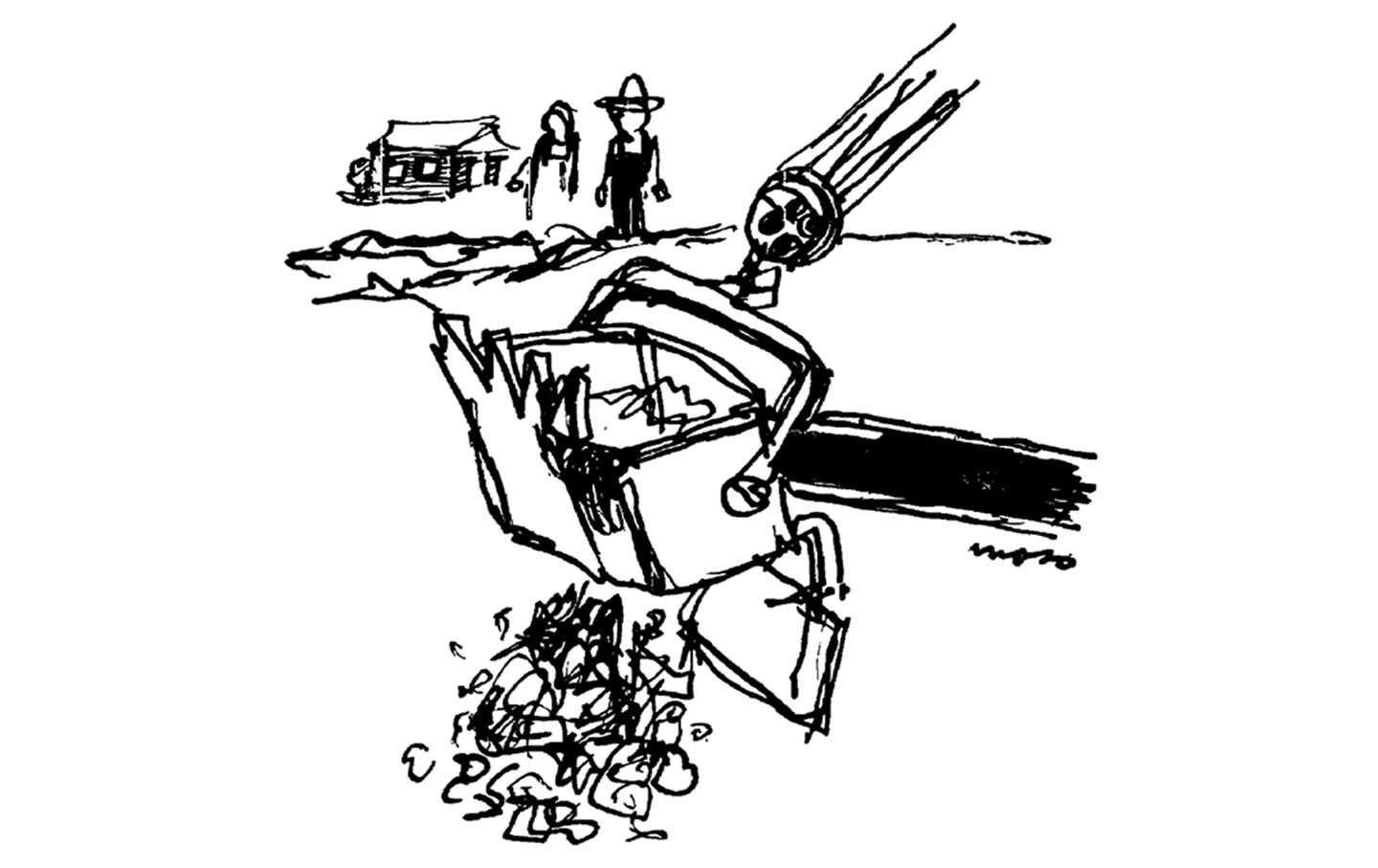
Two years later, Berry published “Strip-Mine Morality: The Landscaping of Hell,” an essay that chronicled a popular struggle in his native Kentucky to ban strip-mining for coal. Berry was shocked by the coal companies’ arguments, which reflected “the unmistakable implication that anything can be justified by profit,” as well as the “assumption that the steep mountain sides, now being ruined on an almost unbelievable scale and at great speed, are good for nothing else.”
No other writer has so thoroughly probed the consequences of that assumption, both on the land itself and on the national character.
In his tribute, Britton-Purdy called The Unsettling of America Berry’s “most enduring work of nonfiction.” In that book, which began as a Nation essay, Berry argued that American agriculture had traded soil-renewing practices for a strictly extractive model. Even wind or solar energy, he predicted, would not solve the alienation of labor and the emptiness of modern life. “We will not find those answers in Washington, D.C., or in the laboratories of oil companies,” Berry wrote. “In order to find them, we will have to look closer to ourselves.”