
Trump’s Anti-DEI Crusade Is Going to Hit White Men, Too
Under the Trump administration’s anti-DEI directives, colleges would be forced to abandon gender balancing, disadvantaging men.

President Donald Trump in the White House in January 2025.
(Hu Yousong / Xinhua via Getty Images)One of the best-kept secrets about DEI is that it helps men—that includes white men—get into college. If you do not work in admissions, you are likely unaware of this fact, and that’s by design; one admissions officer even told The Wall Street Journal it’s “higher education’s dirty little secret.” But it’s been true for decades. Women’s college enrollment surpassed men’s all the way back in 1979, and the gender gap has only widened in the interim. Over just the last five years, as college enrollment numbers plunged by roughly 1.5 million students, men have accounted for more than 70 percent of that decline. In an increasingly difficult effort to maintain something approximating gender parity, admissions officers at private universities have for years used “gender balancing,” accepting male applicants at higher rates than female applicants. The Supreme Court ruled that race-consciousness in college admissions is unconstitutional in 2023. That means affirmative action is technically illegal, just not if it benefits men.
Under the Trump administration’s anti-DEI directives, schools would be forced to abandon gender balancing, leaving fewer men in college. More specifically, fewer white men, since they make up the majority of male applicants.
And the most precipitous drops would happen at America’s elite institutions of higher education. Private schools are the only colleges allowed to practice gender discrimination, which has been legally banned at public colleges since 1971’s Title IX passed. But the Trump administration, using federal funding as a bargaining chip, is pushing colleges to sign its Compact for Academic Excellence in Higher Education. The plan specifically names “gender identity” as one of many traits that cannot be “considered, explicitly or implicitly, in any decision related to undergraduate or graduate student admissions.” And while there have been few signatories to that plan, the administration has succeeded in having Brown, Columbia and Northwestern sign agreements that state students will be accepted “solely on their merits, not their race or sex.”
Even as they use that language, which is deliberately crafted to imply unqualified women are getting away with something, right-wingers are well aware that men are increasingly turning away from college. Anti-anti-racist activists including Christopher Rufo have groused for years about the “feminization” of higher education, a complaint that makes sense only if said complainer understands that men are the ones quietly being advantaged. Their endless chatter about ending gender DEI in education is just right-wing PR—a way to keep grievances simmering instead of acknowledging who’s actually being given a hand up.
Take, for example, Brown University. Hechinger Report education journalist Jon Marcus finds the school had 18,960 men apply for the 2024–25 academic year, a pool dwarfed by the 29,917 women who applied. The Ivy League admitted nearly equal raw numbers of each gender—1,326 men and 1,309 women. But that’s not so equal proportion-wise, with roughly 7 percent of men getting in, but just 4.4 percent of women accepted. Columbia, the University of Chicago, Vassar, Tulane, Yale, Boston University, Swarthmore, and Vanderbilt also admit men at higher rates than women. Again, a lot of selective colleges do.
Not that any of them are shouting about this from the rooftops—and to be fair, admissions is opaque on every front. So how do we actually know men are being given an advantage—and not that, say, “women are more willing to apply to long-shot schools than men are,” as libertarian outlet Reason posits? There are clues. We know that women earn higher GPAs in high school, are almost twice as likely to graduate within the top 5 percent of their class, and are more likely to take AP courses—all things schools take into consideration. In addition, admissions officers sometimes just come right out and tell us. Shayna Medley, a former Brandeis University admissions officer who penned a 2016 Harvard legal paper on gender balancing, told The Hechinger Report that “standards were certainly lower for male students.” An ex-Wesleyan admissions officer told The New York Times that gender balancing required being “more forgiving and lenient” with male applicants, adding, “You’d be like, ‘I’m kind of on the fence about this one, but—we need boys.’” (“The process sometimes pained him,” the article notes, “especially when he saw an outstanding young woman from a disadvantaged background losing out to a young man who came from privilege.”) ”Probably nobody will admit it,” the former president of a small liberal arts college confessed in a 1998 Times piece, “but I know that lots of places try to get some gender balance by having easier admissions standards for boys than for girls.”
“Is there a thumb on the scale for boys?” one college enrollment person asked rhetorically in a recent Wall Street Journal article. “Absolutely. The question is, is that right or wrong?”
The answer requires considering what the end of gender-conscious admissions might mean. As of this writing, there are 40 percent more women than men enrolled in America’s two- and four-year colleges. The head of the American Council on Education opined to The Washington Post that if colleges didn’t consider gender in admissions, “the undergraduate population would skew to 65 percent female overnight.” Single-gender colleges already exist for those who seek them, and they have a purpose. But the sorta unstated, yet widely understood, intent of a co-ed college is to educate students in how to coexist with people not of their own gender. I went to a small private liberal arts college where women outnumbered men, and I think there’s something to be said for having people of different genders—including beyond the binary—engaging intellectually, socially and emotionally with one another. I’d go even further and say it’s good for lots of different kinds of people to have sustained contact on a shared campus, because it tends to help them recognize their shared humanity. That sort of proximity can make people slightly less likely to live out their lives hoping—and voting—for harm to befall people who are different from them.
Getting all those people all in the same place might mean looking at more than just grades and test scores. It might mean giving heft to a person who is a member of a group because of that group’s historical treatment—a fact that only becomes scandalous when the criteria is race—or in this case, despite it. Admissions, especially at highly competitive colleges, is a holistic process. Schools look at the whole person, considering everything they bring to the table, or rather, the campus. Gender-conscious admissions—as was also true with now illegal race-conscious admissions—simply means gender is weighed along with a whole host of other things to decide seats. It does not mean that wholly unqualified men are welcomed into America’s finest institutions. That is a child’s—and a conservative’s—dumb idea of how affirmative action works.
I mean that literally. Turns out the reason conservatives imagined that affirmative action allowed unqualified Black students to attend Harvard—which it never did—is that their own version of affirmative action actually does admit unqualified men. Just look at New College of Florida. In 2023, a group of conservatives, including Christopher Rufo, staged a takeover of the school. They destroyed the school’s diversity program and shuttered the DEI office—but then aggressively recruited male student athletes with lower GPAs, SATs, and ACTs than classes before. The result has been a staggering 23 percent increase in male admissions to hit 54 percent of the student body, a 59-spot drop in U.S. News & World Report’s famed college rankings list, and a college now “on its intellectual deathbed,” according to Florida Phoenix journalist Diane Roberts.
Likewise, should America’s top schools actually start to disregard gender in admissions and let in fewer men, especially white men, this administration will start supporting equity so fast our collective heads will spin. The idea will be rebranded, of course. For example, Rufo—a key player in the anti-DEI brigade—claimed that New College of Florida’s majority-female student body “caused all sorts of cultural problems,” and led the school to become “what many have called a social justice ghetto.” This was just before he led the school to lower its standards and let men in at any cost. Right-wingers aren’t, nor have they ever been, opposed to preferences that advantage men, especially men who are white. They oppose racial remediation. There is a difference.
Colleges, for their part, are merely looking out for their bottom lines. In a 2006 Times op-ed titled “To All the Girls I’ve Rejected,” Kenyon college’s woman head of admissions noted that “once you become decidedly female in enrollment, fewer males and, as it turns out, fewer females find your campus attractive.” I hate the misogyny of it all.
Popular
“swipe left below to view more authors”Swipe →In the meantime, the number of men looking at college will likely continue to dwindle. Part of that is the cultural moment, with anti-college rhetoric coming from rich guys like Elon Musk and Donald Trump, two Ivy League grads whose own children, interestingly, attend elite colleges. There’s also the staggering cost of college, which has skyrocketed 125 percent since 1963, according to the National Center for Education Statistics—and by 60 percent between just 2000 and 2022. The general consensus is that young men have looked at the price tag, decided it’s not worth it, and instead gone for skilled trade and other vocations, where they can make just as much money. Take a look at any list of well-paying jobs that don’t require a degree—from HVAC technician to petroleum pump system operator—and you’ll notice that they’re all male coded. Women-coded sectors not requiring a degree—retail, childcare, hospitality, etc.—pay badly. Recent studies even find that as more women enter traditionally male fields, the pay drops.
So women make the calculation that the cost of college is necessary to make a decent living. Because it is, unfortunately. And that’s not likely to change soon.
More from The Nation

Seeing My Mother in Prison: A Conversation with Author Harriet Clark Seeing My Mother in Prison: A Conversation with Author Harriet Clark
An interview with the author of The Hill about her debut novel and the artist’s role in documenting atrocities.
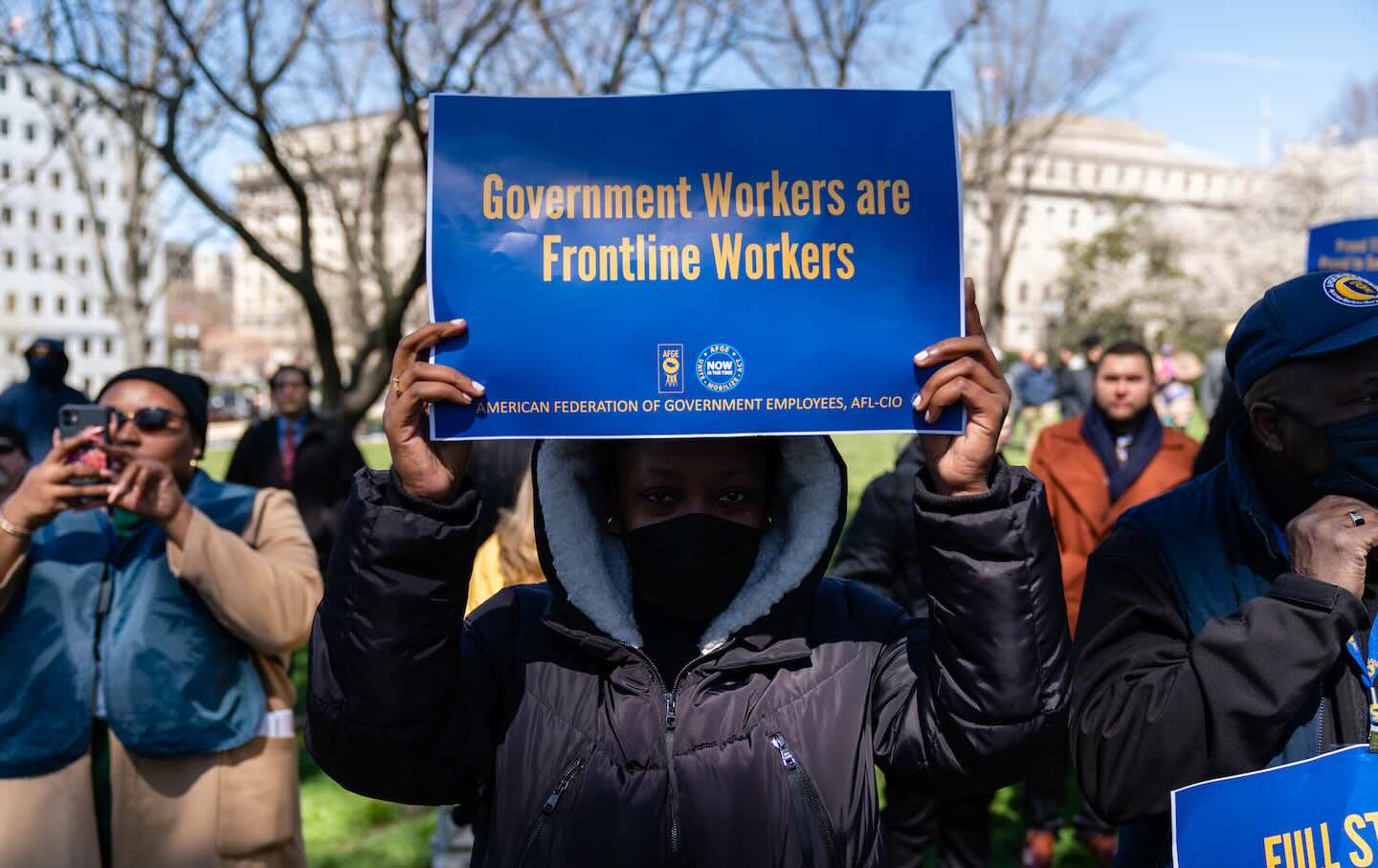
Recovering From a “Gut Punch”: Black Women Fired by Trump and Musk Work to Overcome Shame and Self-Blame Recovering From a “Gut Punch”: Black Women Fired by Trump and Musk Work to Overcome Shame and Self-Blame
Black women working for the federal government did what they were supposed to do. Yet their achievements could not protect them from the political winds.

How the Skydance Merger Will Remake Hollywood and the News Business How the Skydance Merger Will Remake Hollywood and the News Business
The Ellison family’s $110 billion deal to acquire Warner Bros. Discovery means more top-down control, and less room for dissent.

The Conservative Organization Building a New Young Elite The Conservative Organization Building a New Young Elite
From pro-life summits to Palantir résumé drops, the David Network is discreetly building a pipeline for conservative college students.
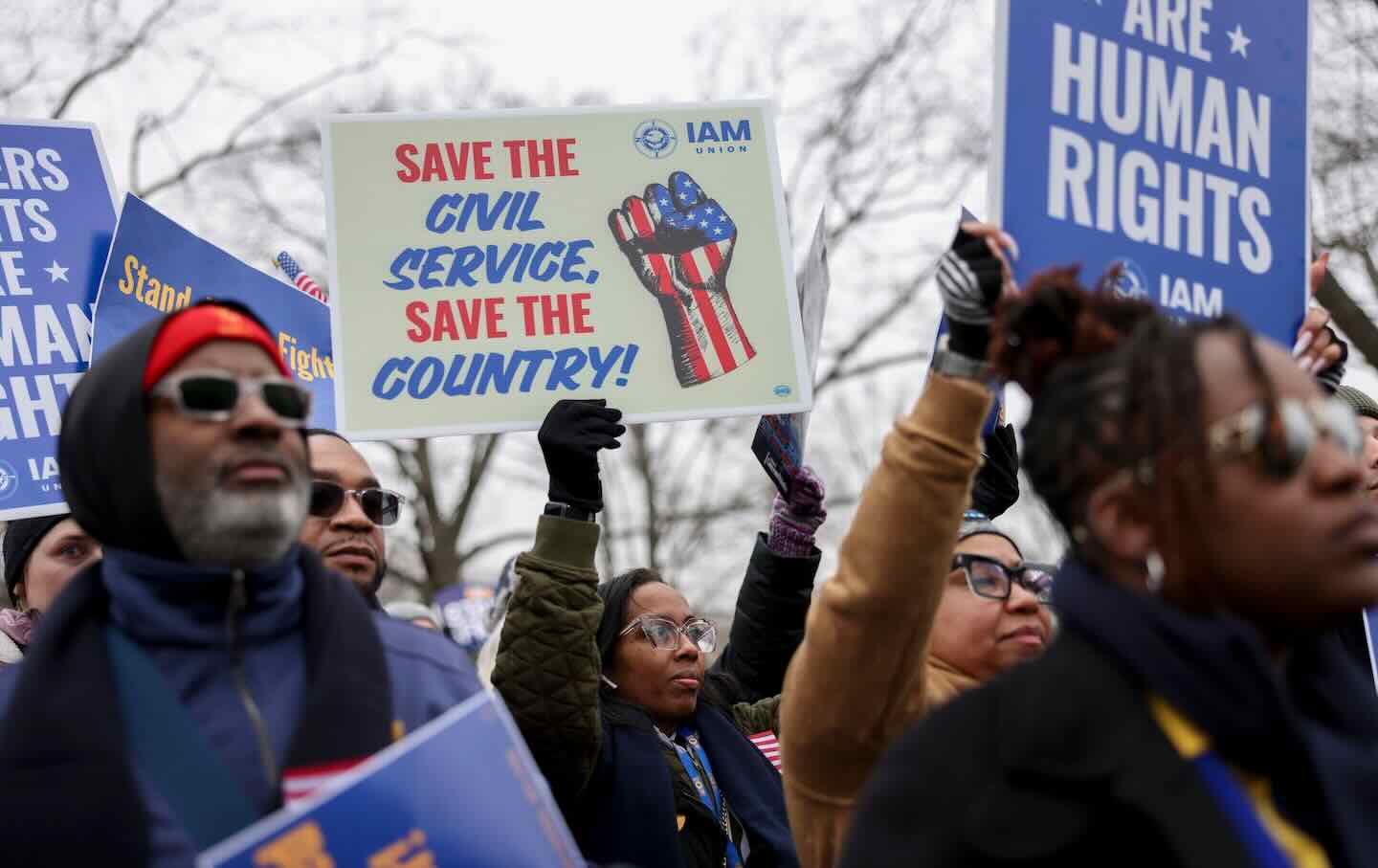
The Unseen Toll: Depression, Anxiety Plague Black Women a Year After Being Fired by DOGE The Unseen Toll: Depression, Anxiety Plague Black Women a Year After Being Fired by DOGE
Trump’s federal workforce cuts dismantled a job pipeline for Washington, DC’s Black community and gutted the well-being of the women who hold up that community.
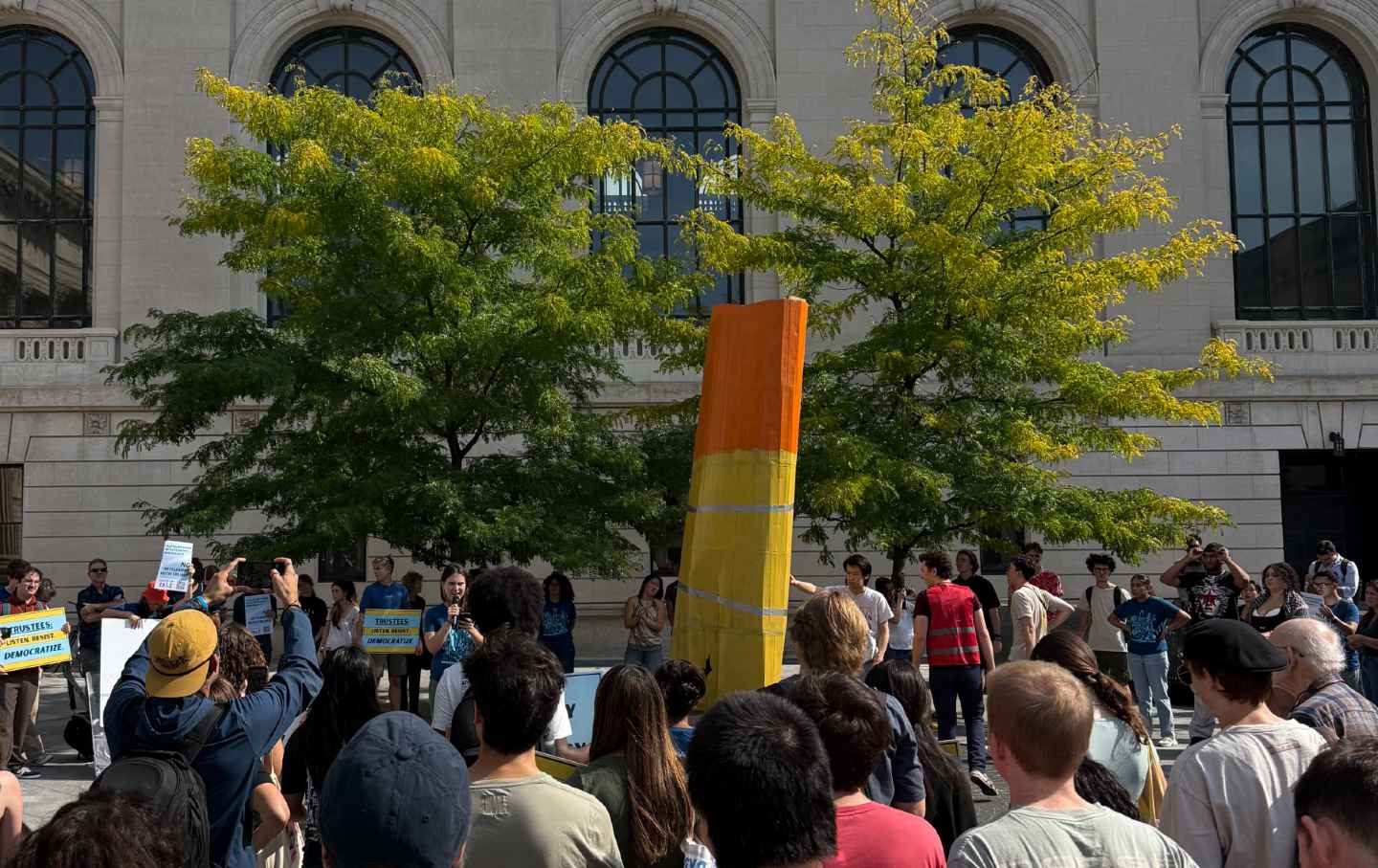
Yale’s Protest Tradition Is Back Yale’s Protest Tradition Is Back
For the first time in more than 50 years, Yale students gathered around an iconic sculpture to protest their university and their government.

