Resisting Federal Overreach in the Exam Room and on the Streets of DC
This Hyde anniversary, Dr. Jamila Perritt reflects on the culture of fear and self-determination in the nation’s capital.
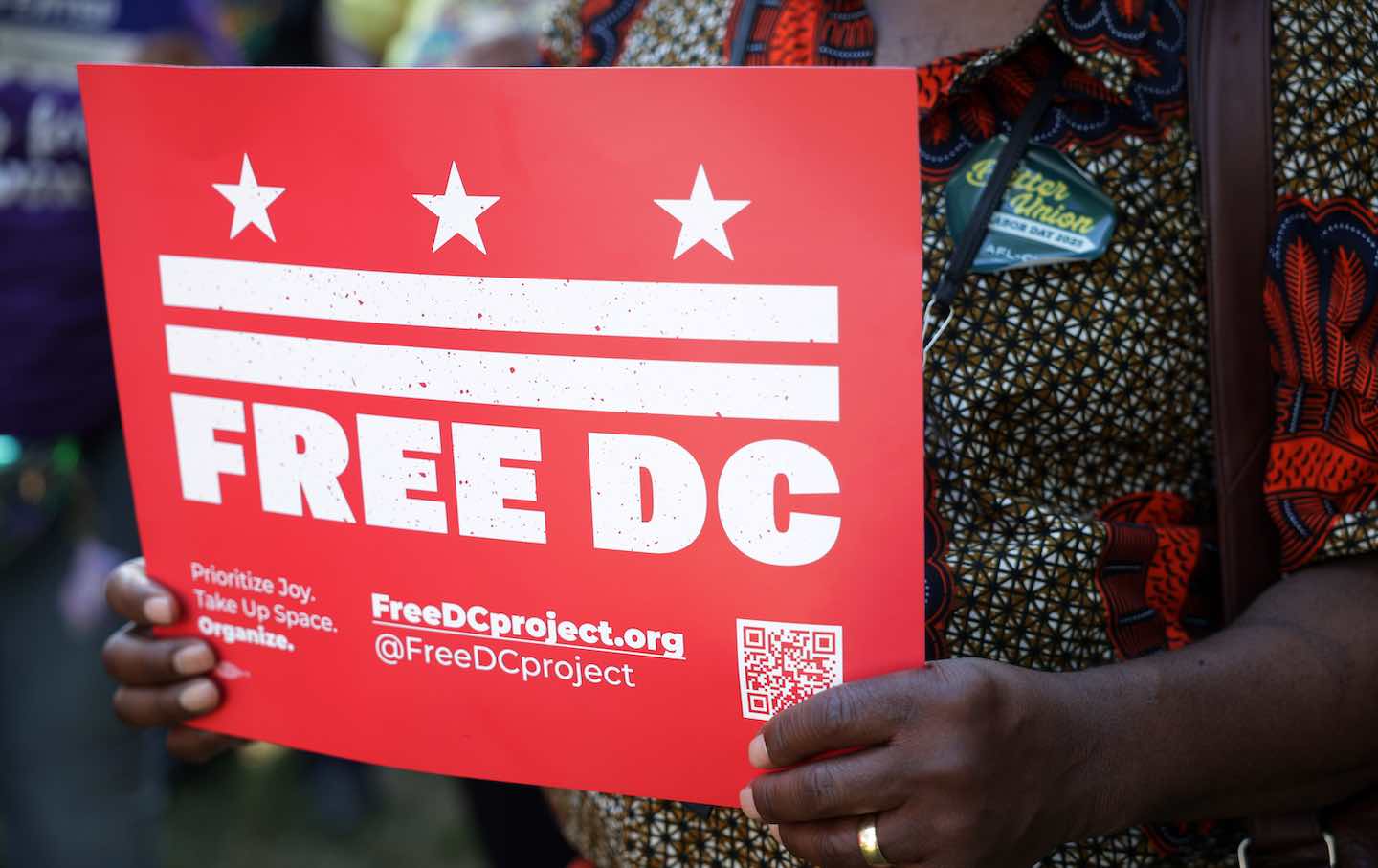
An activist holds a sign that read “Free DC” during a rally at Dupont Circle on August 28, 2025, in Washington, DC.
(Alex Wong / Getty Images)The District of Columbia has been my family’s home for generations. I attended medical school in the District, became a board certified ob-gyn, and pursued a specialty in complex contraception and abortion care because I wanted to care for the community that has always cared for me.
DC has always been a community that is committed to self-determination and is animated and sustained by its people and culture. But true self-determination remains out of reach because DC occupies the precarious position of not yet being a state. DC residents live with the reality of disenfranchisement and are denied, on a daily basis, the autonomy and self-determination afforded to other communities.
Long before the Trump administration deployed federal troops into our streets, long before the Supreme Court dismantled constitutional protections for abortion care in Dobbs v. Jackson Women’s Health Organization, as a provider of abortion care in my hometown for decades, I witnessed the ways federal overreach denied my patients and my community the bodily autonomy and dignity that is our human right. Forty-nine years ago, Congress passed the Hyde Amendment, blocking anyone who relies on federally funded health coverage from accessing abortion care. That includes people in the military, Indigenous communities using Indian Health Services, Peace Corps volunteers, federal employees, and anyone insured through Medicaid.
Some states have resisted the prohibition on abortion care dictated by Hyde by using their own funds to support patients in accessing care. However, DC doesn’t have this option because Congress controls our budget. This policy was ratified through the Dornan Amendment, a rider initially passed in 1988, that prohibits the District from using even locally raised money to ensure abortion coverage for DC residents living on low incomes.
Bans on insurance coverage for care like the Hyde and Dornan Amendments create a two-tiered system of care—one where those with means and resources are able to exercise their right to bodily autonomy and those without cannot. It is unjust, heartbreaking, and infuriating.
I have seen firsthand the impact of this interference and its damaging effects. People who are living in poverty, those already struggling to make ends meet, are singled out for control, denied their right to abortion care, and made to suffer in ways that those with resources and means do not. I have held the hands of patients as they cried when they found out that, despite their working each and every day, their insurance did not cover their care. I have cared for people who are being forced to choose between buying food for their families and getting the care that they need.
Research shows that when women are denied access to abortion, they suffer long-term health and economic consequences, including financial hardships and financial insecurity for years to come. But policy decisions like Hyde don’t just cost patients money and peace of mind; they can also cost them their lives.
Just one year after Hyde passed, Rosie Jimenez—a student and single mother in Texas—died after being denied a Medicaid-covered abortion. Rosie is the first known preventable death due to the Hyde Amendment, and because of many factors, like limitations and variations in the way that deaths during or after pregnancy are reported and inconsistencies in access to care, we may never know the true number of preventable deaths caused by this legislation.
As it turns out, the Hyde Amendment was the canary in the coal mine. Passed only two years after Roe v. Wade was decided, the Hyde Amendment signaled that attacks against abortion care would continue despite a constitutional protection. While many in the reproductive rights movement were celebrating the passage of Roe, reproductive justice activists were warning that if the federal government could deny critical healthcare such as abortion care to people with public insurance, people with private insurance would soon be at risk. They were right. And today we are living in that reality, with total abortion bans in 12 states and 29 others severely restricting access to this care. The Trump administration went even further, passing the so-called One Big Beautiful Bill, which eliminated Medicaid funding for clinics that provide abortion care for one year, and prohibiting plans under the Affordable Care Act from covering abortion in their policies in certain states.
Make no mistake, their foreshadowing goes beyond access to abortion. I hear their voices now as I see federal troops occupy my beloved city. The militarization of DC and the punishment of those who are poor and living on low incomes is all undergirded by the very same disregard for the autonomy and self-determination of my community.
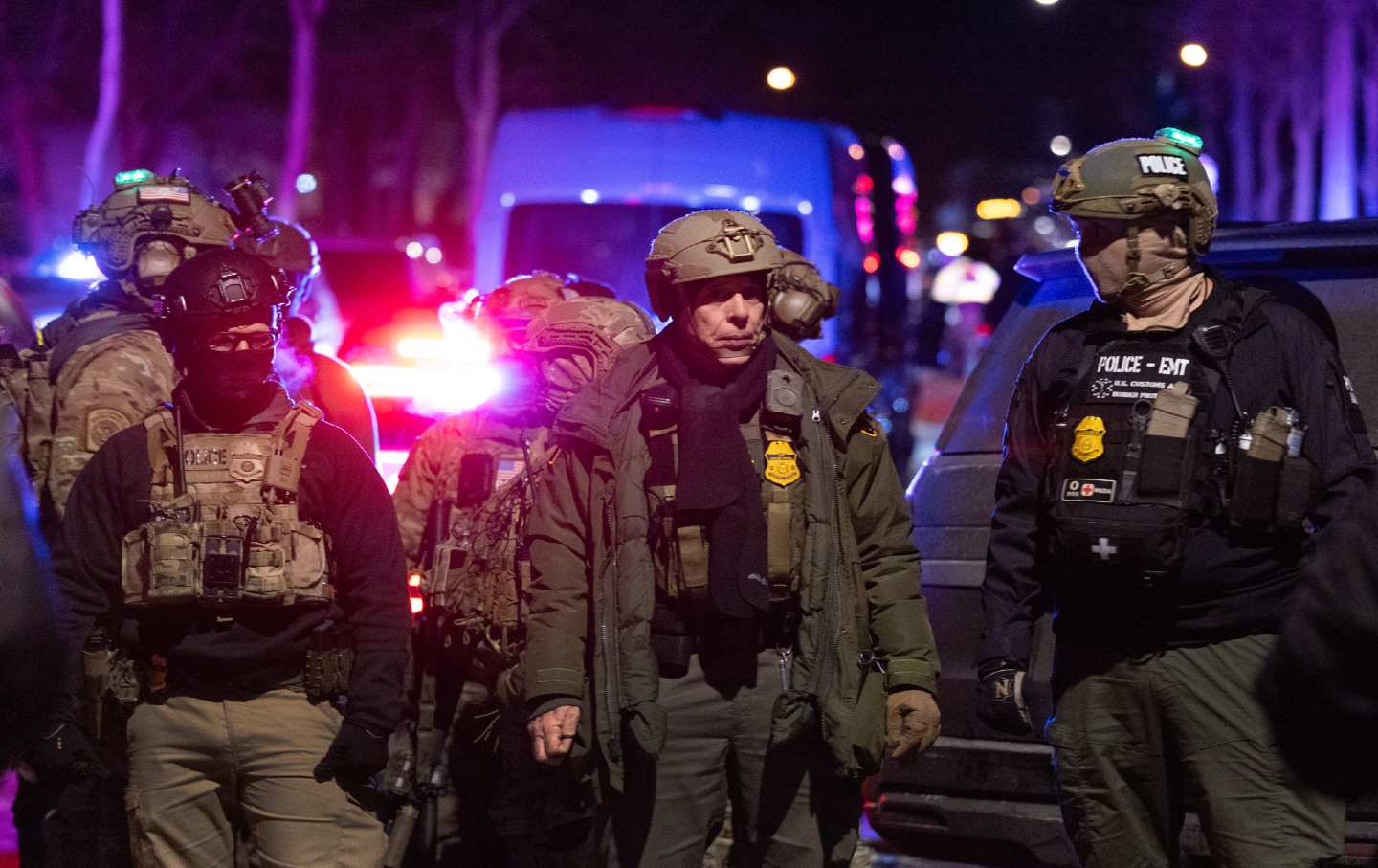
Right now, my neighbors, patients, and colleagues are facing an escalation of state violence at the hands of federal agents—ICE, the FBI, the Secret Service, the National Guard, and others patrol and terrorize our communities under the guise of safety. Immigrant families, our neighbors, community members and colleagues, are being torn apart. Family members kidnapped from homes, from elementary school drop offs and parks, from their places of work, and from the streets, disappeared. Young people, Black and brown, are targeted at metro stations, harassed on their way to and from school, terrorized by masked agents in uniform. This has created a culture of fear, sadness, and anger as we see the gross emotional and physical impact this is having on the families that make DC our home.
The state-sanctioned violence we are witnessing is not separate from attacks on access to reproductive healthcare like the Hyde and Dornan amendments. The same forces driving abortion bans are also fueling immigrant detention, anti-trans legislation, and the militarization of our streets. These policies share a foundation: the devaluation of Black, brown, immigrant, poor, and queer lives. And, this time, DC is the canary. What happens in DC should matter to the rest of the country. We know the administration wants to spread to other cities across the country.
Popular
“swipe left below to view more authors”Swipe →But we are not powerless. Our communities are resilient, and we will continue to resist.
Here in DC, we have a long and rich history of Black and vrown organizers committed to ensuring that people can live safe lives. We are watching that play out in the leadership of organizations like Free DC, DC Abortion Fund, Harriet’s Wildest Dreams, and DC Migrant Solidarity Mutual Aid. Activists are building models of care and safety free from the violent overreach of systems that were never designed with our well-being in mind. DC residents are also demanding access to care, including abortion care, free from barriers, delays, or punishment, and will not stop fighting until our communities can live free from threats of the police state aiming to separate and criminalize our families.
We deserve the right to self-determination. This is not too much to hope for, or to demand.