How Israel’s Special Antisemitism Envoy Is Getting Antisemitism Totally (and Dangerously) Wrong
In equating criticism of Israel and Zionism with antisemitism, Noa Tishby relies on the same conspiratorial tropes that fed Jew-hatred through the centuries.
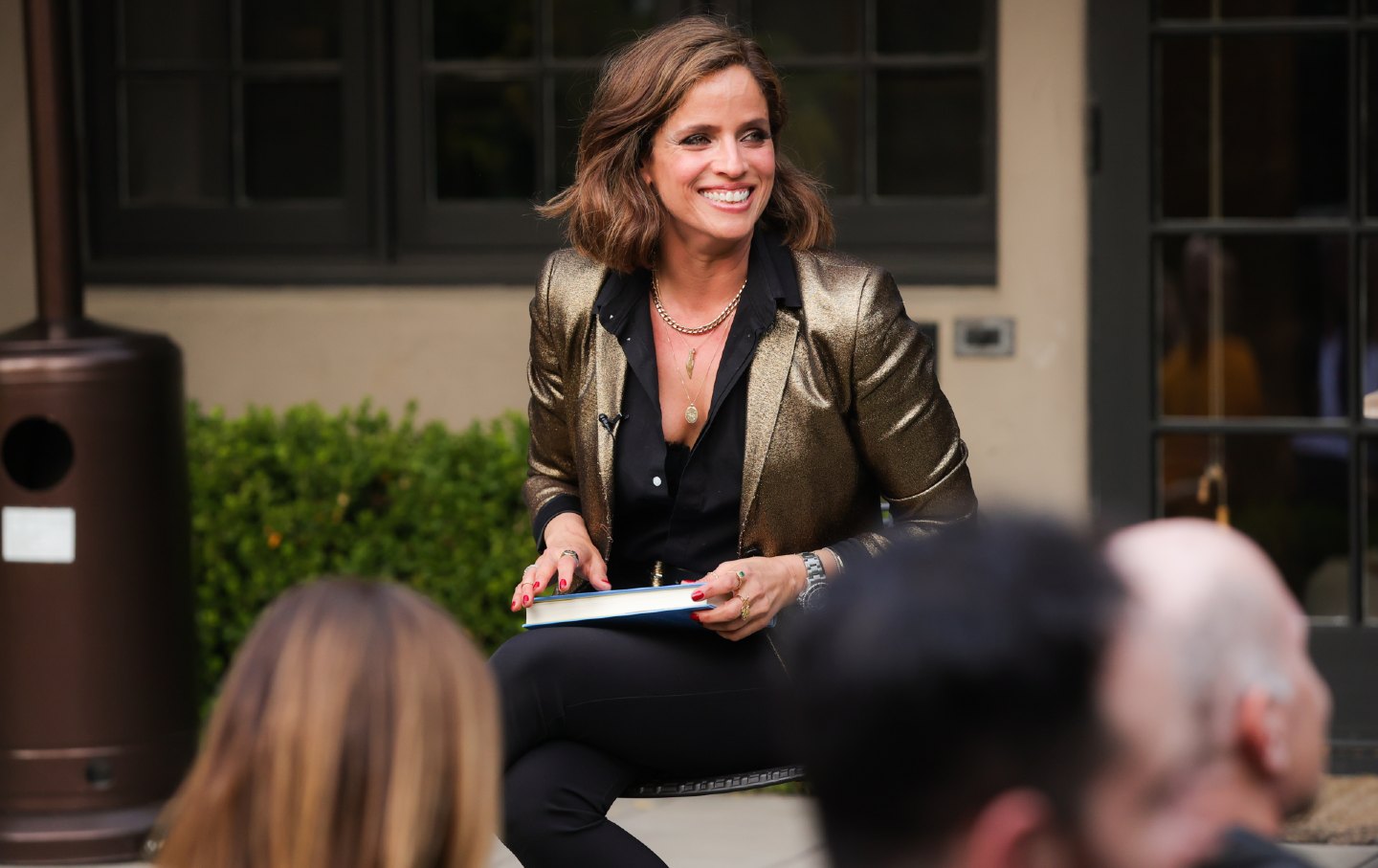
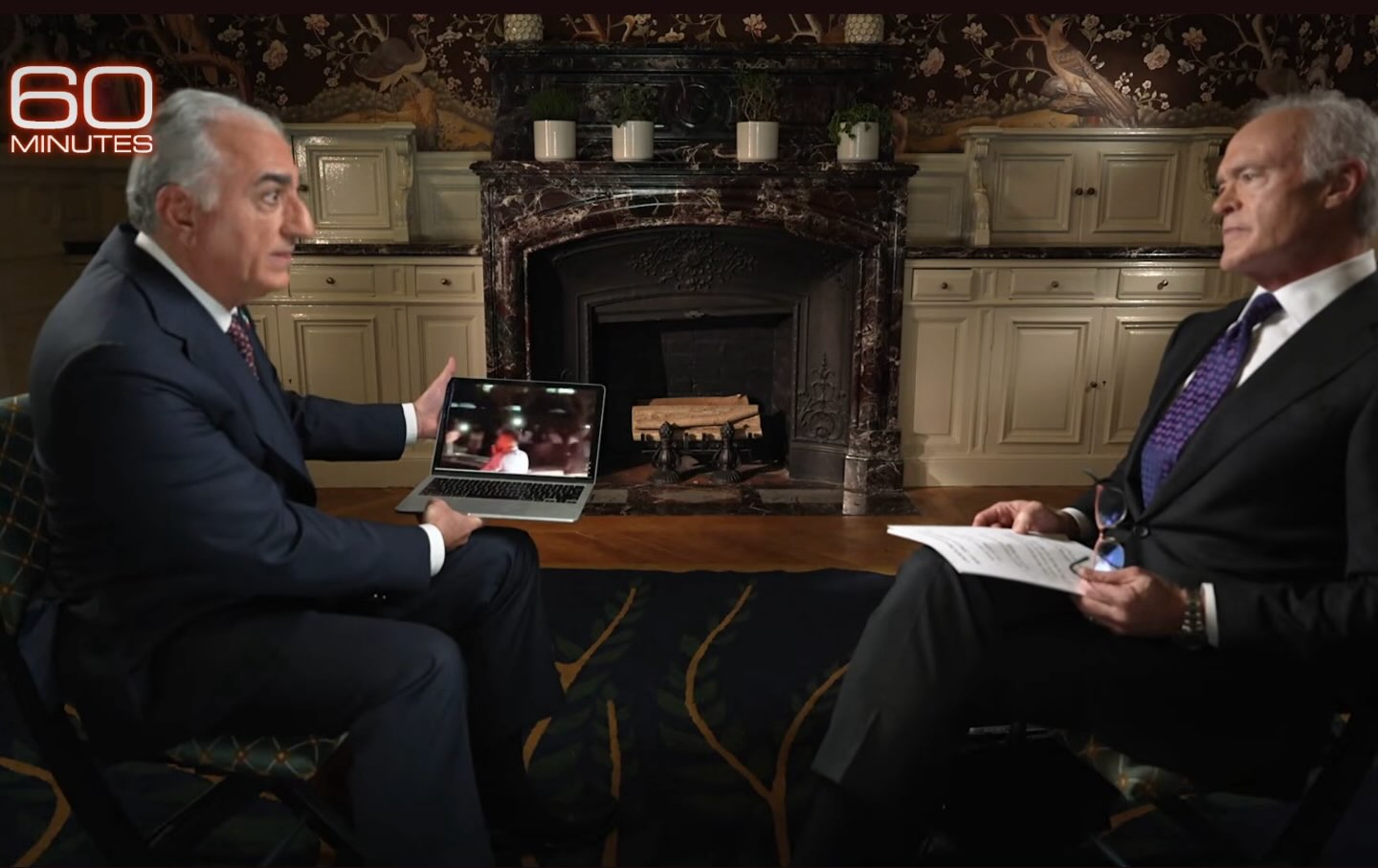
In recent weeks, the president of Harvard University, Claudine Gay, and the president of University of Pennsylvania, Liz Magill, were both forced to resign following virulent attacks on them, accusing them of antisemitism. Noa Tishby, Israel’s former special envoy for combating antisemitism and a Fox News darling, played a part in these attacks, taking to social media to incite animosity against American academia with frightening success. Making an appearance on Piers Morgan Uncensored on December 13, for instance, Tishby argued that “antisemitism is deeply rooted in academia.” In typical fashion, she provided no proof for this accusation, emboldened perhaps by a lengthy, glowing profile that The New York Times published a month earlier.
As a scholar of antisemitism, I continue to be alarmed by the language Tishby uses, sometimes in conjunction with other much more well-known television personalities such as Chelsea Handler and Mayim Bialik, to describe anyone who opposes her view that all criticism of Israel is antisemitism. In various media appearances, Tishby has called pro-Palestinian protesters “a cancer,” accusing them of secretly serving foreign governments that have “sent their tentacles,” and has argued that pro-Palestinian groups are funded by terrorist organizations. Tishby has also claimed, again without any proof, that students and professors have been planted at US universities and funded for years to promote an anti-Israeli agenda. Another Israeli-born influencer, Emily Austin, has used more explicit language, calling for defunding “Nazi-breeding college campuses.”
The very tropes Tishby relies on themselves typify antisemitic ideas about Jewish conspiracies everywhere. I have written about one example of such conspiracy thinking from 1968, when students in Poland joined the global youth protest movement, taking to the streets to demand democratic reforms. Poland’s communist government responded by accusing the students, some of them Jews, of serving a foreign agenda—of being embedded and funded by Israel and the United States to promote Zionism and undermine the Soviet bloc. Certainly, the situation in Poland in 1968 was very different, given that Polish students were raising their voices about local politics, not Israel. But the discourse against them was similar. As a result of the Polish government’s attack, hundreds of Jewish students and academics, including several renowned professors such as Zygmunt Bauman, left the country, with dire implications for Polish academia. Today’s situation in the United States is moving in the same direction, only here with Israeli intervention by those like Tishby, who are taking aim at core American values: free speech and academic freedom. Spreading mass hysteria about criticism of Israel, Tishby proves that she has been a good student of antisemitism.
The main argument Tishby repeatedly makes—with stunning confidence but no evidence—is that all criticism of Israel and Zionism is synonymous with antisemitism. Yet Tishby ignores the many Jews who have criticized Zionism and Israel, some of them as staunch anti-Zionists. Jews around the world have stood at the vanguard of struggles against exclusionary nationalism since its emergence more than a century ago. Undeterred by this fact, Tishby pushes forward in weaponizing antisemitism discourses, equating anti-Zionism with antisemitism. This rhetorical sleight of hand allows Israel to act with impunity. Israel is a state, however, not a person and not a people, and criticizing its actions is absolutely normal. Generalizing about a group of people can be motivated by racism or antisemitism. But criticizing Israeli policies and violence against Palestinians is part of a long struggle against racism and antisemitism. Are there antisemites among those who criticize Israel? Yes. Are there antisemites among those who support Israel? Yes, including some outspoken antisemites, such as John Hagee.
Tishby further argues that Pro-Palestinian slogans, such as “From the river to the sea, Palestine will be free,” are implicitly genocidal. Yet, Israel’s former antisemitism envoy makes this claim while donning a symbol of Jewish supremacy and the Israeli settler movement: a “Greater Israel” pendant. Hanging from a long chain, the pendant is shaped like a map of Israel, but with borders extending from the River Jordan to the Mediterranean Sea. For years, long before October 7, Tishby has worn this necklace, given to her by the Jewish National Fund, and she has claimed that it is merely “a map of Israel.”
This “Greater Israel” map is, however, the symbol of a settler movement that explicitly calls for ethnic cleansing—removing Palestinians, one way or another—and the creation and expansion of illegal settlements in the Israeli-occupied West Bank and in East Jerusalem. Beyond a lack of knowledge about the subjects she discusses, Tishby then also promotes illegal policies and mass violence. Her attacks on free speech and academic freedom—all in the name of Israeli ethno-nationalism—are also an assault on the basic premise of democracy in the United States. Indeed, the resignation of the presidents of two leading US universities—a victory Tishby and her supporters have achieved through a campaign of mass hysteria reminiscent of the dark days of McCarthyism—should worry anyone who cares about the future of democracy.
Support independent journalism that does not fall in line
Even before February 28, the reasons for Donald Trump’s imploding approval rating were abundantly clear: untrammeled corruption and personal enrichment to the tune of billions of dollars during an affordability crisis, a foreign policy guided only by his own derelict sense of morality, and the deployment of a murderous campaign of occupation, detention, and deportation on American streets.
Now an undeclared, unauthorized, unpopular, and unconstitutional war of aggression against Iran has spread like wildfire through the region and into Europe. A new “forever war”—with an ever-increasing likelihood of American troops on the ground—may very well be upon us.
As we’ve seen over and over, this administration uses lies, misdirection, and attempts to flood the zone to justify its abuses of power at home and abroad. Just as Trump, Marco Rubio, and Pete Hegseth offer erratic and contradictory rationales for the attacks on Iran, the administration is also spreading the lie that the upcoming midterm elections are under threat from noncitizens on voter rolls. When these lies go unchecked, they become the basis for further authoritarian encroachment and war.
In these dark times, independent journalism is uniquely able to uncover the falsehoods that threaten our republic—and civilians around the world—and shine a bright light on the truth.
The Nation’s experienced team of writers, editors, and fact-checkers understands the scale of what we’re up against and the urgency with which we have to act. That’s why we’re publishing critical reporting and analysis of the war on Iran, ICE violence at home, new forms of voter suppression emerging in the courts, and much more.
But this journalism is possible only with your support.
This March, The Nation needs to raise $50,000 to ensure that we have the resources for reporting and analysis that sets the record straight and empowers people of conscience to organize. Will you donate today?