A Year Without Fares: Lessons From New York’s Free Bus Pilot
Albany must embrace transformational change to bring NYC transit back on track and be ready for the challenges of tomorrow.
“That $2.90 is killing us all.”
That’s Cicely Blatch, a bus rider in the Bronx, talking about how prohibitively expensive transit in New York City has become. Blatch is not alone—one in five New Yorkers in 2023 struggled to afford the $2.90-a-ride subway and bus fares. Blatch rides the Bx18 bus every day—sometimes multiple times a day. These trips accumulate and can break her budget.
Public transit in New York wasn’t always this way. In the past, it was cheaper, taking less of every dollar earned by New Yorkers. A ride didn’t break $1 in inflation-adjusted dollars until 1948 and $2 until 1970—66 years after the MTA’s first subway opened. It was a lifeline—the thing that made New Yorkers’ lives possible. Today, the cost of a ride is just one more example of a cost-of-living crisis. And for the average bus rider who makes less than $30,000 a year, this crisis is even more acute. That’s exactly why we created the fare-free bus pilot for New Yorkers.
A Success Story

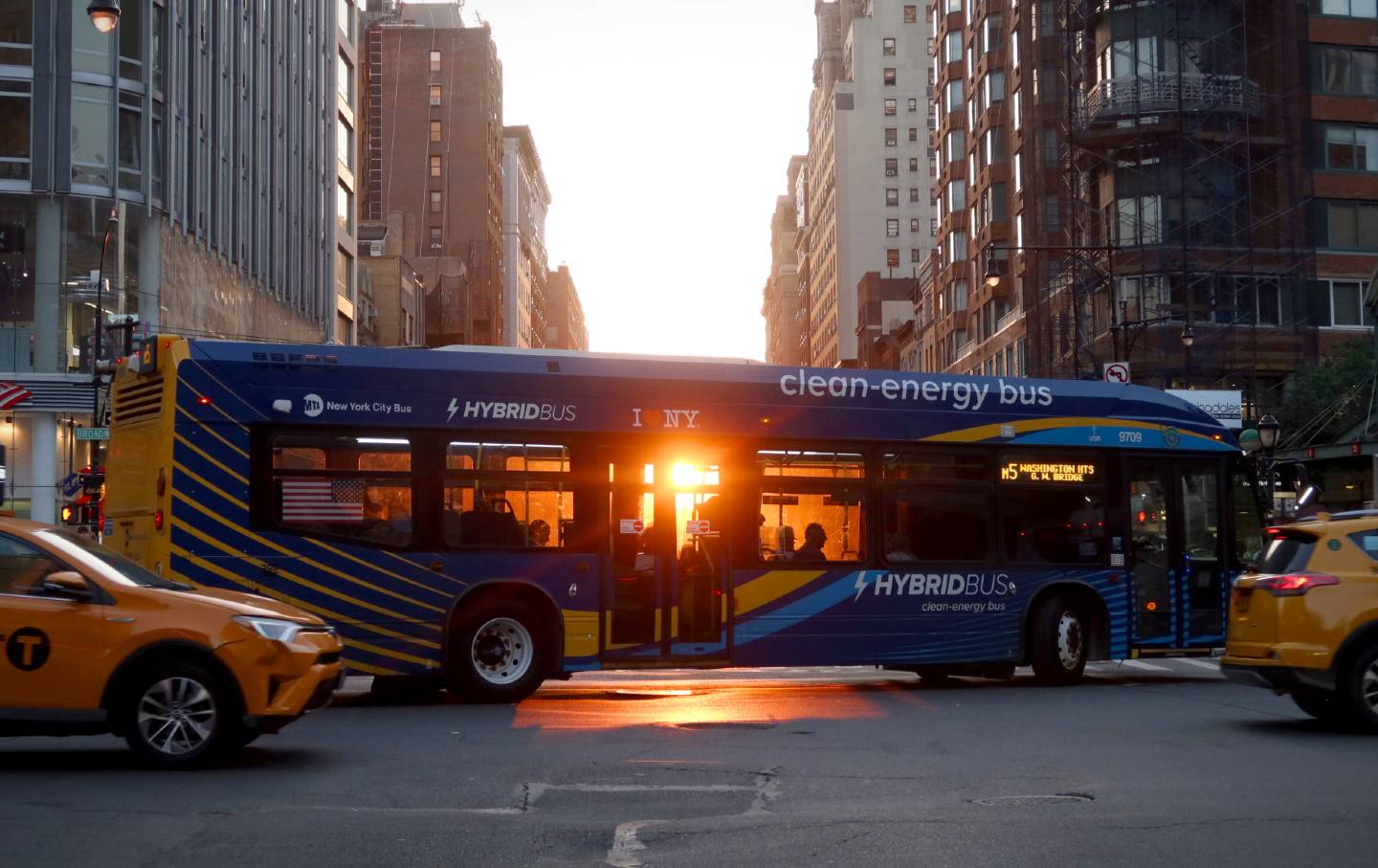
We designed the fare-free bus pilot to be a trailblazing program in which the MTA offered free service on five bus lines across New York City—one in each borough, including Blatch’s Bx18. The program lasted from September 24, 2023, until this past Sunday, serving nearly 50,000 weekday riders. Like similar fare-free bus programs in Kansas City and Boston, the Fare-Free Pilot hoped to offer working-class New Yorkers economic breathing room while also making their commute safer. With the end of this pilot, one thing is clear: It was a resounding success.
The pilot firstly dramatically increased ridership. Across all five fare-free bus lines, the MTA reported a 30 percent increase in ridership on weekdays and 38 percent on weekends, with 23 percent of riders reporting that they made the trip because it was free. It also provided clear economic relief to low-income riders. The highest uptick in new riders was from individuals earning less than $28,000.
Forty-four percent of riders took the free bus for errands and leisure, allowing them to more freely contribute to New York’s economy. And for Blatch, the fare-free bus pilot gave her more freedom to pay for daily necessities. “This means I’ll take the bus more.… I’ll use this money to cover more bills.”
Safety in our public transit system has continued to be a chief concern for New Yorkers. Fare-free buses also offer us a compelling answer on how to deliver safer public transit. Across the five routes we made free, assaults on bus operators dropped by 38.9 percent. This strongly mirrors what happened in Kansas City: After introducing fare-free buses, security incidents dropped 39 percent from 2019 to 2020. By eliminating the fare box, riders did not need to interact with bus operators, interactions that were often the source of altercations. J.P. Patafio, a TWU Local 100 vice president who represents bus operators in Brooklyn, put it this way: The “fare box is responsible for 50 percent of the assaults on my operators. Free bus service would make my bus operators’ job much safer.” The pilot had positive effects on the environment, too: Eleven percent of new riders used the bus instead of a car or taxi they used prior, thus reducing city-wide emissions.
A Paradigm Shift
Far too often, crises—often self-imposed ones—warp our transportation policy decisions. The most recent example of this was Governor Kathy Hochul’s decision to delay congestion pricing—throwing the MTA into a solvency crisis. Yet we cannot let public transit be trapped in endless cycles of financial emergencies.
The MTA’s strategic priority is to move New Yorkers where they need to go in a safe, reliable, and accessible way. As lawmakers, we must ask: How can we most effectively fulfill the MTA’s mission? Fare-free bus transit is one clear answer.
Continuing to make buses free in New York is more attainable than you might believe. We can make all New York City buses free for just under $800 million, or $50 million less than what New York spent on the new Buffalo Bills stadium.
As we approach New York’s next budget cycle, it is critically important to resolve the MTA’s fiscal insolvency. Yet our task at hand is greater than this. It’s time to go beyond the crisis-fix-crisis paradigm and make public transit work for all. So much of what we have been fighting for is exactly what the MTA itself wants: a system that moves millions of New Yorkers. While the fare-free pilot is sunsetting, it showed us the true value of public transit as a public good: a transit system that can be safe, reliable, and universally accessible. The proof is in the numbers: Fare-free service improved public transit by virtually all measures. Now, it’s time to make this a reality for every New Yorker across this city.