The Rise of Medical Fascism
The US medical profession’s long history of complicity with state violence has prepared it for compliance with Trump’s authoritarian orders.
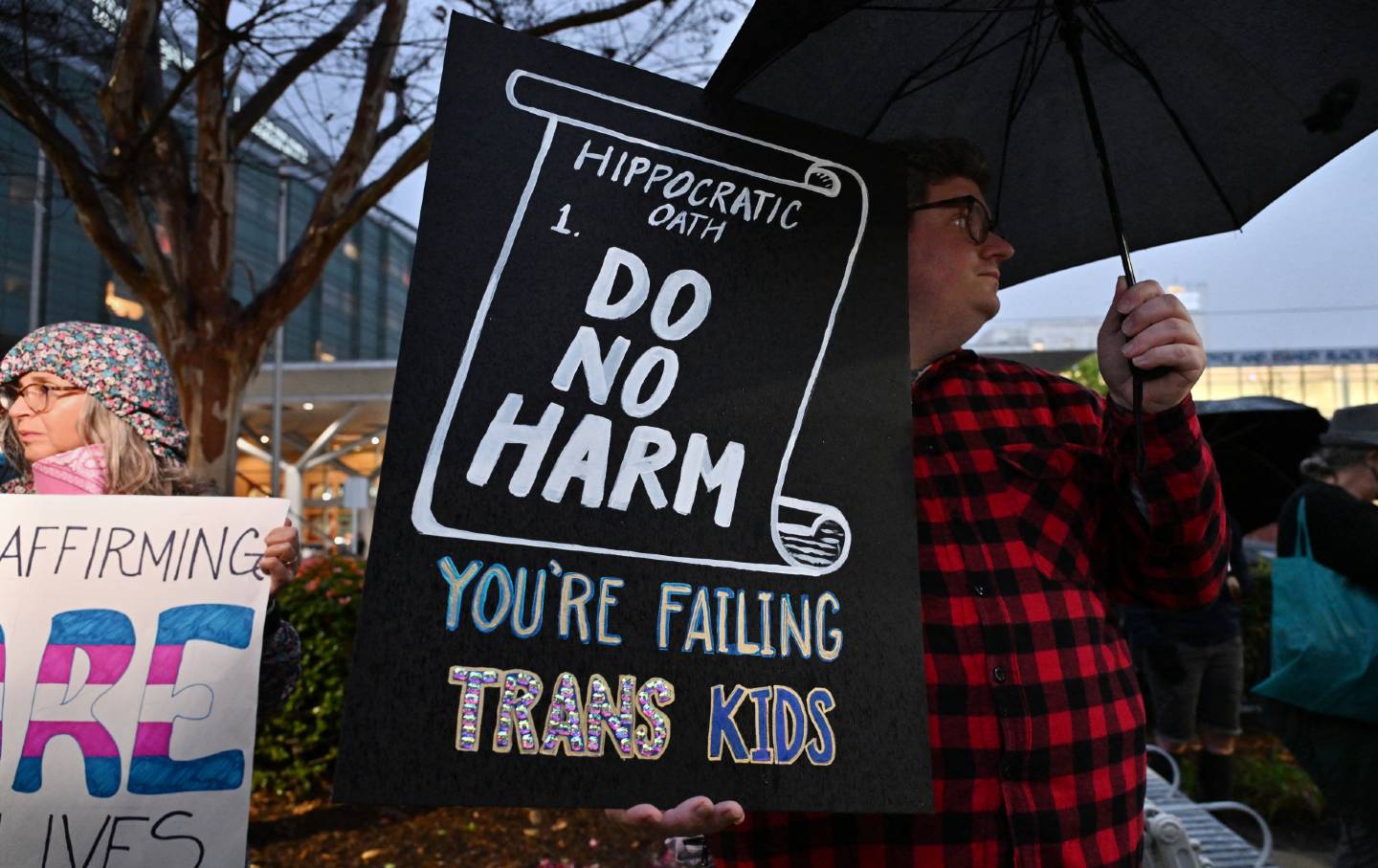
Supporters of transgender youth demonstrate outside Children’s Hospital Los Angeles on February 6, 2025, in the wake of President Donald Trump’s executive order threatening to pull federal funding from healthcare providers who offer gender-affirming care to children.
(Robyn Beck / AFP via Getty Images)Authoritarian regimes always enlist medical systems to ensure their control over the means of life and death, but they do not do so overnight. Instead, medical fascism, by which I mean the integration of healthcare institutions and professionals into autocratic systems of control, coercion, and repression, rises gradually. It incrementally erodes professional ethics, co-opts health institutions, discourages dissent, and provides incentives and ideological support for participation in state violence. Rather than externally imposed, these steps are typically carried out by actors already internal to the field—usually by those doctors most eager for career advancement. This process is underway in the United States, and it didn’t start with Donald Trump.
For decades, medical institutions in the United States have normalized collaboration with violence. This includes participating in forced sterilization programs targeting Black and Indigenous women until at least 2013, the psychiatric pathologization and involuntary institutionalization of Black men participating in civil rights protests, repeated political defense of for-profit healthcare exclusion responsible for at least tens of thousands of deaths each year, and essential support for both the nation’s profoundly racist and harmful system of mass incarceration and its CIA torture programs.
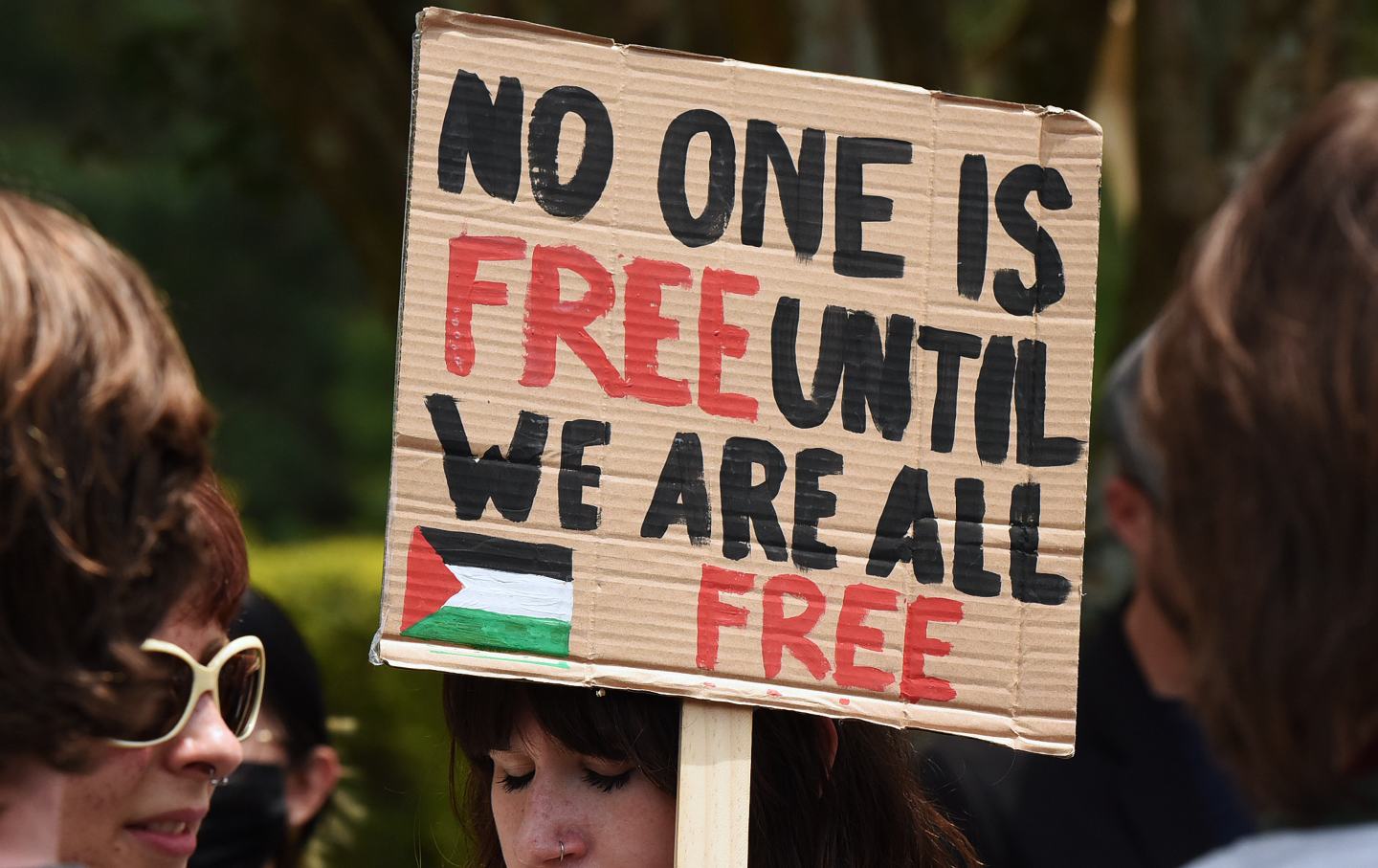
Some may be tempted to say that these shameful roles are a thing of the past. This is wishful thinking. The US medical profession’s complicity with cruelty has been especially obvious and further honed over the last 18 months, during which the Israeli government has used US-supplied weapons and diplomatic cover to bomb all of Gaza’s 36 hospitals, torture and kill approximately 1,200 healthcare workers, and manufacture famine as a weapon of war. Amid all of this, the representatives of the US healthcare industry—one of the most powerful political lobbies in the world—have remained silent. In some cases, our most influential journals and professional leaders have even actively defended and provided cover for unambiguous war crimes that UN investigations have repeatedly determined constitute clear evidence of genocide.
I and others have decried this complicity as a betrayal of medicine’s most basic ethical responsibilities. Many of us have pointed to the hypocrisy betrayed when the profession’s organizations were unabashedly outspoken in their condemnations of parallel war crimes in places like Ukraine and Syria. But the unpleasant truth is that the US medical profession’s cooperation with the US-Israeli perpetration of genocide against Palestinians is neither an aberration nor inconsistent with its political foundations.
It is, instead, part of a well-established pattern that goes back to the origins of the profession in this country. Like many institutions un the US, the medical field was born out of complicity with slavery, providing various medical rationalizations for racist policies and supporting segregated medical systems well into the 20th century. Over the course of its development, the profession has devised medical justifications for misogyny, the pathologization and criminalization of queer sexualities, and the health harms of capitalism’s exploitative labor practices that medical professionals dutifully record as unfortunate tragedies rather than profit-driven social murder. Many US doctors have repeatedly aligned themselves with government policies regardless of their ethical reprehensibility. And to quash political dissent from within our own ranks, we have allowed strategic uses of an unprincipled ideology of “professionalism”—one that treats superficial political neutrality, automatic obedience to authority, and loyalty to institutional interests and hierarchies as core virtues—to demand conformity and reward compliance, often punishing those who speak out against injustice as disruptive or unprofessional.
Although the US medical profession’s alignment with violence may have begun at home, it has not been confined to domestic affairs. Alliance with foreign policy, no matter how unjust, has been a defining feature of US medicine and its institutions. This is evident in their tacit support for American-perpetrated genocide in Vietnam, defense of medical apartheid in South Africa against global demands for its end, and refusal to speak out against US war crimes in Iraq and Afghanistan. And it has been manifest in the US medical profession’s longstanding support for medical apartheid—and now an acute genocide—in the Occupied Palestinian territories.
As anti-colonial theorist Aimé Césaire observed in his 1950 Discourse on Colonialism, in which he reflected on the return to Europe of mass murder it had long practiced in the colonies, the logics of dehumanization and eugenics at home and those that enable genocide abroad are not separate. Violence practiced against the foreign “other” boomerangs back as violence enacted against our neighbors, and vice versa, with each scene fueling the other.
Domestically, this typically begins with aggression against immigrants, racial minorities, and gender minorities before it ultimately expands to anyone who dares dissent. As we reflect on this, we should remember the central role that German physicians played—inspired in part by US doctors’ own eugenicist ideologies and by a well-honed tradition of European physicians’ participation in colonial violence—in the rise of Nazism and the active implementation of its extermination campaigns.
In light of these histories, it should come as no surprise that as Trump and his allies pursue deportations of dissidents, criminalization of gender-affirming and reproductive care, indiscriminate destruction to the country’s public health and public care systems, and a proposed doubling-down on “asylum”-based mass incarceration in place of essential mental health and social care, doctors and medical institutions are once again responding with compliance rather than organized refusal or resistance. If past international instances of medical cooperation with fascism are prologue, we should be deeply concerned about what comes next.
Popular
“swipe left below to view more authors”Swipe →We are already seeing the groundwork being laid for doctors to function as agents of state control rather than as providers of care. Hospitals are shutting down gender-affirming care programs and scrubbing mention of racial and gender health inequalities from their websites, fearing retaliation from state governments or disapproval from right-wing billionaire donors. Doctors in anti-abortion states are declining to treat pregnant patients for fear of prosecution. Both private and public hospitals have instructed their employees to ignore their legal rights and duties to provide sanctuary in favor of instead collaborating with ICE raids targeting immigrant patients and staff, and some states are requiring hospitals to ask patients their documentary status.
These are not isolated policy disputes. They are part of a broader shift toward medical fascism—a system in which doctors and nurses are compelled to act as enforcers of state violence rather than as independent ethical actors.
We have every reason to anticipate that the Trump regime will intensify these efforts to wrap health agencies and institutions into the war on immigrants and dissidents, to expand restrictions on reproductive and transgender healthcare, and to use medical institutions to surveil and punish marginalized communities. What will American doctors do if ordered to deny care to trans patients? To assist in mass deportations? To participate in state-mandated sterilization programs? To turn away patients in crisis from emergency departments because, stripped of Medicaid coverage, they have no capacity to pay for care? History suggests that many will comply. Many already do.
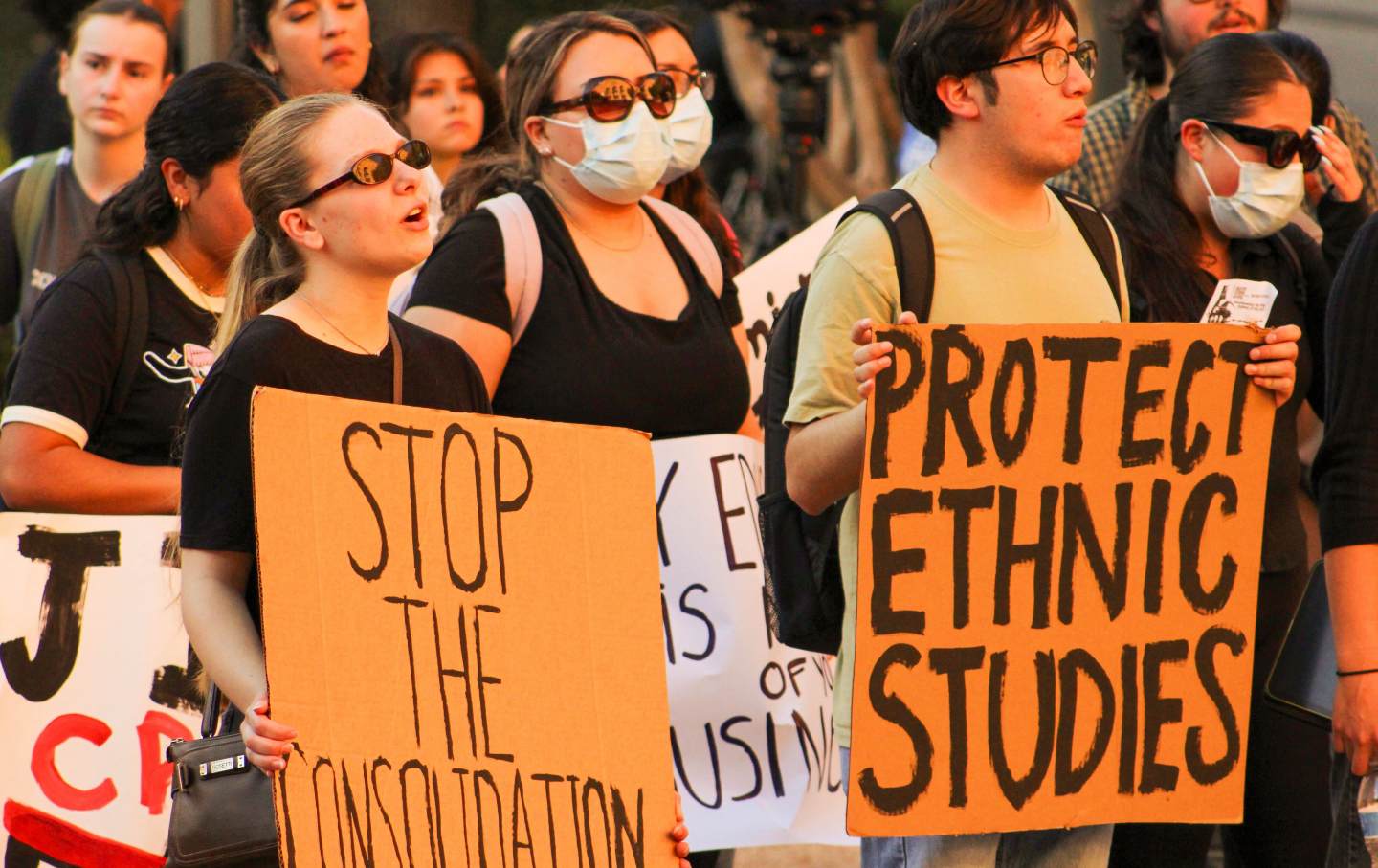
Although authoritarian regimes have relied on the cooperation of medical professionals to deny care to those deemed undesirable, to provide a veneer of legitimacy to state violence, and to enforce systems of exclusion, the fact remains that when medical professionals refuse to comply, these systems falter. We are already seeing pockets of resistance. Some doctors in the United States have continued providing abortion care underground. Some hospitals have refused to comply with ICE targeting of patients. Some medical students have risked their careers to protest their institutions’ complicity in genocide. But individual acts of courage are not enough.
To beat back medical fascism, the medical profession must organize to exert collective force. This means forming networks of mutual aid, preparing for mass civil disobedience, and coordinating to refuse to comply with policies that threaten harm to our patients, colleagues, and communities. It means demanding that our institutional administrators and professional organizations take a stand against genocide, state violence, manipulation by oligarchic donors, and the creeping authoritarianism that is infiltrating our hospitals and clinics. It also requires us as health workers to condemn, oppose, and depose our institutional leaders if, as at present, they refuse to prioritize ethics over convenience.
It is also essential to acknowledge that, in a context of collapsing public trust in our failing health systems best known for their profiteering cruelty and exploitative norms, resistance alone is not enough. To protect public health and try to recover the integrity of the medical profession in the United States, we must also fight for more effective, equitable, and democratic national health systems rather than simply try to defend an indefensible status quo.
There is no neutral ground in the face of state violence, and our ethical obligations as caregivers do not end when ethical action means accepting personal risk. What remains to be seen is whether health workers will allow our history to repeat itself or whether, this time, we will finally refuse.