
Congressman Jim Banks’s Pressure on Indiana University to Police Antisemitism Is Duplicitous and Dangerous
Campus debates about the Israeli-Palestinian conflict can be challenging, fractious—and sometimes triggering. But they are debates, not acts of bigotry.

On November 15, Republican Representative Jim Banks sent a letter to Indiana University President Pamela Whitten. The letter, posted at Bank’s website, expressed concern about antisemitism on the Indiana University Bloomington campus, posed six questions, and demanded that these questions be answered “no later than December 1, 2023.” On his website, Banks went further, announcing a “probe” of campus antisemitism, and concluding with a clear reminder: “As a lawmaker, I would note that Title VI of the Civil Rights Act prohibits anti-Jewish and antisemitic discrimination. If IU administrators condone or tolerate campus antisemitism, the university could lose access to federal funding.”
Banks might appear to be a concerned public official who supports civil rights and is sincerely concerned about bigotry on the campus.
But appearances can be deceiving.
Banks is a hard-core supporter of Donald Trump—the most racist president in recent memory—who voted on January 6, 2021, to overturn the election of Joe Biden and has continued to defend Trump’s actions on January 6, insisting, “There’s nothing more American than coming to the Capitol and protesting, speaking out, marching around the Capitol mall holding signs. A lot of people did that that day.”
Banks’s current crusade against “antisemitism” coincides with his Trump-endorsed campaign for Indiana’s US Senate seat. An evangelical Christian, Banks’s support for Israel may be religiously inspired. But his leadership in the culture wars of the far right, which target educators, libraries, and universities, is clearly politically inspired. And so, like many GOP politicians looking to 2024, Banks presents himself as a savior of Jewish students victimized by a “woke” university system.
Banks’s concern is hard to take seriously.
Back in 2017, when then-President Trump identified “good people on both sides” of Charlottesville’s neo-Nazi Unite the Right rally, Banks did not join with GOP colleagues to condemn him. Nor did he join with his colleagues to condemn antisemitism after the mass shooting at Pittsburgh’s Tree of Life Synagogue in 2018. Nor did he join with anyone to denounce the fascist groups whose participants attacked the Capitol on January 6 sporting neo-Nazi iconography and carrying Three Per Center flags clearly symbolizing white Christian nationalism.
But Banks did join, on October 25, with 20 conservative Republican members of Congress to demand that Washington, D.C., Mayor Muriel Bowser “immediately rename ‘Black Lives Matter Plaza’ and remove the street painting that reads ‘Black Lives Matter’ due to that movement’s celebration of violent antisemitic terrorism” and “end the city’s celebration of this terrorist sympathizer group.”
And now Banks turns his attention to Indiana University, demanding that it furnish an official accounting of its commitment to fighting “antisemitism.”
The cynicism of this move is betrayed by the fact that Banks’s own letter offers no evidence that there has been any violence against Jews, or antisemitism more generally, on the Bloomington campus in the wake of the October 7 Hamas attack on Israel.
Citing news reports, Banks offers three examples of “antisemitism”:
- Students at an October 9 Palestinian Solidarity Committee (PSC) rally claimed they were there to support “our brothers and sisters being mass-murdered, tortured, killed and raped in Israel.”
- Students associated with the PSC also participated in a protest calling for a cease-fire in Gaza. In Banks’s words: “One protestor held a sign reading ‘Colonialism, Apartheid, Genecide [sic],’ and, according to the Bloomingtonian, an IU student smeared Israelis as ‘occupiers.’”
Popular
“swipe left below to view more authors”Swipe →- Two Jewish members of the IU student government recently resigned, claiming that the student body president “is antisemitic,” and alleging that another student government official claimed, “Antisemitism is not an issue on campus.”
Banks’s own description of the first two “incidents” makes clear that they involved pro-Palestinian activism, not “antisemitism”; indeed, these events involved student members of Jewish Voice for Peace.
It is hardly antisemitic to claim that Israel is a colonial or apartheid state. And while some Jewish American students might not like hearing Israelis described as “occupiers,” Israel has indeed occupied the West Bank and Gaza since 1967, and Israeli settlers have recently been attacking West Bank Palestinians and seizing their land.
The website of B’tselem, the Israeli human rights group, states: “Israel’s regime of apartheid and occupation is inextricably bound up in human rights violations. B’Tselem strives to end this regime, as that is the only way forward to a future in which human rights, democracy, liberty and equality are ensured to all people, both Palestinian and Israeli, living between the Jordan River and the Mediterranean Sea.” Does this make B’tselem “antisemitic”?
Raz Segal, an Israeli Jewish expert on the Holocaust, claims that the IDF bombardment of Gaza is “a textbook case of genocide,” and he published a essay explaining why in Jewish Currents, a Jewish journal that publishes critiques of Israel written by Jewish people who actually identify with the country. Is Segal an antisemite? Is Jewish Currents an antisemitic publication?
Regarding the Jewish student leaders who allege that other student government officials are “antisemitic,” this is simply hearsay, and constitutes no evidence of anything except what the students think.
As a Jewish New Yorker who has lived in Bloomington, Ind., for the past 36 years, has taught many thousands of Indiana students, and whose two Jewish children attended Bloomington’s public schools, I can attest that antisemitism exists in southern Indiana. But its primary sources are general ignorance and the presence of far-right groups, such as the so-called “Traditionalist Workers’ Party” and its offshoots, organized by neo-Nazi and January 6 insurrectionist Matthew Heimbach of Paoli, Ind. As far as I know, there have been no sightings of Hamas or ISIS in these parts.
Antisemitism is deplorable. Terrifying threats like those recently made against Jewish students at Cornell, referenced by Banks, must be condemned and punished. So, too, threats made against Islamic or Arab students—though Banks himself is silent about this.
But no such antisemitic threats have surfaced on the Bloomington campus as a result of October 7, and most of what is currently being condemned as antisemitism is not bigotry against Jews but opposition to the Israeli government and solidarity with Palestinians—things protected by the Constitution’s First Amendment and the basic principles of academic freedom.
Last week, over 130 Indiana University, Bloomington faculty came together to sign an Open Letter criticizing the Banks letter for its content and tone and its barely veiled threat against the university.
Debates about the Israeli-Palestinian conflict are challenging, fractious—and sometimes triggering. But they are debates, not acts of bigotry. Efforts to police them run counter to the basic values of a democratic society. And efforts to exploit them for political gain represent acts of cynicism unbecoming of anyone who seeks to earn the public’s trust.
More from The Nation

The Endless Hypocrisy of Bari Weiss The Endless Hypocrisy of Bari Weiss
She claims to be a free speech champion. But as her actions at CBS News keep showing, she seems to think free speech should run only in a rightward direction.
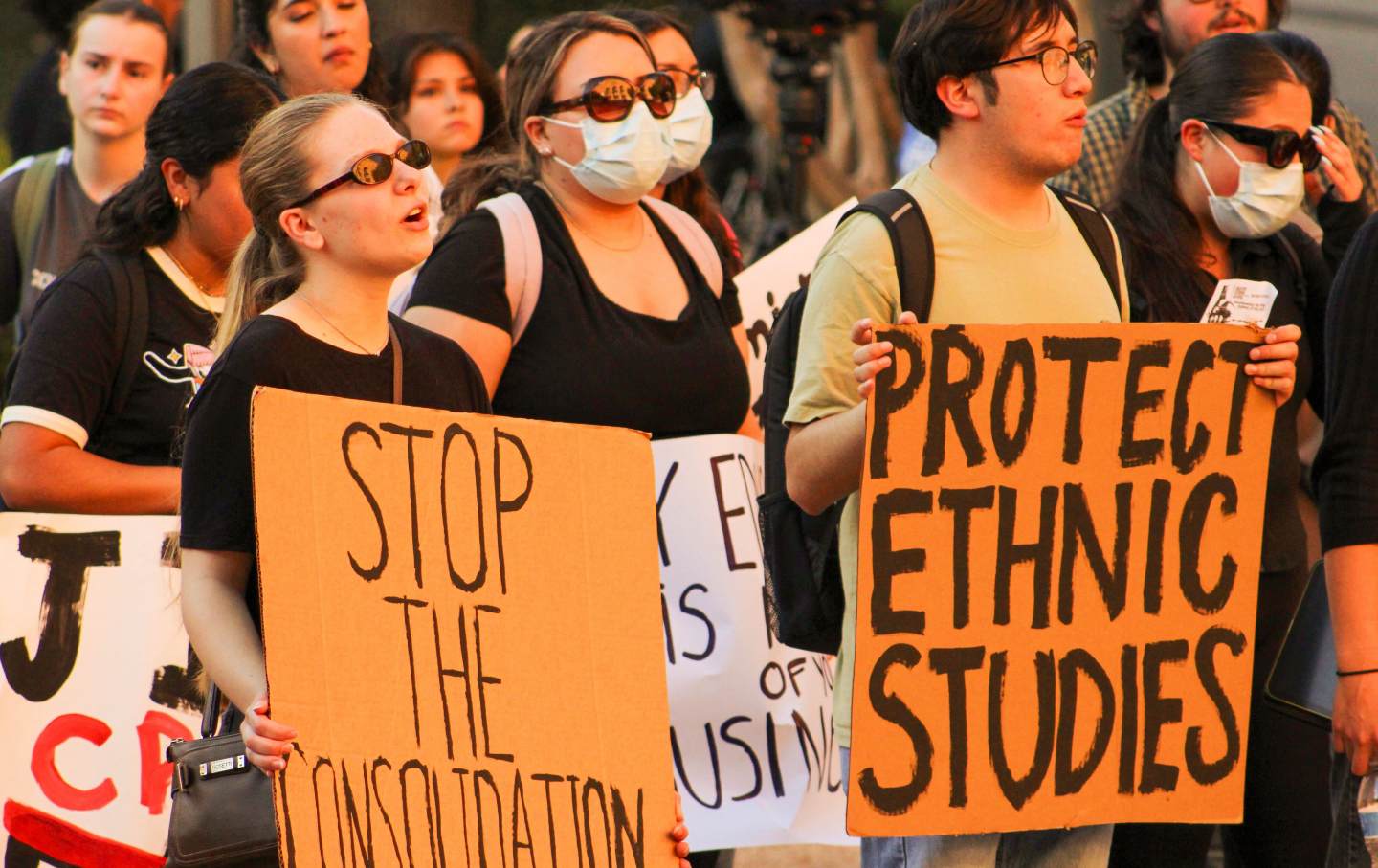
What Will Be Left After the University of Texas Destroys Itself? What Will Be Left After the University of Texas Destroys Itself?
UT-Austin has collapsed its race, ethnic, and gender studies into a single program while a new policy asks faculty to avoid “controversial” topics. But the attacks won’t end there...

The Corporate Media Is Head Over Heels for the Iran War The Corporate Media Is Head Over Heels for the Iran War
Donald Trump’s attack may be surreal, unjustified, and illegal. But that’s not stopping the press from turning the propaganda dial way up.

The Disturbing History of ICE’s “Death Cards” The Disturbing History of ICE’s “Death Cards”
The Vietnam-era practice is yet another example of ICE agents thrilling to the brutality they have been encouraged to cultivate.
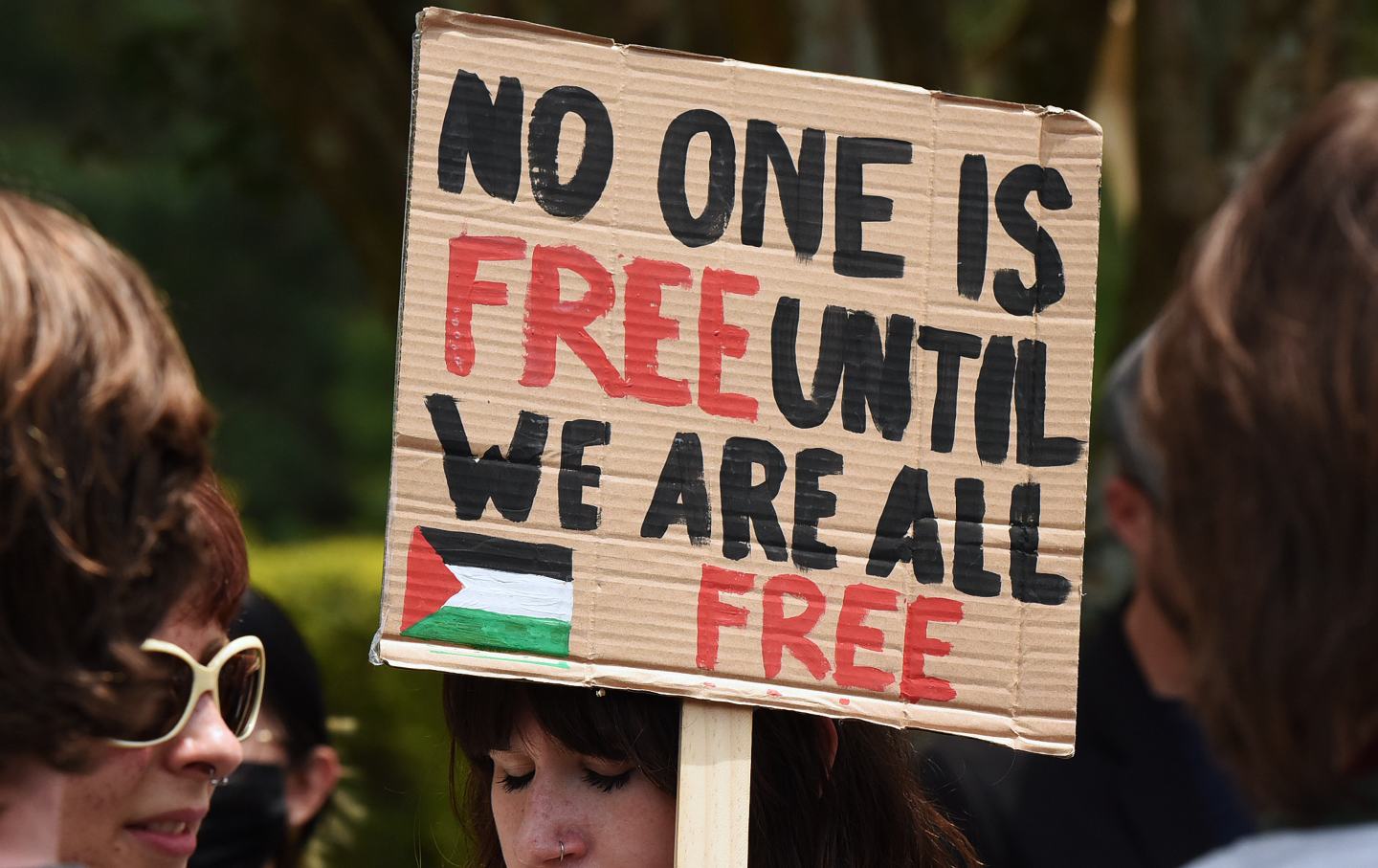
The American Universities Programming Israel’s Killer Drones The American Universities Programming Israel’s Killer Drones
Industry partnerships in higher education are pushing STEM graduates into the business of weapons manufacturing and genocide profiteering.

The Red State–Blue State Healthcare Divide Is Dangerous for Everyone The Red State–Blue State Healthcare Divide Is Dangerous for Everyone
Whether or not you have access to independent, scientifically sound public health guidance may depend on how your state voted for governor.

