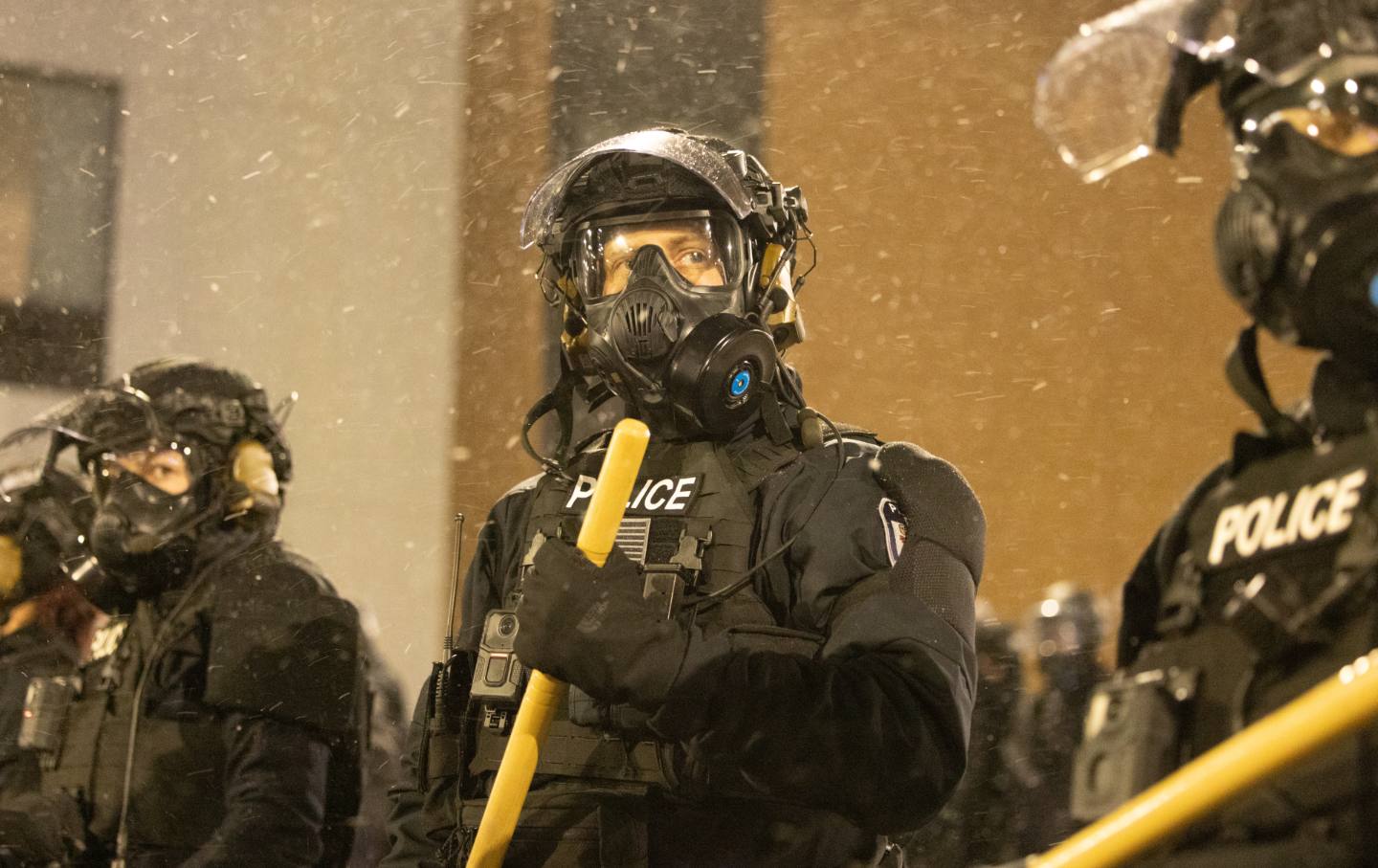
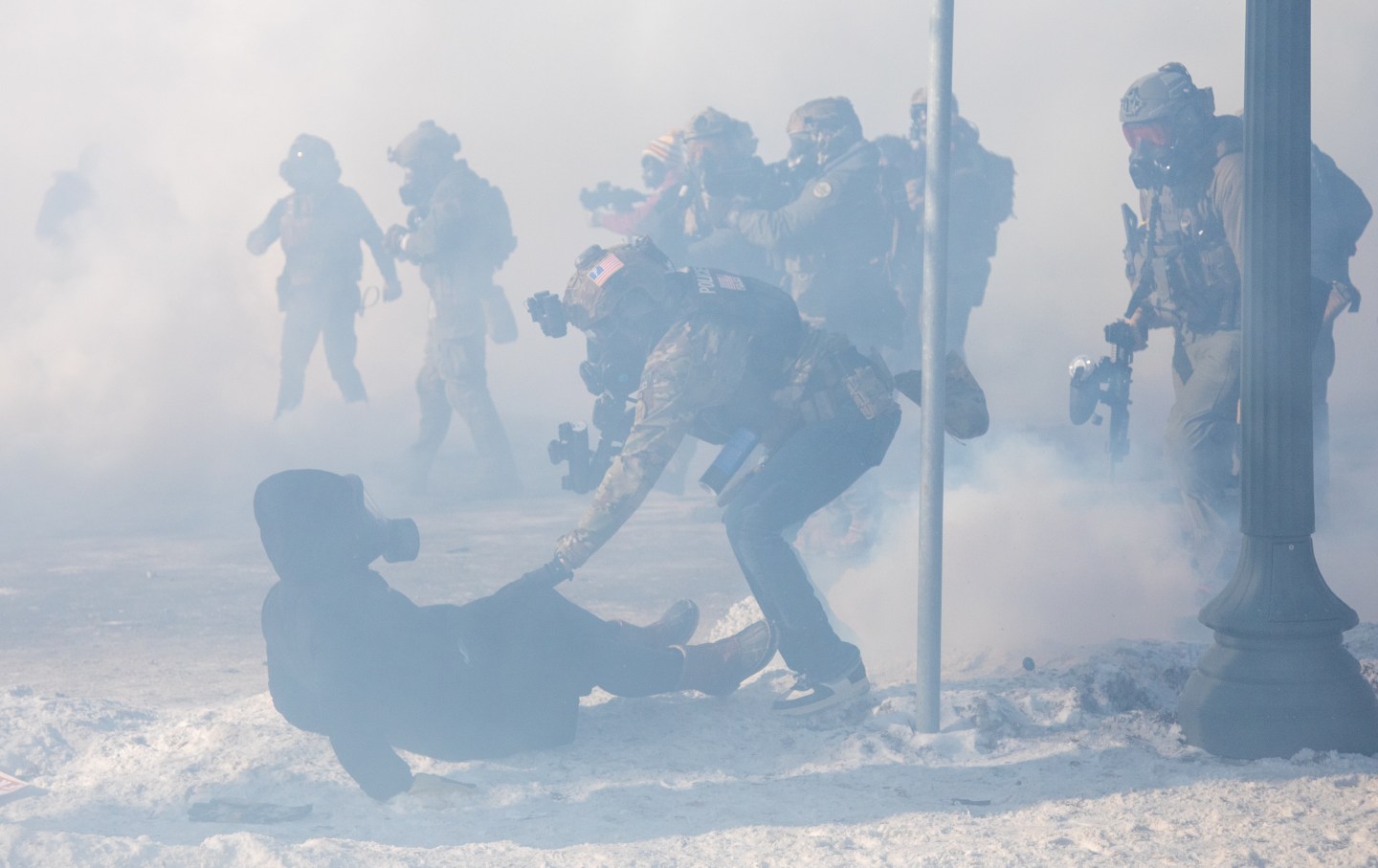
Protesters clash with law enforcement while holding a “noise demonstration” outside of a hotel believed to be housing federal immigration agents near Minneapolis, on January 26, 2026.
(Arthur Maiorella / Anadolu via Getty Images)The deployment of federal armed forces in our cities is creating a new, terrifying reality for communities across the country. Some people may never have suffered anything like it before. But as a Black man who grew up in the South Bronx on the tailwinds of the civil rights era, over-policing is something I’ve experienced my entire life.
On January 17, federal agents murdered ICU nurse Alex Pretti on the streets of Minneapolis after he tried to help another protester. Only 10 days earlier, an ICE agent shot and killed Renee Nicole Good, a 37-year-old mother. These horrific acts of state violence occurred just a short distance from where a white police officer brutally murdered George Floyd in 2020.
This is what state violence has always been—horrific and brutal. And once President Trump unleashed his ICE goons on cities across America, these tragedies were inevitable. As Americans, we should all pray for an end to this state terror. Sadly, history tells us the murders of Alex and Renee are unlikely to be the last.
When I see federal agents in our cities and violent attacks by masked men on thousands of people assumed to be undocumented immigrants, I recognize an old playbook dressed in new language.
When I was in the sixth grade—almost the same age as my grandsons now—four armed police officers came into my classroom and took away my friend David. We didn’t see him again for a week. Uniformed white men with guns had shown up and disappeared our friend, and there was nothing we could do about it. It turned out that David had been accused of a robbery, and he eventually came back to school. But I realized then, at just 11 years old, that there was no place safe from the police–not even a school classroom–and that any of us could be taken away at any time.
As a teenager during the crack epidemic, undercover police cars with tinted windows would regularly pull up to the playground where we played basketball. Armed cops wearing bulletproof vests would get out and make groups of 13-to-14-year-old kids stop our game and line up. Then they’d pat us all down, even though we were wearing basketball shorts. It felt like a lesson: We were powerless, and the cops could do whatever they wanted.
Then, just as now, “public safety” and “law and order” were used as excuses for a violent system of racial control and oppression. Then, as now, this violence was disproportionately targeted towards people of color. It’s no coincidence that most of the cities where Trump has deployed the National Guard are led by Black mayors–whether it’s Karen Bass’s Los Angeles, Muriel Bowser’s DC, or Paul Young’s Memphis.
These cities, and others on the president’s list—including Minneapolis—are tarred with false claims of “out-of-control crime” and “disorder.” But Trump’s claims don’t reflect reality. Across America, murder rates declined by 14 percent in 2024, and preliminary data suggests that the decline was even larger in 2025. In Washington, DC, violent crimes were already at a 30-year low before the arrival of the National Guard.
Deploying armed federal agents to our cities has never been about keeping us safe. It’s about exerting power and control. It’s about making us feel powerless.
Since America’s inception, our government has deployed armed forces time and again to control people at home, harming Native American, Black, and brown communities.
Federal troops enforced Native removals, oversaw the reservation system, and dismantled Indigenous political power—actions packaged as “law and order” to smooth the way for settlers.
The 1921 destruction of Tulsa’s Greenwood District—which saw Black prosperity reduced to ash by a white mob backed by elected officials—shows how “public safety” can become racial terror when state power looks away or joins in. That state-sanctioned violence was part of a long pattern stretching from Reconstruction-era reprisals against newly freed Black communities to crackdowns on civil rights protests in the 1960s in Watts, Newark, and Detroit.
In Los Angeles in 1943, authorities answered rising tensions between communities with biased investigations and policing that targeted Mexican Americans. Police allowed—or joined in—mob violence against Mexican, Filipino, and Black youth wearing zoot suits.
Now Trump is once again sending the message that racialized state violence is necessary for “public safety.” But whose safety is Trump protecting? Certainly not mine or my family’s.
These militarized responses are part of the same system of racial oppression as the current attacks on affirmative action, voting rights, and social safety nets, and they deepen the very crises they claim to solve.
Popular
“swipe left below to view more authors”Swipe →My heart breaks for the families of Renee Nicole Good and Alex Pretti, just as it broke when George Floyd called out for his mother with his last breath. No one is truly safe when state violence goes unchecked.
If we want true safety and justice, we must break the cycle of state violence against Black and brown communities. The path forward must include restorative justice, collaboration, and accountability.
That means redefining safety around dignity and resources; strengthening civilian oversight; protecting the right to protest; expanding mental health, housing, and youth opportunities; and trusting local leadership to lead.
Only then can we move toward the future I want for my grandkids—one in which they never have to worry that their friends could be disappeared from their school classroom, or live in fear of the police; a future where every community is treated with dignity and respect, free from the shackles of historic oppression and ongoing harm.
More from The Nation
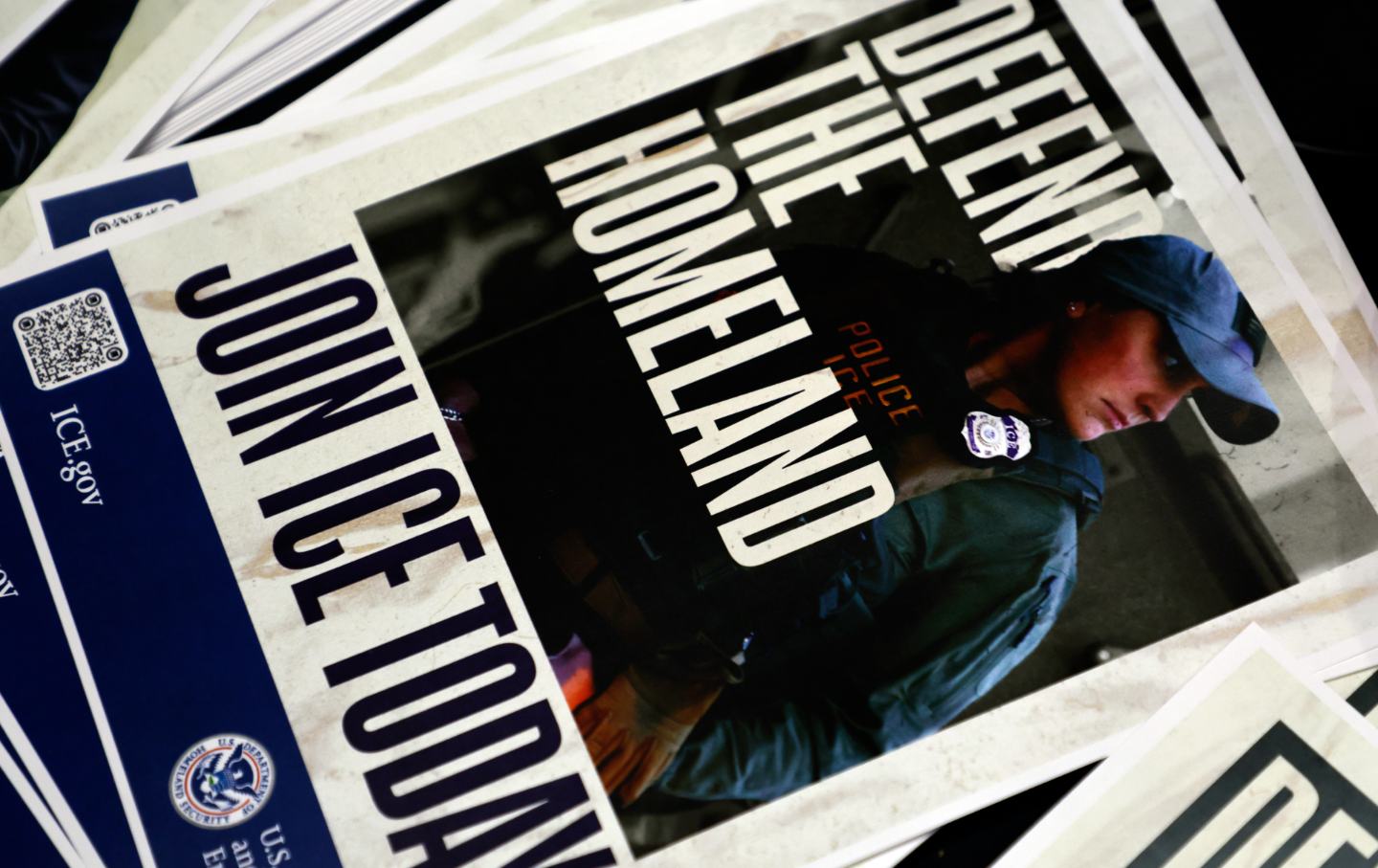
Whom Is ICE Actually Recruiting? Whom Is ICE Actually Recruiting?
ICE has lowered standards to facilitate a massive hiring spree. Many of the new recruits are plainly unqualified. Are some also white supremacists or domestic terrorists?

A Call Is Rising for Nations to Boycott the Trump World Cup A Call Is Rising for Nations to Boycott the Trump World Cup
As marauding state agents fill US streets, a leading German soccer official says countries should consider what was once unthinkable: skipping the 2026 World Cup.
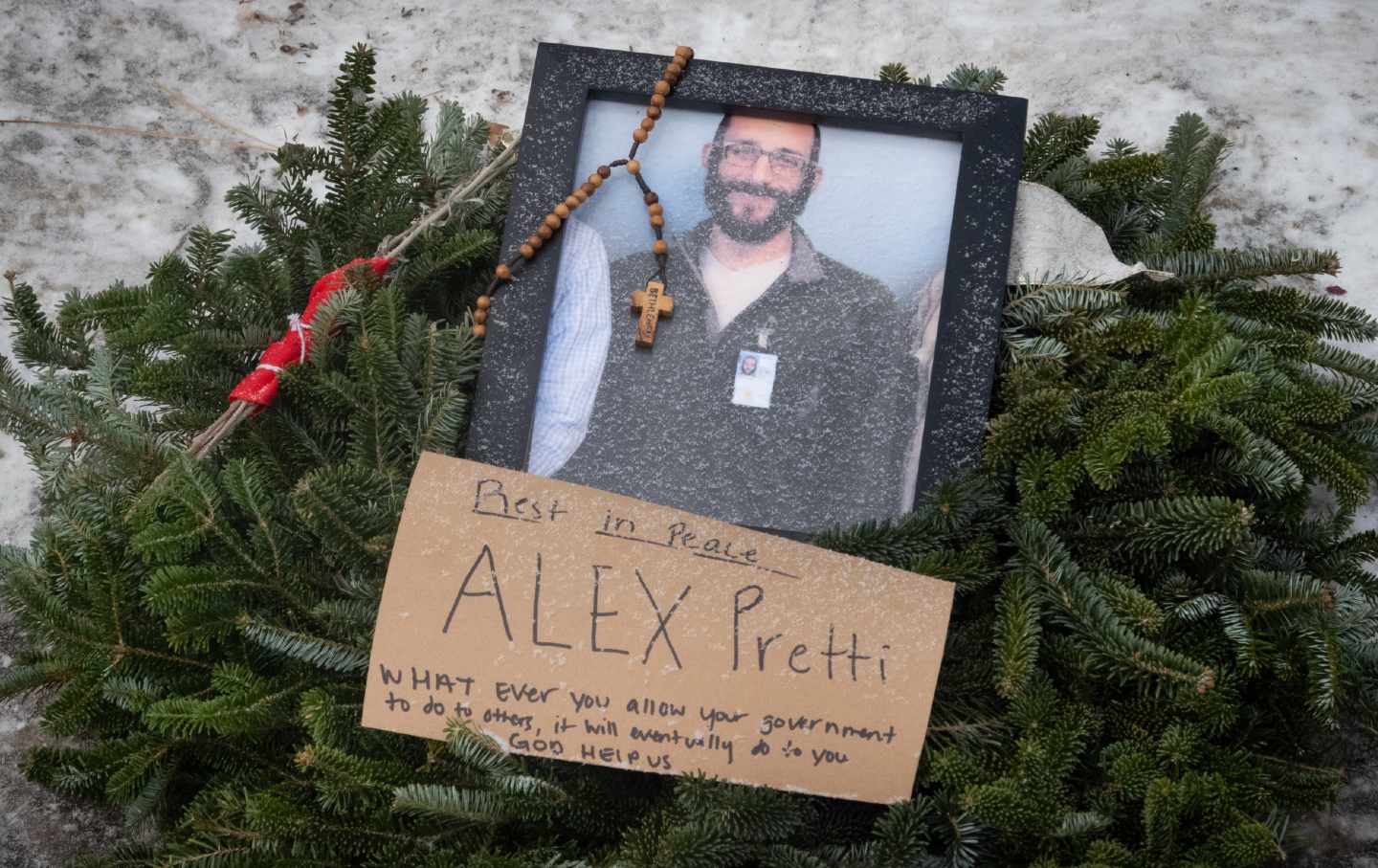
Alex Pretti Was a Good Man at a Time of Great Evil Alex Pretti Was a Good Man at a Time of Great Evil
The 37-year-old ICU nurse was killed helping another ICE victim. We must honor his sacrifice.
Minneapolis Is an “Insurrection” of Trump’s Own Making Minneapolis Is an “Insurrection” of Trump’s Own Making
The city has become ground zero for the Trump administration’s war on immigrants and the growing resistance to it.
Why I Didn’t Report My Rape Why I Didn’t Report My Rape
In 2021, six men sexually assaulted me in a Las Vegas hotel room. Something more than abolitionism prevented me from reporting the crime.
Meet the Alaska Student Arrested for Eating an AI Art Exhibit Meet the Alaska Student Arrested for Eating an AI Art Exhibit
A conversation with Graham Granger, whose combination of protest and performance art spread beyond campus. “AI chews up and spits out art made by other people.”

