
Gen Z’s Ability to Detect AI Is Far Lower Than You’d Expect
A new poll revealed that young people are overly confident in their ability to identify AI content.
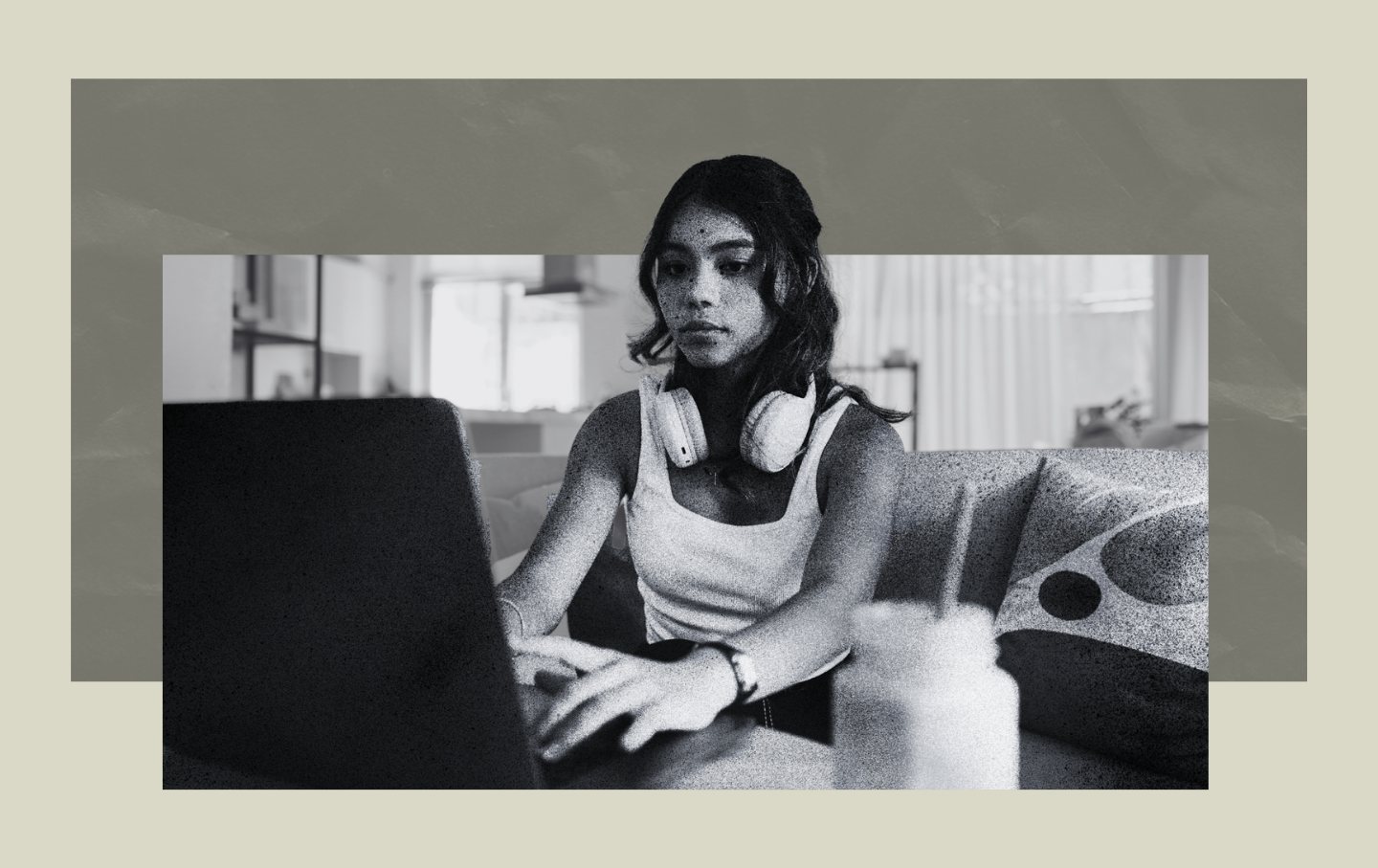
On May 20, 2025, Google DeepMind released Veo 3—an AI video generator. The opportunity to produce realistic clips from brief textual prompts landed at fingertips’ reach—that is, if you were willing to pay the hefty $249.99 monthly fee. While generating Oscar-worthy documentaries at home still lies in the future, Google’s achievement settled a long-standing AI debate and proved that native, synchronized audio with cinematic text-to-video content was possible.
Already, use of text-to-photo and text-to-video platforms is proliferating online. From AI-generated deepfake nude photos to political opposition ads—namely, in New York, Virginia and Texas—generative tools furnish damaging images and clips to bad-faith actors within seconds.
What makes this ease of access more concerning: A majority of Americans are highly confident they can identify AI-generated images and videos, per the spring 2026 Yale Youth Poll. The experiment provided participants with two pairs of headshots: one pair from Adobe Stock and the other from single-sentence descriptive prompts on DeepMind’s publicly available Nano Banana 2.0.
Expectedly, the most technologically literate subgroup of the poll (ages 18–34) overwhelmingly shared a confident belief that they were capable of detecting AI-generated content. But under this subsequent direct test, 80 percent of that demographic could identify AI images only 50 percent of the time.
No longer do top-of-the-line AI images give viewers the “uncanny valley” feeling, nor are telltale signs of extra or mismatched limbs ever-present. These results, dating from early March 2026, disproportionately affect young people and mark the beginning of a slippery slope in distinguishing AI-generated content from reality.
To address this concerning phenomenon, a community of content creators intent on promoting AI literacy has bubbled up over the past year. Jeremy Carrasco created his social-media accounts to share informational videos about AI-generated content, but only gained significant attention after debunking a viral video of animals bouncing on a trampoline in July 2025. The original video, which gained 244 million views on TikTok at the time of publication, fooled many viewers into believing this footage—generated to look like it was from a Ring-style camera—was genuine. For many, per Carrasco’s comments on Instagram, it was a wake-up call to the hyperrealistic capacities of generative AI tools.
Carrasco approaches this quandary of AI detection through an almost scientific process, using a tool kit the average social-media user does not possess. “As a former encoding engineer, I have a lot of ways to just download the videos, look at their metadata, and understand where they likely came from, even from a platform level,” he said. “Most of what I actually think is accessible and durable is a lot of linguistic and pattern analysis.”
Carrasco’s video format draws inspiration from NPR’s Car Talk. Like Car Talk’s hosts, Click and Clack, Carrasco takes viewers through a diagnostic process before reaching a conclusion about whether he found the content to be genuine, all while maintaining a goal of “helping people figure out where things are coming from in an entertaining and science-based way.”
Evidently, Carrasco tapped into a bountiful market. With a cross-platform social-media following of more than a million, Carrasco estimates that he receives somewhere between 20 to 25 video requests daily from viewers. As such, Carrasco’s efforts exist to address an ever-changing media landscape in real time and without barriers to access: a digital-era public service.
Yet, without Carrasco’s professional expertise, it is nearly impossible for the average viewer to determine what is and is not AI-generated. And independent content creators simply cannot keep up with the rapid flow of AI-generated content online.
AI slop—videos produced for social media entertainment and clickbait value—could be contributing to this overconfidence phenomenon. Digital natives may have noticed that their feeds are populated by AI-generated content ranging from humanoid fruit dating series to Vladimir Putin in a leotard doing front handsprings. The preponderance of these videos, characterized by their outlandishness, low quality, and obviously AI provenance, may be feeding into the erroneous notion that AI videos have remained easily identifiable. But professionally generated content is cleaner, hyperrealistic, and often passes for authentic footage. In these cases, overconfidence can be fatal.
This issue of overconfidence has far-reaching social implications. Democratic societies are built upon trust, a principle directly incompatible with indecipherable generative content. As younger generations develop a case of overconfidence, a better understanding of AI literacy may become a requisite skill within our digital-political ecosystem.
Generative AI is multipurpose, said Carrasco. It can “make sloppy videos, create websites in a couple of minutes, or find a single boat from a world’s worth of satellite footage.” But the challenge, he argued, is accurately discerning when, how, and why it’s being used. “Becoming AI literate means cutting through this ambiguity to understand how the technology will impact your life.”
More from The Nation

What Trump and Tucker Carlson Have in Common What Trump and Tucker Carlson Have in Common
Carlson has broken with Trump largely over the war in Iran. But on Ukraine and immigration, the two speak very much the same language.

The Jewish Case Against AI The Jewish Case Against AI
Haredi rabbis and the secular left agree: This technology is a threat to the entire social fabric.

The Fight for Educational Equality Is Also a Fight for a Just Supreme Court The Fight for Educational Equality Is Also a Fight for a Just Supreme Court
The court has severely weakened our ability to make an education system that fulfills the promise of Brown.
The Fall of “Scientific American” The Fall of “Scientific American”
When the beloved science publication got too political, its corporate owners stepped in. Now its future is uncertain.
The Bookstore Revolution in Taiwan’s Conservative Heartlands The Bookstore Revolution in Taiwan’s Conservative Heartlands
After Taiwan legalized same-sex marriage, gender-themed bookstores are working to build the social acceptance that the law alone couldn’t deliver.

Jalen Hurts Deserved Better. We All Do. Jalen Hurts Deserved Better. We All Do.
In a country that treats workers as expendable parts, Hurts’s playing through a blood clot is just the highest-profile example of the price workers pay in an oligarchy.

