
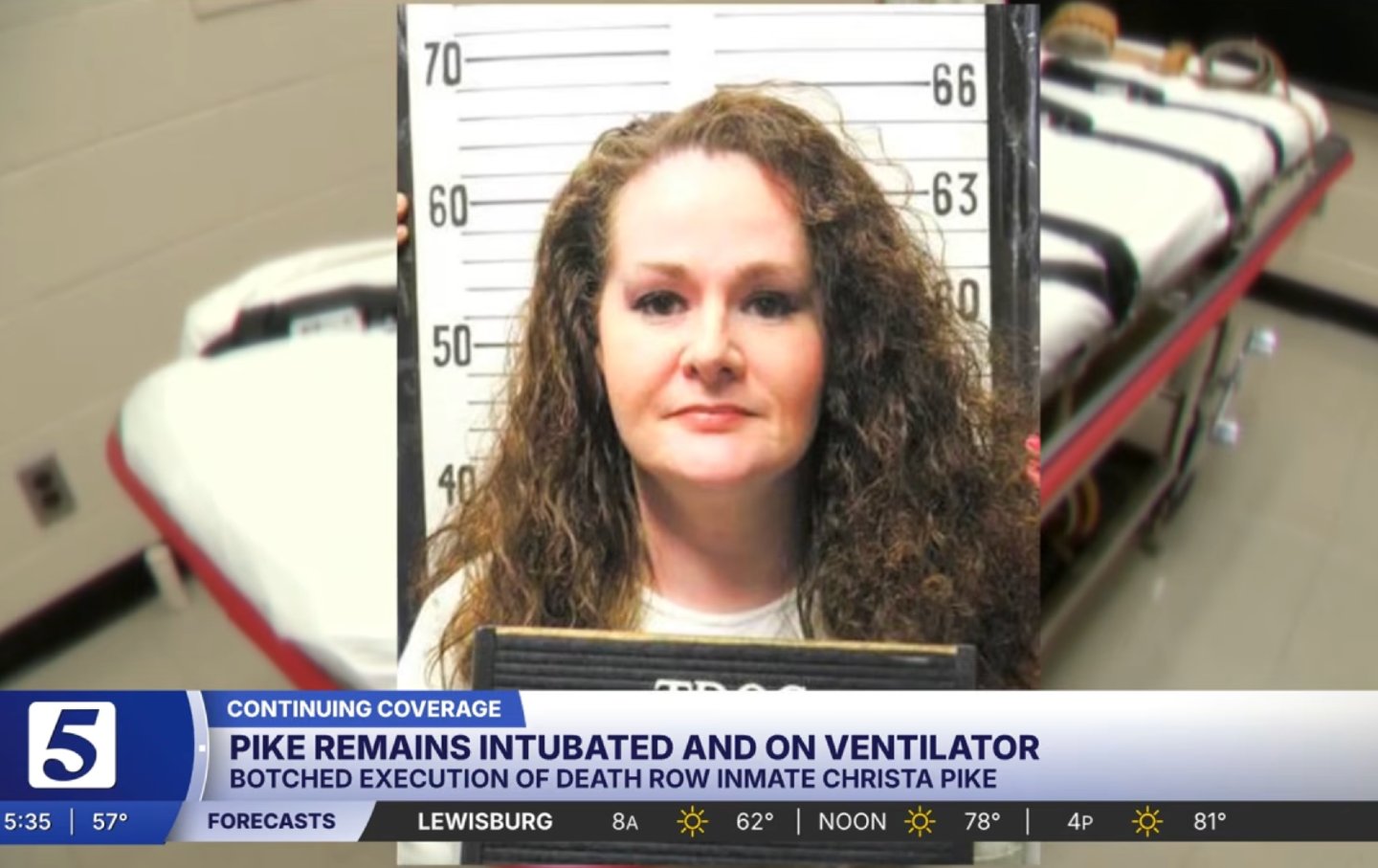
On Wednesday, the state of Tennessee twice tried to kill Christa Pike, failed both times, and ended up grievously wounding her. Pike, a convicted murderer, was meant to be executed using a strong dose of the sedative pentobarbital. This was even after Pike’s lawyers and an outside doctor, Joel Zivot, warned that the lethal injection was a risky procedure; Zivot advised that Pike’s particular medical conditions could “lead to a painful and cruel death by lethal injection.”
Zivot was right to say that Pike would suffer. But the nature of that suffering was, if anything, even worse than he predicted. Pike was given one ostensibly lethal dose, but she continued to live. She was then given another dose and fell into a deep sleep, but still did not die. At that point, she was taken to a hospital, where she continues to be in critical condition, being fed by a tube and breathing through a ventilator. According to her lawyer, she has not spoken since the failed execution.
The entire grotesque spectacle highlights how perverse the death penalty has become in contemporary America. It is increasingly unpopular and indeed shunned by people of conscience. But paradoxically, this means that when executions are conducted, they are conducted by incompetent and even sleazy officials who end up committing torture.
There are many reasons to oppose the death penalty. It is a form of violent retribution, rather than justice. It is irrevocable—when an innocent person is executed, no form of reparation can bring them back. Capital punishment is also often applied unfairly, much more likely to be used against racial minorities and the poor.
But the barbaric botched execution of Pike highlights another case against capital punishment that is gaining urgency: the attempt to make executions more humane by methods such as lethal injection—which was once sold as the clinical, painless alternative to the gallows or the electric chair—has utterly failed. In fact, it has made executions even more gruesome and cruel, underscoring the grim truth that killing a healthy body cannot be done with clean hands by the state.
Pike’s case has been troubling from the beginning. She was sentenced to death in 1996 for murdering a Jobs Corps classmate the previous year, when she was 18. (Her boyfriend, along with another friend, participated in the crime.) The courts refused to consider extenuating facts, such as Pike’s history of mental illness and the fact she had been repeatedly raped as a child.
Tennessee officials seem to have pushed forward her execution in part as an attempt to prevent a re-opening of her case. As The New York Times reports:
Her lawyers said that a history of extreme trauma and sexual abuse that began when she was a toddler had not been considered at her trial.
Just 90 minutes before Ms. Pike was set to die on Wednesday, a federal appeals court issued a stay, saying that it needed more time to consider new arguments in the case. For Tennessee, that set off a race against the clock. The execution warrant would expire just before midnight.
The most shocking thing about Pike’s torture is how unsurprising it was. Writing in The Atlantic, Elizabeth Bruenig, a journalist who has specialized in the death penalty beat over the last few years, makes note of a stunning fact: Pike is not the first prisoner to suffer a horrifically botched execution in Tennessee this year.
In May, prison officials in Nashville similarly bungled the killing of Tony Carruthers, who was pierced with needles and sliced open with a scalpel before the execution was called off. These stories are part of a broader pattern of failed executions in recent years. In 2022, when I began investigating disastrous lethal-injection attempts in Alabama, the Death Penalty Information Center reported that 35 percent of the year’s total executions had been botched. In the 44 years that America has carried out lethal injections, the evidence has repeatedly revealed that the method is scientifically unsound, frequently torturous, and woefully unreliable.
The broader story of the death penalty is of increasing unpopularity. According to Gallup, in the modern era, support for the death penalty peaked in 1994 at 80 per cent. After that, it has steadily gone down and is now down to 52 per cent. As The Washington Post reports,
After the turn of the century, though, the death penalty began a decades-long decline. There were 98 executions nationwide in 1999; the number dropped to 22 by 2019, the last pre-pandemic year….New death sentences also plunged, dropping from hundreds annually handed down during the 1990s to 23 new capital sentences imposed last year.
But botched executions are becoming more common even as the death penalty itself is losing popularity. The two facts are related: the attempt to make executions more palatable to a disgusted public by developing clinical methods of killing is inherently contradictory. Increasingly, medical and pharmaceutical professionals have turned against being co-opted by the state’s machinery of death. This has led to a situation where those involved in killing are incompetent and reckless.
The increasing opposition to the death penalty has led to civil society resistance. Leading organizations. As CNN reports, “major medical groups, including the American Medical Association and American Nurses Association, have opposed or prohibited their members from participating.” Pharmaceutical companies have also stopped supplying drugs like pentobarbital to states such as Tennessee that carry out executions.
The upshot is that the states that want to carry out lethal injections do so with staff that are often insufficiently trained or professional. These executioners work with drugs that are often past their expiration date or untested.
Popular
“swipe left below to view more authors”Swipe →In 1994, Supreme Court Justice Harry Blackmun issued a famous dissent in the death penalty case of Callins v. Collins, where he wrote,
From this day forward, I no longer shall tinker with the machinery of death. For more than 20 years I have endeavored — indeed, I have struggled — along with a majority of this Court, to develop procedural and substantive rules that would lend more than the mere appearance of fairness to the death penalty endeavor. Rather than continue to coddle the Court’s delusion that the desired level of fairness has been achieved and the need for regulation eviscerated, I feel morally and intellectually obligated simply to concede that the death penalty experiment has failed.
Updating Blackmun, we can say that “the machinery of death” has become a torture machine, an outcome that is all the more damning since lethal injection was supposed to make executions less violent, cleaner, and more palatable.
Austin Sarat, a law professor at Amherst, drew the reasonable conclusion in an interview with CNN: “The United States has been on a quest since the end of the nineteenth century to find a method of execution that would be safe, reliable and humane. There is no such method.”
More from The Nation
The People vs. the Supreme Court The People vs. the Supreme Court
This term the Supreme Court has plans to trample
even more of our rights. But we, the people, are not powerless
in the face of their power grab.
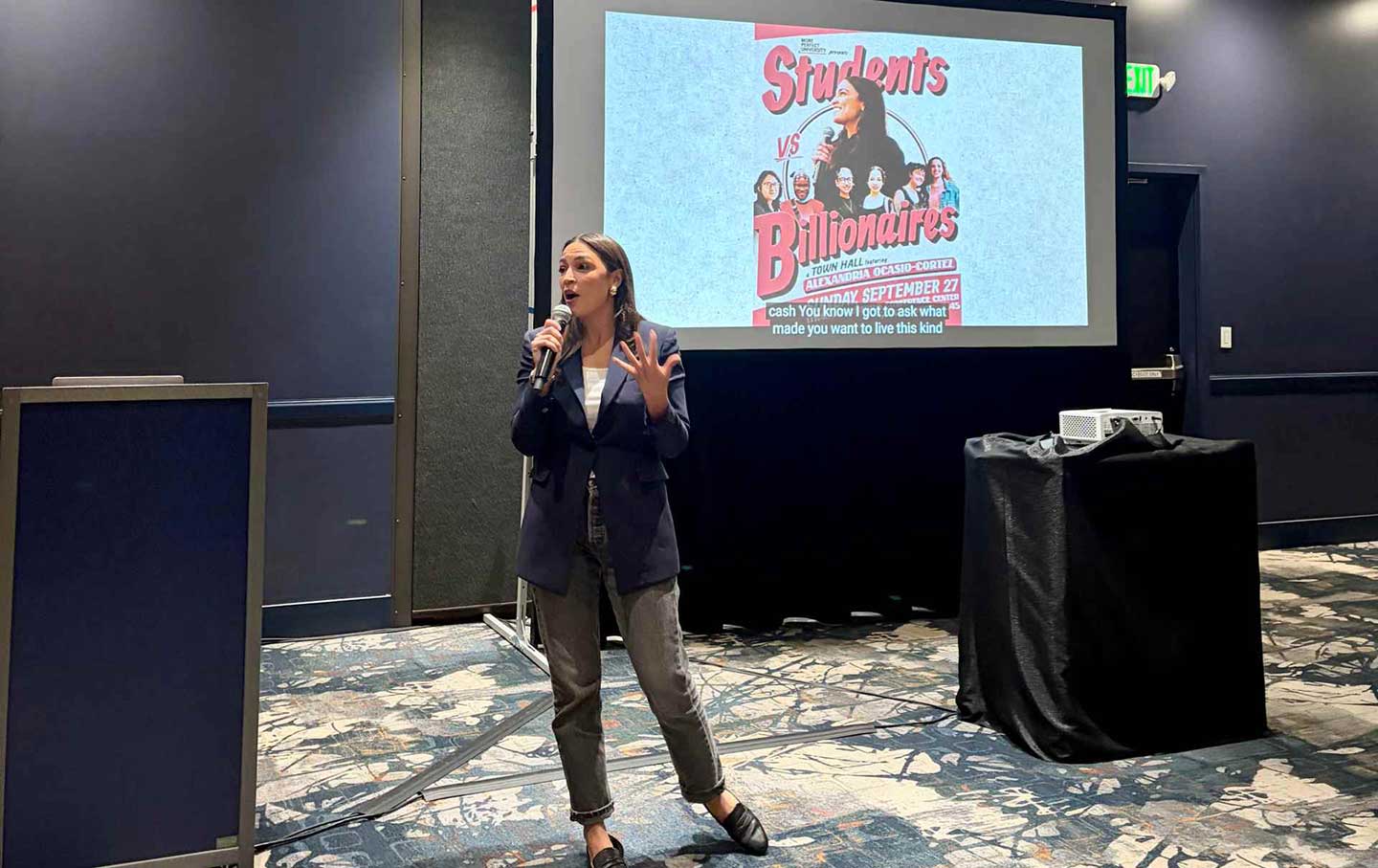
Cornell Students Challenge University Power at a “Students vs. Billionaires” Town Hall Cornell Students Challenge University Power at a “Students vs. Billionaires” Town Hall
Representative Alexandria Ocasio-Cortez spoke to Ithaca students about tuition hikes, sexual violence, free speech, and university governance.

Trump Has Made it Legal to Destroy Endangered Species’ Habitats Trump Has Made it Legal to Destroy Endangered Species’ Habitats
By redefining the meaning of “harm” in the Endangered Species Act, the administration is giving big corporations a gift they have long demanded.
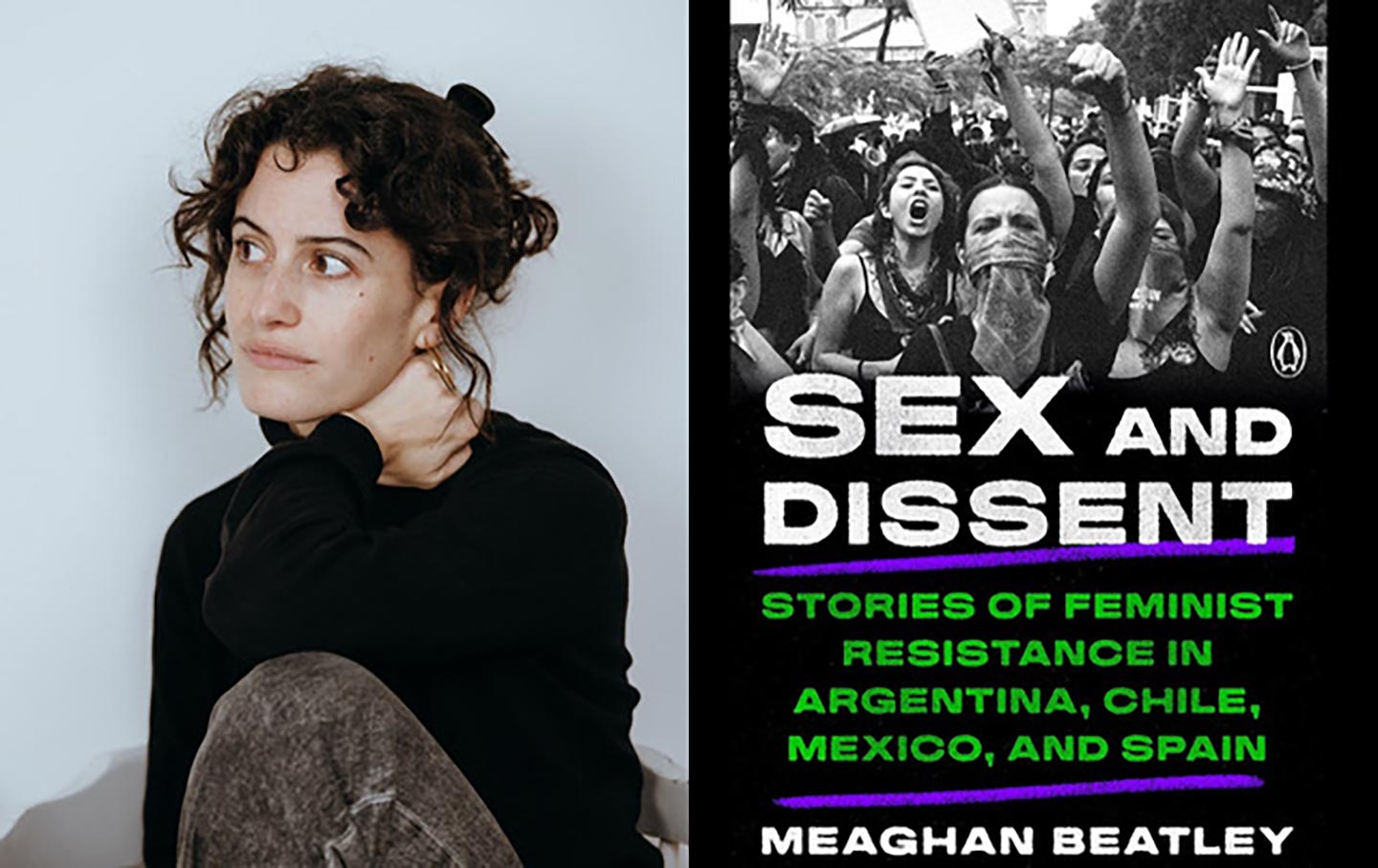
Journalist Meaghan Beatley on Latin America’s Feminist Resistance Journalist Meaghan Beatley on Latin America’s Feminist Resistance
A conversation with the author of Sex and Dissent about what American feminists can learn from the Green Wave movement.

As Cornell’s Rape Case Draws National Attention, Students Want Accountability As Cornell’s Rape Case Draws National Attention, Students Want Accountability
A new lawsuit alleging that a former student was drugged and gang-raped by Chi Phi fraternity members is sparking outrage in the Cornell community.

