
Can Rupert Murdoch Conquer LA?
The tabloid baron will launch a West Coast version of the New York Post next year.
Can Rupert Murdoch Conquer LA?
The tabloid baron will launch a West Coast version of the New York Post next year.
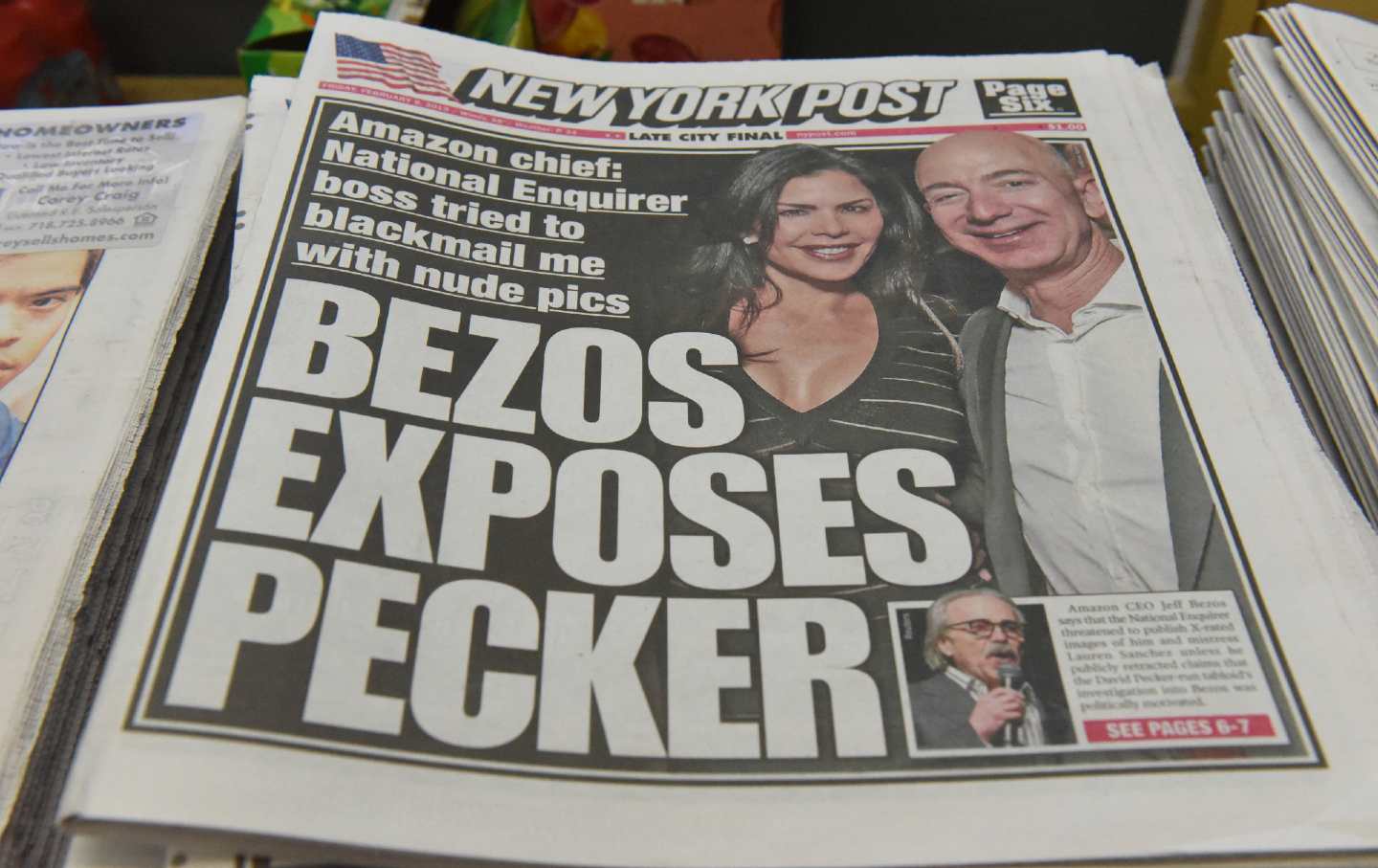
Los Angeles can expect a lot more lurid tabloid coverage in its media future, to judge by the New York Post’s track record
(Stephanie Keith / Getty Images)
It’s been a busy week for Rupert Murdoch, the extremely elder statesman of American yellow journalism. He’s currently fending off a $20 billion lawsuit from President Donald Trump, who’s seeking revenge from the Murdoch-owned Wall Street Journal after it ran a story on a nude drawing and lewd note Trump denies he drew or wrote for the man he currently also denies was his close personal friend, Jeffrey Epstein.
Trump also has an older score to settle with Murdoch’s Fox News for its early (and accurate) election-night call that Arizona had gone for Biden in 2016. The 94-year-old Murdoch claims his fragile health prevents him from being deposed for Trump’s suit against the Journal anytime soon. Anxious to ensure that the suit goes forward, Trump announced that he had come to an agreement with the frail tabloid titan that he must be apprised of Murdoch’s health every three days—in order to make sure, one assumes, that Murdoch isn’t getting away with anything.
While Murdoch may be in delicate health, one of his media properties, the New York Post Media Group, made a surprise announcement this week that it’s expanding into Los Angeles. Murdoch is no stranger to LA. He owned 20th Century Fox for decades until Disney gave him $71.3 billion for the company in 2019. That deal greatly expanded Disney’s intellectual-property archive, but it left the film world with one fewer major studio making theatrical movies and flouting the industry’s now-dominant model of reviving legacy franchises ad infinitum.
Murdoch’s new foray into LA media will be called the California Post and is projected to start rolling off the presses next year. What’s surprising is not that Murdoch still wants more of the media world—it’s that in 2025, he’s making a bold move into newspapers. Where every other media guru talks digital and streaming, of AI and YouTube channels and podcast empires, Murdoch chose to return to his 1950s roots in Adelaide, Australia. Back then, he had a particular genius for sensing weak newspapers in untapped, vital markets. And true to form, Murdoch and his top print team at the New York Post sensed a media market so underserved, and a competitor so weak, it must have reminded Murdoch of an ailing Aussie backwater recycler—Patrick Soon-Shiong’s Los Angeles Times.
“Los Angeles is fast becoming a news desert,” the Post’s PR flacks announced on Monday. “Thousands of stories are going untold and countless perspectives aren’t being represented by a media ecosystem that has lost touch with the people—especially as the city and state face unprecedented challenges and leadership vacuums.”
They’re not wrong. While the paper will be based in LA, Murdoch plans to cover the whole state with the California Post, from the Mexican border to Hollywood to Silicon Valley, Governor Gavin Newsom’s probable presidential run, and the Bay Area. And Murdoch will offer Los Angeles something it has not had in a long time—a tabloid paper. Los Angeles is the second-biggest media market in the country, with a population of 13 million. And yet the Times, the city’s iconic legacy newspaper, currently struggles with a print circulation of less than 70,000 and just over 200,000 online subscribers. The Times’ closest rival is the LA Daily News, with a print circulation of around 56,000.
After Soon-Shiong bought the Times, he moved it out of its iconic downtown headquarters in 2018 to El Segundo. He then shut down its printing plant in 2024. At the start of this year, the paper laid off 115 editorial employees—more than 20 percent of its newsroom. This July on Jon Stewart’s podcast, Soon-Shiong announced that the Times will soon go public, under a plan similar to the municipal ownership scheme that’s kept the Green Bay Packers in the possession of its fan base. It’s not clear just how many remaining fans the LA Times can claim, but it’s likely well short of what it would take to reverse the paper’s tailspin.
The LA Times blames its woes on this winter’s fires for decimating important print subscriber markets in the Palisades and Altadena, but that doesn’t account for the layoffs or the reported $30–50 million the paper loses annually. The current nosedive goes back to Soon-Shiong’s decision to kill the Times’ 2024 presidential endorsement for Vice President Kamala Harris. In her home state, and in a city targeted by Trump as a blue woke stronghold, Soon-Shiong’s decision looked purely craven. The Times endured the same brutal market reversals that Jeff Bezos’s Washington Post faced after the Amazon baron’s order to spike that paper’s Harris endorsement, suffering a steep drop in subscriptions and an equally devastating loss of credibility among its readership.
When Soon-Shiong bought the Times, he wrote in an e-mail to his new staff, “As someone who grew up in apartheid South Africa, I understand the role that journalism needs to play in a free society.” As with Bezos—who was initially hailed as a brave voice against creeping MAGA authoritarianism in Washington—Soon-Shiong rapidly shed his pet image of himself as a supporter of crusading, reform-minded journalism in favor of editorial dictates all but designed to drive away serious news consumers. Bezos remade the Post’s op-ed section into a libertarian agitprop outlet. Soon-Shiong concocted an AI-makeover for the Times’ opinion coverage that assigns a bias meter reading for its published content, once more substituting inert and unreliable tech programming for critical thinking. Needless to say, the section’s editors fled shortly after the gimmicky experiment was announced.
Keith Poole, the New York Post’s current editor in chief, sees big opportunities in the Times’s self-inflicted woes: “California is the most populous state in the country, and is the epicenter of entertainment, the AI revolution and advanced manufacturing—not to mention a sports powerhouse,” he said in the statement laying out plans for the California Post. “Yet many stories are not being told, and many viewpoints are not being represented. With the California Post, we will bring a common-sense, issue-based approach to metropolitan journalism.”
The California Post should not have much trouble competing with the Times on its Hollywood and sports coverage. When Soon-Shiong took over the paper in 2018 he told The Washington Post, “One of our priorities is to be the sports paper of the nation.” And how did that go? “Of the 14 major pro and college teams in the region, the Times only has a traveling beat writer for the Lakers, Dodgers, Rams, Chargers, USC and UCLA,” The Sporting Tribune recently reported. After the Times sold its printing plant, it discontinued daily box scores, standings, and game stories because the paper’s news deadline was now 3 pm.
The Post is also well positioned to have its Hollywood coverage overtake that of the Times. Even though the Times has a huge legacy advantage on this beat, back to publishing the work of reporters like the legendary studio-era gossip troll Hedda Hopper, the modern Times approaches the entertainment scene as just another industry—albeit one central to the region’s economy. Like most tabloid impresarios, Murdoch has always viewed entertainers and celebrities as the lifeblood of circulation. The British phone-hacking scandal, and the sensationalist coverage in the Post’s successful Page Six gossip franchise both underline how Murdoch properties thrive on gut-punch celebrity gotcha reporting. It’s a safe bet that the California Post will fill a massive gossip void in LA’s mainstream Hollywood coverage. Certainly there’s no shortage of paparazzi and TMZ-style scandal reporting coming out of LA—but you don’t find it in the Times or trade outlets like The Hollywood Reporter and Deadline. This week, the Times’ Hollywood Inc. section is covering the exits of several Paramount executives and management hires under the new Skydance buyout of the studio, as well as news of recent streaming deals. Page Six includes bikini photos of Gwyneth Paltrow’s daughter, Apple Martin, Raven Symone talking about her ex-boyfriend getting someone else pregnant and asking Raven to be the godmother, and paparazzi shots of Denise Richard with a possible black eye and allusions to domestic violence. It’s not that Los Angelenos are above that sort of thing, but the prestige-driven daily papers and trades want us to be. Murdoch knows we’re not, and it’s a market that’s never failed him.
Popular
“swipe left below to view more authors”Swipe →But the broader challenge here is that the Post’s understanding of “commonsense” journalism is anathema to the Los Angeles reader base. The irony is that Soon-Shiong, in his fumbling mogul way, is already steering his paper toward a money-losing and MAGA-appeasing worldview. If that pivot costs him up to $50 million a year, and prompted the paper’s desperate move to a crowd-funded business model, why does the NY Post think it will fare any better by injecting “many viewpoints” into the mediasphere of Southern California? This week, Poole’s Post ran a cover featuring Democratic mayoral nominee Zohran Mamdani and Senator Elizabeth Warren meeting in New York with the headline “African-American meets Native American.” It’s hard to see how a parallel embrace of race-baiting will appeal to readers in LA—particularly given Trump’s steady barrage of ICE raids at workplaces, churches, and playgrounds, all backstopped by the cynical deployment of members of the National Guard and United States Marines as political props.
For this and countless other reasons, LA and New York do not have the same political base. LA’s last Republican mayor left office in 2001. It’s true that the California Post plans a statewide marketing strategy, meaning that the right-wing voters in the state’s interior, as well as Orange County and San Diego, could rally to the paper—though that will likely still be a tough sell to MAGA followers who increasingly consume news online and via social media and know that Trump views Murdoch as an enemy. Maybe Murdoch’s dramatic expansion plan will yield a robust new audience for the Post’s right-leaning tabloid fare—but it seems far more likely that, at least in LA, the California Post will join Murdoch’s acquisitions of MySpace and Vice Media as a big media bet that somebody should have talked him out of.
Support independent journalism that does not fall in line
Even before February 28, the reasons for Donald Trump’s imploding approval rating were abundantly clear: untrammeled corruption and personal enrichment to the tune of billions of dollars during an affordability crisis, a foreign policy guided only by his own derelict sense of morality, and the deployment of a murderous campaign of occupation, detention, and deportation on American streets.
Now an undeclared, unauthorized, unpopular, and unconstitutional war of aggression against Iran has spread like wildfire through the region and into Europe. A new “forever war”—with an ever-increasing likelihood of American troops on the ground—may very well be upon us.
As we’ve seen over and over, this administration uses lies, misdirection, and attempts to flood the zone to justify its abuses of power at home and abroad. Just as Trump, Marco Rubio, and Pete Hegseth offer erratic and contradictory rationales for the attacks on Iran, the administration is also spreading the lie that the upcoming midterm elections are under threat from noncitizens on voter rolls. When these lies go unchecked, they become the basis for further authoritarian encroachment and war.
In these dark times, independent journalism is uniquely able to uncover the falsehoods that threaten our republic—and civilians around the world—and shine a bright light on the truth.
The Nation’s experienced team of writers, editors, and fact-checkers understands the scale of what we’re up against and the urgency with which we have to act. That’s why we’re publishing critical reporting and analysis of the war on Iran, ICE violence at home, new forms of voter suppression emerging in the courts, and much more.
But this journalism is possible only with your support.
This March, The Nation needs to raise $50,000 to ensure that we have the resources for reporting and analysis that sets the record straight and empowers people of conscience to organize. Will you donate today?
More from Ben Schwartz
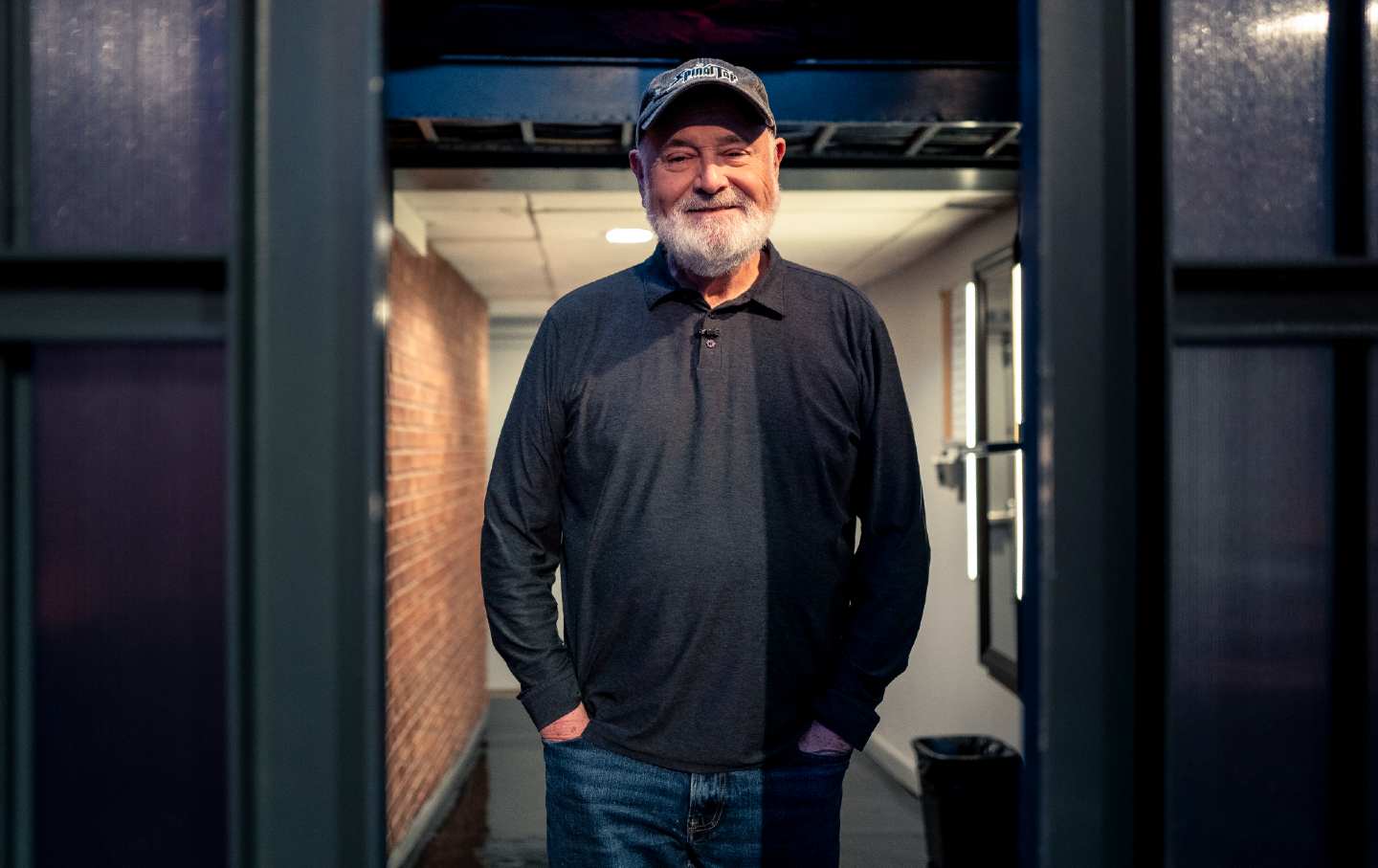
Rob Reiner’s Legacy Can't Be Sullied by Trump’s Shameful Attacks Rob Reiner’s Legacy Can't Be Sullied by Trump’s Shameful Attacks
The late actor and director leaves behind a roster of classic films—and a much safer and juster California.
One Buyout After Another One Buyout After Another
The multibillion-dollar takeover bids targeting Warner Bros. Discovery show how Trump’s corrupt model of governance-by-payback could destroy Hollywood.
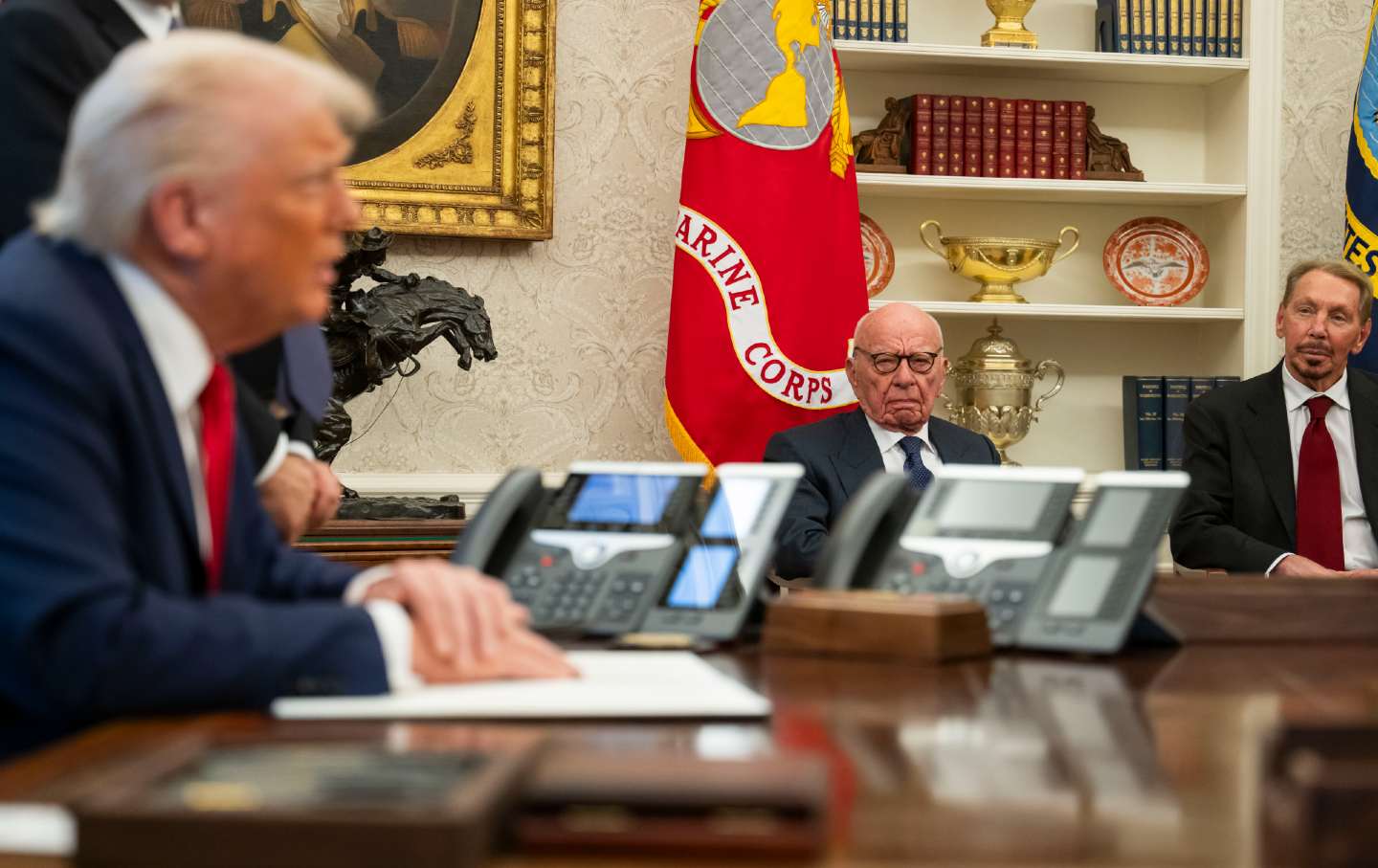
Trump’s Quest for Total Media Control Trump’s Quest for Total Media Control
Look beyond the petty celebrity feuds, and you'll see a plan to transform American media companies into outlets for MAGA agitprop.
The Pending Disaster of a Skydance-Warners Merger The Pending Disaster of a Skydance-Warners Merger
The Ellison family’s aggressive pursuit of the WBD empire would shred news values and further pillage movie and TV production.
History’s Lessons for the Second Committee for the First Amendment History’s Lessons for the Second Committee for the First Amendment
Jane Fonda is reviving the Hollywood advocacy group to meet the high-stakes challenges to free expression in the Trump era.
The Sad Spectacle of American Comedians Selling Out in Saudi Arabia The Sad Spectacle of American Comedians Selling Out in Saudi Arabia
It turns out that edgy free-speech warriors will scuttle their principles for a check from a brutal autocratic regime.

