
How Zohran Mamdani Saved the Fourth of July
The mayor’s fighting patriotism bested Trump’s rantings and Obama’s evasions.
In normal times, there’s nothing more tedious than a Fourth of July speech. It’s an occasion for self-congratulatory nationalist backslapping, pompous mythmaking, and oily celebrations of unity that always evade the reality of political divisions. But in a time of crisis, the tired rituals of commemorative jollification will no longer serve, which makes speeches about the meaning of the United States much more urgent.
Most memorably, in 1852, Frederick Douglass redeemed the Fourth of July by turning a ritual of self-praise into an occasion for searching criticism. In his immortal speech, “What to the Slave is the Fourth of July?” Douglass articulated with unparalleled clarity the immeasurable gap between the ideals of the Declaration of Independence and the horrific reality of American bondage. This speech is reposted every Independence Day by The Nation because its core argument, that the United States is an unfinished project that has yet to fulfill its deepest aspirations, remains true.
In 2026, the United States is once again in a national crisis, presided over by a corrupt and lawless president who incited a mob to attack the Capitol rather than accept the loss of the 2020 election. But Donald Trump is symptomatic of a deeper malaise, brought on by the centralization of power in the presidency, the withering away of congressional checks, the domination of plutocrats in politics as well as the economy, and the virulence of ethnonationalist passions. His brazen criminality, which includes repeatedly launching wars without congressional approval, would not be possible in a healthy democracy.
The national mood is sour. Trump’s actions, ranging from ICE killings of protesters to the failed war in Iran, have created an angry and volatile political moment. According to a recent Gallup poll, national pride is lower than at any time the pollster has measured it in the last 25 years, especially among the majority who are not Republicans. “Currently 70% of Republicans, 28% of independents and 14% of Democrats say they are extremely proud to be American,” the pollster found. “Extreme pride has edged down seven points since last year among Republicans and six points among Democrats.”
Amid all this widespread gloom, and against the backdrop of the country’s 250th birthday, this year’s Fourth of July orations took on an added importance. Three significant speeches reflected the moment.
Donald Trump’s Fourth of July speech, delivered at the National Mall late at night after festivities had been interrupted by a thunderstorm, was, predictably, a travesty. Rather than speaking to any of the higher aspirations of the nation, Trump bombastically ranted about his achievements while casting his political foes as “communists” who were beyond the pale. There were also speeches and public statements by the former presidents, most notably by Barack Obama. None of these statements named Trump directly, though they were all, including the one by George W. Bush, clearly animated by concern over the president’s authoritarianism. But the message they offered of needing to restore comity and acceptance of electoral results was insufficient, tired, and excessively cautious. They shared the familiar fantasy of ancien regime restoration: the hope that the turmoil of Trumpism would one day disappear like a bad dream.
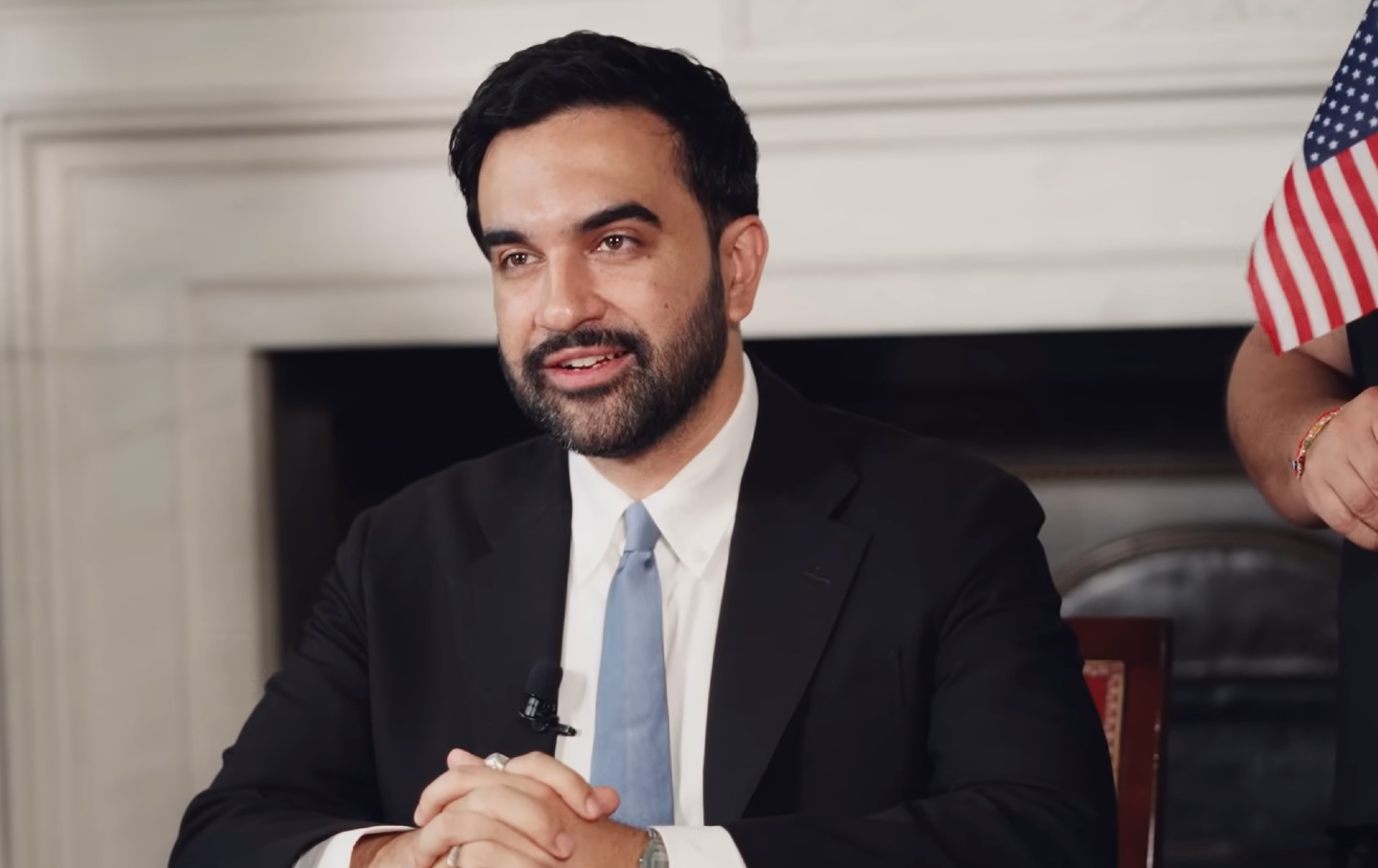
The one major political figure who rose to the occasion was New York Mayor Zohran Mamdani, who delivered an address on July 3 that was clearly meant to be a preemptive response to Donald Trump’s expected ravings the next day.
The contrast between Trump and Mamdani could not be sharper. Trump’s speech was truly a disgrace. When he spoke about the rights secured by the nation’s founding, he immediately veered off into self-pity about how his political enemies were unfair to him, saying, “After 250 years, unlike so many others in the world, in this country we have freedom of speech, freedom of religion, equal justice under the law, although I wasn’t treated that well. But we won’t get into that.”
Tellingly, Trump gave special attention to the right to bear arms, gloating that, “for the almost six years that I was president, I guarded very, very powerfully your Second Amendment. And they didn’t do a thing to it. And it was not easy. But we guard your Second Amendment. We guard it very, very strongly.”
Trump mistakenly claimed that “our Declaration of Independence tells us we are all made in the image of one Almighty God.” He then added, “And a communist will never say that. That’s for sure.” (History is not Trump’s strong suit. He also falsely asserted that “38,000 Americans died to give us one of the greatest engineering feats of all time, Panama Canal.” In fact, roughly 300 American-born workers died on the canal, while the vast majority killed, an estimated 5,000, were non-Americans.)
Trump also pointed to some World War II veterans in the audience and said, “So, ladies and gentlemen, these are the fighters and the banners of the Greatest Generation. They are the greatest generation. I hate to admit that, but they are.” This is a baffling remark, but presumably one made because Trump loathes the idea that any “greatest generation” doesn’t include him.
Provoked by the recent successes of the Democratic Socialists of America and perhaps having flashbacks to his friendship with the late red-hunting demagogue Roy Cohn, Trump made anti-communism a major theme of the speech. Trump averred, “America will never be a communist country. Won’t happen. Communism is a loser, and it always will be.”
For Trump, the primordial political division is between winners and losers. Naturally, the speech reverted to his tiresome refrain that the nation was going to hell in a handbasket under the Democrats but is now greater than ever. This was combined with crowing over military victories, real and imagined, in Venezuela and Iran:
You look at Venezuela, you look at Iran. We wiped it out, wiped out their military.…
[The] navy sank the Spanish fleet to the bottom of the Manila Bay, one of the greatest naval victories in history. Much like our recent victory by sinking the entire Iranian Navy 159 ships to the bottom of the sea, all done in just a moment’s time, happened very quickly….
Americans won the West and built the modern world. Because America is a nation of winners. And today our country is winning again. And we’re winning like never before.
America is back and we want to keep America great. And we will do so by approving the Save America Act, which means all voters must show voter ID, all motor business. All voters must provide a little thing called proof of citizenship. And there will be no mail in ballots except for illness, disability, military deployment, or travel. And you won’t have cheating on the elections anymore. It’s very simple.
Mamdani’s speech seemed to anticipate the vulgar theme of “winning” the president would harp on: “We are told that America is exceptional because we are richer, stronger, more powerful than everyone else,” Mamdani wryly noted. “The truth, my friends, is that America is exceptional because here, nothing is fixed into place.”
Popular
“swipe left below to view more authors”Swipe →Sitting behind a desk once used by George Washington and flanked by immigrants who had been recently made citizens, Mamdandi was clearly making a national address to rebuke Trump. But the power of the speech came from the fact that Mamdani didn’t treat Trump and authoritarianism as the only problem. Rather, the mayor also went after the plutocrats who support Trumpism and have benefited from exploiting xenophobia:
We see a city of contradictions within a nation of contradictions. We see the wealthiest country in the history of the world—one where children go to sleep hungry while the world’s first trillionaire hungers for more. We see monopolies that dominate every industry and oligarchs who buy elections. We see masked agents terrorizing our streets, eating food cooked by our undocumented neighbors before spiriting them away in unmarked vans. We see a nation whose immense wealth has been built by those with calloused, dirt-streaked hands—those who toil on factory floors and chisel into stone—and we see a nation that has allowed so much of that wealth to be held instead in the soft hands of a precious few.
Trump offered the nation his usual toxic brew of narcissism and ethnonationalist bigotry. Obama and the other presidents indulged in ineffectual nostalgia. Only Mamdani spoke to the moment. He named the crisis and offered as the solution a politics of solidarity. If the left continues to surge and eventually defeats the new authoritarianism, Mamdani’s speech will be remembered as a classic.
More from The Nation
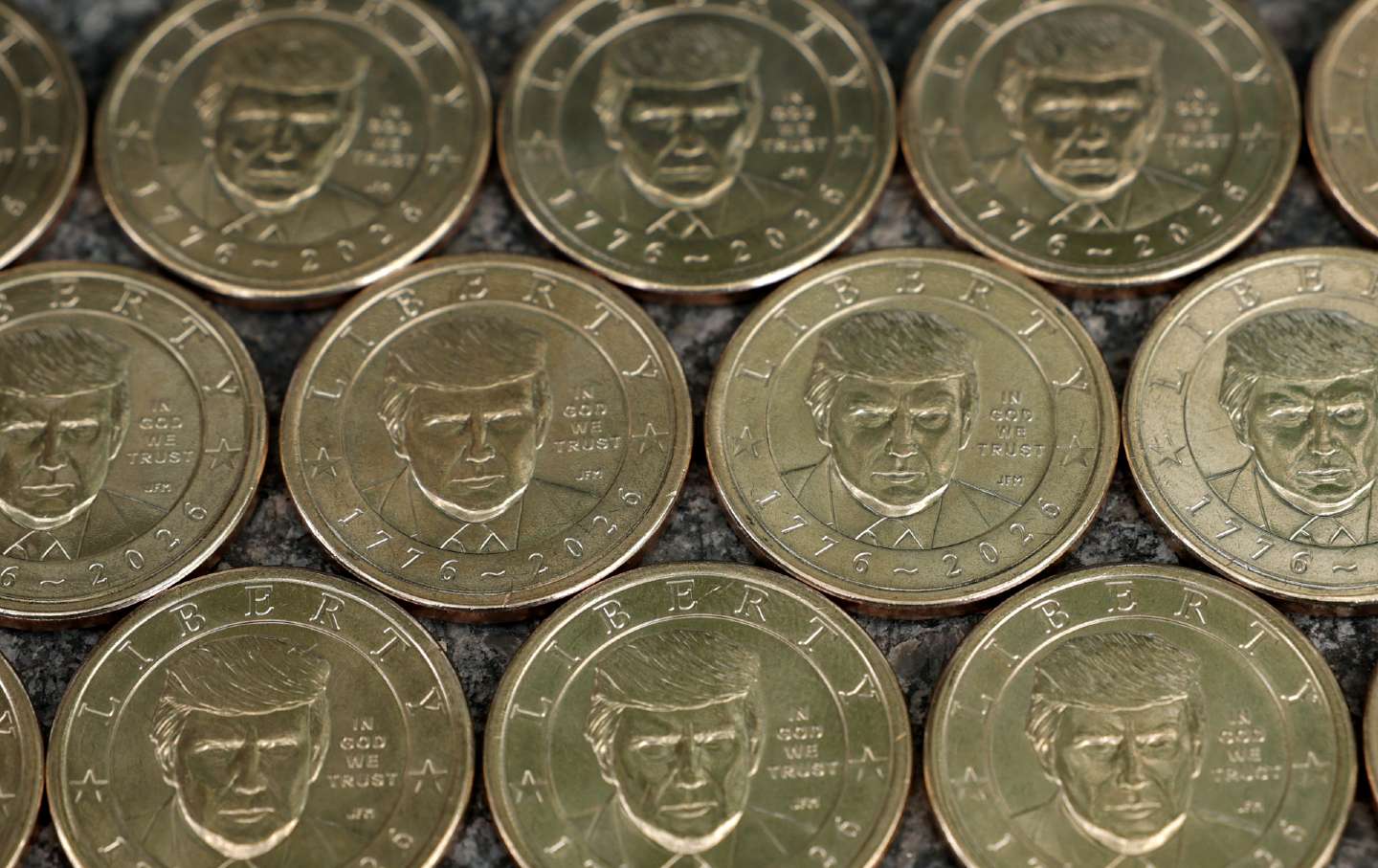
Corruption in the White House: Does Anybody Care? Corruption in the White House: Does Anybody Care?
The 2026 midterms and 2028 presidential election should be referendums on whether Trump and his associates can profit from his presidency.
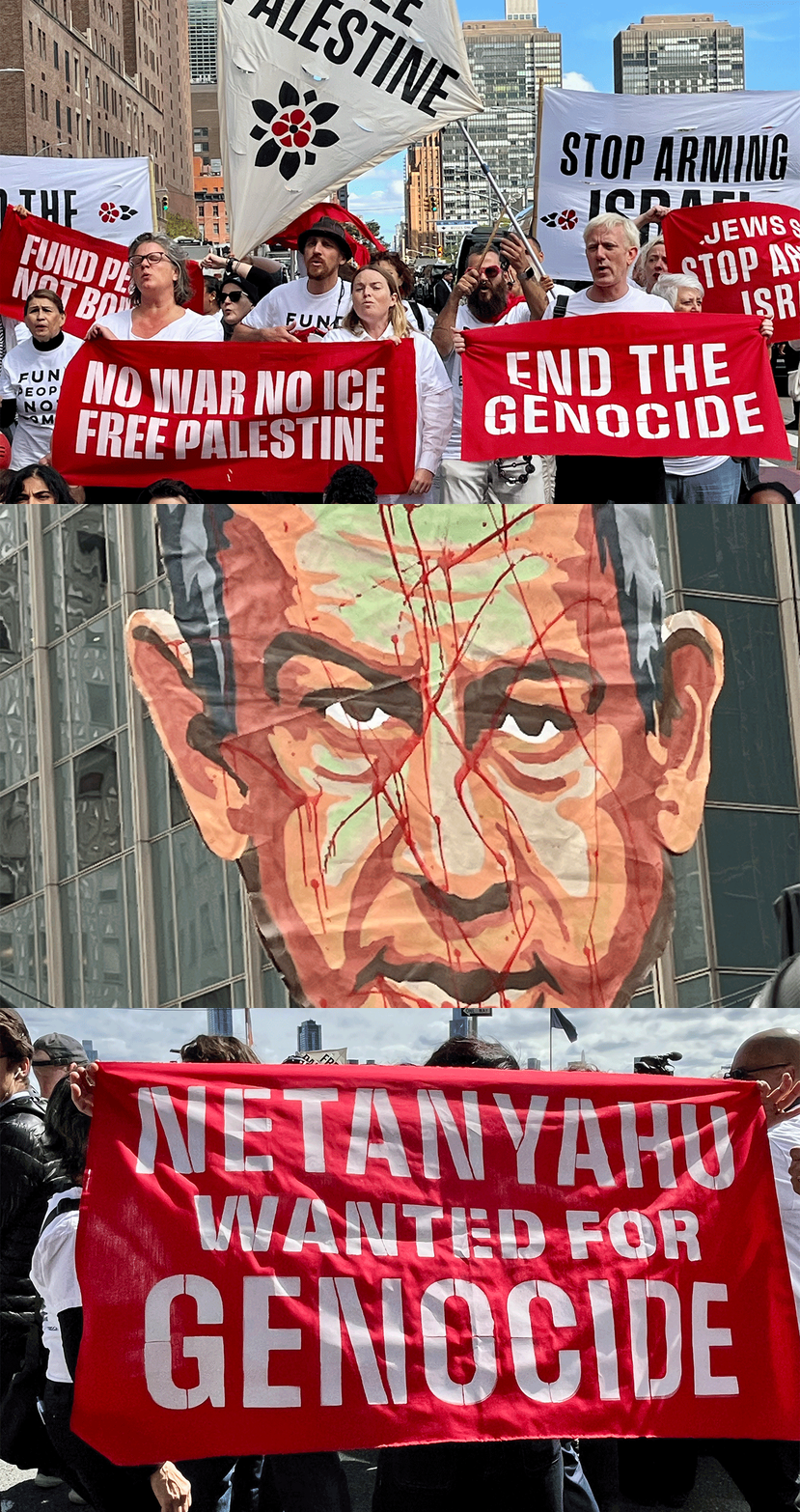
Resistance to Netanyahu Takes to the Streets in New York Resistance to Netanyahu Takes to the Streets in New York
Demonstrators gather near the United Nations in New York on September 24, 2026, protesting Benjamin Netanyahu’s government and its policies.
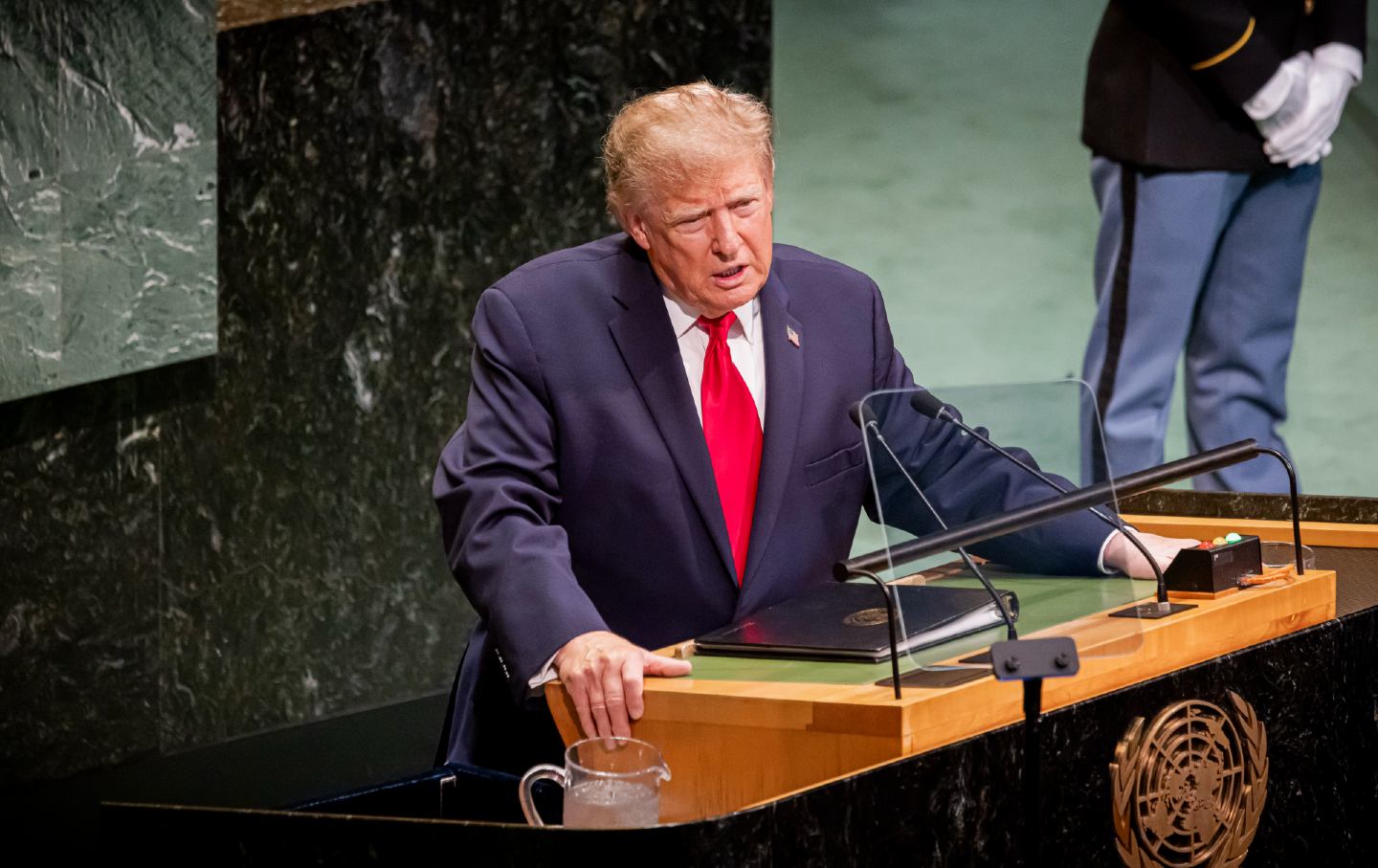
Donald Trump vs. Bernie Sanders—2 Sharply Different Views of America’s Role in the World Donald Trump vs. Bernie Sanders—2 Sharply Different Views of America’s Role in the World
One is an imperial gangster; the other seeks to create a world “not based on greed but based on justice, on decency.”
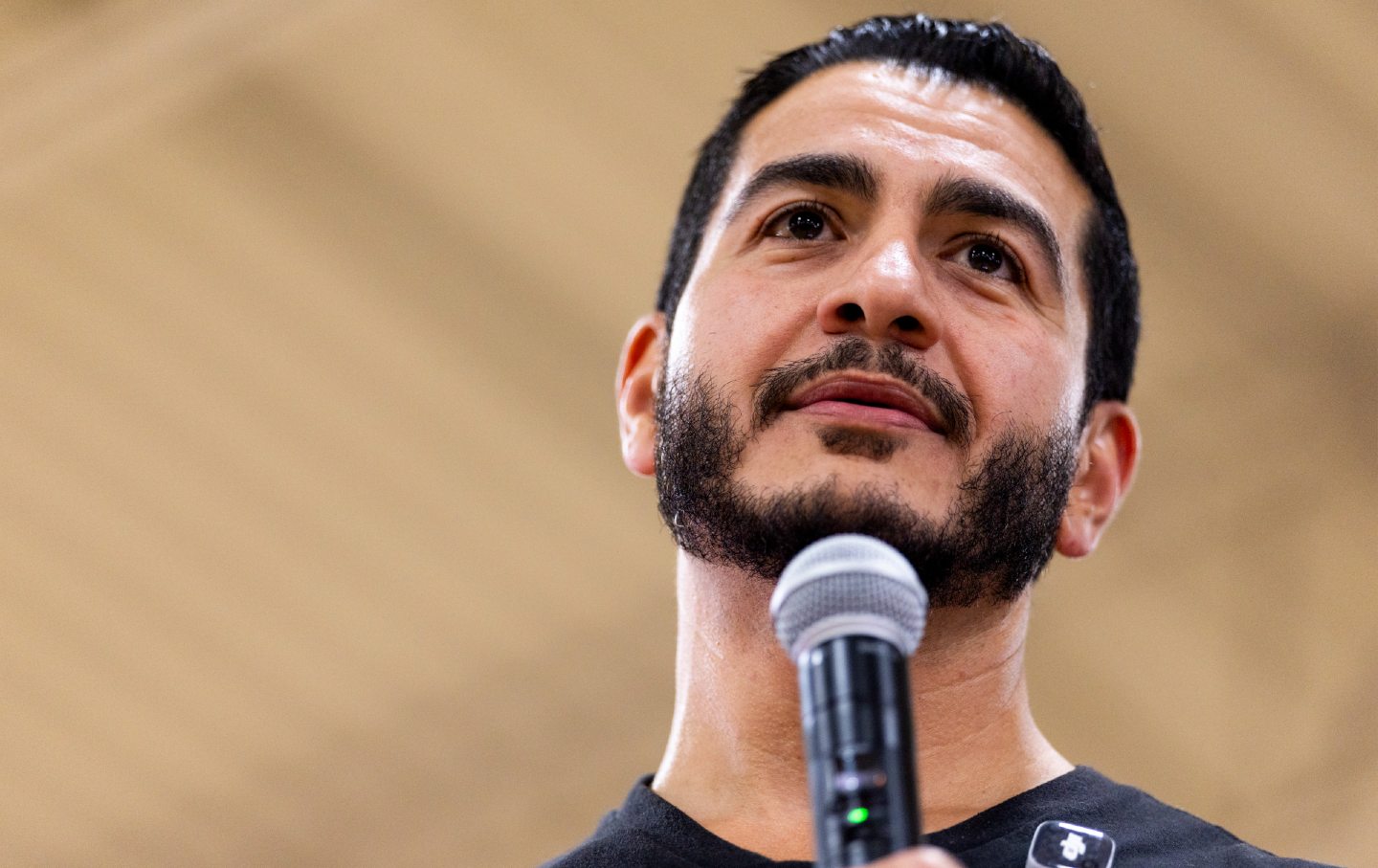
Michigan’s Senate Race Is a Testing Ground Michigan’s Senate Race Is a Testing Ground
We must counter fear and division with solidarity.
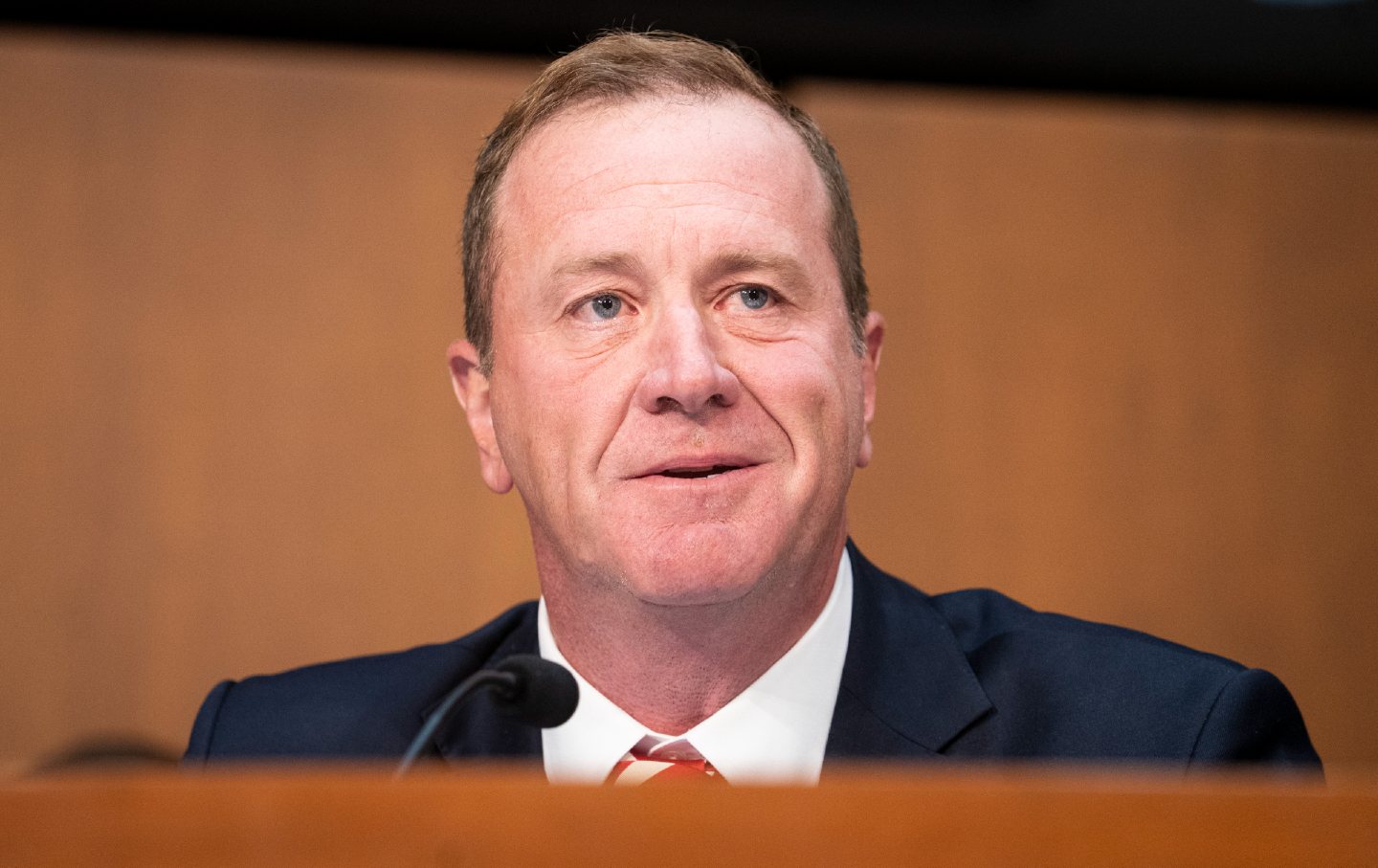
Eric Schmitt Deserves to Be Mocked Forever Eric Schmitt Deserves to Be Mocked Forever
In this week’s Elie v. U.S., our justice correspondent relives the senator’s glorious face-plant. Plus: why John Roberts also deserves our mockery.

