
Why I’m Running for Vice-Chair of the Democratic National Committee
Party building begins from the bottom up. But in the fight to make the DNC more accountable, and to get dark money out of Democratic primaries, who is in office also matters.
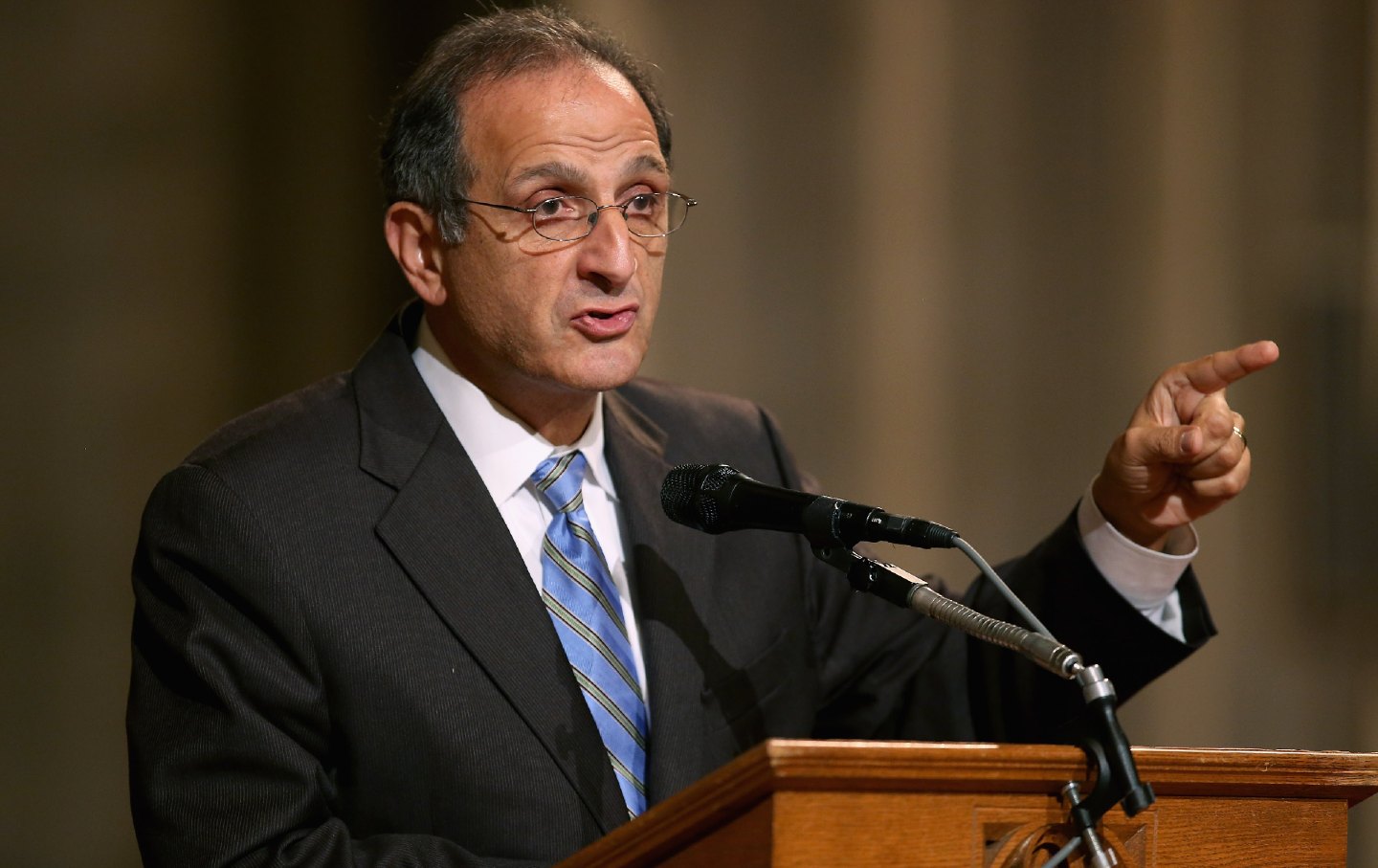
In the aftermath of our 2024 electoral defeat, many in our party have been engaged in hand-wringing and soul-searching in an effort to understand what went wrong—and what we must do differently moving forward. Much of this discussion has focused on messaging we should have used (or avoided), issues we should have raised (or avoided), or constituencies to whom we should have directed more or less attention.
Like any good Democrat, I have my views on all of these matters, but that’s not why I’m running for one of the vice-chair positions of the Democratic National Committee. The issues I intend to raise are those related to governance and party building: the need for budget transparency and accountability; the need to address the financial drain and loss of decision-making control created by our dependence on outside consultants; the need to build state parties; the need to take “dark money” out of our primaries; and the need to create a sense of belonging and engagement that brings young people and others who feel rejected and disenfranchised into our party, finding a place for them in our work.
In my more than three decades as a member of the Democratic National Committee, I have had the privilege of serving our party in a number of positions: on the Executive Committee (16 years), cochair of the Resolutions Committee (11 years), cochair of the Ethnic Council (12 years), and member of the Unity/Reform Commission (2017–18). In each of these capacities I have tried to serve our party, to help it grow, and to win victories.
At the same time, I’ve had the opportunity to observe repetitive structural and institutional problems we face that I believe must now be addressed. I was able to raise some of these concerns during my time on the Unity/Reform Commission. Others were introduced through the Resolutions Committee. As most remain unresolved, I am seizing upon this opportunity to run for vice-chair to engage our membership in a discussion of needed governance reforms.
1. Accountability and transparency.
With more than a billion dollars being spent in an election cycle (with much of it going to consultant groups), oversight and evaluation of these expenditures, and the groups we hire, is important to ensure transparency and accountability. This is what a governing body does, and it is time that the DNC operate as the governing body of the party.
In 2017, I proposed to the Unity/Reform Commission that we take steps to implement the Bylaws requirement that the Executive Committee and the full DNC receive “annual reports…on the goals and purposes of expenditures, and the results of expenditures and staff.” To facilitate this process, I proposed the creation of an elected financial oversight committee of elected DNC members that would undertake such a review for submission to the membership.
2. Making DNC membership have impact.
Many DNC members have complained that they feel more like “props who fill seats at meetings” than members of the party’s governing body. This needs to change. In addition to voting to approve or question the annual budget review, there are other ways to empower members to strengthen our party’s work.
For example:
- Instead of being presented with a fait accompli and asked to ratify the Chair’s slates of at-large members and members of the standing committees, the composition of these bodies should be determined by elections—either by the full membership, or the ASDC and Regional Caucuses. Some slots can be reserved for the Chair, but not the entire slates. The mechanics of this process can be worked out, but the principle guiding the process should be that it is open, democratic, regionally distributed, and that it empowers DNC members.
- Opportunities should be created at DNC meetings for members to engage in discussion and debate. For example, the Resolutions Committee should allow more time for consideration of proposed resolutions with some of them going to the full membership for discussion, debate, and a vote. And when resolutions are passed that include action components, there should be a report back to the membership as to whether the called for action was taken and what, if anything, happened, as a result.
- We should provide opportunities at our meetings for presentations of “best practices” in which state and local parties can learn from each other’s successful outreach models.
- We should provide opportunities for full discussions of how we reach underserved or misunderstood constituencies: young voters, rural voters, recent immigrant communities (from African, Hispanic, Caribbean, Asian, Eastern European, and Arab backgrounds), and working-class ethnic voters—all of whom we need to incorporate (or, in some cases, reincorporate) into our ranks to become a majoritarian party.
3. Strengthening state parties.
Too much of our resources are funneled to consulting groups for outreach, messaging, and even canvassing or GOTV programs. At the end of each cycle, despite the massive amounts of money raised and spent, and the success of some of these efforts, we don’t see any appreciable growth in the organizing capacity of our state or local party organizations.
More financial support should be forthcoming for state parties, with no states left behind. Coupled with this increase in funding, the ASDC should be charged with establishing an oversight and support mechanism to ensure that state parties are growing and operating in manner that is democratic, accountable, and providing opportunities for our diverse membership to be active and playing an empowered role in our work.
4. What does it mean to be a member of the Democratic Party? How do we find, train, and support the next generation of compelling leaders?
Popular
“swipe left below to view more authors”Swipe →Party building begins from the bottom up. At the beginning of his tenure, Jaime Harrison proposed a task force to explore this question of what it means to be a member of our party. The idea was a good one, but it wasn’t implemented. It should be now.
The problem is that for too many Americans being a member of a party means being on a mailing list, an e-mail list, an SMS list, or a targeted social media list. In most instances these communications merely involve asking for money. Too little is done to create a sense of “belonging” to the party or any sense of excitement and engagement. We must change this.
During the Unity/Reform Commission we proposed ideas to provide selected state parties with the resources necessary to strengthen and expand the role of local party capacity by recreating the roles once played by precinct captains, providing year-round community-based outreach.
Sustained outreach creates opportunities for recruitment and training of new party leaders and candidates for local elective office. We can’t leave identifying and supporting new leaders to chance, state legislative caucus leaders, or hurried if admirable efforts by campaign committee leaders. We need to rebuild our farm team, in each of the 50 states. Dynamic new leaders will create engagement where people live, talk, scroll, listen, and post—and lead to lasting change. All the research agrees: The effect of TV ads vanishes quickly. The effects of building community and leadership would last.
5. Eliminate Dark Money from our primaries.
On two occasions, we submitted proposals to eliminate dark money from Democratic primaries. In the past two cycles, tens of millions of dollars were raised and spent by these outside groups—with money often coming from Republican donors—to sway voters in Democratic primaries. This is something that we and our state parties can regulate or call out. Democratic voters should decide who wins our primaries, not outside groups.
I hope that my candidacy will create an opportunity to discuss these proposals to strengthen our party and help it grow with one goal in mind: to win elections. That’s why I’m running.
Support independent journalism that does not fall in line
Even before February 28, the reasons for Donald Trump’s imploding approval rating were abundantly clear: untrammeled corruption and personal enrichment to the tune of billions of dollars during an affordability crisis, a foreign policy guided only by his own derelict sense of morality, and the deployment of a murderous campaign of occupation, detention, and deportation on American streets.
Now an undeclared, unauthorized, unpopular, and unconstitutional war of aggression against Iran has spread like wildfire through the region and into Europe. A new “forever war”—with an ever-increasing likelihood of American troops on the ground—may very well be upon us.
As we’ve seen over and over, this administration uses lies, misdirection, and attempts to flood the zone to justify its abuses of power at home and abroad. Just as Trump, Marco Rubio, and Pete Hegseth offer erratic and contradictory rationales for the attacks on Iran, the administration is also spreading the lie that the upcoming midterm elections are under threat from noncitizens on voter rolls. When these lies go unchecked, they become the basis for further authoritarian encroachment and war.
In these dark times, independent journalism is uniquely able to uncover the falsehoods that threaten our republic—and civilians around the world—and shine a bright light on the truth.
The Nation’s experienced team of writers, editors, and fact-checkers understands the scale of what we’re up against and the urgency with which we have to act. That’s why we’re publishing critical reporting and analysis of the war on Iran, ICE violence at home, new forms of voter suppression emerging in the courts, and much more.
But this journalism is possible only with your support.
This March, The Nation needs to raise $50,000 to ensure that we have the resources for reporting and analysis that sets the record straight and empowers people of conscience to organize. Will you donate today?
More from The Nation
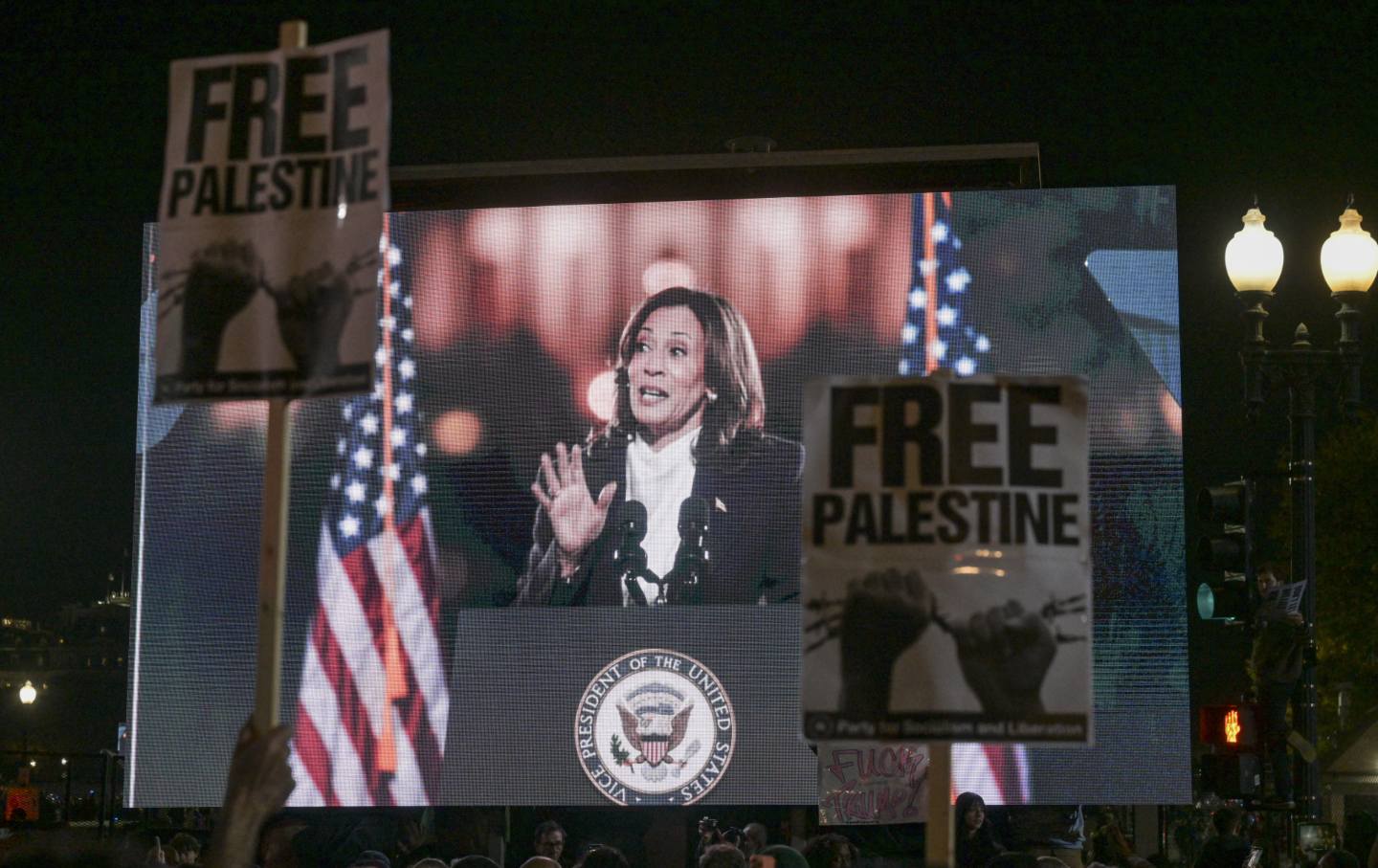
We Don’t Need an Autopsy to Tell Us the Democrats Failed on Gaza We Don’t Need an Autopsy to Tell Us the Democrats Failed on Gaza
The DNC is allegedly hiding a report showing that Kamala Harris’s Gaza policy helped cost her the 2024 election. But that report won’t tell us anything we don’t already know.

Texas’s Senate Primary Has Already Made History—and It’s Not Over Yet Texas’s Senate Primary Has Already Made History—and It’s Not Over Yet
Democratic nominee James Talarico is getting national media attention, but the real story is sky-high voter turnout, even amid GOP bids to suppress balloting
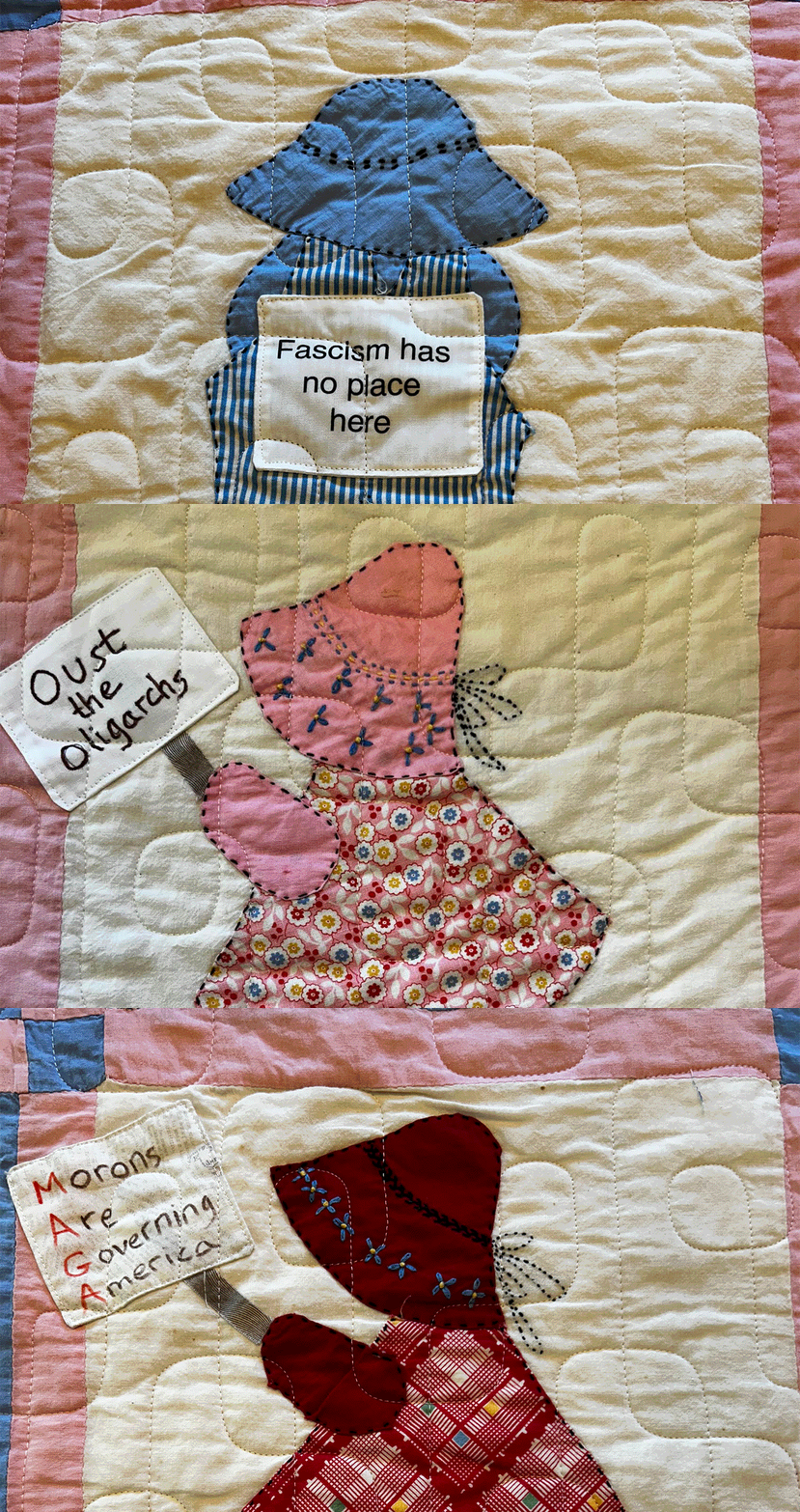
Quilted Messages Quilted Messages
Sunbonnets carrying not-so-sunny truths.
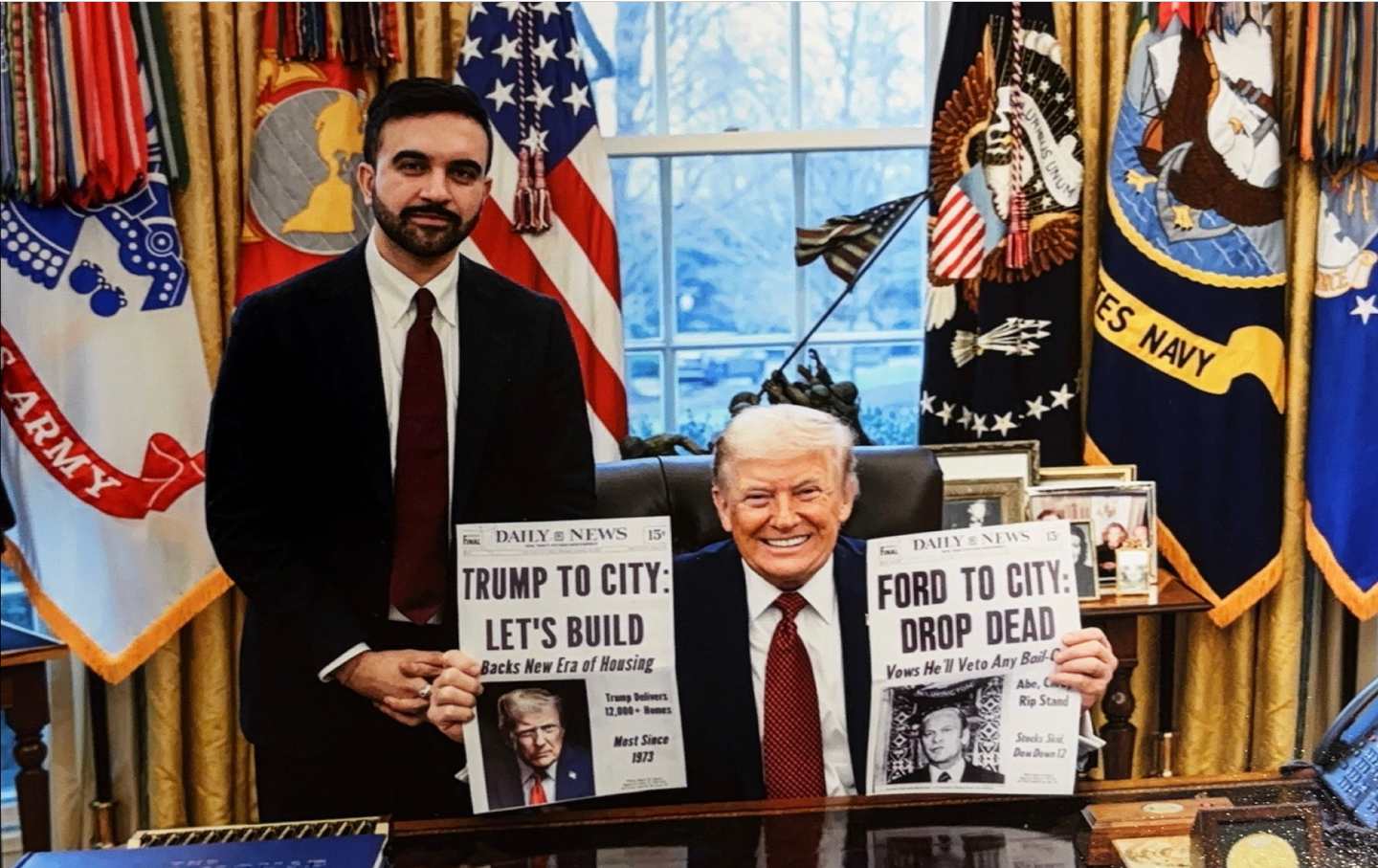
How the Theatrics of Mamdani’s Trump Meeting Backfired How the Theatrics of Mamdani’s Trump Meeting Backfired
By pandering to the president’s vanity, the New York mayor reinforced Trump’s image as a strongman commanding deference—an especially bad look on the eve of Trump’s war with Iran
Students in New York Are Going Hungry. How Can Mamdani Help? Students in New York Are Going Hungry. How Can Mamdani Help?
With plans for city-owned grocery stores and a focus on affordability, the new mayoral administration offers fresh hopes of successfully confronting the food crisis among students...

We Are the Fire That Melts the ICE We Are the Fire That Melts the ICE
Oaxaca, Mexico, street art.

