
Why JD Vance Is Unpopular and Project 2025 Has Gone Underground
The Heritage Foundation’s attempt to produce an intellectual and wonkish Trumpism turns off voters.
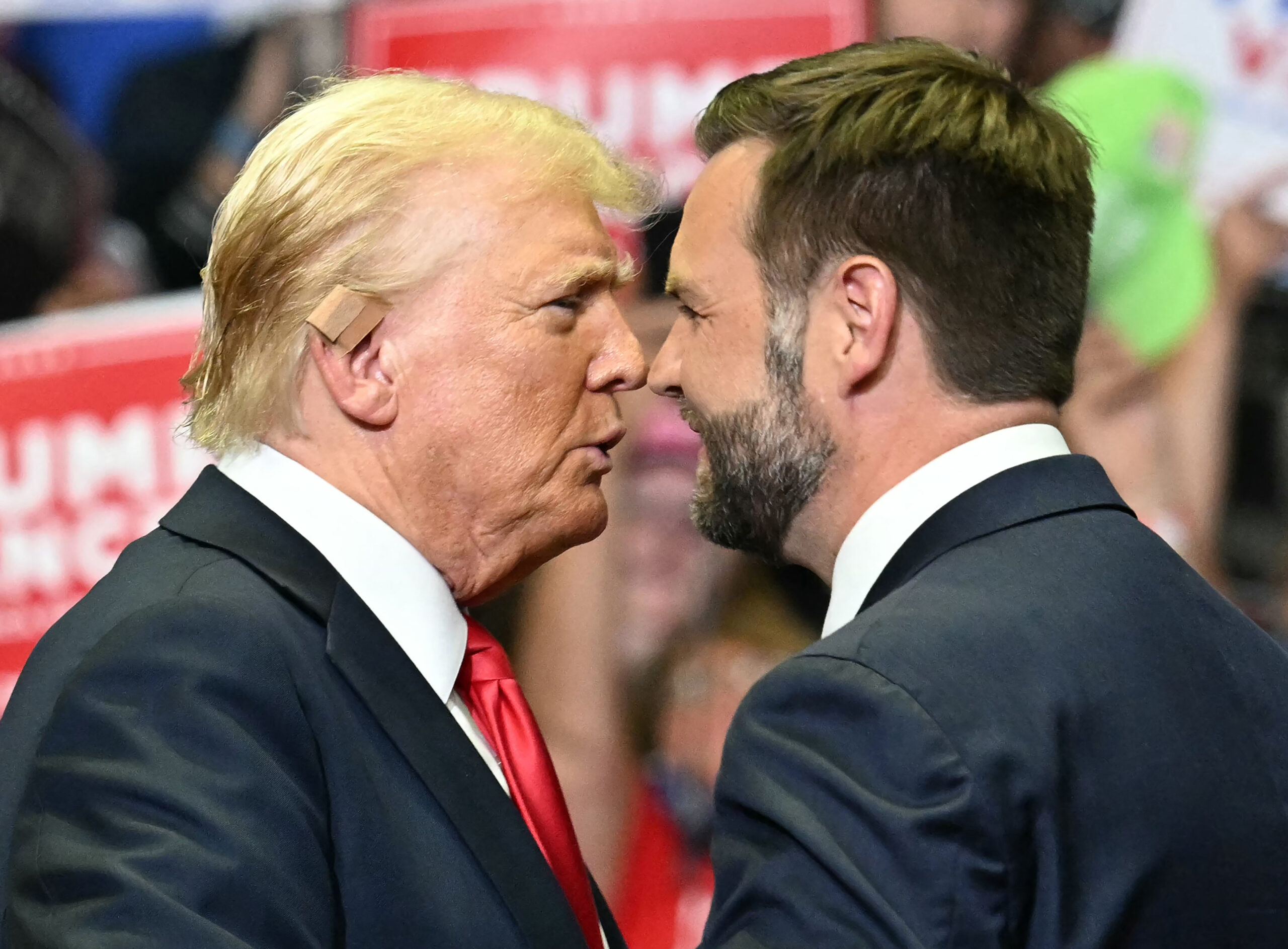
A funny thing has happened to Donald Trump’s policy agenda: It’s gone into hiding. Trump’s political campaign has been floundering ever since the Democrats switched out the diminished Joe Biden for Kamala Harris, who has now taken a small but significant lead in the polls. But even when Biden was the presumptive nominee and dragging down his party’s election hopes, grassroots Democrats (relying on the investigative journalism of progressive media outlets such as The Nation) had already found a significant Achilles’ heel in Trump’s presidential bid in the form of Project 2025—a detailed, 900-page policy agenda for a second Trump term created by a consortium of right-wing think tanks headed by the Heritage Foundation.
It was the grassroots outcry against Project 2025, soon echoed by elected Democrats, that made the right-wing policy agenda both widely known and unpopular. In early July, polling from Navigator Research found a surge of awareness about Project 2025, with 54 percent of the public knowing about the document as against only 29 percent a month earlier. Further, only 11 percent of Americans viewed Project 2025 favorably, as against 43 who viewed it unfavorably.
Donald Trump started disavowing Project 2025 in increasingly stark terms, despite the fact that many of the document’s authors were long-standing Republicans policymakers who had worked in his administration (notably Trump’s speechwriter Stephen Miller). On July 30, the Trump campaign issued a statement saying, “President Trump’s campaign has been very clear for over a year that Project 2025 had nothing to do with the campaign, did not speak for the campaign, and should not be associated with the campaign or the President in any way.” That same day, the head of Project 2025, Paul Dans, stepped down, and the Heritage Foundation announced that there would be no new policy work on the report.
Summing up a poll conducted by his university, Tatishe Nteta, provost professor of political science at University of Massachusetts, Amherst, noted: “Large majorities of Americans oppose the key pillars of Project 2025, such as the replacement of career government officials with political appointees (68 percent opposed), restricting a woman’s right to contraception (72 percent opposed) and eliminating the Department of Education (64 percent opposed).”
A forthcoming book by Kevin Roberts, head of the Heritage Foundation—which will carry a foreword by Trump’s running mate, JD Vance, another factor making it harder for the ticket to disavow the effort—fell victim to the fact that Project 2025 has become politically toxic. On Wednesday, PBS reported:
As Project 2025 hits turmoil, the head of the influential, far-right Heritage Foundation is postponing the release of his potentially fiery new book until after the November presidential election. Kevin Roberts, who took over Project 2025 as part of a leadership shake-up amid blowback over its recommendations for a potential Donald Trump White House, said Wednesday he is focused on defeating presumptive Democratic nominee Kamala Harris. Trump’s running mate JD Vance penned the foreword to Roberts’ book.
Vance’s authorship of the foreword to Robert’s book is hardly an accident. Like Project 2025 itself, Vance can be understood as part of a program to institutionalize Trumpism into a coherent political program. Trump himself has dominated the Republican Party for nearly a decade, starting with the launch of his first presidential run in 2015. His remarkable hold on the GOP has been stronger than that of any politician since at least Ronald Reagan, and indeed his reach into the party goes deeper than Reagan’s. After all, Reagan’s power rested on his distillation of conservative themes (foreign policy hawkishness, tax cuts) held by most Republicans. Trump has remained the GOP standard-bearer despite holding positions that a significant chunk of the Republican establishment disagrees with (protectionism, immigration restriction, and foreign policy unilateralism).
Trump’s major problem has always been staffing and the implementation of policy. Aside from a small crew of loyalists, he didn’t have a cadre of Trumpist policy wonks comparable to the loyalist policy army that earlier Republican presidents possessed. But over time, it has become clear that Trump is slowly reshaping the GOP in his image.
With the emergence of Project 2025 and the rise of politicians such as Vance (along with other Trump imitators such as Marjorie Taylor Greene, Matt Gaetz, Lauren Boebert, and Blake Masters), Trump’s institutional weakness seemed like a problem that had been overcome. Vance himself was a Never Trump Republican only a decade ago, but he applied a born-again zeal into becoming more Trumpist than Trump. The promise (or danger) of Project 2025 and Vance was that we would finally see a Trumpism without Trump—a Trumpism that wasn’t just snarling attitude and chaotic and ad hoc executive orders but a cohesive governing agenda.
The good news for Democrats is that Trumpism without Trump is wildly unpopular. Vance shares the low approval ratings of Project 2025.
Washington Post columnist Aaron Blake describes Vance as “a historically unpopular running mate.” According to Blake, “Vance’s net favorable rating (favorable vs. unfavorable) is now nine points underwater in the FiveThirtyEight average. That’s a marked contrast to other recent running mates, who have generally polled in popular territory.”
The unpopularity of Project 2025 and Vance demonstrates the fact that Trumpism without Trump is not only politically unsuccessful but also a logical contradiction. If Trump’s appeal is at heart anti-intellectual, then the attempt to intellectualize it is oxymoronic.
Trump’s popularity owes much to his status as a celebrity, famous first as a fixture of tabloids, television, and the professional wrestling circuit. This branding gave Trump an identity and politics that transcended ideology and energized citizens who are normally disengaged from politics—an important source of Trump’s success in 2016 and the reason he remains a powerhouse within the Republican Party.
But if you take away Trump’s celebrity charisma, what you are left with are a set of decidedly unpopular policy prescriptions that Democrats find easy to deride as “weird.”
As Jacob Rosenberg of Mother Jones notes, “Vance and Project 2025 have helped shift the focus to Trump’s substance in a way that lets Democrats attack his policies without attacking his voters’ identities.”
Writing in The New Republic, Alex Shepherd argues that Vance’s deep unpopularity shows:
Trumpism itself doesn’t have legs. It is still largely dependent on its namesake. Its ideology will clearly be around for a long time, but there are few signs that it will remain potent without Trump’s own weird charisma.
Popular
“swipe left below to view more authors”Swipe →For Democrats, the political lesson is clear: Don’t let Trump get away with hiding Project 2025. Keep hammering away at how unpopular the policy agenda is. This task is immeasurably helped by the fact that Trump’s handpicked running mate is a perfect embodiment of everything ordinary people hate about Trumpism as a policy agenda: It’s a form of geeky bullying whereby strange people try to inflict their personal inadequacies on the larger society.
Support independent journalism that does not fall in line
Even before February 28, the reasons for Donald Trump’s imploding approval rating were abundantly clear: untrammeled corruption and personal enrichment to the tune of billions of dollars during an affordability crisis, a foreign policy guided only by his own derelict sense of morality, and the deployment of a murderous campaign of occupation, detention, and deportation on American streets.
Now an undeclared, unauthorized, unpopular, and unconstitutional war of aggression against Iran has spread like wildfire through the region and into Europe. A new “forever war”—with an ever-increasing likelihood of American troops on the ground—may very well be upon us.
As we’ve seen over and over, this administration uses lies, misdirection, and attempts to flood the zone to justify its abuses of power at home and abroad. Just as Trump, Marco Rubio, and Pete Hegseth offer erratic and contradictory rationales for the attacks on Iran, the administration is also spreading the lie that the upcoming midterm elections are under threat from noncitizens on voter rolls. When these lies go unchecked, they become the basis for further authoritarian encroachment and war.
In these dark times, independent journalism is uniquely able to uncover the falsehoods that threaten our republic—and civilians around the world—and shine a bright light on the truth.
The Nation’s experienced team of writers, editors, and fact-checkers understands the scale of what we’re up against and the urgency with which we have to act. That’s why we’re publishing critical reporting and analysis of the war on Iran, ICE violence at home, new forms of voter suppression emerging in the courts, and much more.
But this journalism is possible only with your support.
This March, The Nation needs to raise $50,000 to ensure that we have the resources for reporting and analysis that sets the record straight and empowers people of conscience to organize. Will you donate today?
More from The Nation

We Don’t Need an Autopsy to Tell Us the Democrats Failed on Gaza We Don’t Need an Autopsy to Tell Us the Democrats Failed on Gaza
The DNC is allegedly hiding a report showing that Kamala Harris’s Gaza policy helped cost her the 2024 election. But that report won’t tell us anything we don’t already know.
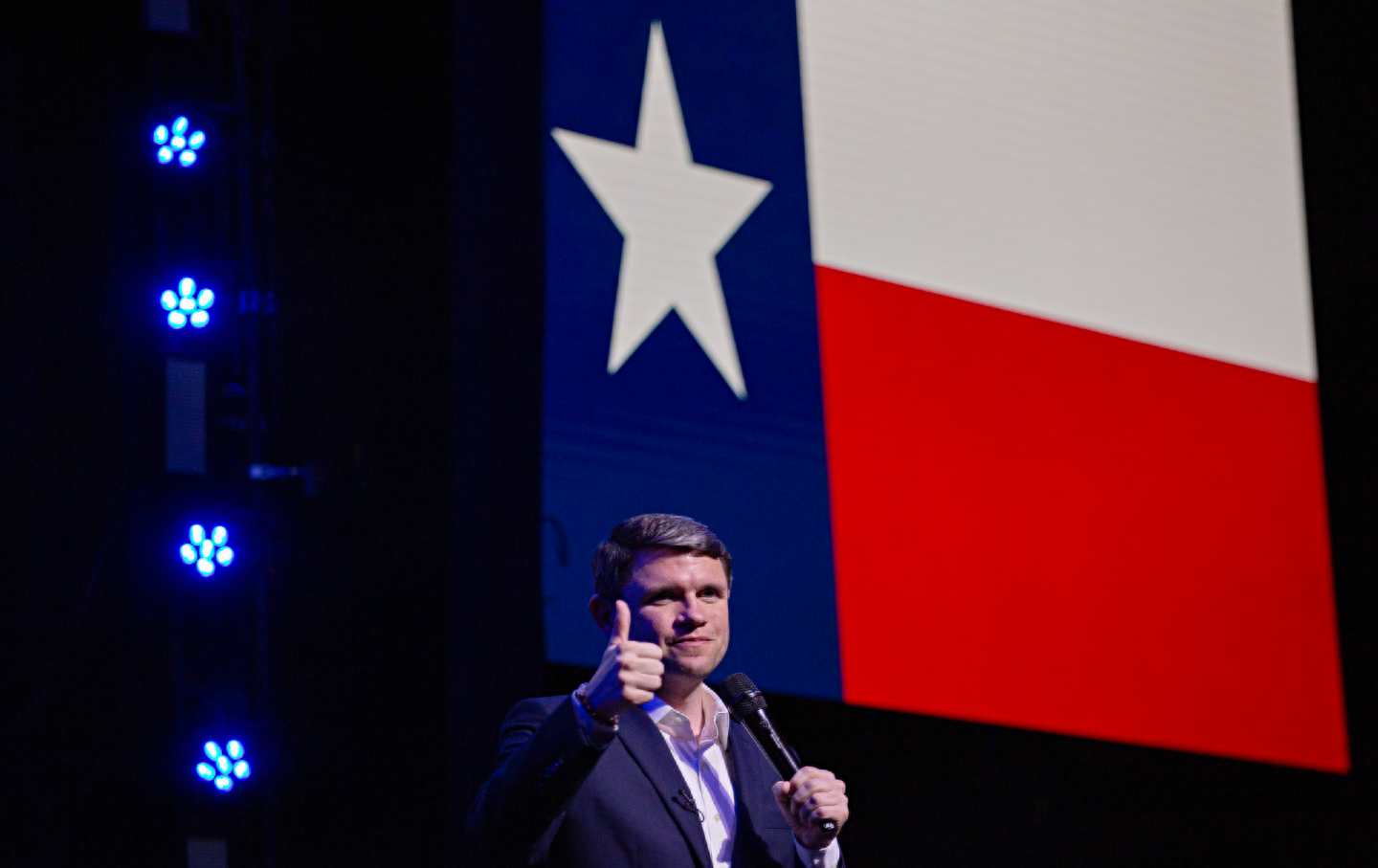
Texas’s Senate Primary Has Already Made History—and It’s Not Over Yet Texas’s Senate Primary Has Already Made History—and It’s Not Over Yet
Democratic nominee James Talarico is getting national media attention, but the real story is sky-high voter turnout, even amid GOP bids to suppress balloting
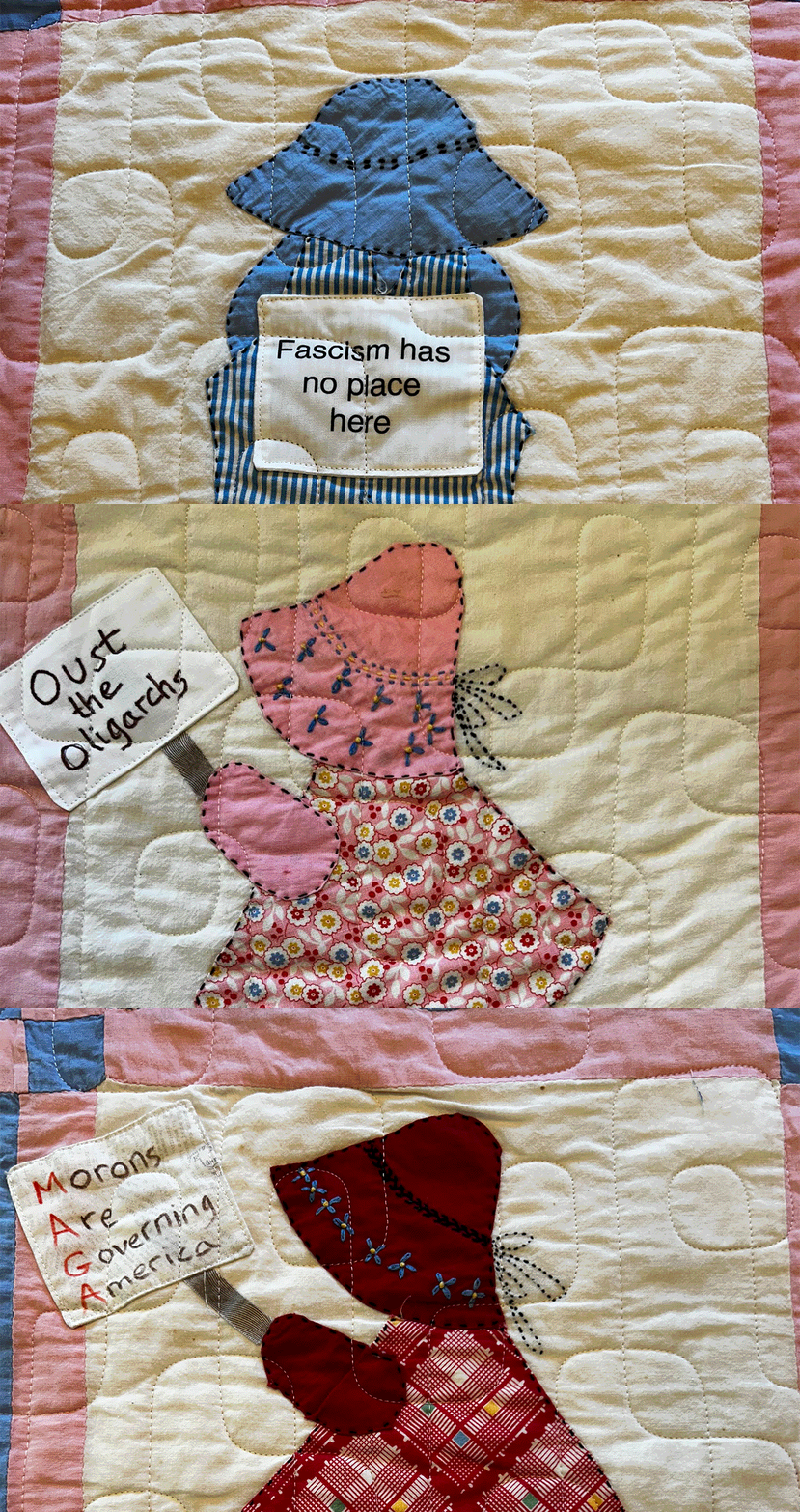
Quilted Messages Quilted Messages
Sunbonnets carrying not-so-sunny truths.
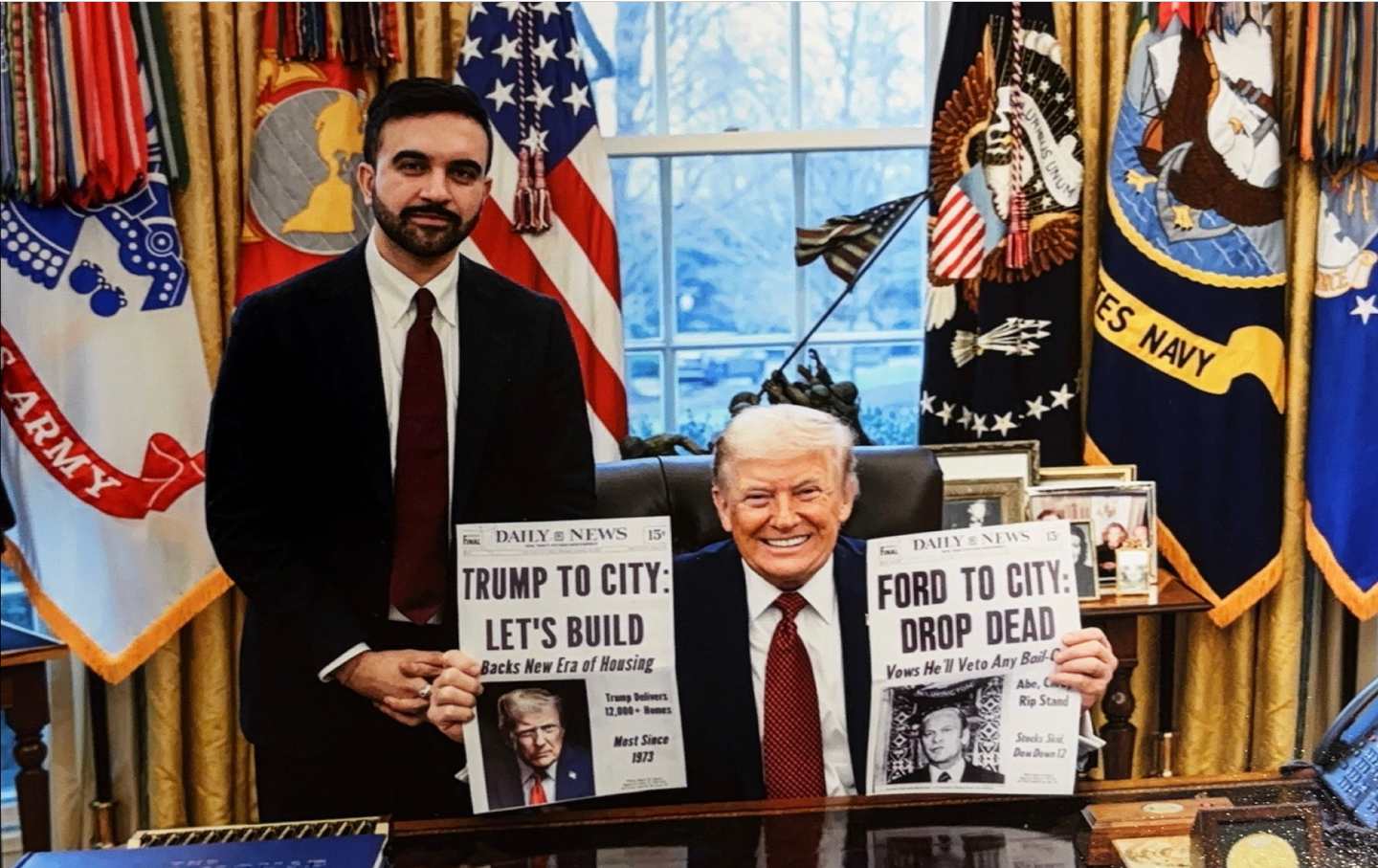
How the Theatrics of Mamdani’s Trump Meeting Backfired How the Theatrics of Mamdani’s Trump Meeting Backfired
By pandering to the president’s vanity, the New York mayor reinforced Trump’s image as a strongman commanding deference—an especially bad look on the eve of Trump’s war with Iran

Students in New York Are Going Hungry. How Can Mamdani Help? Students in New York Are Going Hungry. How Can Mamdani Help?
With plans for city-owned grocery stores and a focus on affordability, the new mayoral administration offers fresh hopes of successfully confronting the food crisis among students...
We Are the Fire That Melts the ICE We Are the Fire That Melts the ICE
Oaxaca, Mexico, street art.

