Trump’s Order Dismantling the Education Department Continues His Attacks on the Agency
The president plans to sign an executive order directing officials to take all “necessary steps” to shut down the department, but a complete closure would require an act of Congress.
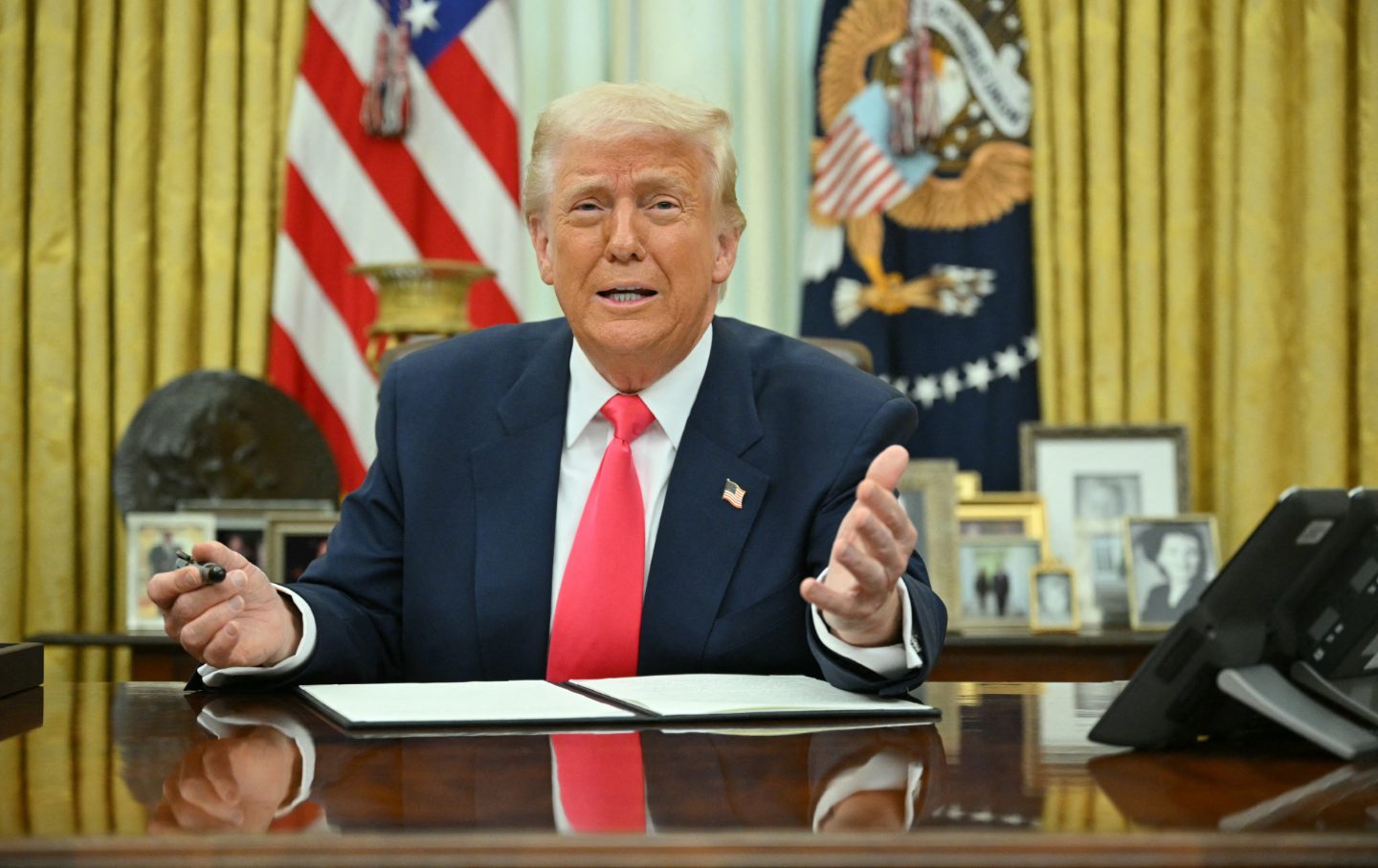
Donald Trump in the Oval Office of the White House in Washington, DC, on March 6, 2025.
(Mandel Ngan / Getty)President Trump plans to sign an executive order today directing officials to shut down the Department of Education, carrying out what once was a pipe dream for the GOP but became a central theme in his 2024 campaign.
The order, which is almost certain to be challenged in court, will direct Secretary of Education Linda McMahon to “take all necessary steps to facilitate the closure of the Department of Education and return education authority to the states,” according to an internal document detailing the order and a White House official. The complete closure of the department would require an act of Congress as it was established by statute in 1979—a fact McMahon has previously acknowledged.
The order will also detail stipulations that “programs or activities receiving any remaining Department of Education funds will not advance DEI or gender ideology,” according to the Internal document, which was labeled “pre-decisional.” As part of its rationale for the move, the administration cited plummeting standardized test scores as evidence that “federal government control of education has failed students, parents, and teachers.”
The Trump administration began weakening the department last week. On March 11, about 1,300 employees were laid off, approximately half of the department’s workforce, The Nation previously reported. These employees were irate about Trump’s decision and said that his justification for the order—returning education to state control—is redundant.
“Education has already been controlled at the state and local levels,” one former employee told The Nation. They were granted anonymity for fear of jeopardizing their severance. “It’s hard to understand what the actual goal is here.” Currently, the department has no say over the curricula that are used in schools. Instead, states are typically the ones that take the lead on developing and implementing curricula.
Another employee said the department “only sets policy for the use of a tiny percentage of federal funds and keeps track of student performance on standardized tests,” another employee said. “Nothing about the shutting down of the department has to do with saving money or being efficient.”
Education groups are livid over the decision. The American Federation of Teachers president Randi Weingarten had just four words for Trump: “See you in court.”
Becky Pringle, the president of the National Education Association, the largest educators union in the United States, blasted the decision Wednesday night, saying it “will hurt all students by sending class sizes soaring, cutting job training programs, making higher education more expensive and out of reach for middle-class families, taking away special-education services for students with disabilities, and gutting student civil rights protections.”
The administration has previously floated reassigning various functions of the department to other federal agencies. Project 2025, a Republican playbook compiled by the conservative think tank The Heritage Foundation, suggested closing the department and moving some of its financial aid operations to the Treasury Department and the Office for Civil Rights to the Department of Justice
In seeing the reports of the upcoming signing, two employees described their reaction as “heartbroken.”
“Closing the department harms students and families,” one said.
On the campaign trail, Trump repeatedly bashed the state of American education, saying that it had been taken over by “the radical left maniacs.” He has advocated for “pro-America education” and the creation of a credentialing body that would “certify teachers who embrace patriotic values.”
McMahon gave a preview of departmental reshuffling in an all-staff e-mail hours after she was sworn in as the department’s secretary in early March: “We will partner with Congress and other federal agencies to determine the best path forward to fulfill the expectations of the President and the American people.”
Without a filibuster-proof majority in the Senate and with a fractious coalition in the House, the prospect of passing a GOP-led bill to wholly shutter the department remains unlikely. But many hard-line Trump allies in the Republican Party have expressed support for the action.
Popular
“swipe left below to view more authors”Swipe →It is unclear whether Speaker Mike Johnson or Senate majority leader John Thune, who have the last say on which bills are brought to the floor of their respective chambers, support such congressional action. But they have been Trump’s allies in the Capitol, uniting their caucuses to deliver policy wins for the new administration. Neither of their offices responded to a request for comment.
But as the administration has eyed a phaseout of the department, it has ramped up its oversight functions. Investigations have been opened into higher education institutions over allegations of antisemitism, funding cuts have been threatened for schools with race-conscious programs, and DEI is now anathema.
On March 7, the Education Department, alongside other federal agencies, canceled $400 million in federal grants to Columbia University over what it calls “continued inaction in the face of persistent harassment of Jewish students.” Columbia is now in negotiations with the federal government, which is attempting to extract concessions from the university, including instituting a mask ban on campus, adding additional protest restrictions, and placing the department of Middle East, South Asian, and African Studies under “academic receivership,” meaning it would no longer be controlled by faculty.
“Legitimate questions about our practices and progress can be asked, and we will answer them,” Columbia interim president Katrina Armstrong said in a Wednesday statement. “But we will never compromise our values of pedagogical independence, our commitment to academic freedom, or our obligation to follow the law.”
Universities have also paused hiring new staff, reduced the number of PhD admits, and issued travel warnings for international students in recent weeks, citing an ever-changing federal landscape. As Trump has threatened additional action against these institutions, administrators around the country have been left wondering whether they are next.
More from The Nation

Drowning Out the Noise Drowning Out the Noise
How music became the cathartic refuge for my political frustration.

Introducing “Fighting Fascism,” a New Podcast Devoted to Resisting Authoritarianism Introducing “Fighting Fascism,” a New Podcast Devoted to Resisting Authoritarianism
In a moment that demands not just outrage but strategy, cohosts Aaron Regunberg, Jonathan Smucker, and Matt DaSilva, are here with concrete lessons to help listeners fight back.
The GOP Wants Alito Out—but Not Because He’s Evil The GOP Wants Alito Out—but Not Because He’s Evil
In this week’s Elie v. US: A look at the campaign to dislodge Alito and replace him with... Ted Cruz? Plus: the appalling charade of President Big Mac and Door Dash Grandma.

The Real Reason Trump Hates Pope Leo: He Wants to Take His Place The Real Reason Trump Hates Pope Leo: He Wants to Take His Place
Forget being a regular king. Trump is clearly expressing a not-so-secret desire to be a spiritual monarch.
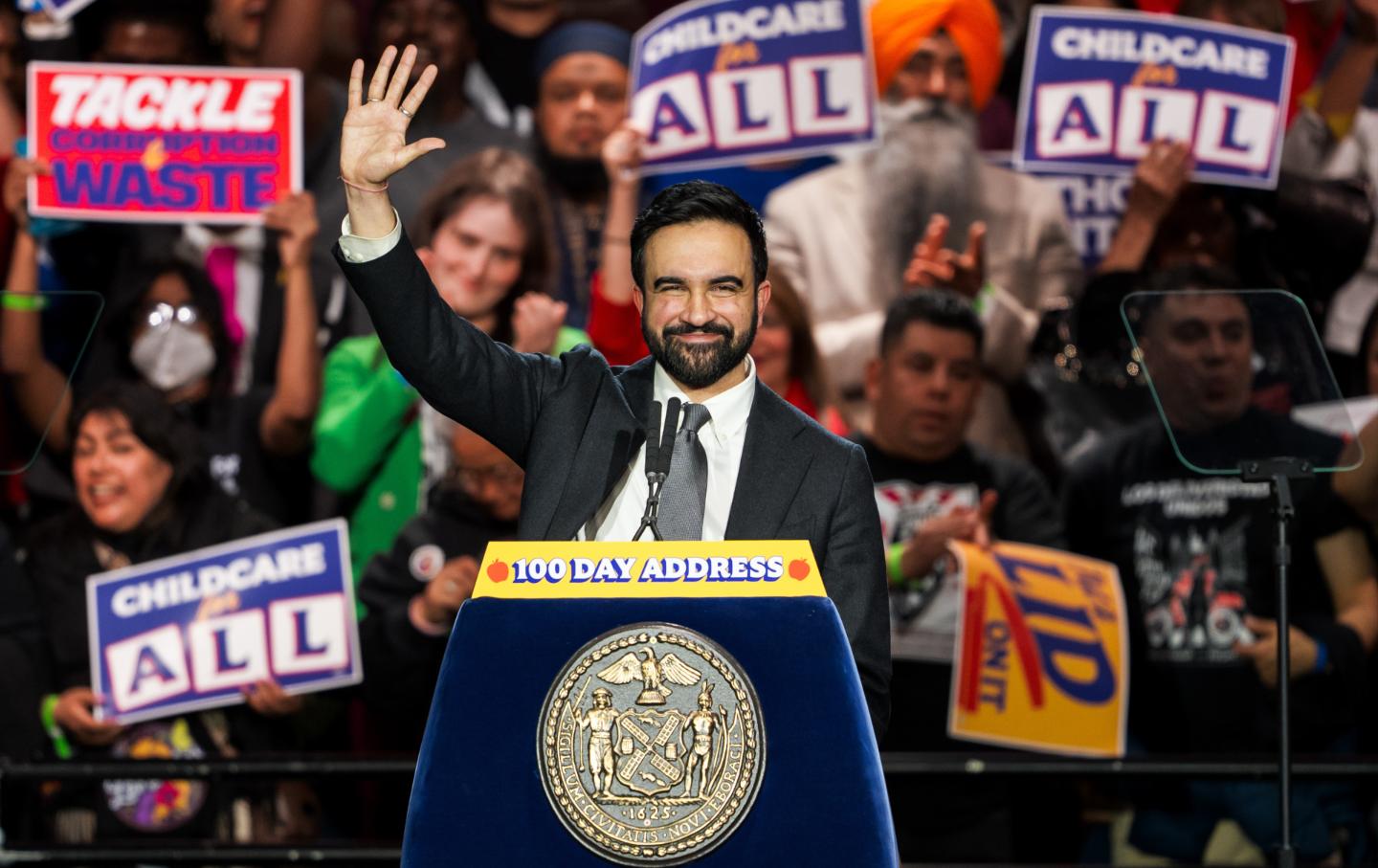
Mamdani Wants to Show That Democratic Socialism “Can Flourish Anywhere” Mamdani Wants to Show That Democratic Socialism “Can Flourish Anywhere”
The mayor is using his “100 Days” moment to talk about “the change that democratic socialism can deliver.”

