
Only One Side Has Clearly Broken the Law In the Strait of Hormuz
And it isn’t Iran.

For weeks, much of the world, from the Arab Gulf states to Europe, has accused Iran of violating international law by regulating the passage of and charging fees to ships transiting through the Strait of Hormuz. At the UN Security Council alone, multiple resolutions have been introduced to condemn Iran’s regulatory actions in the Strait. One of those resolutions passed with support from nearly 140 member states. Hours before the United States and Iran agreed to a two-week ceasefire on April 7, 11 members of the Security Council voted in favor of another resolution, which was ultimately vetoed, that would have condemned Iran for its regulatory actions and authorized every UN member state to go to war against it in order to open the Strait.
By contrast, not a single resolution has been brought before the Council condemning the US/Israel war against Iran. The disparity between these two responses bears little relationship to the fact that only one side has unequivocally broken international law—and it isn’t Iran.
The US/Israeli war is indisputably unlawful. It constitutes one of the gravest crimes under international law—the crime of aggression. The legality of Iran’s regulation of the Strait is, however, less clear-cut. Though Iran has not formally blockaded the Strait, it required ships to coordinate with it and abide by its regulatory regime in order to pass through during the war and ceasefire. It outright forbade US and Israeli-linked ships from transiting. As of today, it appears Iran is allowing all commercial ships, with the possible exception of those linked to the US and Israel, to pass through the Strait for the duration of the 10-day Israel-Lebanon ceasefire, though ships must still use a “coordinated route” that passes close to Iran’s coast. Iran has also reportedly charged a fee to some passing ships. Unlike the United States, Iran can make a reasonable case that it is within its rights to do all these things under international law.
Instead of reflecting these realities, however, the international community has effectively treated Iran—rather than the two states that started a clearly illegal war against it—as the pariah nation in this conflict. This practice aligns with long-standing Western and allied tendencies to leverage international law to legitimize and whitewash imperial actions while simultaneously constraining Global South states that resist Western domination, including through legal means. While these resistant states are depicted as serial rule-breakers, nations in the imperial core are framed as reliable, committed to the rule of law, and fundamentally dedicated to a peaceful and secure world. In this case, as is so often the case, the opposite is true.
What the Law Says
States are legally prohibited from going to war unless they have a right to self-defense—which is limited in scope—or are authorized to do so by the Security Council. This means they cannot use war or the threat of war to, for instance, force another country to make concessions over its nuclear program, ballistic missile program, or support for non-state actors. This is, however, precisely what the United States and Israel hoped to do in launching their war on Iran on February 28.
Despite this blatant illegality, the Trump administration has made half-hearted attempts to justify its joint attack against Iran as defensive. Hardly anyone—including America’s Western allies—has bought into these legal justifications, even though many still support the US/Israeli war politically and militarily. In fact, with the exception of a few countries, like Spain, most Western governments have not clearly and unequivocally condemned US and Israeli actions against Iran. A few days after the war began, German Chancellor Friedrich Merz suggested that Iran was not even entitled to the protections of international law.
The United States’ latest move against Iran—to institute a naval blockade against its ports and coastal areas—is also clearly unlawful but has similarly generated little legal pushback. Blockades are prototypical examples of illegal uses of force and acts of aggression, where not justified by the right of self-defense or a Security Council resolution. In the case of Iran, the US blockade is both unlawful—as it is not otherwise legally justified, and continues the aggression that began on February 28—and effectively ends the ceasefire between the United States and Iran.
The US blockade also violates the laws of naval warfare, which prohibit blockades if “damage to the civilian population is, or may be expected to be, excessive in relation to the concrete and direct military advantage anticipated from” the action. The purpose of the US blockade is not to pursue any military advantage against Iran but rather to achieve the political objective of increasing US leverage in ongoing negotiations with the Iranian government. For this reason alone, the blockade is unlawful. But even if that objective were somehow a valid, military one, the blockade would still be illegal because it is designed to do significant damage to the civilian population by collapsing the Iranian economy. This would obviously have devastating short-term and long-term impacts on the Iranian people that substantially outweigh the goal of enhancing the US bargaining position.
By contrast, the legality of Iran’s regulation of the Strait of Hormuz is far less black-and-white. Contrary to what some have claimed, the Strait does not constitute “international waters” or the high seas. It is classified, instead, as an “international strait” exclusively composed of the territorial waters of two countries: Oman and Iran.
According to Iran’s critics, it is a blatant violation of the “freedom of navigation” for Iran to regulate passage through the Strait, including through its own territorial waters. This argument is based on provisions of the UN Convention on the Law of the Sea (UNCLOS). Under UNCLOS, international straits, like the Strait of Hormuz, are governed by a “free navigation” regime known as “transit passage.” This regime gives coastal states very limited regulatory rights and obligates them not to “impede” ships and aircraft passing through international straits. If Iran were a party to UNCLOS, it would be bound by this regime, and its regulatory actions in the Strait of Hormuz would likely be unlawful. But Iran is not a party to UNCLOS; nor, for that matter, is the US. Under international law, states are, by and large, bound only by treaties they’ve both signed and ratified; a state’s failure to abide by an unratified treaty is not legally controversial. While Iran signed UNCLOS in 1982, it has not ratified the treaty specifically because it does not accept the transit passage rule. It expressed objections to this regime during the negotiation of UNCLOS as well as when it signed the treaty. It has continued to object to the transit passage rule ever since.
While Iran could be legally obligated to abide by the transit passage rule for other reasons, none of those apply here. One of those grounds is “customary international law,” another source of international law that binds all states in ways that treaties do not. Though some argue that transit passage is customary law, others disagree. Even if the naysayers are wrong, Iran is considered a “persistent objector” to the transit passage rule, meaning it cannot be required to abide by it even as a matter of customary law. Alternatively, one might argue that, as a signatory to UNCLOS, Iran must abide by transit passage as part of its obligation to uphold the “object and purpose” of the treaty even before it has been ratified. Even if this were true, after more than 40 years of failing to ratify UNLCOS, Iran has arguably made its intention not to become a party to the treaty clear, freeing itself of this obligation as well.
For these reasons, a reasonable case can be made that Iran is not subject to UNCLOS’s free navigation regime in international straits and, instead, is subject to a different, more permissive, and older regime known as “innocent passage.” Under innocent passage, coastal states, like Iran, can take measures within their territorial waters, including waters that lie in international straits, to address certain kinds of issues, including security-related concerns. Innocent passage also allows states to charge fees for ships passing through their territorial waters as long as those fees are for “specific services rendered to the ship” and are levied in a nondiscriminatory manner.
Putting all this together, under innocent passage, Iran can conceivably refuse to allow certain ships through the Strait because of threats to its security. It can also levy fees against vessels to which it provides specific services—for example, helping to guide them through the Strait or providing other safety-related assistance. In this regard, Iran could reasonably claim it has provided such services to transiting ships over the last few weeks, given the dangers involved in passing through the Strait during the ongoing armed conflict.
There can certainly be debate about whether this is actually what the Iranian fee system is designed to do or whether it is simply charging ships for transiting through the Strait, which is generally forbidden. The Iranian parliament is reportedly considering legislation that would formalize this regulatory regime, including the fee system, as a matter of domestic law. It is unclear, as of yet, what the basis for this system will be or whether it will comply with the requirements of innocent passage.
Some international law scholars have similarly concluded that Iran can conceivably regulate passage through the Strait of Hormuz, including charging fees. Others disagree with that assessment. The point is that, in contrast to the US/Israeli war, which has no valid legal basis, there can be such disagreement on this issue. Iran is not obviously or clearly forbidden from regulating passage through the Strait. Indeed, it has a credible and reasonable international legal argument for doing so.
Imperial Weaponization of International Law
By presenting a black-and-white view of Iran’s legal obligations and accusing it of taking “the world’s economy hostage” and threatening “international peace and security” through its regulation of the Strait, numerous states have made it appear as if Iran—rather than the United States and Israel—has committed one of the worst crimes known to humankind. The suggestion would be laughable if the consequences were not so grave.
Popular
“swipe left below to view more authors”Swipe →This is how international law is weaponized to marginalize and delegitimize Global South countries while empowering and legitimizing the unlawful actions of Western states and their allies. This is how international law has been used by imperial powers and their proxies to strip other states of their sovereignty when they threaten or resist the prerogatives of more powerful countries. This is how international law has, in fact, operated for much of its modern history—as a cudgel of the “strong” against the “weak.”
Centuries ago, international law scholars sought to justify imperial plunder by arguing that Western empires could conquer and dominate native people who failed to respect free trade and travel. During the 19th and the first half of the 20th centuries, Western powers used international law to claim an entitlement to “protect” minority populations in certain states—particularly Christian populations in Muslim states—by intervening in the domestic affairs of those countries. The League of Nations—the predecessor to the UN—embraced the right of self-determination of people, but only for those in Central and Eastern Europe. Considering them unprepared for the responsibilities of self-government, it largely withheld the right from groups in Asia and Africa who remained under colonial rule. More recently, Israel and the United States have exploited ambiguities in international humanitarian law—which governs the conduct of war—in order to systematically target civilians and civilian objectives that should otherwise be protected from deliberate attack. Israel has been a particularly aggressive leader in the weaponization of these laws and has tried to use them to legitimize its genocide of the Palestinian people.
Even the international law notion of “freedom of the sea,” which is being invoked against Iran, is a byproduct of imperial interests. It was established in the 18th century by a handful of Western states to ensure they could transit throughout the globe, unimpeded, to engage in trade as well as to conquer and exploit the resources of people and territories far from their shores.
In insisting that Iran’s regulation of the Strait of Hormuz clearly and undeniably violates international law, Western and non-Western states and commentators alike have reinforced this troubling history. Indeed, for many, especially in the West and Arab world, the goal is not simply to ensure the Strait is open and free to all. The goal is also to make it harder for Iran to escape crippling economic sanctions—mostly instituted unilaterally by the United States—by generating income from the Strait. Because if Iran remains under sanctions, it will be weak and disempowered, unable to either satisfy the needs of its population or threaten the power of the United States, Israel, or Arab Gulf countries.
Reasonable minds can disagree over whether Iran has a legal right to regulate the Strait of Hormuz. There can be no debate, however, about the blatant illegality of the US/Israel war or the current US blockade against Iran. By claiming clarity for the former while failing to meaningfully condemn the latter, the international community has effectively drawn on and reinforced the legacy of imperial international law-making. Most of the world—which stands to lose from this unbalanced double-dealing in the long term—should not accept this state of affairs. They should, instead, actively and loudly resist it.
Become a Sustaining Donor This September
Between the reemergence of right-wing red-baiting and Donald Trump’s use of the chilling National Security Presidential Memorandum–7 to criminalize left political organizing, we’re seeing McCarthyism reborn before our eyes.
This assault on democracy cannot be ignored or wished away. Resisting it requires bravery in the face of threats and repression, a steadfast commitment to the truth, and the unwavering belief that we can—and will—overcome this darkness.
We must have an independent media that sets the record straight, unearths corruption and abuses of power, and advances a politics of justice and dignity for all if we’re to win this fight.
That’s why I’m writing to you today. This September, The Nation needs to add 100 monthly donors to sustain our progressive journalism. Your contribution makes the next investigative report, the next truth-speaking column, and the next pathbreaking essay all possible.
I hope you’ll support our work with a recurring donation today. If you donate $10 or more a month, we’ll send you a brand new “Hands Off the Free Press!” sticker to recognise your commitment to our cause. Please, donate today.
Onward,
Katrina vanden Heuvel
Editor and Publisher, The Nation
More from The Nation
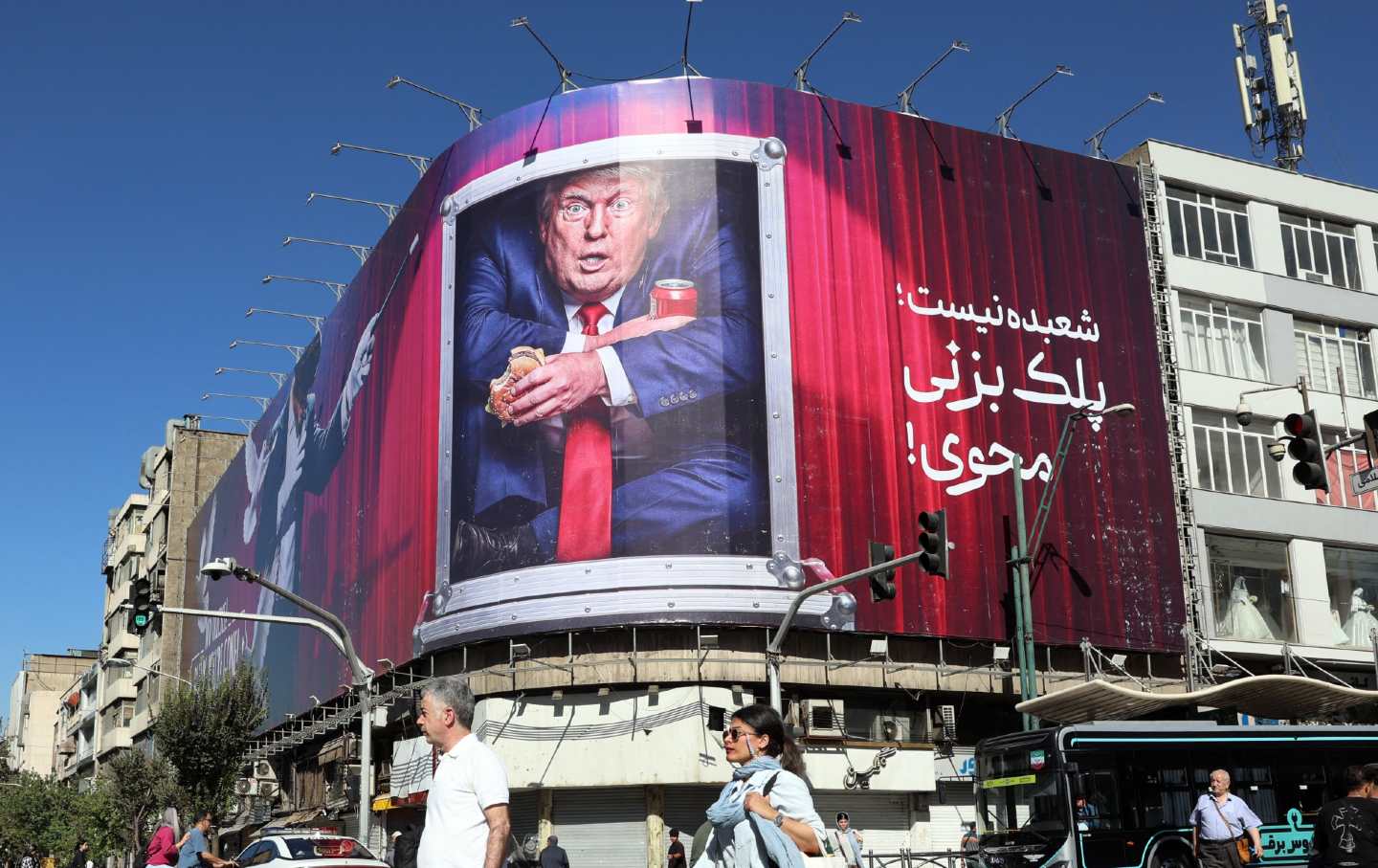
The Decades-Old Roots of Trump’s War on Iran The Decades-Old Roots of Trump’s War on Iran
An interview with historian Behrooz Ghamari-Tabrizi about the generations of US presidents who have tried to destroy the Iranian regime.

Emmanuel Macron’s Turbulent Exit Emmanuel Macron’s Turbulent Exit
Between a budget crisis and a cost-of-living squeeze, Macron is leaving a country feeling more insecure than ever—and ready to take to the streets.
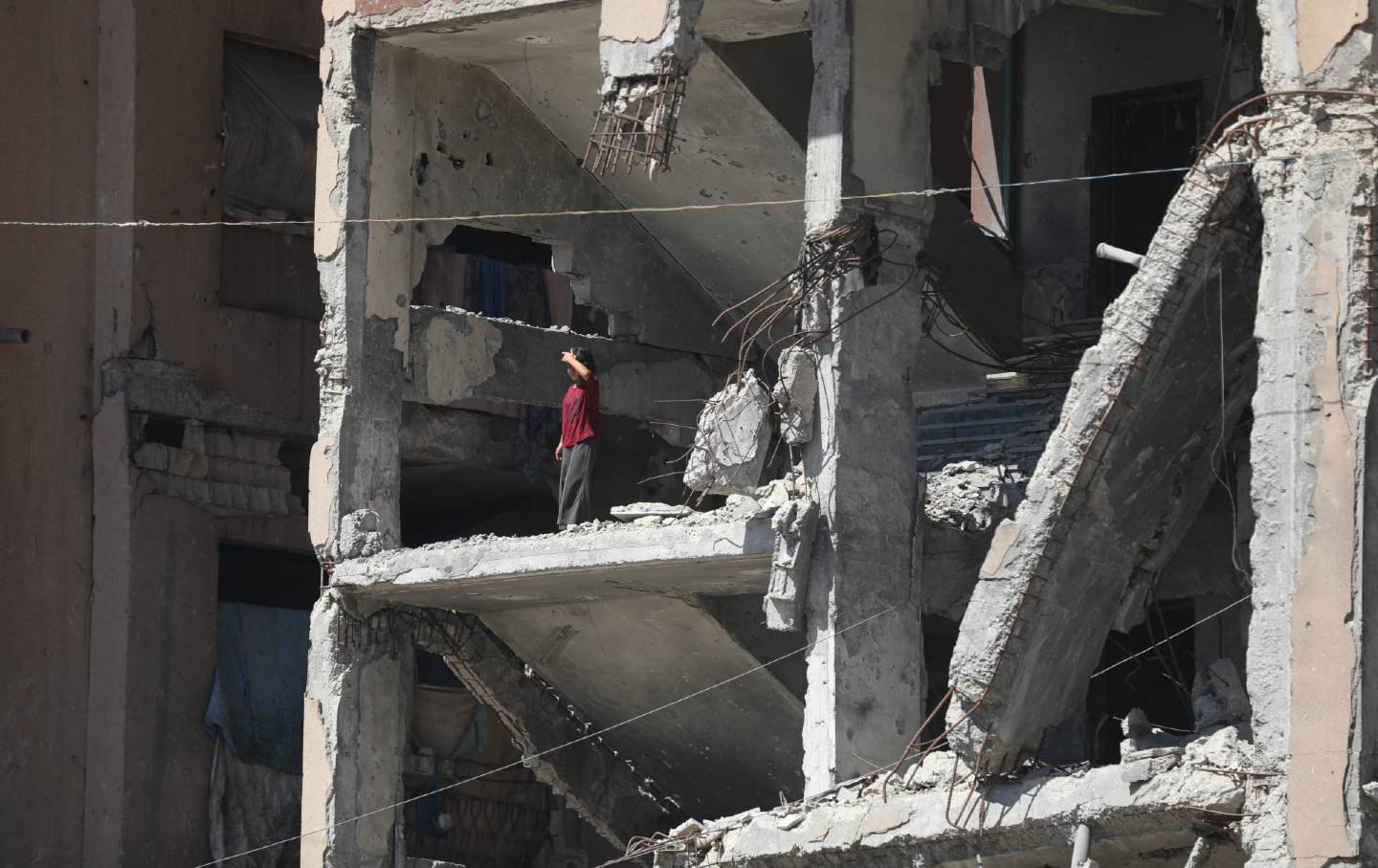
Israel’s Election Can’t Fix What Netanyahu Broke Israel’s Election Can’t Fix What Netanyahu Broke
The fundamental problem is not the name of the prime minister, but rather the actions of the Israeli government and the urgent issues that need to be addressed.

The AfD’s Rise Isn’t Just About East Germany The AfD’s Rise Isn’t Just About East Germany
The Alternative für Deutschland has a stable national poll lead, including in the former West Germany. Its rise owes to much more than Eastern grievances.
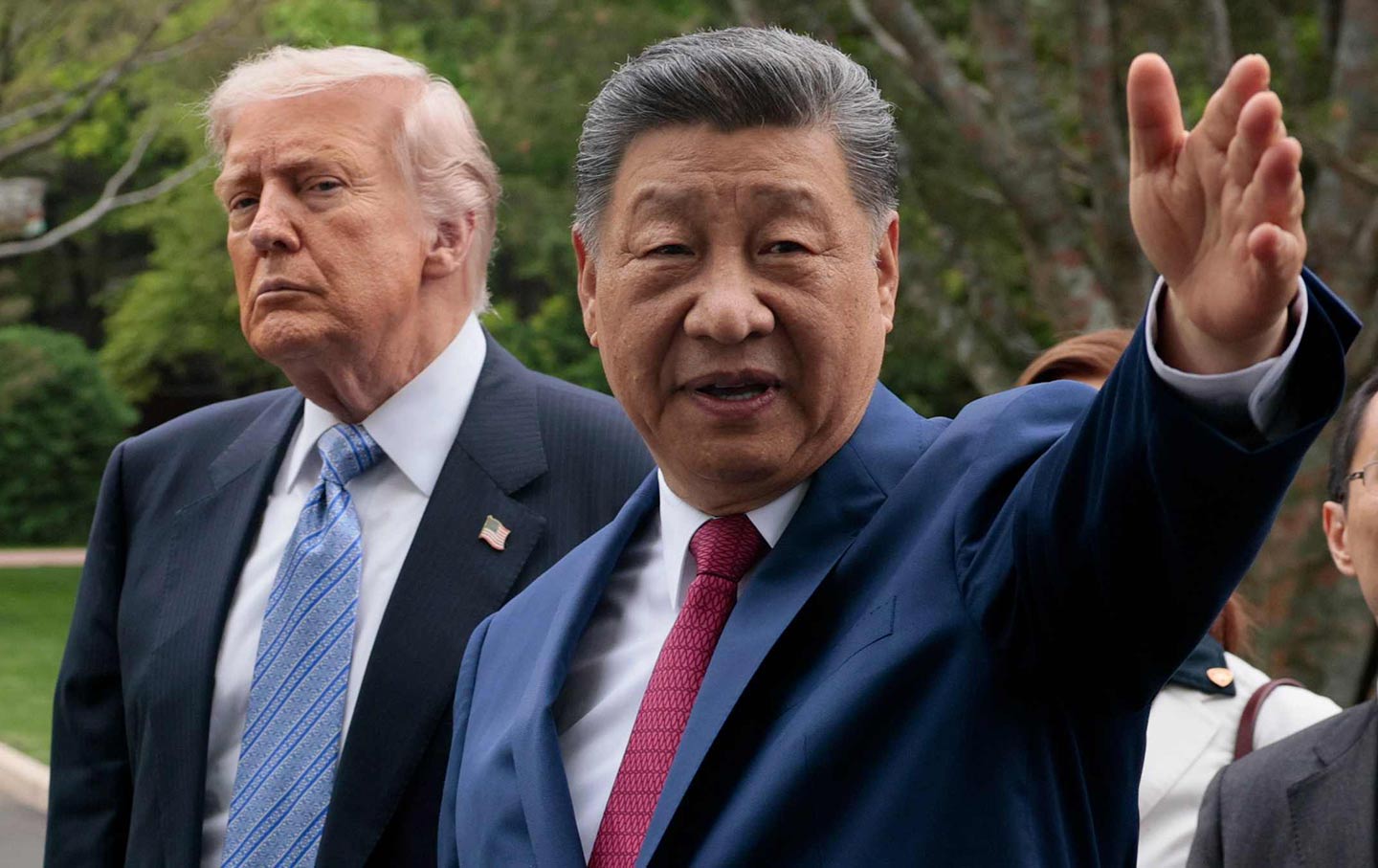
Chinese Development Is the Betrayal Washington Cannot Forgive Chinese Development Is the Betrayal Washington Cannot Forgive
The prospects for Xi Jinping’s visit are dim because American leaders are blaming China for the failures of globalization.

Pinochet: The Verdict of History in the Letelier-Moffitt Case Pinochet: The Verdict of History in the Letelier-Moffitt Case
An act of international terrorism on the streets of Washington, DC, still reverberates 50 years later.

