
Donald Trump Is the Authentic American Berserk
Far from being an alien interloper, the incoming president draws from homegrown authoritarianism.
In March 2019, Joe Biden summoned to his Wilmington, Delaware, residence his longtime confidant Ron Klain. Biden was gathering his forces for a presidential bid and wanted to hammer out the thinking behind his candidacy. At age 76, Biden was widely dismissed as a political has-been, a man whose time had come and gone. He naturally didn’t accept that view, and in fact felt energized by the outrages of Donald Trump’s presidency—particularly Trump’s open embrace of racism (as evidenced by the infamous “fine people on both sides” comment in response to a white supremacist rally at Charlottesville, Virginia) and disdain for foreign policy internationalism.
According to Bob Woodward’s new book,War, Biden told Klain, “Trump represents something fundamentally different and wrong about politics.” Biden added, “This guy just isn’t really an American president.” According to Woodward, these words “would stick forever with Klain,” summing up Biden’s last political mission: to defeat Trump in the presidential race and vanquish the existential threat of Trumpism to American democracy.
If Biden’s political mission was to defeat Trump and Trumpism, then we are forced to say that Joe Biden failed. It’s true that, by winning the 2020 election, Biden temporarily forestalled the rise of Trumpism. It should also be acknowledged that Biden (especially in the early part of his presidency, when Klain was his adviser) was an impressive domestic president, pushing through the most significant expansion of social policy since the 1960s.
But all of this was for naught in light of Trump’s victory in 2024—a return to power that was enabled by Joe Biden more than any other single person. It was Biden’s hubris that led him to run again in defiance of public polling showing that a majority of the public, including those who voted for him in 2020, thought he was too old. The contrast between the age-ravaged Biden and the still-vigorous Trump became especially glaring in the first presidential debate on June 27, which was followed by weeks of Democratic angst culminating in Biden ending his presidential run. This emotionally draining drama hobbled his successor, Kamala Harris, and also significantly tarnished Biden’s reputation.
Biden’s failure was not just personal but also political and ideological. Although he defined himself as the anti-Trump, to a significant degree Biden misunderstood what Trump and Trumpism are all about. His error can be seen in the remark that made such a lasting impression on Klain: “This guy just isn’t really an American president.”
The great error that Biden and other centrist liberals have made is seeing Trump as an alien import into an otherwise healthy America. That is underlying logic behind Hillary Clinton’s description of Trump as a “puppet” of Vladimir Putin and the absurd energy and hopes invested in the Russiagate investigation, which produced evidence of Trump obstructing justice and having sordid political associates, but did not support the lurid fantasy of the Republican president being a longtime “asset” of Russia (a possibility raised by centrist columnist Jonathan Chait, among others).
There’s a slight element of truth in the linkage of Trump to foreign sources. Since the financial meltdown of 2008, the world’s democracies have been engulfed by anti-system politics, with blustering outsiders challenging long-held consensus politics. Anti-system politics has both left- and right-wing variants. The left variant can be seen in figures like Bernie Sanders in the United States, Jeremy Corbyn of England, and Claudia Sheinbaum of Mexico. Trump has many similarities with fellow right-wing anti-system politicians such as Victor Orbán of Hungary, Javier Milei of Argentina, Jair Bolsonaro of Brazil, and Marine Le Pen of France.
But the parallels are a matter of these politicians’ responding to the same political moment and the transmission of ideas across borders. This is very different matter than being a puppet or asset of a foreign power.
Trump is right-wing anti-system politics with an American face. My Nation colleague Elie Mystal recently wrote with his characteristic eloquence about Trump’s essential Americanness:
We are not “better” than Trump. If anything, thinking that we are better than Trump, thinking there is some “silent majority” who opposes the unserious grotesqueries of the man, is the core conceit that has led the Democratic Party to such total ruin. America willed Trump into existence. He was created from our greed, our insecurities, and our selfishness. We have summoned him from the depths of our own bile and neediness, and he has answered.
Democrats will never be able to defeat Trumpism unless they realize that Biden is wrong and Mystal is right. Trump is as American as baseball and apple pie, although far less wholesome than either. He’s the dark side of American individualism and lawlessness, a manifestation of what Philip Roth once called (in his 1997 novel American Pastoral) “the indigenous American berserk.”
To understand Trump, one must look to the long and hidden history of right-wing anti-system politics in America, which is now being uncovered by historians such as John Ganz, David Austin Walsh, Nancy MacLean, and Nicole Hemmer. What these writers have shown is that, while right-wing anti-system politics only achieved national power with Trump, it’s long been percolating at the corners of public life, often influencing mainstream conservatives.
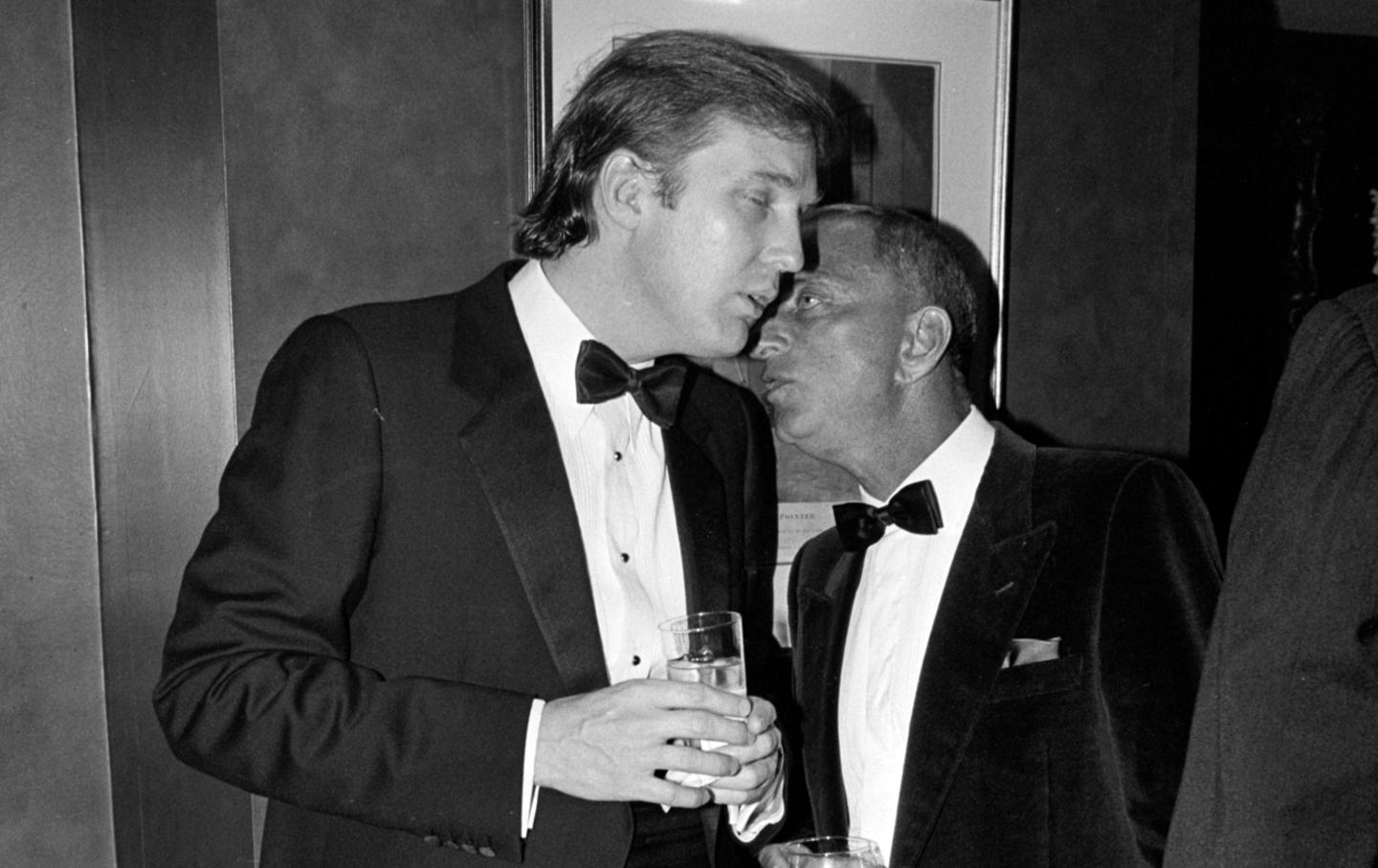
The tradition that created Trump goes back to the racist reaction to Reconstruction, to the Ku Klux Klan in its many manifestations, to the demagoguery of Huey Long and Joseph McCarthy. Trump himself was inducted into this dark tradition by his mentor Roy Cohn, McCarthy’s acolyte.
As Trump returns to power, we can no longer afford the illusions of Joe Biden, who pursued a politics of ancien régime restoration that was doomed to fail. As a lifelong centrist, Biden could never come to terms with the genuine power of right-wing anti-system politics. He thought it was fringe and anti-American, though it has been a deep-running tendency festering throughout modern American history. To fight right-wing anti-system politics, centrist illusions about the essential innocence of American history will have to be abandoned.
Biden staked his political fate on his faulty understanding of Trump. Seeing Trump as alien to America, Biden had no understanding of the homegrown appeal of Trump’s message. Nor could Biden comprehend the fact that in a period of anti-system sentiment it was counterproductive to appeal to traditions of bipartisan comity as bulwarks against this allegedly alien threat. Biden’s frequent evocation of bipartisan blather (which came to fruition with Kamala Harris’s embrace of Liz Cheney) only reinforced Trump’s claim to be an outsider fighting against a corrupt bipartisan elite.
Popular
“swipe left below to view more authors”Swipe →The overwhelming majority of Americans, hovering between 65 and 70 percent in polls, are unhappy with the direction the country is going in. Given this reality, the only path Democrats had toward victory was to adopt left-wing anti-system politics. Unfortunately, Democrats followed Biden’s preference and cast themselves as a pro-system party. This strategy failed—spectacularly. In the wake of that failure, we now have to turn to the political traditions on the left that never had any illusions about right-wing anti-system politics—or about American innocence.
Correction: A previous version of this article misstated the country Javier Milei is from.
More from The Nation

The White Man Can Always Take What You Have The White Man Can Always Take What You Have
In this week's Elie v. US, our justice correspondent breaks down the real message of the attacks on Ilhan Omar. Plus: the anti-trans case that will come for us all.
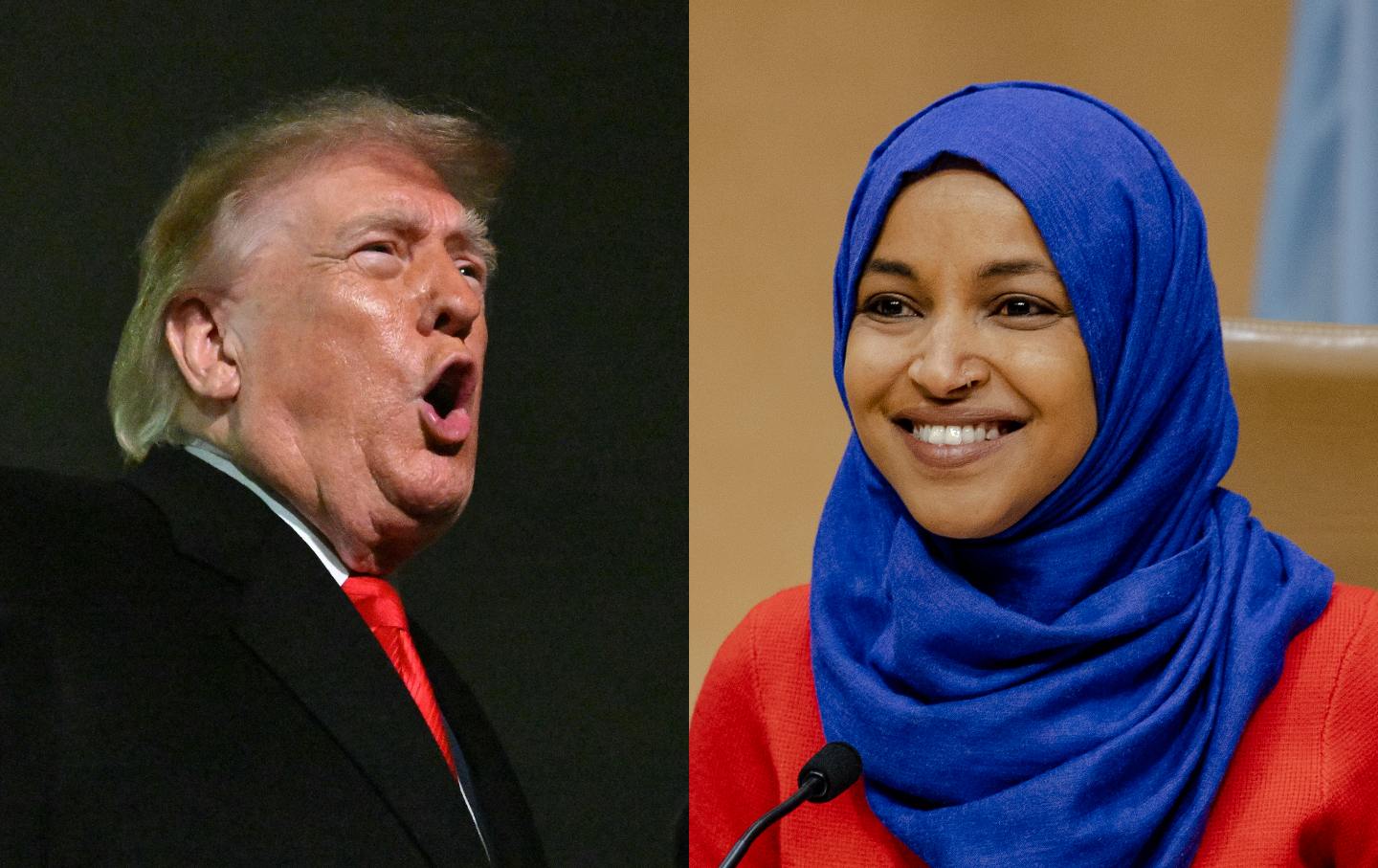
Where Is the Outrage Over Trump’s Racist Targeting of Ilhan Omar? Where Is the Outrage Over Trump’s Racist Targeting of Ilhan Omar?
The establishment press and some Democrats are strangely mute over the president’s flagrant abuse of the legal system.
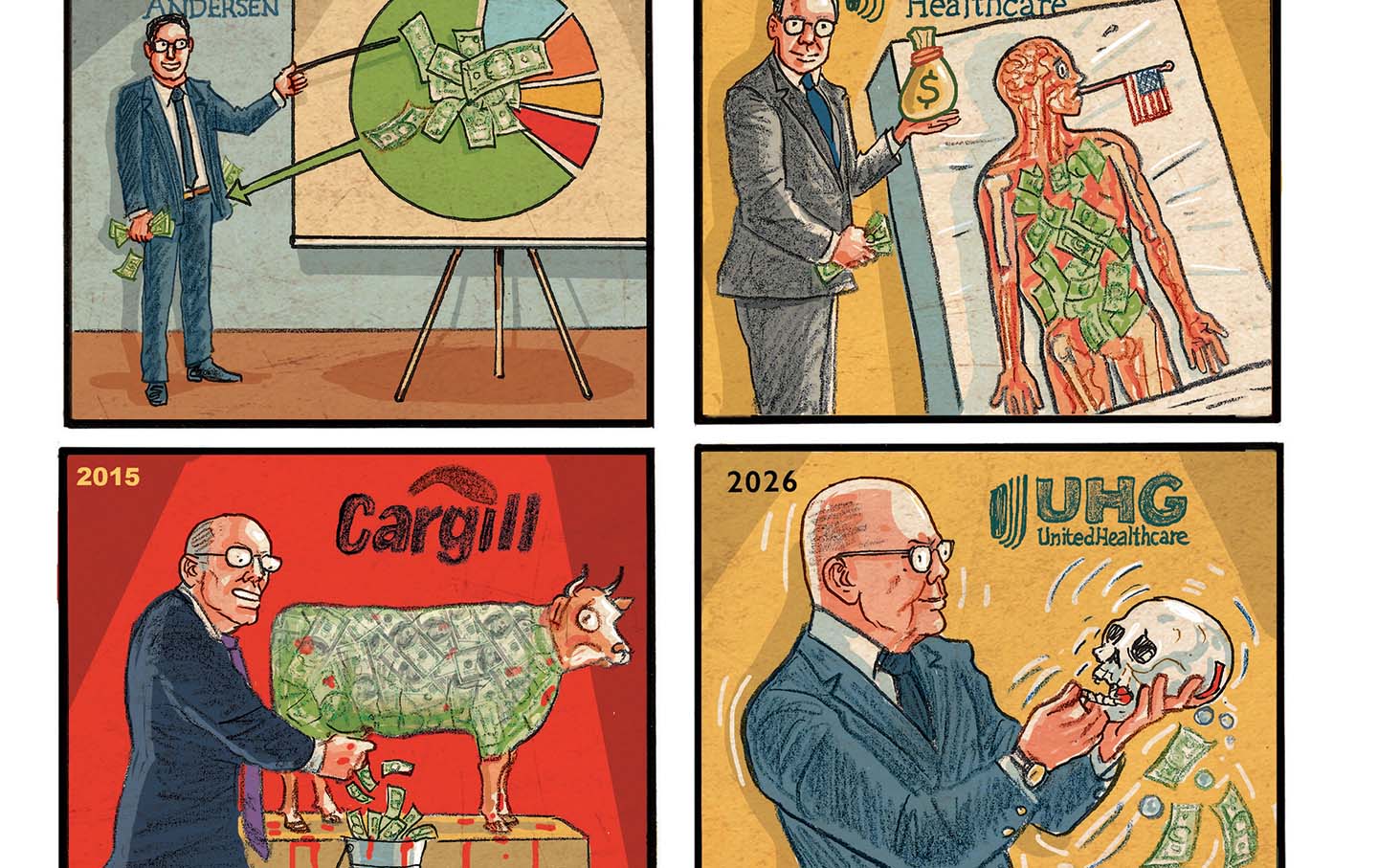
America’s UN-Healthcare Treatment America’s UN-Healthcare Treatment
The UnitedHealth group CEO’s savings plan.

Gina Hinojosa Is Showing Democrats How to Run Against Republican Grifters Gina Hinojosa Is Showing Democrats How to Run Against Republican Grifters
The Democratic gubernatorial candidate has closed the gap in Texas by focusing relentlessly on Greg Abbott’s corruption.

