
What’s Next for the Rural Americans Who Oppose Trump?
In rural communities, 70 percent of elections are uncontested. With Trump winning a second term, it’s never been more urgent to build power at the local and state level.
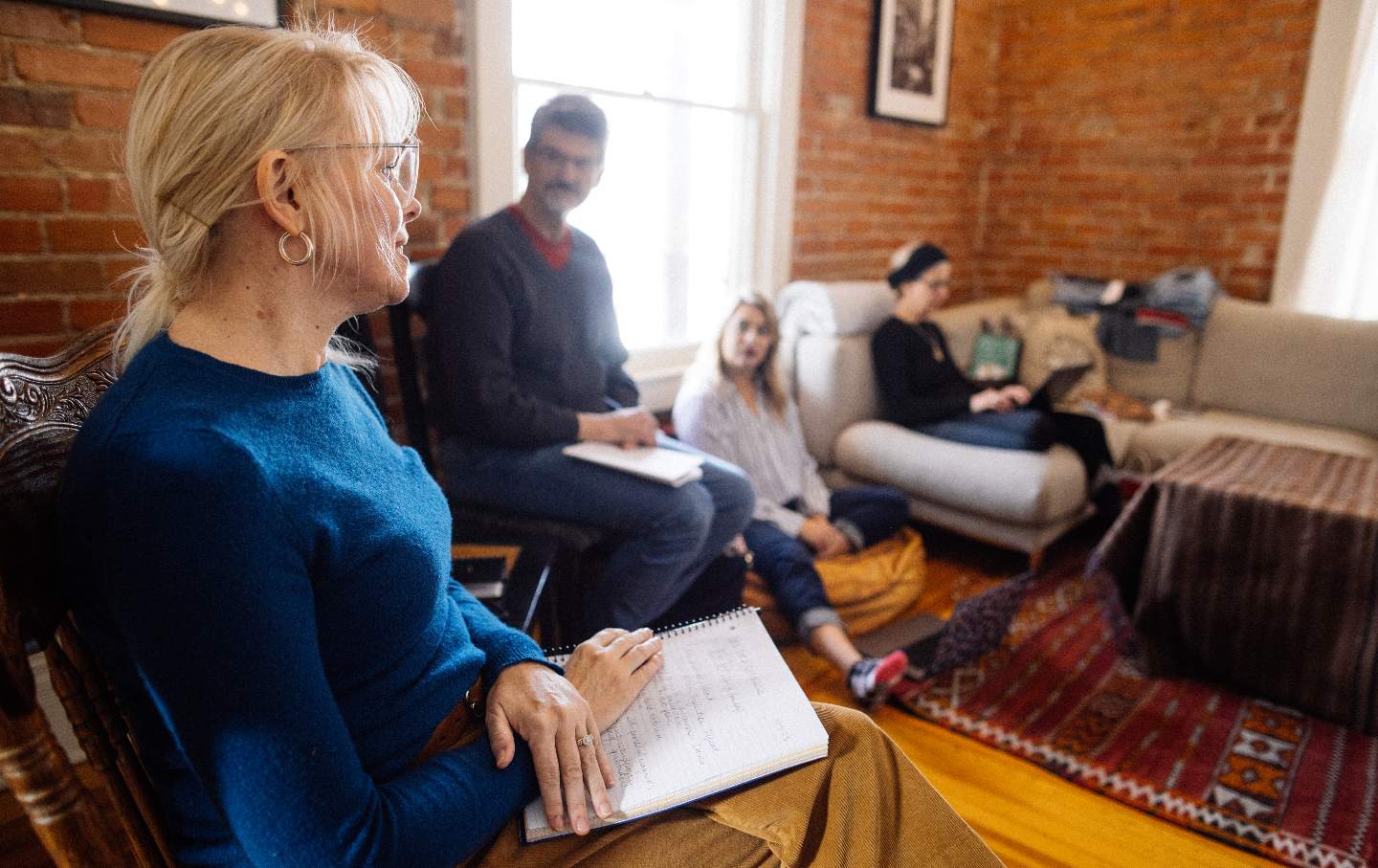
Millions of us woke up on November 6 with more fear, anger, and sadness. We woke up with resilience and determination. We woke up with questions. How could this happen? Could I have done more? And for many Americans who live in rural areas that have driven this country’s swing towards extremist candidates like Donald Trump, these questions go even further. What is happening in my hometown? What can we do? What’s next?
To every rural American adult, one answer is simple: run for office.
In 2018 and 2020, we teamed up in two rural conservative state legislative districts in Maine. With Chloe as the candidate and Canyon as the campaign manager, we reached beyond the choir, talking to folks who had been left behind by the political establishment and built a movement that transcended divisive partisan politics. We won—both times. First, shifting the vote margin by 22 percent to win a very conservative House district, then defeating the incumbent Senate minority leader to flip a rural state senate seat that has remained progressive ever since.
No matter what community you live in, rural organizing is tough work. But with Trump winning a second term, it’s never been more urgent to build power at the local and state level. Our future depends on it. Our neighbors and our families depend on it. And when we organize strategically, we can activate our communities, shift the margins, and even win in places that the establishment has written off. That’s why we started Dirtroad Organizing in 2022 to train and support rural leaders across the country.
This cycle, most of our alumni ran for office and either won or outperformed their predecessors in an election that saw most rural districts move even further to the right. Their organizing bucked the trend and shifted the margins in rural districts in Idaho, Montana, Colorado, Wisconsin, Iowa, Oklahoma, Missouri, Ohio, New Hampshire, Vermont, and West Virginia.
In Wisconsin, Sarah Keyeski, a licensed professional counselor, won a state senate seat campaigning on public education, reproductive freedom, mental health, and affordable childcare. In Montana, Melody Cunningham won a seat in the state legislature after spending more than a year going door to door listening to people’s concerns and emphasizing her background advocating for “the voices of those who are often not heard,” focusing on healthcare, public education, and affordable housing. In northern Vermont, Leanne Harple won a House race by just 120 votes. Leanne, a public school teacher, centered the stabilization and support of rural schools, affordable housing and childcare, the environment, and access to healthcare.
These candidates made headway by organizing with everyone, not just the people who thought like them. They did this not by spending thousands of dollars on television ads, but by knocking on thousands of doors to connect with their neighbors and listen to their concerns.
Now, as we face another four years of Donald Trump, we know that the resistance must be strong in rural communities to hold ground and build back power. Dirtroad Organizing is looking for the next generation of brave, bold rural leaders to organize and run. People who are already serving in their communities, and are more concerned with improving the lives of ordinary people than impressing the powerful.
If you can, run. If you can’t run, ask a friend to run. Tell them how you will help them, and let them know that there’s a national movement ready to train and support them every step of the way. Believe it or not, you can win.
We’ve also seen dozens of candidates win another way—even when they didn’t get more votes than their opponents. Candidates who use their races to build a volunteer base, register hundreds of new young voters, or increase awareness of local resources have a big impact and shift margins long past Election Day. In northern Montana, David Arends, a physician’s assistant, lost to a longtime incumbent but outperformed the predicted vote margin by 9 percent. He ran on education, community revitalization, and bridging the political divide, promising to create nonpartisan workgroups within the district to facilitate discussion, problem-solving, and the development of ideas for potential legislation. This is what we need more than anything in rural areas: real and lasting political infrastructure that bridges partisan divides to win real victories for working people.
Rural America is filled with vibrancy, love, hope, and compassion. And yes, rural America is also where Trump’s base has gained considerable ground. In rural communities, 70 percent of elections are uncontested. Now more than ever, it’s time to organize.
Take our Defend Democracy Pledge. You’ll get connected to an incredible network of organizations that are ready to support people like you that want to run, support a friend to run, or organize in your community. We’re partnering with GALEO Impact Fund, West Virginia Can’t Wait, RuralOrganizing.Org, Contest Every Race, Forward Montana, SURJ, Change Tennessee, and others to ensure that you receive the community, support, and training that you need. Whether you want to run for office or organize, Dirtroad Organizing and our incredible state and national partners will support you. Join the movement of hardworking rural and small town Americans to invest in our communities and defend democracy.
You are not alone. We will do this together.
Popular
“swipe left below to view more authors”Swipe →More from The Nation
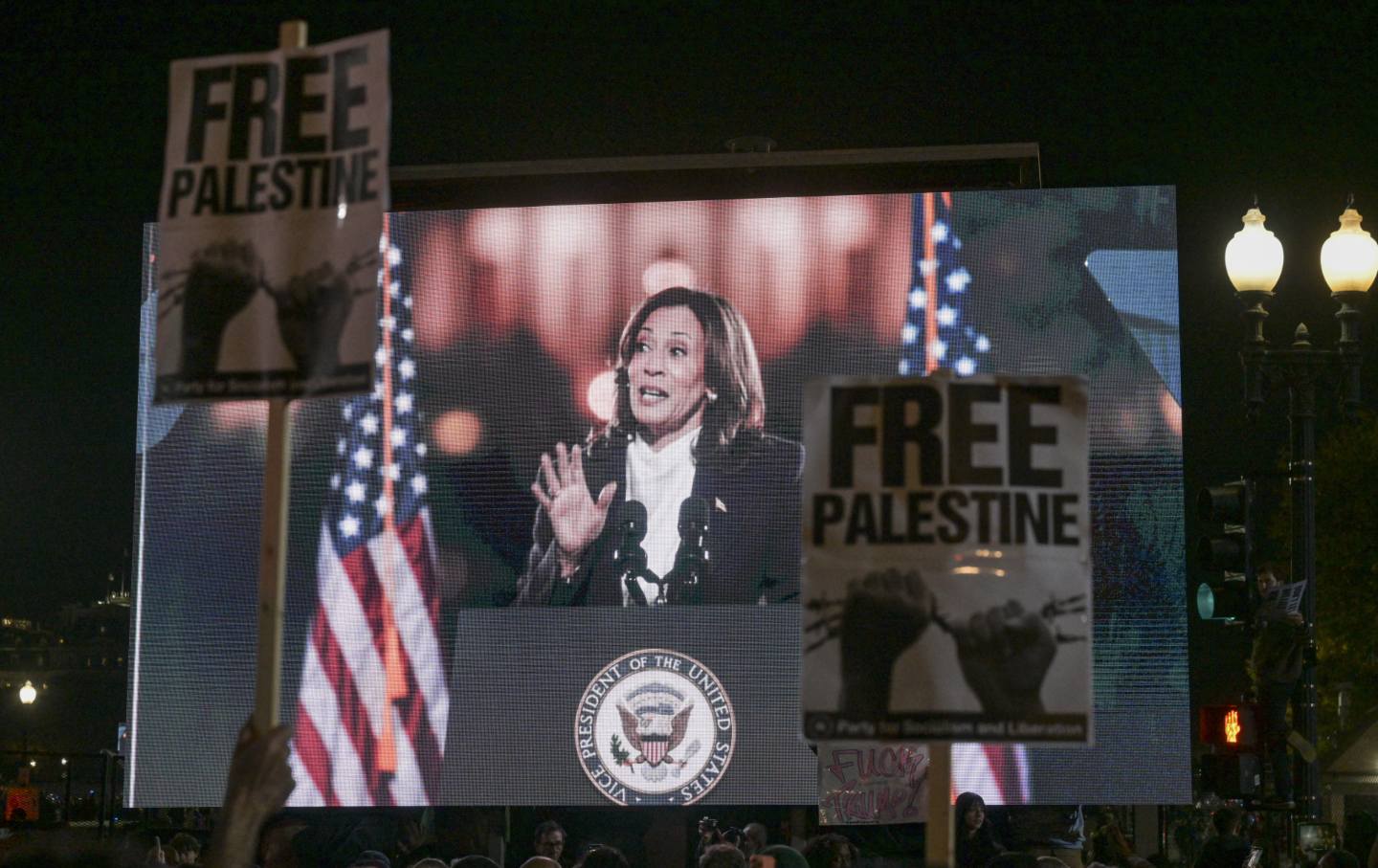
We Don’t Need an Autopsy to Tell Us the Democrats Failed on Gaza We Don’t Need an Autopsy to Tell Us the Democrats Failed on Gaza
The DNC is allegedly hiding a report showing that Kamala Harris’s Gaza policy helped cost her the 2024 election. But that report won’t tell us anything we don’t already know.
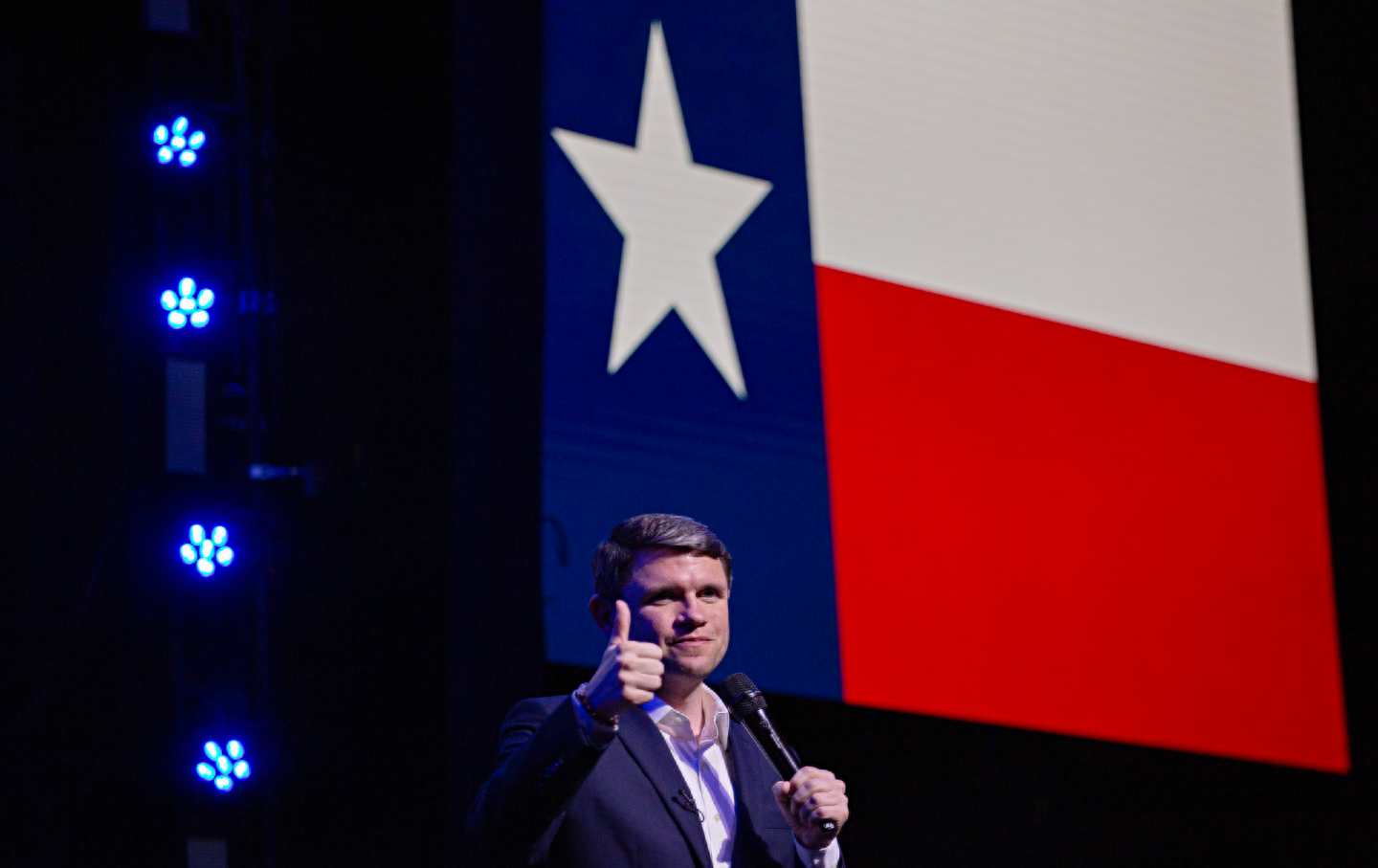
Texas’s Senate Primary Has Already Made History—and It’s Not Over Yet Texas’s Senate Primary Has Already Made History—and It’s Not Over Yet
Democratic nominee James Talarico is getting national media attention, but the real story is sky-high voter turnout, even amid GOP bids to suppress balloting
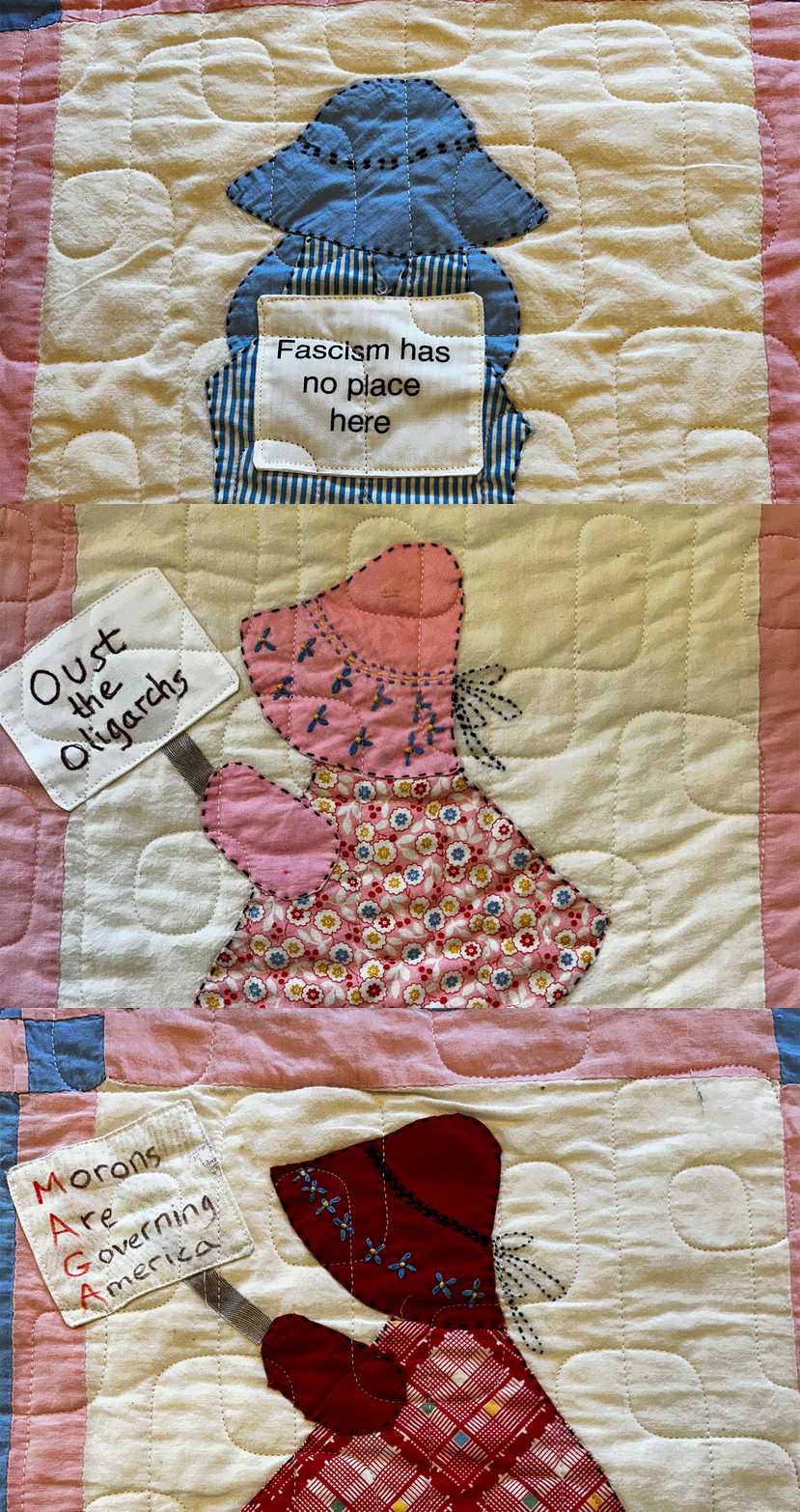
Quilted Messages Quilted Messages
Sunbonnets carrying not-so-sunny truths.
How the Theatrics of Mamdani’s Trump Meeting Backfired How the Theatrics of Mamdani’s Trump Meeting Backfired
By pandering to the president’s vanity, the New York mayor reinforced Trump’s image as a strongman commanding deference—an especially bad look on the eve of Trump’s war with Iran
Students in New York Are Going Hungry. How Can Mamdani Help? Students in New York Are Going Hungry. How Can Mamdani Help?
With plans for city-owned grocery stores and a focus on affordability, the new mayoral administration offers fresh hopes of successfully confronting the food crisis among students...
We Are the Fire That Melts the ICE We Are the Fire That Melts the ICE
Oaxaca, Mexico, street art.

