
A Socialist in the White House
Zohran Mamdani is certainly not the first democratic socialist to meet with a US president. But his visit with Donald Trump shows the renewal of a historic American movement.
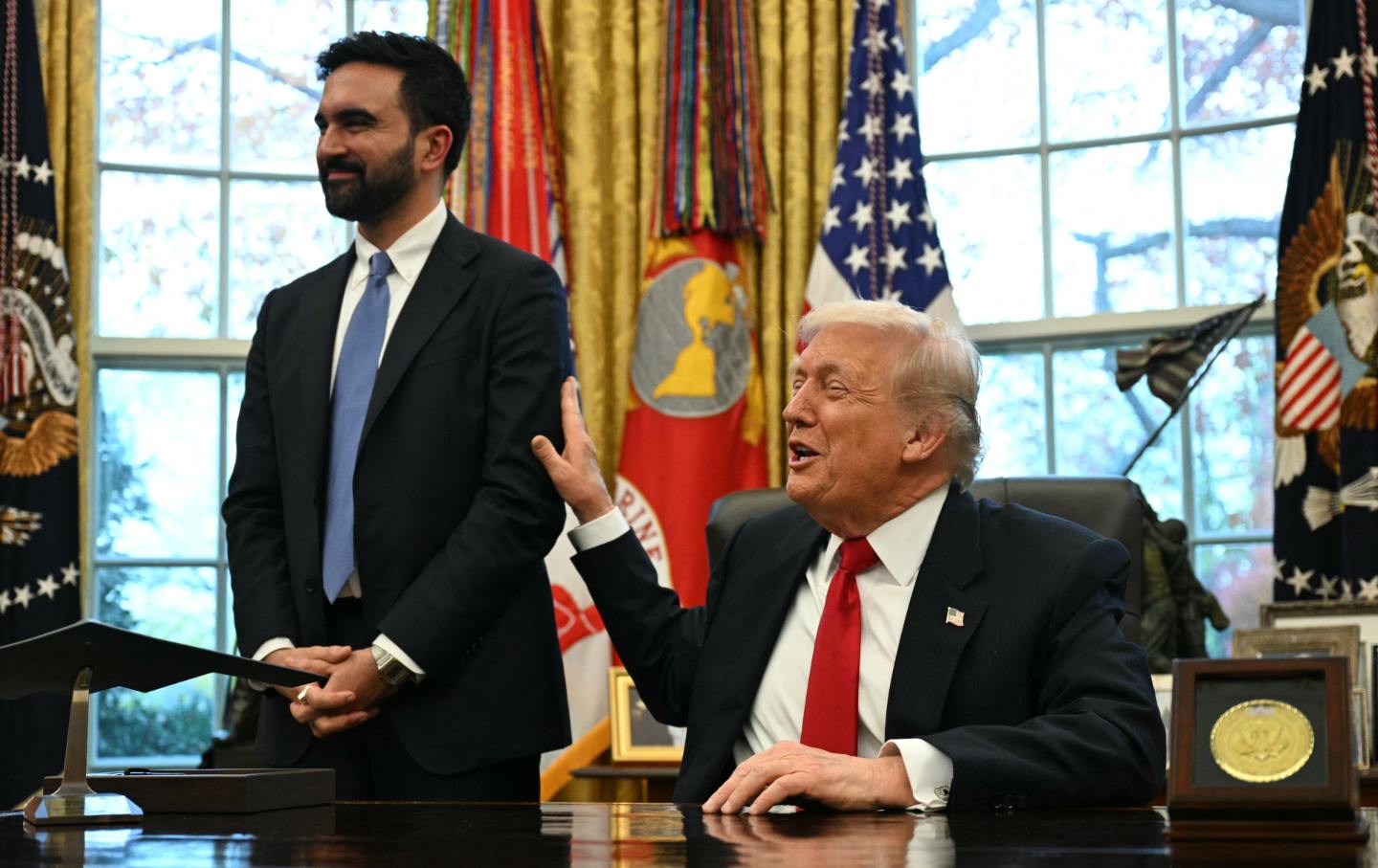
Donald Trump (R) meets with New York Mayor-elect Zohran Mamdani in the Oval Office of the White House in Washington, DC, on November 21, 2025.
(Jim Watson / AFP via Getty Images)When Zohran Mamdani met with President Trump on Friday, New York City’s mayor-elect did so as a proud democratic socialist.
And a winning one.
None of Trump’s hyperbolic commentary on the New York mayoral campaign, no absurd mischaracterization of Mamdani as a “communist,” no pressure tactic or threat regarding federal funding or ICE raids, could change the fact that the democratic socialism that Mamdani champions has gained traction with voters, in New York and nationally, who are looking anew at alternatives to status-quo politics and status-quo economics.
Trump—who, as he has often said, likes to be around winners—seemed to recognize that after the two men spoke in the Oval Office on Friday. The strikingly congenial tone of their post-meeting press conference felt like a sign that the Trumps of the world have begun to acknowledge—however grudgingly—that democratic socialism is here to stay in contemporary American politics.
Instead of the campaign-season vitriol that Trump aimed at the New York City Democrat, the president said Friday, “I feel very confident that he can do a very good job.”
Trump noted that “a lot of my voters voted for him” on November 4—an acknowledgement that New Yorkers who backed Trump in 2024 because of cost-of-living concerns went to Mamdani, who addressed those concerns with far more specificity, in 2025. And he said that he would be comfortable living in a Mamdani-run New York—a complete reversal of the apocalyptic rhetoric the president and his billionaire allies used during the campaign. He even laughed off a question about Mamdani referring to him as a “fascist,” patting the mayor-elect’s arm and cheerfully telling him he didn’t have to answer for his past statements.
When it came to ideological differences. Trump went no further on Friday than to say of Mamdani, “He’s got views that are a little out there.”
However Trump describes them, those views proved to be popular in New York City in this year’s election—just as they have proven to be popular across a country where dozens of democratic socialists now serve in the US Senate, the US House, state legislatures, and city halls nationwide.
In his epic November 4 election night victory speech, Mamdani spoke to this reality in the triumphant language of a candidate who had scored a victory not just for himself but also for his democratic socialist ideals.
“For as long as we can remember, the working people of New York have been told by the wealthy and the well-connected that power does not belong in their hands,” declared Mamdani. “Fingers bruised from lifting boxes on the warehouse floor, palms calloused from delivery by handlebars, knuckles scarred with kitchen burns—these are not hands that have been allowed to hold power. And yet, over the last 12 months, you have dared to reach for something greater. Tonight. Against all odds, we have grasped it. The future is in our hands.”
By any measure of contemporary politics, and even by the limits of Trump’s understanding of America’s electoral heritage, that was true.
But it should be noted that democratic socialism has a great history in America, one that presidents before Trump frequently acknowledged. John Fitzgerald Kennedy recognized and responded to the vital message of Michael Harrington, the veteran socialist who authored the 1962 book The Other America: Poverty in the United States. (Harrington went on to cofound Democratic Socialists of America, the group that provided vital backing to Mamdani’s mayoral bid.) Franklin Delano Roosevelt met with Socialist Party presidential candidate Norman Thomas, whose robust 1932 election showing signaled a desire on the part of many voters to move to the left in response to the Great Depression, before FDR’s 1933 inauguration. Roosevelt also worked closely with many socialists during his presidency and gave broad expression to democratic socialist idealism with his 1944 Economic Bill of Rights speech. Republican Warren Harding pardoned labor leader and former Socialist Party presidential candidate Eugene Victor Debs—who had been jailed on charges stemming from his outspoken opposition to World War I—and invited Debs for a what turned out to be a friendly White House chat on December 26, 1921. (“Good morning, Mr. President,” Debs is reported to have said, as Harding responded, “Well, I have heard so damned much about you, Mr. Debs, that I am now very glad to meet you personally.”)
Debs figured in Mamdani’s victory speech, when he quoted from the proudly radical labor leader who made socialism a household word—and became a significant force on the American electoral landscape—more than a century ago.
After results from across New York confirmed that the 34-year-old immigrant from Uganda would be the first Muslim mayor of the nation’s largest city, Mamdani declared, “The sun may have set over our city this evening, but as Eugene Debs once said, ‘I can see the dawn of a better day for humanity.’”
The crowd that had packed Brooklyn’s historic Paramount theater for the celebration erupted with loud and knowing applause at the mention of Debs, a founder of America’s electorally potent Socialist Party who led its presidential ticket five times in the first decades of the 20th century.
As democratic socialism has swelled in popularity in recent years, especially with young voters, Debs has become an iconic figure. Vermont Senator Bernie Sanders, whose 2016 and 2020 presidential bids did much to renew interest in socialism—and whom Mamdani has credited with turning him into a socialist—has educated a new generation of activists about Debs. So it was no surprise that a reference to him by the newly elected socialist mayor of New York inspired cheers.
But just as Mamdani is not the first democratic socialist to meet with a president, so he is not the first mayor of a great American city to talk up Debs. Indeed, when Debs ran what was arguably his most successful presidential campaign—a 1912 bid that won 6 percent of the national vote and actually outperformed sitting Republican President William Howard Taft in seven states—his running mate was the Socialist mayor of Milwaukee: Emil Seidel.
Seidel was one of three Socialist Party mayors who governed Milwaukee across much of the 20th century, managing municipal affairs so ably that Milwaukee was regularly ranked as one of the nation’s most fiscally responsible, humane, and healthy cities. The healthiness of Milwaukee was a major priority for the Socialists, who focused on public health initiatives, housing, and neighborhood renewal, and programs to protect the safety of workers in the city’s vast factories. In fact, the Milwaukeeans invested so heavily, and so enthusiastically, in sanitation projects that they came to be known as “sewer socialists.”
Mamdani knows this history. When Katrina vanden Heuvel and I interviewed him in July, after he’d won the Democratic mayoral nomination, the candidate spoke at length about his socialist predecessors.
“The example of sewer socialism is one that I think of often,” he said. “What we have seen in recent years is that the language that should be identified with the left has become associated with the right: language of efficiency, of [fighting] waste, of quality of life. To fight for working people must also mean to fight for their quality of life. Sewer socialism, to me, represents a belief that the worth of an ideology can only be judged by its delivery. That means improving the services and social goods that working people experience each and every day: the sewers, the clean drinking water, the parks. You win someone’s trust through an outcome, and that is what I am working backward from: an outcome of an affordable city and a desire to show that government can, in fact, live up to its responsibilities to working residents.”
Popular
“swipe left below to view more authors”Swipe →Mamdani’s quoting of Debs and referencing of the sewer socialists offers a reminder that the United States has a rich history of visionary, humane, and highly successful socialist governance—in Milwaukee and dozens of other cities. And that it can have a vibrant future in Mamdani’s New York.
Donald Trump tried to avert that future before the November 4 election. But he failed. And, now, it is the emerging reality of a nation that has a long history of electing socialists and—as the recent victories of Mamdani, Seattle Mayor Katie Wilson, and so many other democratic socialists indicate—is prepared to keep doing so.
More from The Nation
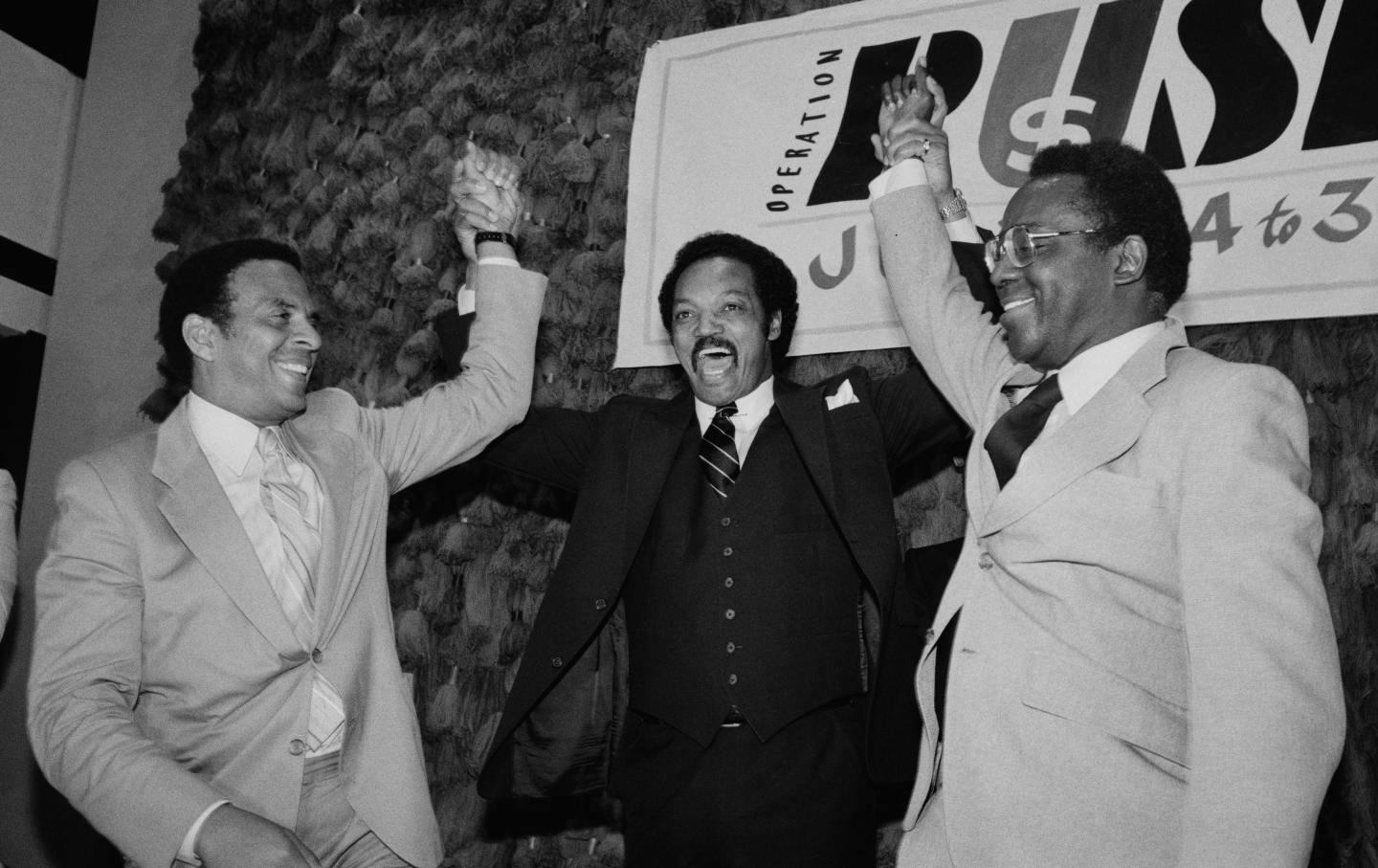
Jesse Jackson Reshaped the Democratic Party Jesse Jackson Reshaped the Democratic Party
The candidate may have started as a long-shot contender, but The Nation always took him—and his impact on political history—seriously.
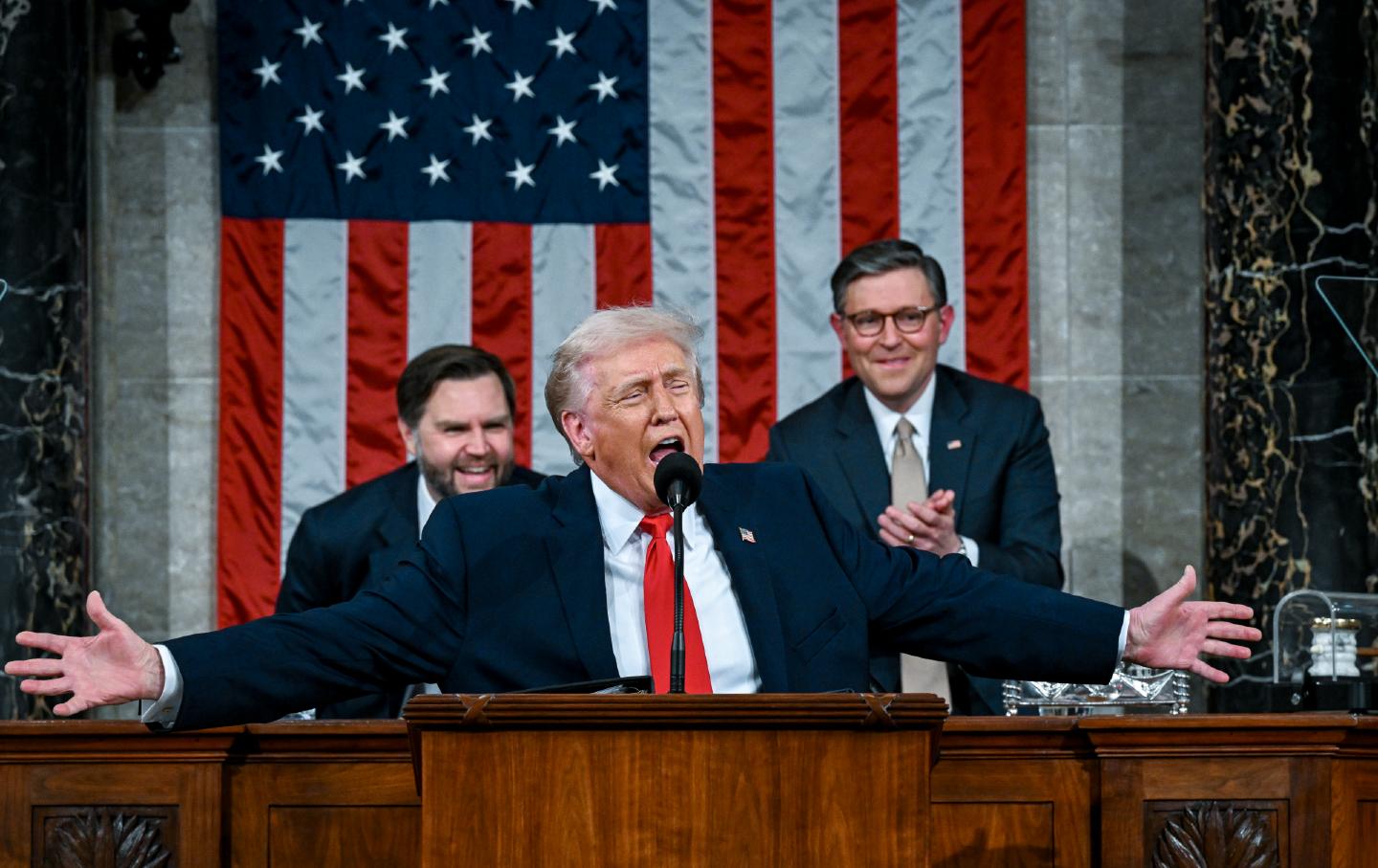
The State of the Game Show The State of the Game Show
In this week’s Elie v. US, our justice correspondent explores how Trump’s State of the Union turned authoritarian violence into a titillating event. Plus Kansas’s vile ban on driv...


Cuba’s Oil Crisis Cuba’s Oil Crisis
Much of Cuba goes dark as a US oil blockade chokes the island’s energy supply. Major carriers have halted services now that aviation fuel is no longer available at nine internation...
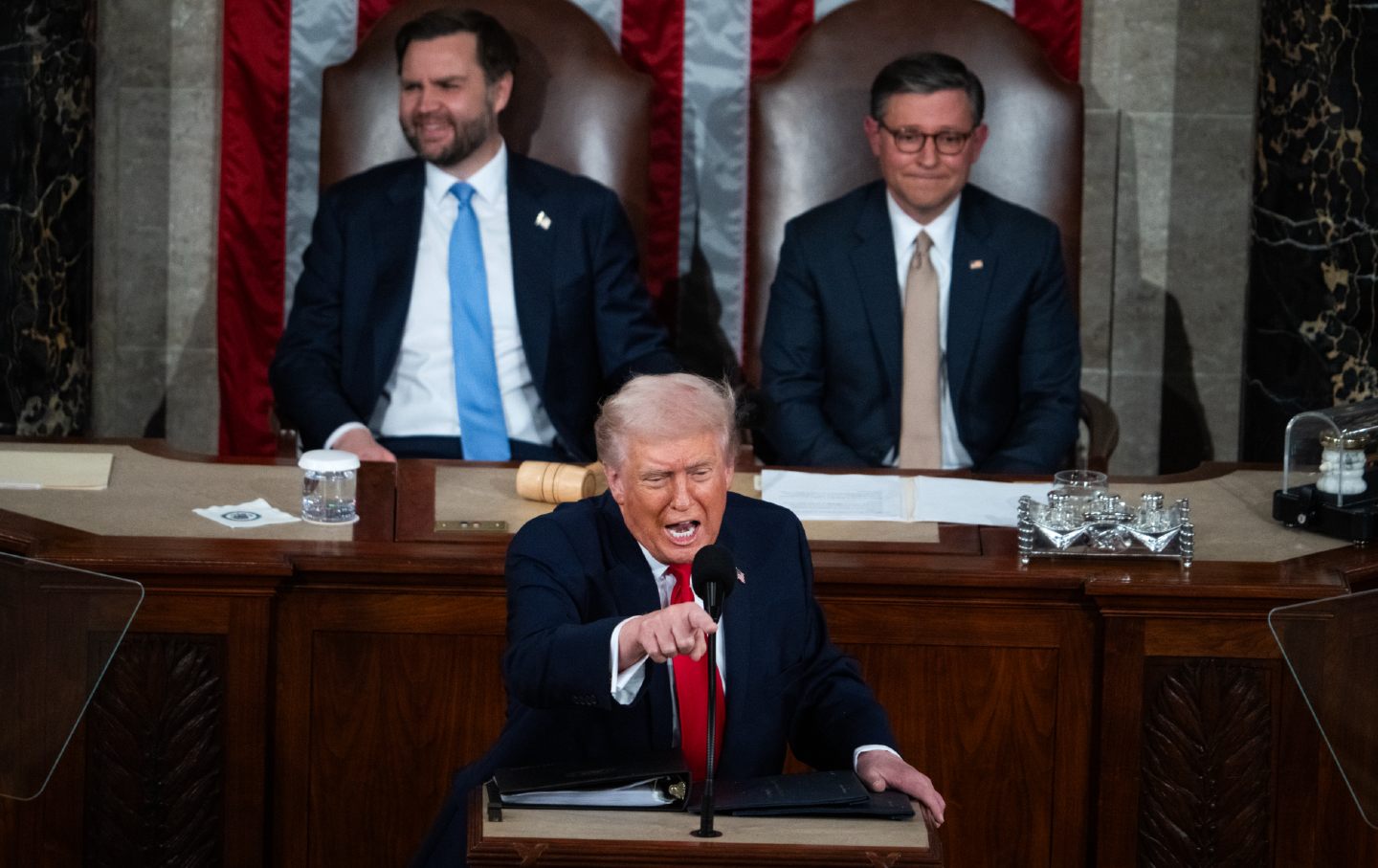
For 108 Minutes, Trump Gave a Tedious Mussolini Impersonation For 108 Minutes, Trump Gave a Tedious Mussolini Impersonation
It was most mendacious State of the Union in US history. It was also the longest.
Clarence Thomas Just Struck Another Blow to Black Power Clarence Thomas Just Struck Another Blow to Black Power
In his majority ruling in a sleeper case about mail delivery, Thomas opened the door to a new way for Republicans to suppress the Black vote.

