News Avoidance and the Climate Majority
The next phase of Covering Climate Now’s 89 Percent Project puts faces to the numbers.
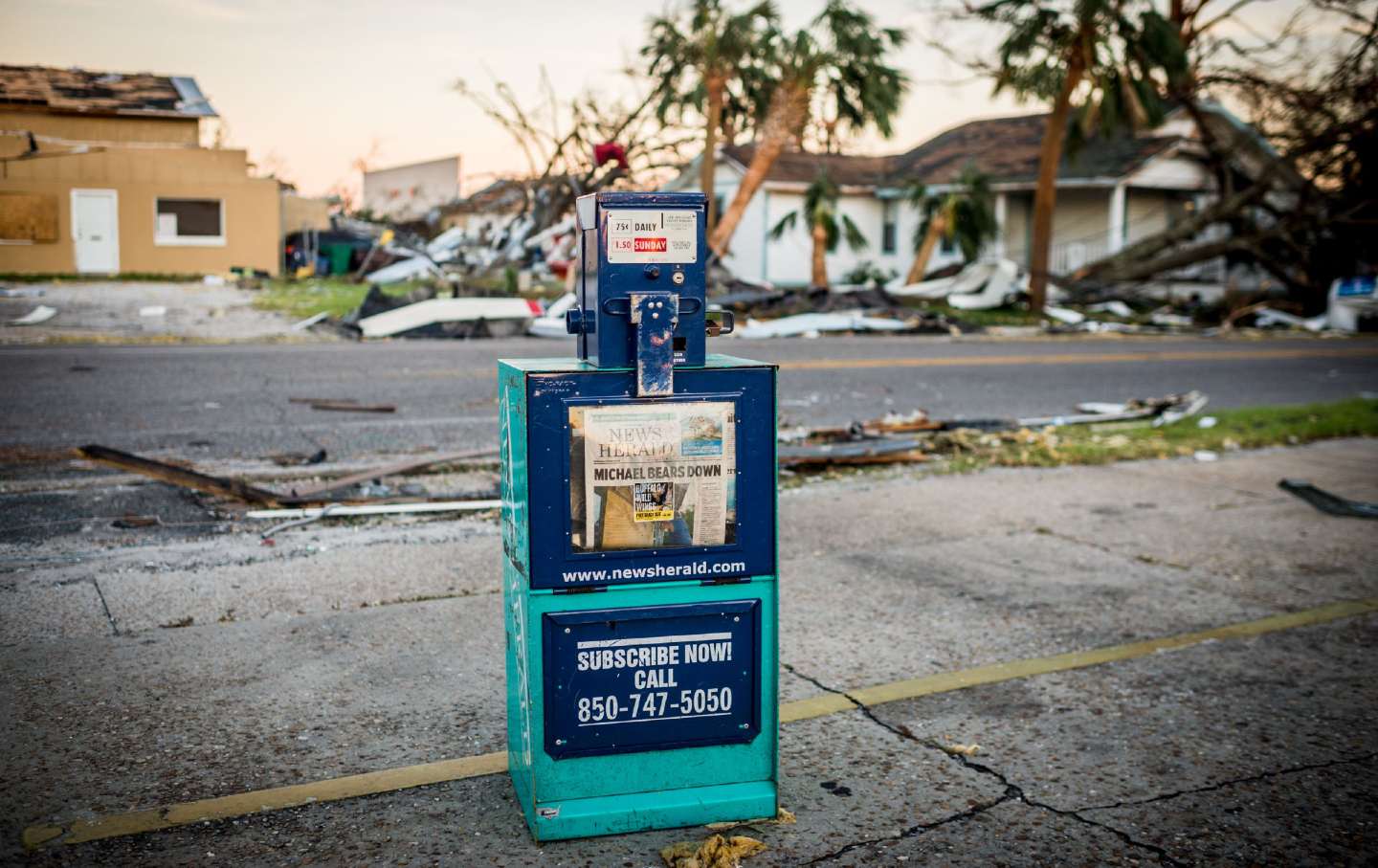
A newspaper box with a paper that reads “Michael Bears Down” in the aftermath of Hurricane Michael in Millville, Florida, on October 11, 2018.
(Emily Kask / AFP via Getty Images)Jon Batiste sympathizes with the growing number of people avoiding the news these days, but the global music star has an antidote: Talk about climate solutions and “bring people together. People power is the way that you can change things in the world.”
Forty percent of the world’s people practice “news avoidance,” according to the Reuters Institute for the Study of Journalism’s “Digital News Report 2025.” Traditional news coverage’s focus on conflict and suffering, along with its portrayal of politicians as the sole arbiters of events, leaves people feeling depressed and powerless, survey respondents said, causing many to tune out.
During the newsmaker interview Covering Climate Now organized last week for the next phase of The 89 Percent Project, Batiste was asked if his new song about climate change, “Petrichor,” can make a social impact, given that many people now shun news about topics as weighty as climate change. “I don’t want to hear about the problem if you don’t have an answer,” Batiste said, adding that his song “is not just saying [climate change] is a problem. It’s also saying we can solve it.”
The same spirit animates The 89 Percent Project. Launched in April, the project’s initial reporting highlighted the fact that 80 to 89 percent of the world’s people want their governments to take stronger climate action. However, most of those people don’t realize that they are the overwhelming majority—and therefore they don’t act, vote, or speak out, like it.
The next phase of The 89 Percent Project explores the people behind the numbers: Who are they? Where do they live, what do they do with their lives, are they surprised they’re the majority, and what kinds of climate policies do they wish to see implemented?
Some Covering Climate Now partners have already begun this reporting. The Guardian posted a story soliciting readers’ written responses to such questions (anonymously if so desired). In Brazil, Agência Pública conducted person-on-the-street interviews], gauging support for climate action. And Japan’s The Asahi Shimbun took a hybrid approach, studying the findings of public opinion polls and then checking them against the paper’s own interviews.
The goal of this phase of The 89 Percent Project is to present a vivid, factually grounded portrait of the global climate majority in all its diversity and potential. With news avoidance at an all-time high, this kind of reporting—featuring the names, faces, and sentiments of the overwhelming majority of the public—makes good commercial as well as journalistic sense.
Become a Sustaining Donor This September
Between the reemergence of right-wing red-baiting and Donald Trump’s use of the chilling National Security Presidential Memorandum–7 to criminalize left political organizing, we’re seeing McCarthyism reborn before our eyes.
This assault on democracy cannot be ignored or wished away. Resisting it requires bravery in the face of threats and repression, a steadfast commitment to the truth, and the unwavering belief that we can—and will—overcome this darkness.
We must have an independent media that sets the record straight, unearths corruption and abuses of power, and advances a politics of justice and dignity for all if we’re to win this fight.
That’s why I’m writing to you today. This September, The Nation needs to add 100 monthly donors to sustain our progressive journalism. Your contribution makes the next investigative report, the next truth-speaking column, and the next pathbreaking essay all possible.
I hope you’ll support our work with a recurring donation today. If you donate $10 or more a month, we’ll send you a brand new “Hands Off the Free Press!” sticker to recognise your commitment to our cause. Please, donate today.
Onward,
Katrina vanden Heuvel
Editor and Publisher, The Nation