
Thomas Mann’s Pessimistic Humanism
What can we still learn from the The Magic Mountain?
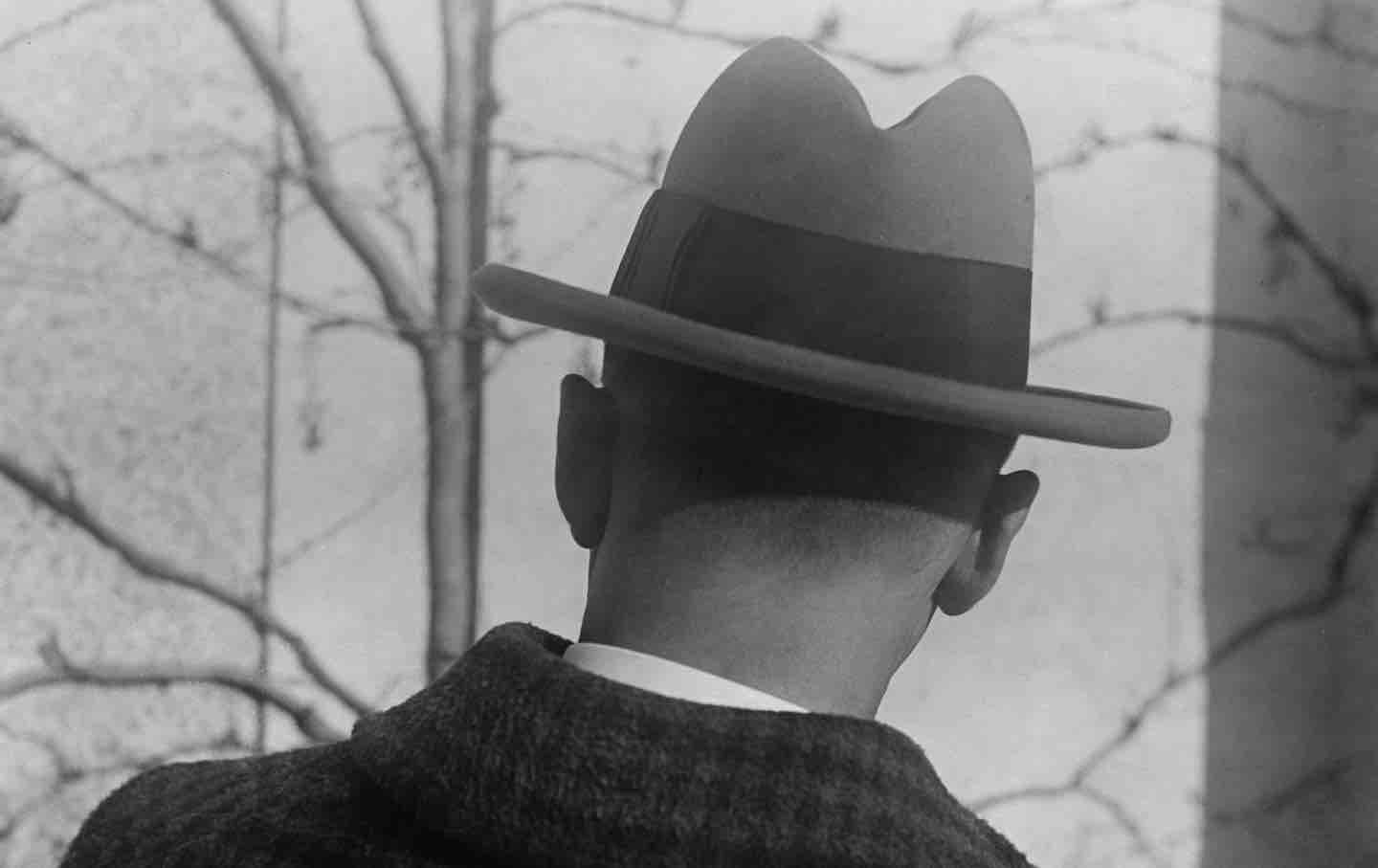
Thomas Mann, from behind, 1930.
(Eduard Wasow / ullstein bild via Getty Images)
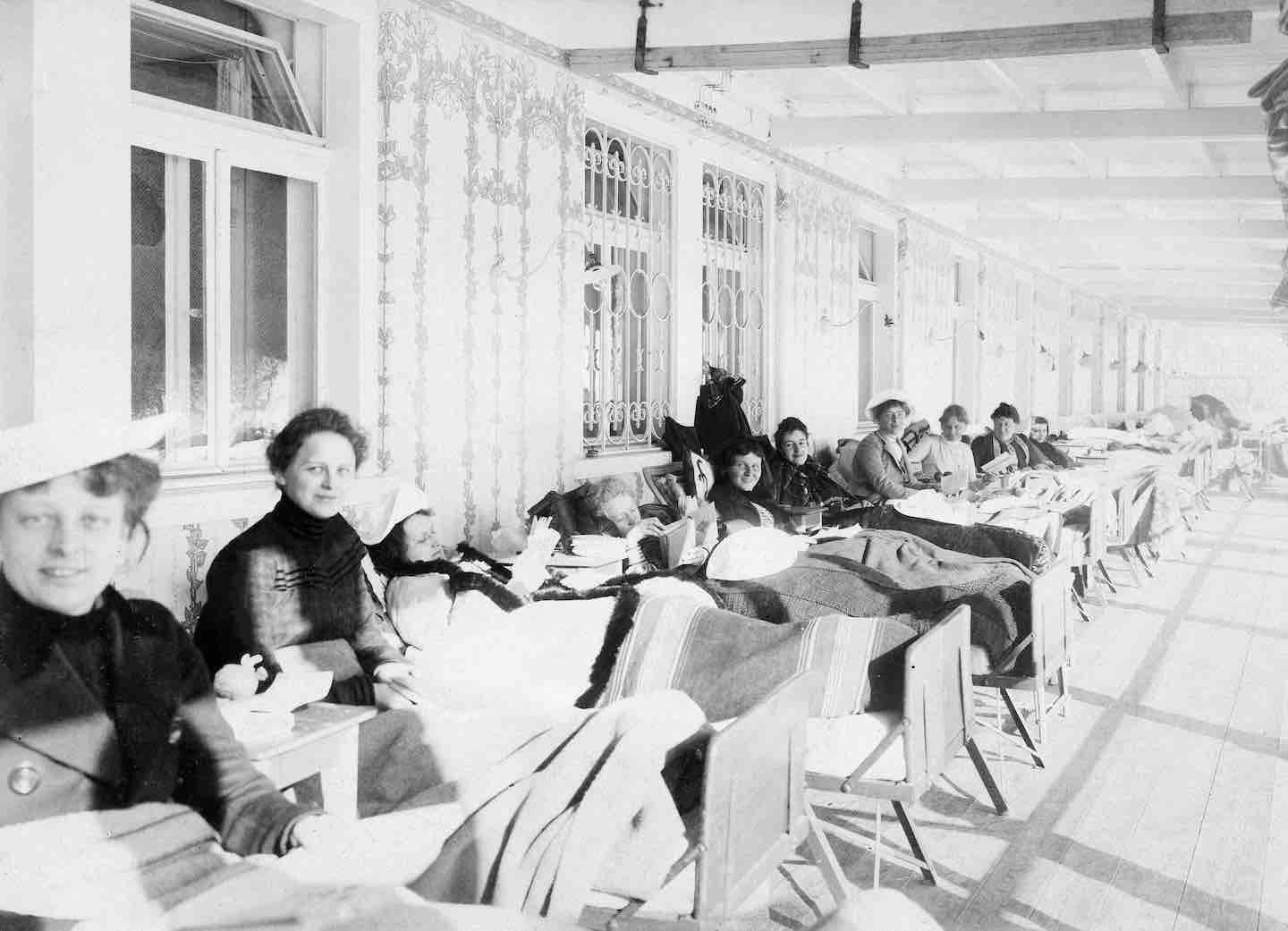
Hans Castorp, the protagonist of Thomas Mann’s The Magic Mountain, famously spends seven years at a tuberculosis sanatorium in Davos, Switzerland, instead of the three weeks originally planned. First published in 1924, The Magic Mountain quickly became a bestseller and is arguably the most influential German-language novel of the 20th century. On its face a sort of bildungsroman concerned above all with its young protagonist’s initiation into the life of the mind, the book presents an intricate account of the debates around culture, civilization, religion, morality, and humanism being hashed out in the years leading up to World War I. At the same time, it is also a playfully satirical story about what happens when an international cast of characters is confined for many months in the close quarters of a sanatorium high in the Alps, cut off from “flatlands” life by both geographical and spiritual/existential divides.
Books in review
The Master of Contradictions: Thomas Mann and the Making of The Magic Mountain
Buy this bookMann started writing the novel soon after visiting his wife, Katia Mann, in Davos, where she was recuperating from a lung ailment. He was immediately struck by the potential of this setting for a novella he wanted to write as a companion piece to Death in Venice. Where that book, despite its short length, was heavy and lugubrious, dripping with heat and doomed longing, this one was to be a light satire mining the comic potential of Davos doctors convincing the healthy that they were ill. When Castorp arrives in Davos to visit his sick cousin, a doctor promptly informs him that he looks more than a little anemic, and he soon finds it hard to leave. Much as Castorp’s stay keeps extending, Mann himself found that his story was expanding far beyond the framework he’d originally had in mind.
Because I’m working on a new translation of The Magic Mountain, a number of friends and acquaintances have let me know that it’s their favorite novel. The book has wide-ranging appeal—it is very funny and broad in scope, filled with entertaining plot twists, period science, intricate philosophical debates, romantic obsession, and page after page of incredibly well-crafted descriptions of everything from the Alps to complex psychological states. And at its center is a heady idea that the book’s callow protagonist and jaded narrator spend hundreds of pages pursuing without arriving at any definitive answer: the meaning of time. The novel has charmed generations of English-language readers, in part thanks to excellent translations by Helen Tracy Lowe-Porter (1927) and John E. Woods (1995).
While it is certainly possible to read and enjoy The Magic Mountain without footnotes or a detailed knowledge of its context, a fuller appreciation is available to those in a position to dig deeper into its panoply of often quite specific historical and philosophical references. These can occasionally bewilder readers not well-versed in the cultural and political context of Germany in the first decades of the 20th century. While there are any number of outstanding academic studies of the novel, a straightforward primer for everyone outside the halls of academe has been lacking.
Morten Høi Jensen’s The Master of Contradictions—packed with facts and engagingly written—is exactly the introduction the Anglophone lover of Mann’s novel needs. It isn’t quite a biography, a work of history, or an essay on Mann’s novel—but it provides enough of each of these things to situate readers of The Magic Mountain quite squarely in the contexts in which the book was written and set. Jensen sees Mann as a creature of his time—as both a great literary talent and a burgher struggling to find his bearings within a particularly volatile period of German history. As he demonstrates, the traces of that struggle left their mark in the pages of Mann’s novel.
Starting out in a biographical vein with particular emphasis on Mann’s initial visit to Davos, Jensen goes on to survey the more salient aspects of the German writer’s activities during the years preceding and coinciding with the composition of the novel. These include Mann’s ongoing rivalry with his older brother Heinrich—a far more prolific writer whose strong opinions about the artist’s responsibility to speak out against social and political ills sharply contrasted with those of his more conservative and private brother. Jensen draws enlightening connections between The Magic Mountain’s characters and storylines on the one hand and the issues Mann was wrestling with in his own life on the other. For example, Jensen connects the “sympathy with death” attributed to Castorp with lines from a letter Mann wrote to his brother stating that he envied Heinrich for having “a proper intellectual and political standpoint,” while all he had himself was “a growing sympathy with death.” Jensen also discusses Mann’s disparaging use of the term Zivilisationsliterat to refer to his brother—“civilization’s man of letters,” as I would translate it; a writer of pan-humanist, progressive sensibilities—while connecting the term to Mann’s description of Ludovico Settembrini, one of The Magic Mountain’s philosophers. This consumptive Italian, a self-described “pedagogue,” takes young Castorp under his wing early in the novel, aiming to introduce him to the intellectual legacy of the Enlightenment. Castorp’s many conversations with him launch the all-important thread of philosophical inquiry in the novel. And once Settembrini’s intellectual frenemy, Leo Naphta, is introduced halfway through, this desire to educate turns into a competition, with two would-be teachers—the humanist-rationalist Settembrini versus the religious reactionary Naphta—striving for their pupil’s soul (or at least mind).
Throughout, Jensen artfully intersperses discussions of the novel itself with its historical context, and while he offers the caveat that his book “doesn’t presume to offer anything like a comprehensive analysis of The Magic Mountain” and insists that he is “not a scholar,” he does cover its most important points. In fact, his layman’s approach to the novel is just what most readers will find most accessible and useful: an introduction to the book and its context that does not presume academic knowledge as a scholarly monograph might. (Still, with this reader in mind, I wish the publisher had sprung for an index.)
It’s often noted that the author who composed the opening chapters of The Magic Mountain in 1912 was no longer the same person who wrote the words “Finis Operis” nearly 1,100 pages later in 1924. For the translator of the novel, this creates a number of issues, because despite the great artistry of the book’s construction, with carefully engineered leitmotifs tying its many strands together, it also contains disparate tones, concerns, and even positions, in the sense of which side of certain key debates in the novel—on secularism versus religion, the viability of democracy as a political system, the role of capitalism or even bourgeois culture in this age of modernity—Mann (or even his narrator) is on. These incongruities are not just the result of so much time passing over the course of the book’s composition; Mann’s work on The Magic Mountain was significantly interrupted during the war years.
To put it thus, however, is to vastly underestimate the effect that the war and its aftermath had on virtually all parts of German society and its individual citizens. At the heart of Jensen’s book is a detailed account of this exceptionally complex period in German history, from the powerful stoking of German patriotism (and anti-European sentiment) in the lead-up to the war, to the chilling arrival of opportunistic political violence in the period of demoralized chaos after the war had ended. As a “bourgeois” writer of this era, Mann tried to stay out of politics, only to discover that this withdrawal was itself a political gesture.
Unable to concentrate on The Magic Mountain during the tumultuous war years, and also wanting to participate more actively in contemporary debates and perhaps even, to some degree, to make amends for his previous insufficiently considered conservatism, Mann interrupted his work on the novel somewhere around the “Hippe” section, about one-sixth of the way into the book, and then spent the war years writing the massive (almost 600 pages) Reflections of a Nonpolitical Man—a highly personal essay about Mann’s struggles to reconcile his own patriotic sentiments and convictions about the primacy of art with the geopolitical reality unfolding around him. By the time Reflections came out, just days after Germany declared defeat in 1918, it already seemed to him that the work was courting irrelevancy, and he wrote to his editor in an attempt to stop its publication.
The Master of Contradictions clarifies how the intervening years had changed some of Mann’s fundamental beliefs by the time he sat down to write The Magic Mountain’s three final chapters, which sprawled to over more than 800 pages. Certainly, his faith in the stability-granting force of bourgeois values had been badly shaken, giving way to a more pessimistic outlook. For many projects, a substantial change in the author’s underlying convictions might prove fatal; but here this circumstance only makes the book that much more effective and interesting.
The Magic Mountain is a peculiar sort of bildungsroman: It’s as much an account of the writer’s and reader’s education as it is that of the protagonist. For while Castorp is exposed to a great many intellectual arguments—above all in the parts of the novel written after the war, which feature exhaustive conversations between Settembrini and Naphta—this education doesn’t obviously, or fundamentally, alter his worldview. (Jensen has a slightly higher opinion of Castorp’s intellectual progress than I do, describing him as “honing his critical faculties and eventually drawing his own conclusions” and “demonstrat[ing] a psychological shrewdness and self-awareness that shows the extent of his pedagogical development.”) I would argue that Castorp remains fascinated with Naphta’s ideas long beyond the point when he should have begun to understand how dangerous they are. But perhaps in this, too, he merely reflects the views of the author, who wrote in his diary after returning to work on The Magic Mountain that Castorp’s two teachers were “equally right and wrong in their viewpoints.”
Popular
“swipe left below to view more authors”Swipe →One can constantly see different points of view being tested and discarded throughout the novel according to the motto placet experiri (“it is pleasing to experiment” or “he likes to experiment”) that Settembrini assigns to Castorp. At times, the positions of the rationalist, pro-Enlightenment, pro-democracy humanist Settembrini (who is also a Freemason) are presented as intellectually dishonest when compared to the more radical stances taken by the Inquisition-glorifying Jewish Jesuit Naphta—sometimes referred to in the novel as a “terrorist”—who believes that human passions are more significant than any rational thought that mortals might be capable of, since they bring us closer to an honest relationship with God.
Is Mann merely trying on these ideas for size? Reading Jensen’s account of how Mann was swept up in the nationalist fervor of the early years of the war—that powerful sense of belonging limned in ethnic and historical terms—is helpful for picking apart these sometimes confusing strands of the book, particularly when the narrative eventually shifts course to take an unexpectedly pacifist turn as European political and military tensions rise in the lead-up to August 1914. Jensen argues convincingly that the essayistic form of Reflections of a Nonpolitical Man wasn’t the best platform for Mann to explain himself: “Only the novel form could accommodate Mann’s fierce self-interrogation, his many revisions and contradictions. Unburdened by the closure of argument, the novel’s intellectual duels are permitted to remain unresolved.”
As Jensen demonstrates, the context in which Mann’s book was written mirrors our own dire time in many unsettling ways. The chapter “Doubts and Considerations,” for example, outlines the frightening chaos of Munich’s postwar period, during which different political factions jostled for control and the faction that still held federal power authorized freelance militias to enforce law and order as they saw fit, handing over political power to soldiers recently returned from a demoralizing war that had ended in a humiliating defeat—a defeat that was already being sold to them by right-wing commentators as the work of a ruling class that despised them. Readers in the United States may be especially unnerved to read about the significant role played by the Freikorps, militias that allied themselves with right-wing political forces to create havoc through acts of intimidation and outright violence extending to assassinations, such as those of Rosa Luxemburg and Karl Liebknecht in 1919, and German Foreign Minister Walter Rathenau in 1922. Jensen quotes a statistician writing in 1922 who estimated that the German far right was responsible for more than 350 murders between 1918 and 1922.
Introducing us to Mann’s time, Jensen shows us a period of German history that we would do well to take as a cautionary example. We know all too well where the upheaval of the post–World War I years in Germany would lead. But he also shows us how Mann learned from this history and wove it into a novel that was all about learning, about both amassing and laboring to grasp and interpret great quantities of new information, whether historical, scientific, or philosophical. It is this great capaciousness of inquiry that has made Mann’s novel endure as a crucial document of its era. At the same time, The Master of Contradictions offers us a new way to think about Mann as a writer and pedagogue whose first object of education was himself. It is a worthy tribute to this fascinating writer.
More from The Nation

Has Contemporary Fiction Ignored the Working Class? Has Contemporary Fiction Ignored the Working Class?
Claire Baglin’s bracing On the Clock gives its readers a close look at work behind the fry station, and in the process asks what experiences are missing from mainstream letters.

Werner Herzog Between Fact and Fiction Werner Herzog Between Fact and Fiction
The German auteur’s recent book presents a strange, idiosyncratic vision of the concept of “truth,” one that defines how he sees the world and his art.
Do Humans Really Understand the World’s Disorderly Rivers? Do Humans Really Understand the World’s Disorderly Rivers?
In James C. Scott’s last book, In Praise of Floods, he questions the limits of human hegemony and our misplaced sense that we have any control over the Earth’s depleted watershed....

The Scramble for Lithium The Scramble for Lithium
Thea Riofrancos’s Extraction tells the story of how a critical mineral became the focus of a worldwide battle over the future of green energy and, by extension, capitalism.

“The Pitt” Shows Doctoring Uncensored “The Pitt” Shows Doctoring Uncensored
The second season tackles everything from the role of AI in medicine to Medicaid cuts. But above all, it is about burnout.

