
 Alex Vitale is an associate professor at Brooklyn College specializing in urban politics and policing. “Popular concern with policing has long been driven by high-profile tragedies,” he says. “What’s new is people organizing against more mundane forms of mass criminalization, like stop-and-frisk and ‘broken windows’ policing.” How should we understand these new battles? Vitale offers five starting points.
 PUNISHED
Policing the Lives of Black and Latino Boys
by Victor M. Rios
Buy this book
This powerful ethnography, a favorite of my students, tracks the corrosive effects of policing and the criminal-justice system on low-income young people of color in Oakland. Rios’s close connection with them allows him to tease out the ways in which they adapt to the constant harassment and humiliation of the “youth control complex,” on the streets and in school, enforced by the police. What often results is a vicious cycle of criminalization and incarceration, and these young men attempt to maintain their dignity in ways that often backfire, deepening their social and economic isolation.
 OUR ENEMIES IN BLUE
Police and Power in America
by Kristian Williams
Buy this book
This taut antiauthoritarian manifesto provides a well-researched overview of the oppressive nature of American policing. While sometimes engaging in generalizations and ad hominem attacks, its unapologetic indictment of the police provides a refreshing antidote to the liberal pleadings that police can be improved with a bit more training. Williams reminds us that the origins of American policing lie in racial oppression and class division. He looks to communities of revolutionary struggle—the IRA in Northern Ireland and the ANC in apartheid South Africa—for examples of self-policing.
 HUNTING FOR “DIRTBAGS”
Why Cops Over-Police the Poor and Racial
Minorities
by Lori Beth Way and Ryan Patten
Buy this book
Popular
"swipe left below to view more authors"Swipe →
This groundbreaking study relied on hundreds of hours of police-car ride-alongs in two unnamed cities. While police often say that arrest rates are racially skewed because minority neighborhoods produce crime, Way and Patten found that officers looking to make arrests go out of their way to target people of color for drug violations and other petty crimes, often leaving their assigned patrol areas to “hunt” for such easy arrests. The book further proves that the “war on drugs” encourages the over-policing of communities of color.
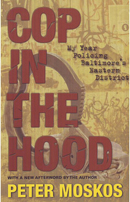 COP IN THE HOOD
My Year Policing Baltimore’s Eastern District
by Peter Moskos
Buy this book
This highly readable ethnography reveals the pointlessness of contemporary urban-policing practices. Most striking is its portrayal of the utter futility of the “war on drugs” from the perspective of both the police and low-income communities of color. Moskos gets deep into the origins of “vice” policing and describes in painful detail the corrupting influence of quotas and other numeric performance measures, showing how they produce unnecessary arrests, undermine relations between the community and cops, and devalue preventive policing.
C ITIZENS, COPS, AND POWER
Recognizing the Limits of Community
by Steve Herbert
Buy this book
This study of West Seattle demonstrates that so-called community policing expands police power rather than empowering civilians. Communities don’t have the organization or expertise to counter the bureaucratic weight of local police. Instead, police/community interactions become an opportunity for police to produce the appearance of cooperation while encouraging residents to provide information. Herbert’s findings suggest that demands for community control are doomed to failure, and that we should look to larger political structures to control the police.

