
Zones of Encounter
Rethinking the early history of North America
Rethinking the Early History of North America
Peter Mancall’s new book reframes the history of the American continent as a zone of encounters between Native peoples, European empires, and African societies.
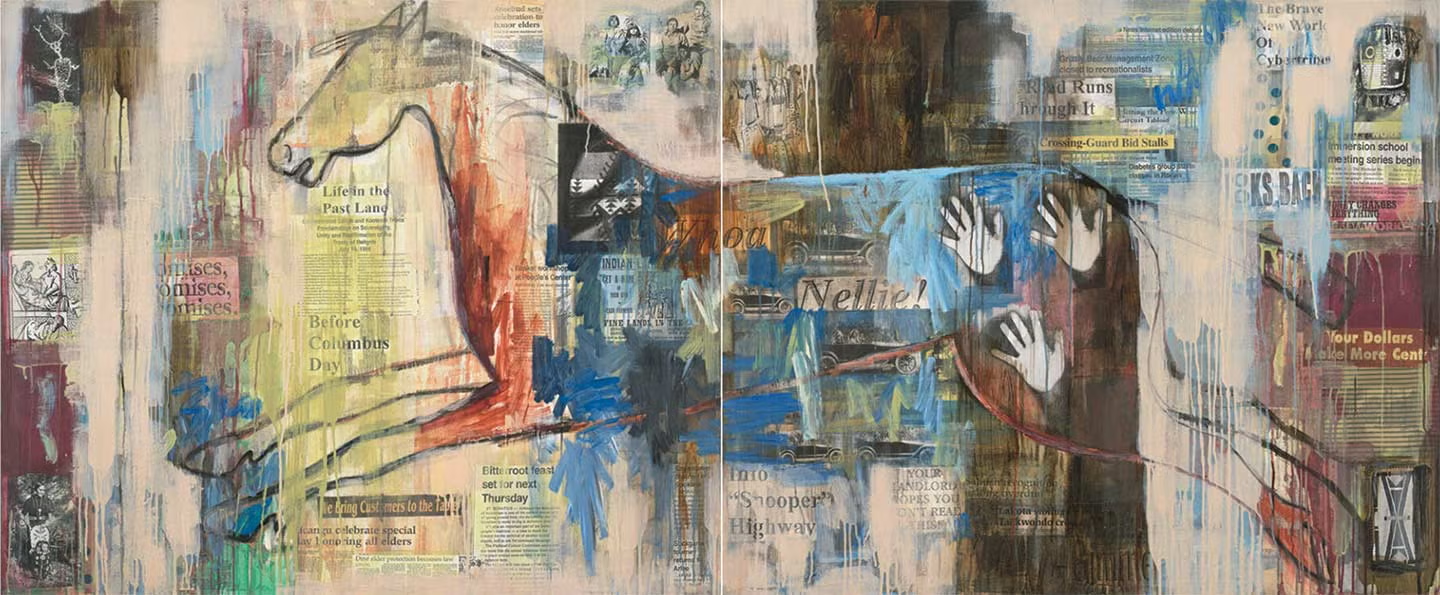
On October 12, 1992, the commemorations for the 500th anniversary of Columbus’s landfall were uneven. Urban gatherings were moderately sized, but the mood was often less than celebratory. In Columbus, Ohio, the city’s $95 million floral and garden exposition drew roughly half the expected number of visitors. In Berkeley, California, the city defiantly reclaimed the date as Indigenous People’s Day, while in Nevada, an antinuclear gathering took place at a US Department of Energy test site, co-organized by Western Shoshone activists. Few festive events marked the quincentenary; fewer still generated national attention. By contrast, a century earlier, the 400th anniversary of Columbus’s arrival served as an occasion to celebrate—so much so that one of the country’s largest fairs ever was held in its honor, Chicago’s Columbian Exposition. But not so in 1992, when Columbus Day largely came and went.
Another date that has seen a dramatic shift in how it has been memorialized is 1776. Synonymous with the founding of the United States, 1776 has been treated by generations of Americans as part of a broader civilizational story: the westward expansion of European peoples, institutions, and political traditions. Within that framework, national commemorations form essential chapters in a single narrative linking European arrival to nationhood, thus blurring the distinction between the history of Europeans in what would become North America and the history of the United States itself.
Books in review
Contested Continent: The Struggle for North America, c. 1000-1680
Buy this bookBut over the past 40 or so years, a remarkable shift has occurred. More recent interpretations attempt to disentangle the history of colonization from that of the US Constitution. In this view, the United States is understood less as the political expression of European settlement than as a particular constitutional project: one grounded in republican government, in the institutions and philosophies articulated in the Declaration and then codified in the Constitution. Such interpretations do not deny the centrality of European colonization to the nation; rather, they critically reexamine North American and US history to foreground the peoples excluded, displaced, or subordinated by it. Native nations, enslaved Africans, and non-Anglo populations claimed as well as rejected the United States. In this interpretive framework, the history of the United States is not reducible to the history of Europeans in North America, even if European settlement formed its precondition.
The 12-hour PBS series The American Revolution reflects this interpretive shift. Its opening episodes foreground historians of Native America, seeking to widen the traditional narrative beyond a familiar story of colonial resistance to Britain. In doing so, the series implicitly asks whether 1776 should be remembered primarily as the triumph of a particular people in its struggle toward self-government, or as the beginning of a contingent experiment in such government. With more than half a dozen historians of Native America foregrounding the latter, the series details how the republic was founded, witnessed, and carried forward by a range of peoples and perspectives—peoples and perspectives that became more diverse with continental expansion.
Into this interpretive fray comes the latest offering in the venerable Oxford History of the United States, a now 10-volume series that, in the words of its publisher, “blends social, political, economic, cultural, diplomatic, and military history into coherent and vividly written narrative.” Initiated under the coeditorship of C. Vann Woodward and Richard Hofstadter in the 1960s, the series has become in many ways the Cadillac of US historical production: tomes written by master craftsmen without a female or minority author among them (yet). The books are not necessarily flashy but instead reflect the boxy and somewhat stodgy assumptions of the postwar historiography from which the series was born: sweeping national narratives organized around the development of the United States as a political, constitutional, and national project.
Peter Mancall’s Contested Continent joins these celebrated studies while also subtly unsettling the framework on which the series was built. Covering the period from 1000 to 1680, Mancall’s book offers the broadest chronological and geographic coverage of any of the volumes to date, stretching across a vast Atlantic world that encompasses Native peoples, European empires, African societies, and the unstable zones of encounter connecting them. Rather than treating the United States as the inevitable center of the narrative, Mancall uses these landscapes to frame a history in continental rather than national terms: a far-reaching “struggle for North America.”
That shift in scale and perspective mirrors the broader changes in historical interpretation that are now shaping commemorative debates. Earlier volumes in the series generally operated within the gravitational pull of the nation-state. Their organizing assumption was that US history could be narrated as the development of a single political society that moved, however unevenly and even hypocritically, toward national consolidation. Mancall’s study instead reflects the growing influence of Atlantic history, Native history, and borderlands scholarship, all of which have challenged nation-centered narratives. Such studies emphasize movement, contingency, competing sovereignty, and the permeability of imperial borders. The result is a history less concerned with national origins than with the larger continental and imperial processes out of which the United States emerged.
In so doing, Mancall draws on a remarkable range of sources, an impressive command of the field, and a clear narrative style. Unlike many comparable works, Contested Continent is exceedingly well referenced. Sources are used so extensively that Mancall reveals how laborious an undertaking it is to tackle this bewildering, not exactly global, not exactly continental, not exactly national history—a notoriously vast undertaking that ranges across geographies, times, and climes. Nowhere do eventual national borders and boundaries offer analytical comfort.
To give structure to this seemingly boundless inquiry, Mancall leans on the political constructions and material limits of the time—charting the development of European empires across the natural limits that land and sea then imposed for the movement of peoples, flora, and fauna. Starting with the introduction of maize in Native America, and then venturing to the Nordic expansions across the North Atlantic before settling into the more familiar Atlantic empires, Contested Continent captures the forces of technological and human movement that wove together the four continents that became forever conjoined after 1492. This Atlantic world has defined the modern era. Its histories of exploration, settlement, missionization, plantation economics, and racial formation generated the eventual origins of what would become North America and the United States, doing so empire by empire, peoples by peoples, and ultimately death by death.
While its nearly 700-page narrative doesn’t reach 1776, Contested Continent illuminates the tensions between writing the history of the Atlantic world and attempting to connect that project to national history. Notably, the 400-year history of North America before 1492 is condensed into a single chapter. By contrast, Columbus receives such extended coverage in the second chapter that readers might forget Mancall’s earlier insistence that American history extends deep into the pre-Columbian world. Twenty pages aim to yet again reinterpret the famous mariner whose 1493 letter saw quick publication “in Strasbourg, Valladolid, Florence, Heidelberg, Augsburg, Nuremberg, Venice, Pavia, Lübeck, Ferrara, Bologna, Burgos, Brescia, and Milan, as well as continuing to appear in printers’ works from Rome and Basel.” The first European images of the Western Hemisphere also accompanied his writings, several of which are included to illustrate the seismic recalibrations unleashed after his first voyage. Although Columbus may no longer be celebrated as the “discoverer” of North America, Contested Continent squarely positions him as a central hand in writing the resulting history.
Though brief, the book’s opening chapter does set the analytical framework for interrogating the more traditional national histories that follow. One of Mancall’s most significant methodological moves is that he develops the book’s narrative within a frame of confrontation and conflict. Violence, gritty and repugnant, is a central if not defining force in Contested Continent.
If you’re unfamiliar with the loss of life after 1492, brace yourself. Taking a less deterministic and epidemiological perspective than Jared Diamond does in Guns, Germs, and Steel, Mancall examines European expeditions alongside studies of Indigenous history and culture. Chilling conclusions abound: From the Andes to the St. Lawrence and from Puerto Rico to the Mississippi, European explorers rushed across the hemisphere with a ferocity often forgotten by subsequent historians, particularly those in the United States. In this sense, Contested Continent stands apart from the other volumes in the Oxford series—despite many calls to broaden US history, too few view that history apart from its eventual or current territorial form. By immersing the reader in a nearly global history of the post-Columbian world, Contested Continent reveals the ubiquitous violence and suffering at its core.
Although it may be surprising to those who were raised on the celebratory Cold War version of US history, contemporaneous studies of early America remain as sobering as they are compelling. Slavery, Indigenous holocaust, and violent social relations characterize works in the field, especially those on the 17th-century world of exploration, settlement, and fracture. Several of Mancall’s concluding chapter titles convey such an emphasis—for example, “Enslavement” and “An Empire for Extraction.”
A second analytical contribution of Contested Continent lies in its treatment of imperial governance as inseparable from the intellectual, political, and legal resistance that it provoked. While specialists can point to comparable works, Mancall assembles hundreds of discrete studies into broader forms and then keeps on going, both chronologically and interpretively. By synthesizing the historical literature in this way, he demonstrates how instantly European imperialism became not only a global phenomenon but also a governing project formed in the face of open and reasoned resistance. Close studies of the writings of the Andean author Guamán Poma de Ayala, the Mexica scribes of the Florentine Codex, and (most indelibly) the 16th-century works of Bartolomé de Las Casas cement this effort, offering vivid contemporary accounts of European expansion and, ultimately, genocide. “To Las Casas,” Mancall observes, “writing a history was a form of bearing witness.” His Short Account of the Destruction of the Indies was among the 43 volumes published in Seville alone by 1552. The everyday ubiquity of the printing revolution, Mancall notes, became one of 1492’s most immediate legacies: “Once printers started spreading stories about the Western Hemisphere, they never stopped.” Las Casas’s text “would soon become the most influential European published work about the Western Hemisphere since the 1493 publication of Columbus.”
Read together, these anti-colonial writings—old and new—recast the violence of conquest not as an unfortunate by-product of cultural collision but as the result of deliberate choices made by imperial powers in full view of contemporary critique. As Greg Grandin has similarly suggested in America, América, Las Casas’s writings and his conversion from colonizer to priest and from participant to advocate offered what should be understood as the first condemnation of global colonialism. Such condemnation both preceded English colonization and was understood across Europe.
Another fierce critic of this emerging order was Guamán Poma. As he toured the Viceroyalty of Peru, Mancall writes, Guamán Poma was inspired to offer a bracing account of “the tragedy that had unfolded over the course of his own life.” Like Las Casas, he had witnessed cruelties and indignities. In his eventual but long-unpublished epic work, El primer nueva corónica y buen gobierno (The First New Chronicle and Good Government), Guamán Poma lamented how “all the demons of hell had come forth in order to trouble the poor of Jesus Christ.” Andean leaders were routinely assaulted, whipped, beaten, and hanged. Urbanization and exile followed: Lima had become “full of Indians who had abandoned their communities and African slaves who had escaped from their masters and become servants, even officials.” Such heterogeneity took a particular toll on Indigenous women, often forced into economies of sexual exploitation that filled the vacuum left in the conquest’s wake. Violence shaped the foundations of the family as Indigenous women became, in Guamán Poma’s words, “loaded down with mestizo and mulatto children.” One wonders when the sexual violence against Indigenous women so evident on these pages will find a more central place in the history of the Americas.
Mancall ultimately carries the analytical frames of imperialism, violence, and disruption into the English colonial world, connecting the national narrative to the continental, imperial, and even interpersonal dynamics that produced it. In English plantation societies, indentured servants drawn from colonies closer to home, such as Ireland, supplied much of the earliest generations of laborers. From Virginia to Barbados, the demand in Europe inspired the introduction of new export products, particularly tobacco and sugar. Harsh disciplinary regimes followed. “I have seen such cruelty there done to Servants, as I did not think one Christian could have done to another,” reported an early writer on Irish laborers in Barbados. By 1660, Mancall writes, sugar had so revolutionized the island’s economy that English leaders “concluded that they could not attract sufficient indentured labor across Britain’s current colonies. The most reliable source of labor, the king believed, was captive Africans.” Only after 1492, then, did institutions of human enslavement begin to structure North America and the United States thereafter.
Deftly capturing large-scale economic and social dynamics, Mancall also remains attentive to everyday forms of resistance, particularly in the late 1600s, when multiple imperial regimes either fell or were challenged by social and anti-colonial revolts. He ends with the Pueblo Revolt of 1680 and highlights the fractures of empires rather than their totalizing outcomes. By 1680, along the Rio Grande, dozens of Pueblo Indian villages had endured generations of Spanish violence, religious persecution, and labor drafts. What at the time were—and still remain today—the oldest continually inhabited human societies in what would become the United States, Pueblo nations organized and revolted against the yoke of colonization, destroying Spanish colonial churches, symbols, and archives. It is within this dialectical encounter between cultures and communities that Mancall locates what would become North America: “Nowadays,” he writes, “scholars recognize that, even if most of the written evidence emphasized Europeans’ actions, Indigenous Americans and Africans, even those brutalized by enslavement, retained agency as well.” However violent, however fractious and agonistic, “Indigenous, Africans, and Europeans together created a new world.”
In certain respects, Contested Continent perfectly prepares the way for the rediscovery of this knowledge and a new American history to be written thereafter. Throughout his sweeping account, Mancall demonstrates that the continent was never a wilderness awaiting European discovery. It was a world of competing sovereignties, economies, and cosmologies that Europeans entered into unevenly and often precariously. By tracing the contingencies of conquest, diplomacy, migration, and survivance across the continent, he helps challenge the triumphalist narratives that still frame the United States as the inevitable product of an Anglo-American political tradition alone. In this way, Contested Continent’s strongest contribution lies less in proposing a revised commemorative framework than in revealing the instability of older ones.
Popular
“swipe left below to view more authors”Swipe →At the same time, the book stops short of fully resolving the problem it so clearly identifies: If the North American continent and, with it, the republic that emerged rely on competing historical claims, then the question is not merely how historians recover neglected voices but also how those recoveries intervene in the broader scholarly and public conversations. Contested Continent gestures toward this challenge without entirely articulating what a rediscovered national story might finally look like. After chronicling more than 600 years of history, perhaps Mancall felt that he had covered enough, but he concludes somewhat abruptly in 1680, thereby ceding much of the telling of this story to the older volumes in the series. Because the interventions of Contested Continent are so persuasive, the book gives rise to the question of what a new history of the United States that begins with Mancall’s volume might look like—and it also raises the question of whether, in fact, the Oxford series, which began publishing in 1982, might be in need of a reset.
What would be the central themes and preoccupations of this new series of US histories? First, there would be a shift away from viewing the United States as a linear extension of European settlement and republican ideology and toward a more rigorous understanding of North America as a site of encounter among many peoples whose collective interactions shaped the continent’s subsequent development. Native nations, enslaved Africans, imperial rivals, missionaries, merchants, and migrants would no longer be peripheral actors in this new rendering of American history. Instead, they would be constitutive agents initiating the processes from which the nation emerged.
Second, there would be a more sustained focus on the contested nature of sovereignty in the development of the United States, thereby correcting the current, overly familiar accounts of state formation that portray US expansion as coherent, consensual, or inevitable. Empires and nations would be front and center, but so too would be the many who challenged and resisted them: local, Native, colonial, African American, all engaged in their own ongoing experiments in government.
Finally, this new account of US history would integrate the authoritarian dynamics of empire into the story of American modernity itself. Imprinted upon the globe in so many places—from the Philippines to Puerto Rico, Alaska to Hawai’i—unbridled US authority has governed millions of non-subject populations, often through force. Rooted in the suppression of Native resistance, the legacies of such anti-democratic practices are becoming more evident, and they inform current efforts to extend US authority into new colonial settings, from Venezuela to Greenland.
Histories of struggle and survival thus become essential means through which to understand our modern American life. Deep, immersive histories like Mancall’s offer contrasts with those that view modernity as the achievement of a unified liberal republic or the fulfillment of Enlightenment philosophies and capitalist economics.
Such a rediscovered American history would not dissolve the national history into fragmentation. Instead, it would recast the nation as a perpetually unfinished project, a “more perfect union” whose legitimacy depends on recognizing the many peoples who have sustained that experiment over time. In this light, the uneasy commemorations of the recent past would reveal less a collapse of national mythologies than a transformation in historical consciousness. The celebratory confidence that animated the Columbian Exposition of 1893 was undergirded by a presumption that establishing the nation was itself the accomplishment of progress, rather than marking these founding moments as the birth of experiments whose causes and consequences were yet to be determined.
Ultimately, Contested Continent suggests that moments of “discovery” and “founding” should not lend themselves easily to uncritical celebration. The American Revolution gave rise to an unprecedented experiment in government in North America, an experiment that has yielded many successes worth celebrating: the formal abolition of human enslavement, the extension of political rights regardless of gender, and the tenuous but exceptional, government-to-government relationship that exists between Native nations and the United States.
Perhaps, in the end, new histories, textbooks, and syntheses may reveal how the nation’s significant achievements did not emerge from the presumed certainty or righteousness of its beginnings, but from the continuing struggle to engage in that experiment. A global and Indigenous cast has played an immense historical role in that experiment, doing so in order to pursue visions of happiness and the good on a continent that many have long called home.
More from The Nation
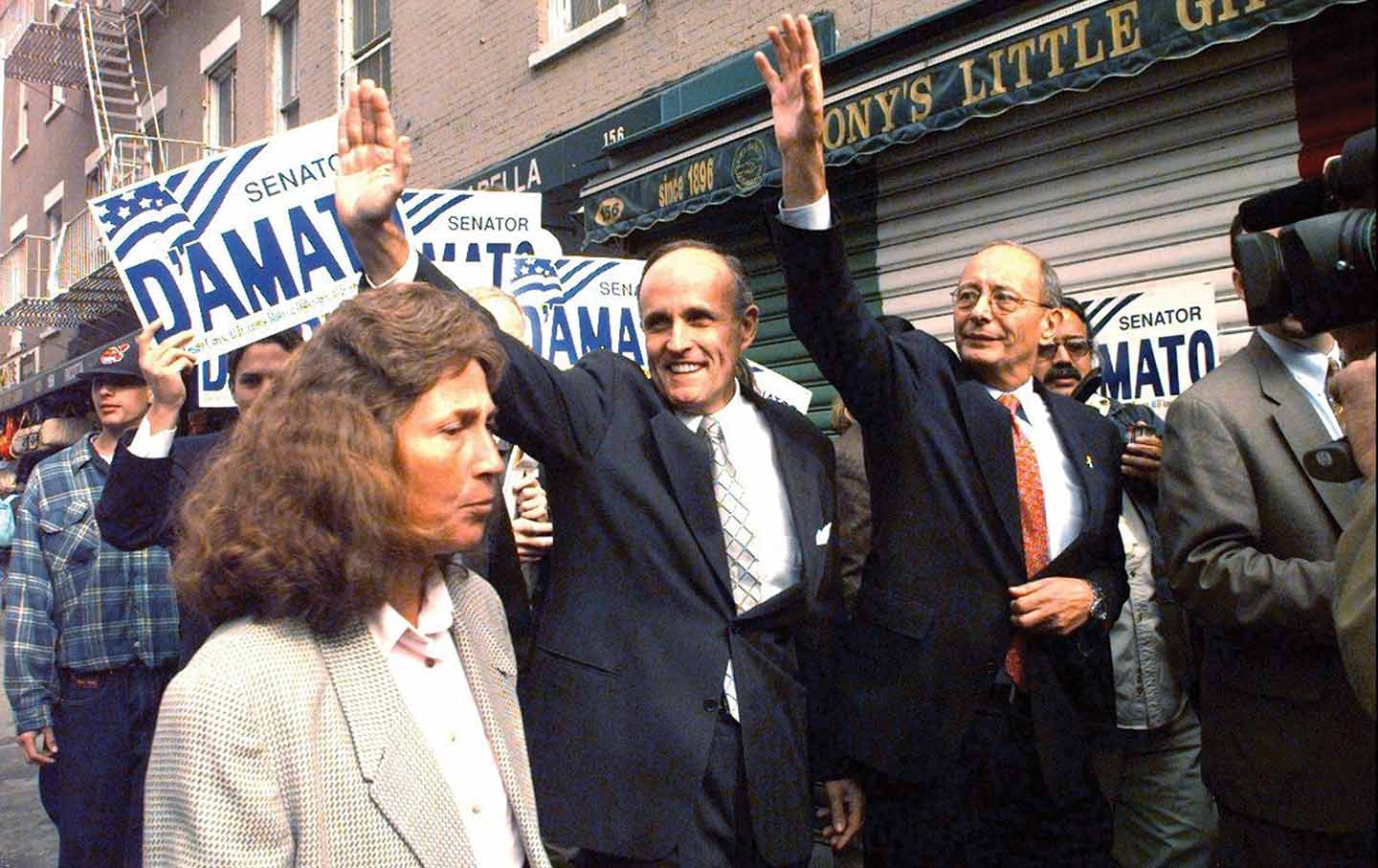
How Did New York Become So Unequal? How Did New York Become So Unequal?
A new history of New York examines how it went from a center of social-democratic experiment to one of neoliberal devastation.
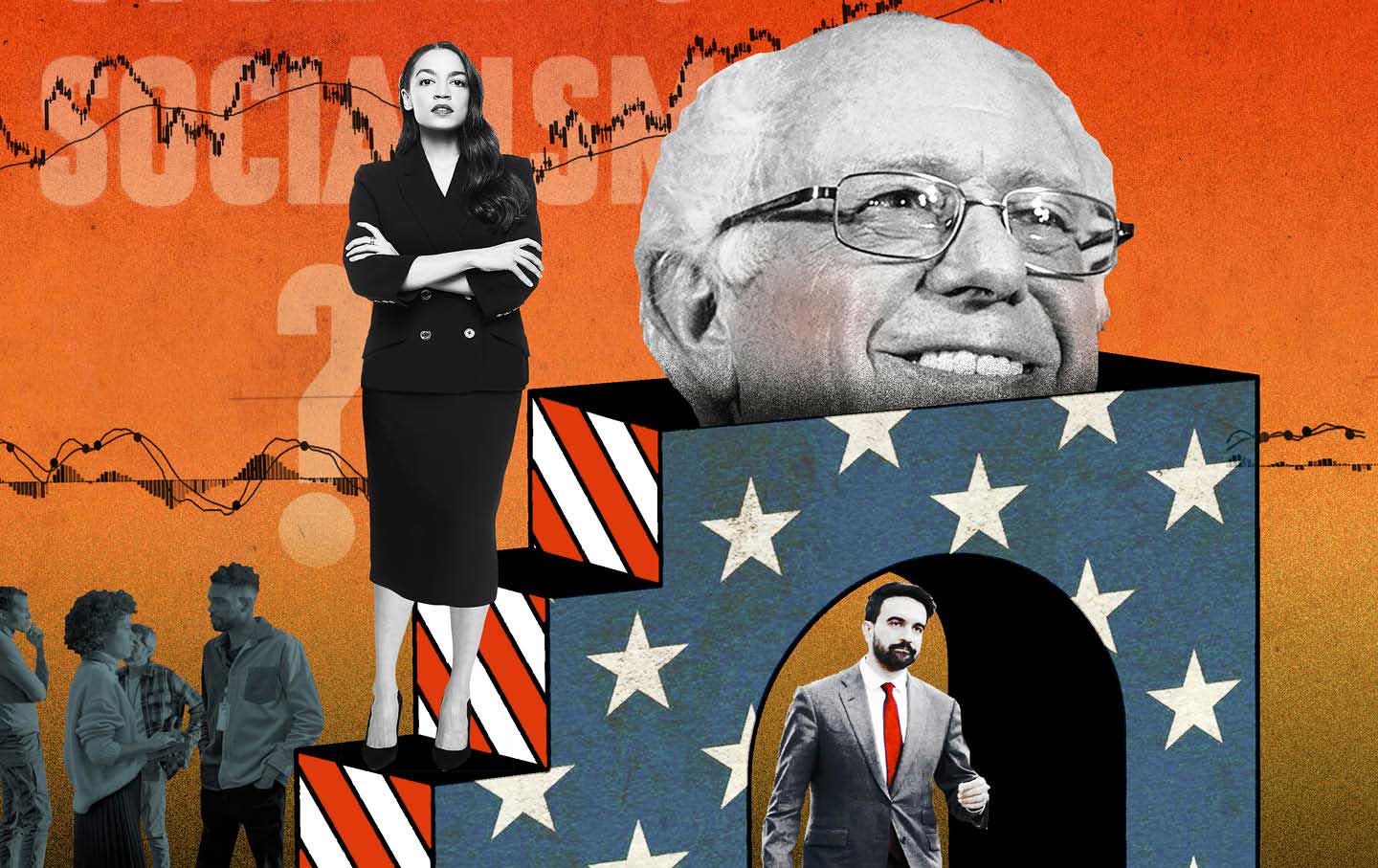
Do Socialists Even Believe in Socialism Anymore? Do Socialists Even Believe in Socialism Anymore?
The American left has a growing list of victories—and an unfinished argument about the society it wants to build.
Feature / Mike Beggs, Ben Burgis, and Bhaskar Sunkara

A Rogue DA in No-Man’s Land A Rogue DA in No-Man’s Land
A strange case of prosecutorial misconduct during a murder investigation in the Oklahoma panhandle.

Letters From the December 2026 Issue Letters From the December 2026 Issue
True progress… A willful blilndness… Correction…

Chad Harbach’s Novel of Millennial Intellectuals Chad Harbach’s Novel of Millennial Intellectuals
In “The Brightness,” Harbach examines life before 2016.

