The People vs. the Supreme Court
This term the Supreme Court has plans to trample
even more of our rights. But we, the people, are not powerless
in the face of their power grab.
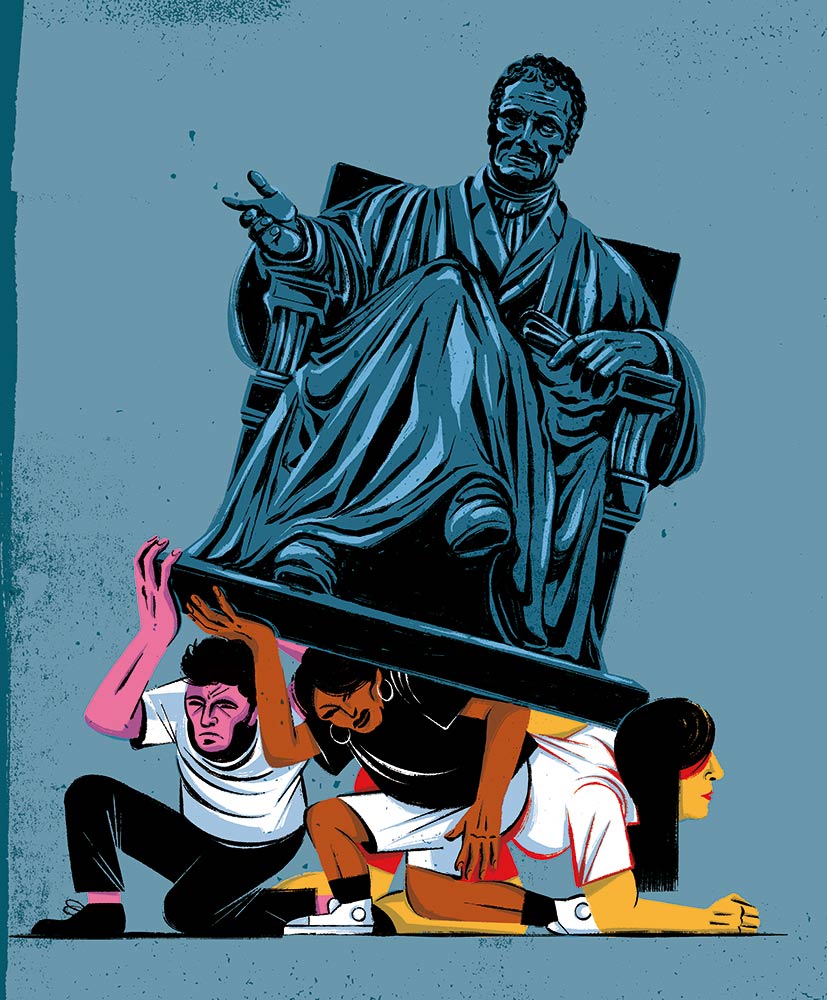
The Supreme Court’s approval rating has hit a record low: Just 33 percent of Americans approve of the job the justices are doing, according to a Gallup poll taken in July, only weeks after the court’s last term ended. The decline appears to have been driven by Republican voters, likely angered by the court’s rejection of Donald Trump’s illegal tariff plans and its affirmation of birthright citizenship. Only 12 percent of Democratic voters approve of the court, which has been the ballpark figure throughout the Trump era. Yet the court is uniquely insulated from this kind of public disgust. While Congress and the president have to answer to the public every two, four, or six years, Supreme Court justices are protected for life. They can rule over the American people, more or less, without their consent.
Things weren’t supposed to play out like this. The people who wrote the Constitution wanted the court to be insulated from public pressure, to be sure, but they never intended those insulated judges to be imbued with this much political power. In our republic, the representatives are supposed to make the important legal and political decisions, while the unelected, unaccountable judges are charged with mediating disputes between the states. That’s why the Supreme Court has original jurisdiction over cases in which one state is suing another. For most other cases, the court has what’s known as appellate jurisdiction, which means it is intended to be used as a last resort.
The framers of the Constitution thought the elected branches of government would serve as a natural check on the Supreme Court’s power because, as Alexander Hamilton put it in Federalist 78, the court does not have the power of the “sword or the purse.” The Supreme Court can’t pay for its rulings to be implemented, and it can’t enforce them. It has to rely on Congress and the president to enact its opinions. It seemed obvious to people like Hamilton that a court that overstepped its role or exceeded its power would simply be ignored by the branches with the power to levy taxes and command armies.
Hamilton, it turns out, was very, very wrong. Far from ignoring today’s over-powerful court, both political parties turn to it to overturn laws, regulations, and orders they don’t like. And we see both of the elected branches regularly genuflect to the court, even when it scuttles their entire popular agenda. We live in a world where popular legislation simply doesn’t matter unless it happens to be approved by five unelected judges on the Supreme Court. Campaign-finance reform, national healthcare, student-debt relief, and all manner of gun laws supported by millions of people and a large number of their representatives mean nothing unless five justices give these popular measures their blessing.
Today, the court is both obscenely powerful and broadly unpopular. It has stolen power from the elected branches, but those branches do nothing to take it back. Democrats applaud the court and boost its legitimacy on the rare occasions that it rules against Trump, as it did on tariffs and birthright citizenship, and then stand functionally inert as the court dances a tarantella on LGBTQ rights, women’s rights, minority rights, voting rights, housing rights, environmental rights, and labor rights, all the while turning our country into a shooting range where kids need to wear bulletproof backpacks to school.
Trump, for all his dictatorial bombast and bluster, has generally allowed the court to have the final say on all of his executive orders. He intimidates and mocks the justices, who only occasionally rule against him, but he rarely ignores them. Trump treats the Supreme Court the way medieval European kings used to treat the pope: as an annoying power they could kill but choose not to because his existence ultimately reinforces their own authority.
And so the unelected, unaccountable, and unpopular Supreme Court trundles on, despite shockingly low public-approval numbers. The justices need not fear their loss of institutional legitimacy, because they know that no other institution in government has the strength or will to stop them. The Supreme Court does not need to be faster than the fastest lion; it must only be faster than the slowest gazelle.
This term, the court will continue its dread work, despite the will of the American people. Human rights will be smashed. Popular laws will be vanquished. And the world the Supreme Court leaves to our children will become ever dirtier and more violent.
Republican National Committee v. Mi Familia Vota
Argument: December 8, 2026
Last term, the Supreme Court effectively killed the most important voting-rights law ever passed, the Voting Rights Act. This term, the court will come for the second-most-important piece of voting-access legislation: the National Voter Registration Act.
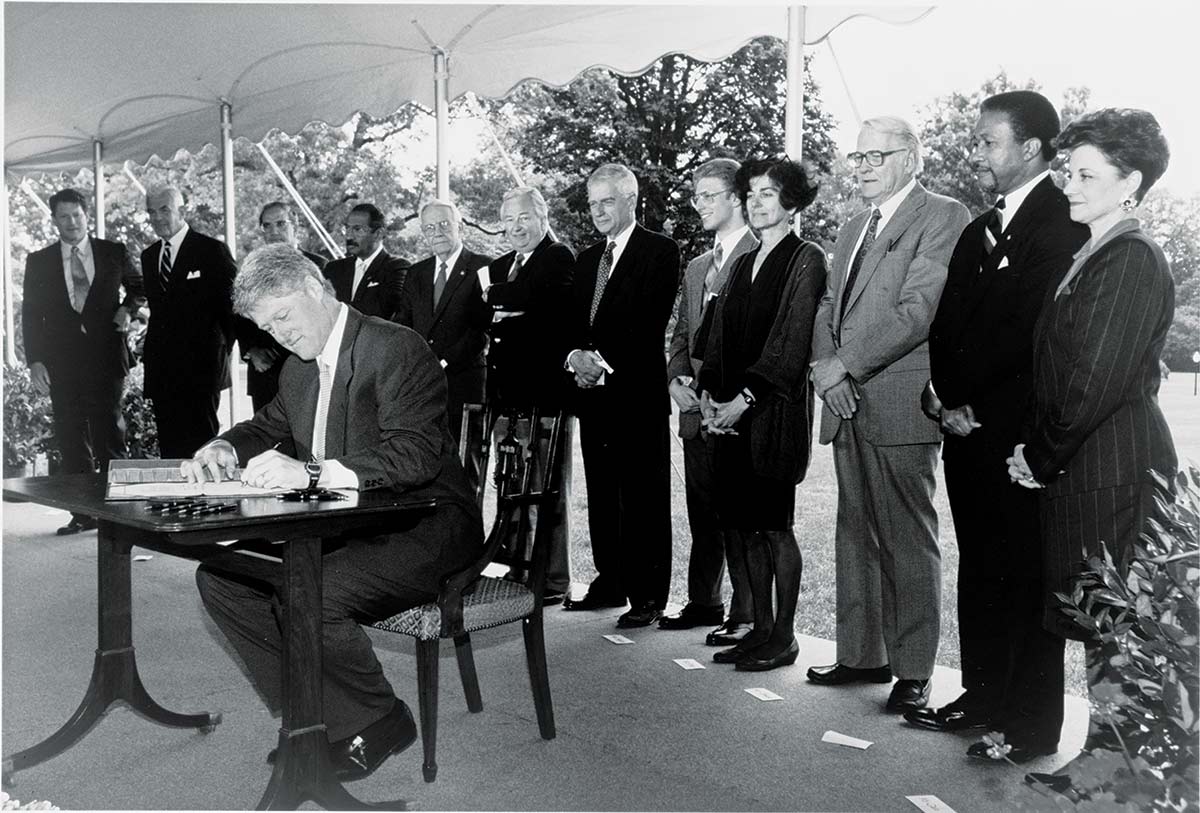
The National Voter Registration Act of 1993 (NVRA), more commonly known as the Motor Voter Act, is the best thing Bill Clinton ever did. It established one standardized federal form for voter registration and mandated that each state must accept the form as sufficient for registration. It’s the form people fill out at the DMV when they’re renewing their driver’s license, hence the moniker.
The NVRA might not seem like much, but in a country with 50 state-level election systems and over 10,000 election jurisdictions, each with its own unique and confusing rules and deadlines for voting, having one single form for voter registration makes it much easier for people to vote.
So, of course, Republicans hate it.
The form does not require proof of citizenship. You have to check a box confirming you are a citizen, and if you lie, you can be prosecuted—but you do not have to rend your garments and produce notarized parchment out of your ass showing that you came over on the Mayflower with two guns and a slave.
So, of course… Republicans hate it.
Arizona challenged the NVRA back in 2013, arguing in Arizona v. Inter Tribal Council of Arizona that it could require proof of citizenship for voter registration. The Supreme Court disagreed. In a 7–2 ruling written by Antonin Scalia and joined by John Roberts, the court said that Arizona’s state registration law violated the supremacy of federal law. The court left open the possibility that states could ask for more information than the federal form required, but they still had to accept the federal NVRA form as sufficient for the purpose of voter registration.
The two dissenting justices in that 2013 case were Clarence Thomas and Samuel Alito.
In 2022, Arizona finally got around to trying to exploit the avenue left open in Inter Tribal Council. The state passed a law creating a new voter-registration form that requires voters to supply documents that establish proof of citizenship. While the state continues to allow people to use the NVRA form, those people, now called “federal-only” voters, are not allowed to vote in state or local elections unless the state verifies their citizenship; they are also prohibited from voting by mail in federal elections. The law also requires state election officials to cross-check Arizona’s voter-registration rolls against some kind of citizenship database, and if they find a voter who isn’t on the citizenship list, they’re authorized to cancel that person’s registration at any time.
Democrats, Tribal entities, and voting-rights groups, led by Mi Familia Vota, sued in response, and Arizona lost soundly in the lower courts. But the state appealed, and as is so often the case, the Supreme Court used its shadow docket to step in, temporarily overrule the lower courts without a hearing, and allow Arizona to use its previously unlawful voter-registration-and-exclusion form in the upcoming midterm elections. The case that the court will hear this term (and probably decide in the spring) will affect the 2028 presidential election.
It’s always amazing to me that Arizona, a state that sits on land first stolen from the Native people living there, and then stolen from Mexico, is one of the most hardcore states about preventing its large Native and Mexican-born populations from voting. It’s like the white folks running Arizona instinctively know they have no freaking right to be there and thus are desperate to use any anti-democratic means necessary to retain their ill-gotten power.
Given the Supreme Court’s open hostility to voting rights, I have to assume that Arizona and the Republicans will win this case and be allowed to use their additional form to suppress the vote. I mean, they’ve just about won the case in the short term.
All I can hope is that Arizona’s victory will be narrow. Hopefully, the court will use this case only to chip away at the NVRA. But we all know this court doesn’t give a damn about its own precedents. There’s every possibility that a robust win for Arizona will involve the court effectively overturning its decision in Inter Tribal Council, killing the NVRA just as it killed the Voting Rights Act.
Republicans, of course, will love it.
Viramontes v. Cook County
Argument: December 2, 2026
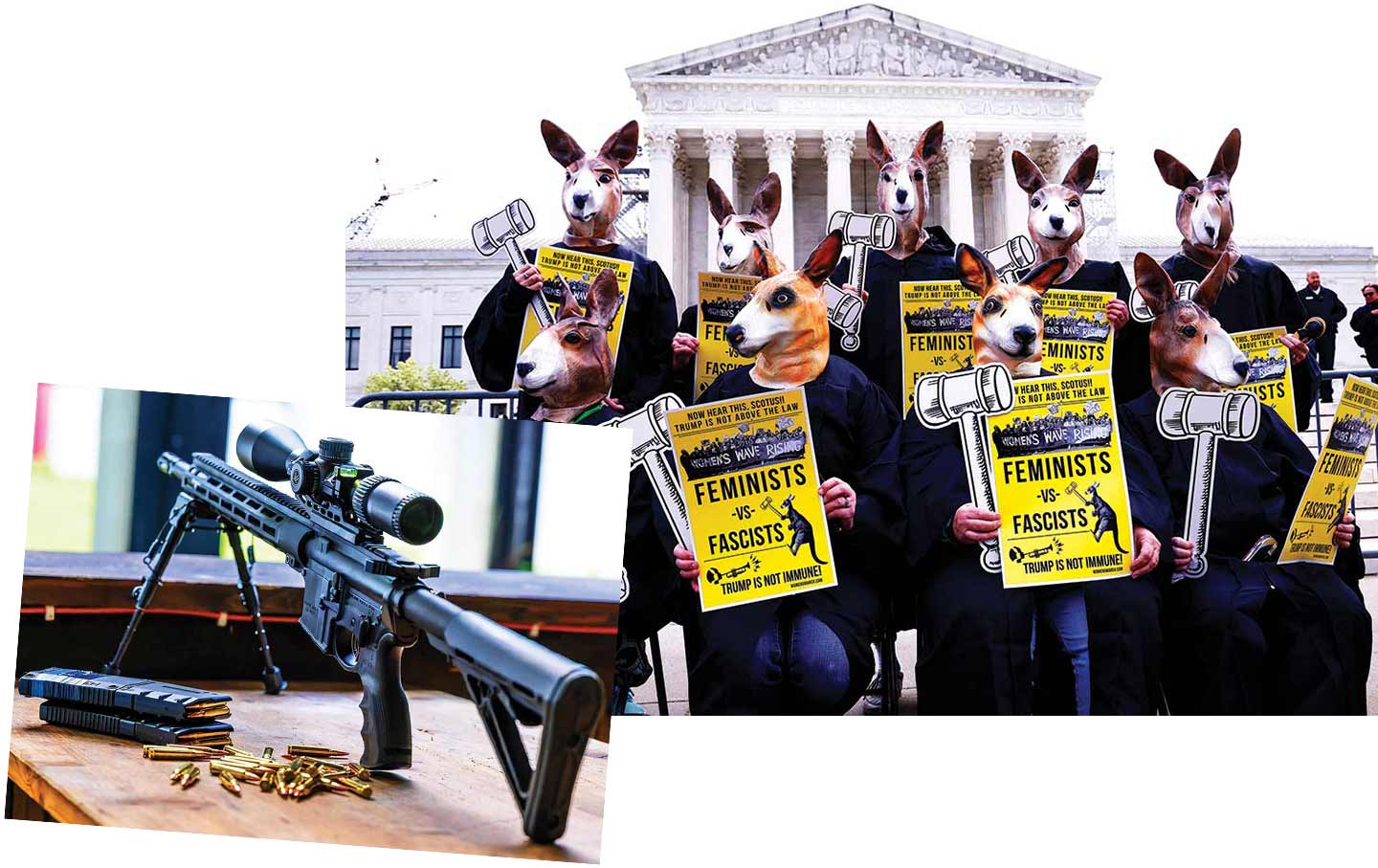
In the Supreme Court’s ongoing assault on the safety of every American, this case is the shot to the head. Viramontes v. Cook County is a challenge to laws in a number of states that ban AR-15s and other assault rifles. When Democratic presidential hopefuls talk about passing an assault-weapons ban—as if that will somehow solve the epidemic of gun violence in this country—this is the case that should remind them that significant institutional reform of the Supreme Court must happen first. It is the only way to achieve meaningful gun regulation.
The plaintiff in this case is indistinguishable from the plaintiff in nearly every other gun case. Some dude, in this case named Cutberto Viramontes, felt the need to overcompensate with some weapon. Lacking the dexterity to operate a bow or the strength to wield a broadsword, he opted for an assault rifle. Chicago told him no, and he claimed that his precious Second Amendment rights had been violated as he wept lead tears. It’s a tale as old as time… if time had started in the mid-1970s, when the National Rifle Association decided that the first 200 years of American gun regulation needed to be shot to death.
For what it’s worth, assault-rifle bans should be constitutional even under the Supreme Court’s recent bloodthirsty precedents. In District of Columbia v. Heller, the court said that people are entitled to firearms for self-defense but that only guns ordinarily used for self-defense get protection. Nobody buys an assault rifle for “self”-defense. In New York State Rifle & Pistol Association v. Bruen, the court ruled that all current gun laws must have an analogue to a gun law from the 18th or 19th century. Bruen is the dumbest ruling in recent memory, but even so, there were practical limits on the kinds of arsenals most people had. It should be possible for the court to analogize an assault rifle to other weapons of war that were not permitted to be owned by yokel militiamen in Lexington during the revolution.
None of that will matter to this Supreme Court. Does anybody really think the six Republican justices, who have spent the last decades giving big, wet kisses to the gun lobby, will uphold an assault-weapons ban? If you do, you simply haven’t been paying attention to how violent and extremist this court has become with regard to guns. Ammosexuals win in front of this court just as often as Christians and capitalists; its opinions might as well drop bullet casings as they are passed around.
The Republicans on the Supreme Court have helped create the most violent wealthy country on earth. They—not violent movies or video games or male loneliness—are responsible for gun violence in this country. We will continue to suffer and die under their bloody perversions until the Supreme Court is reformed.
Suncor Energy v. County Commissioners of Boulder County
Argument: October 5, 2026
I’m a big fan of tort lawyers—attorneys who seek monetary damages against businesses, institutions, or government agencies that cause harm. Some people turn up their noses at these kinds of litigators, deriding them as “ambulance chasers” and criticizing them as looking for payouts instead of justice. But I believe that tort lawyers are one of the people’s few defenses against the corporate-military-industrial-tech-bro complex. If you see a video of me being brutalized by the cops, I don’t want you to call Zohran Mamdani. I want you to call Ben Crump.
Tort lawyers are a big reason your car doesn’t burst into flames when you crash. Tort lawyers are a big reason your kids don’t choke to death on their toys. Tort lawyers helped weaken the tobacco industry and stop Purdue Pharma from selling drugs, and they were in the process of bringing the gun industry to heel before Republicans passed a law preventing gun manufacturers from being sued by tort lawyers. Recently, Meta agreed to pay up to $17.1 billion and massively restructure its policies to settle a lawsuit about how it harms children by trapping them on social-media platforms. “Release the tort lawyers” is my solution to most every problem.
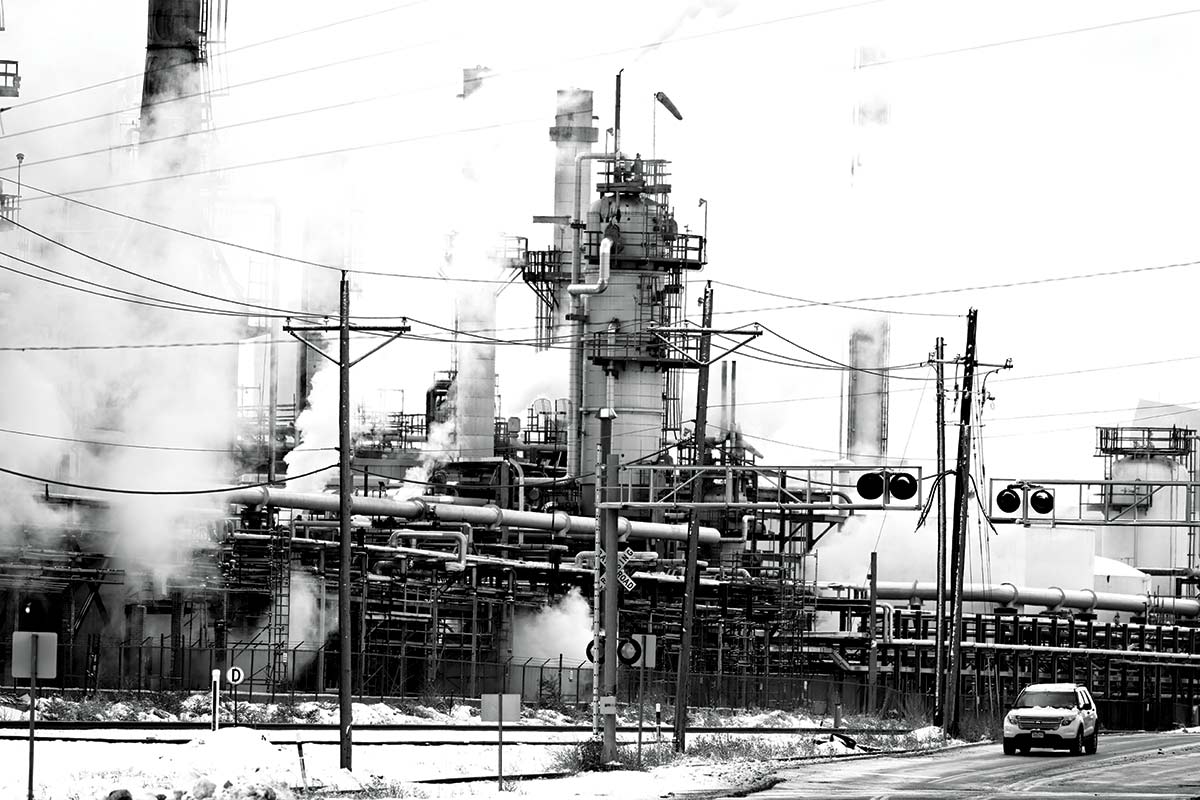
Tort lawyers have been critical in our fight for environmental justice and rights. Without recounting the entire plot of the movie Erin Brockovich, let’s just say that all (as opposed to only some) of our communities would be drowning in industrial waste without tort lawyers. So it shouldn’t be a surprise that the goal of every rapacious business interest in our country is to get Congress or the Supreme Court to make a special rule preventing tort lawyers from suing their industry—and it shouldn’t be a surprise that the fossil-fuel industry is leading the way. The big polluters are being sued in multiple states for the climate damage they’ve caused. Now they’ve asked the Supreme Court to put a stop to it.
This is what Suncor v. Boulder is about. The city of Boulder, Colorado, has sued Suncor Energy and Exxon Mobile in an attempt to hold them liable for climate damage. Boulder is not asking the fossil-fuel industry to stop polluting; it’s asking the industry to pay for its pollution.
And that’s the key. If these companies had to pay for the climate damage they’ve caused, they would likely stop doing it. Even the threat of having to pay would likely compel them to clean up their act. The fossil-fuel business model is that the polluters reap all the profits for polluting while everybody else has to pay the cost of that pollution. If you could change that calculus, you could change the economic incentive for pollution and, without hyperbole, change the entire world.
Which is why it will never happen. The Supreme Court case is about whether Boulder’s lawsuit is preempted by the Clean Air Act. The energy companies are arguing that if they haven’t violated the federal law governing their behavior, then state lawsuits can’t be brought against them for that behavior.
That’s exactly what the six Republican justices will most likely find. The Republicans on the court have been as bad for the environment as the Chicxulub asteroid. They will most likely use this case to institute a new rule that protects the fossil-fuel industry from being sued in state courts for environmental damage. The Supreme Court has already rendered the Clean Air Act all but inert, and the justices know that Republicans don’t enforce what’s left of the act when they’re in power. Telling an industry it can only be sued with a law that is under-enforced is a great way to absolve that industry of legal accountability.
I hope I’m wrong. If Boulder wins this case, it could devastate the fossil-fuel industry. But… that’s why I’m not going to be wrong.
International Partners for Ethical Care v. Ferguson
Argument: December 7, 2026
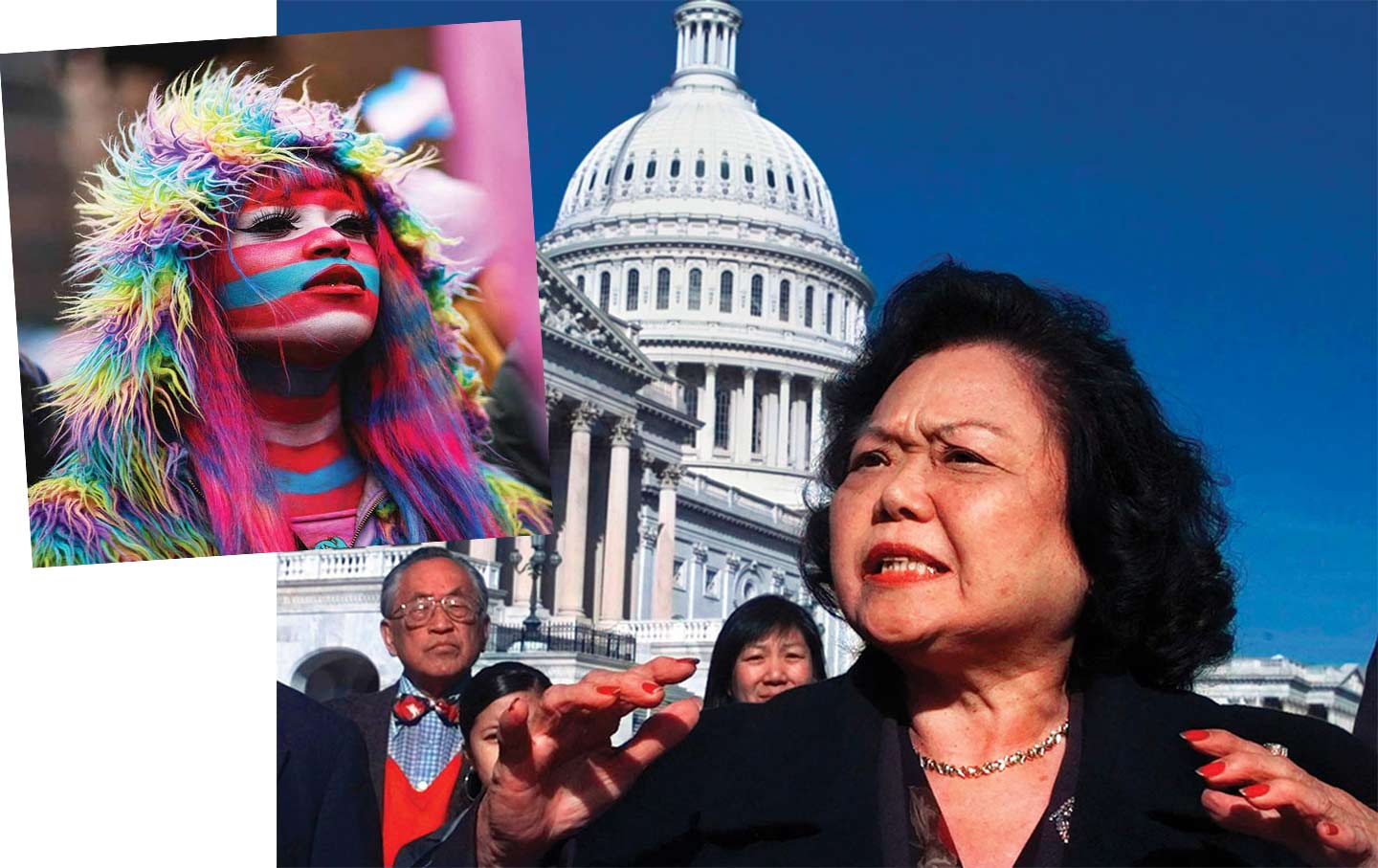
This case should be called the Fugitive Trans Case.
The facts are pretty simple: Washington State has a law that requires licensed shelters to inform parents should they take in a runaway who is a minor. The notice requirement doesn’t apply, somewhat obviously, to minors who are running away from abuse or neglect. I trust I do not have to explain why I think not notifying abusive parents when their children escape is a good idea.
In 2023, Washington enacted legislation to waive the notice requirement when the minor is seeking “protected health care services,” including “gender-affirming treatment.” If you ask me, the law didn’t even need to be amended, because preventing your child from getting an abortion or gender-affirming care already falls under the category of “abuse or neglect.” But I guess Washington needed to make it clear that minors have a right to bodily integrity and autonomy.
You can imagine what happened next. The culture warriors descended on Washington, outraged that trans children might receive the care they need by running away from their abusive anti-trans parents. Five sets of parents sued the state; one set of parents said their child had already run away to receive care, while another said they had received “threats” from—get this—their older child, who wanted to take their younger sibling to a “safe place” to receive care.
I don’t know about you, but as a parent, if I’ve got an older child threatening to run away with the younger child, my inclination would be to think deeply about my parenting strategies, not sue the state over its law protecting runaways.
Then again, I’m not a drooling bigot.
I think we all know what the anti-trans, Christofascist Supreme Court is going to do with this case. Just look at how the court frames the “question presented,” which is how the justices tell the litigants what they think is at issue in the case: “Whether parents have standing to challenge a law or policy that deliberately displaces their decision-making role as to ‘gender transitions’ of their children, and in so doing creates present and likely future impediments to their ability to parent their children as they deem best for them.”
The scare quotes around “gender transitions” are in the original. These poor kids are so screwed: Even when they run away from home, the Republicans on the Supreme Court will find them and send them back for abuse.
Crowther v. Board of Regents of the University System of Georgia
Argument: November 30, 2026
A law has no meaning if the person who violates it cannot be held accountable. A right has no meaning if the person who tramples on it cannot be sued. One of the easiest ways the Supreme Court can take away fundamental rights is to simply prevent people from suing when their rights have been violated.
That is the goal of Crowther v. Board of Regents of the University System of Georgia. The case arises from two separate sex-discrimination lawsuits. In one, Thomas Crowther, an art teacher at Augusta University in Georgia, was accused of sexual harassment by several anonymous individuals. After an investigation, Crowther was effectively fired. He claimed that he was unfairly investigated and terminated on the basis of sex and sued the university under Title IX of the Civil Rights Act, which prohibits sex discrimination.
The other case was brought by MaChelle Joseph, who was the head coach of the Georgia Tech women’s basketball team. In early 2019, she filed a complaint alleging that her program was not given the same resources as the men’s team. Not long after, the school hired an outside investigator to look into complaints about her conduct as a coach and then fired her. She also sued under Title IX, alleging sex discrimination.
The Supreme Court case is not about the validity of either of these sex-discrimination claims (I am eternally thankful for that, because I do not want to have to weigh in on whatever the hell Thomas Crowther is on about), but whether these plaintiffs are allowed to argue their cases at all. Chief Judge William Pryor of the 11th Circuit Court of Appeals (who has been on the short list for a Republican Supreme Court nomination) argued that Title IX doesn’t allow employees to file a private cause of action against a federally funded employer for sex discrimination.
That’s news to me, as well as all of the other lower courts that have allowed this kind of litigation under Title IX since it became law in 1972. Indeed, if Title IX doesn’t allow employees to sue for sex discrimination, then employers might face no economic penalty for engaging in such discrimination. This is another case where the Supreme Court can protect major institutions from the tort lawyers, which will unleash their ability to discriminate without fear of financial damage.
If we had a normal Supreme Court, I would assume that it took the case only to tell Judge Pryor that he was wrong, overrule him 9–0, and warn other lower-court judges not to be so aggressively hostile to gender equality in the future. Unfortunately, our Supreme Court isn’t normal and has justices on it who are even more extremist than Pryor.
I assume this case starts with at least two votes to begin stripping away Title IX: Clarence Thomas and Samuel Alito. Alleged attempted rapist Brett Kavanaugh isn’t exactly a fan of women having their claims heard in open court, so I must also assume that he’s a third vote with the other two misogynists. Neil Gorsuch is absolutely the kind of guy who gets into an elevator five steps ahead of you and then mashes the “Close Door” button in the hope that he won’t have to smile awkwardly at you for a couple of floors, because his jurisprudence is all about closing the courthouse door on litigants he doesn’t deem worthy. So that probably gets us to four votes for Pryor’s wackadoodle reimagining of federal law.
And that leaves us with the game of “Guess which way the wind is blowing through the heads of John and Amy?” If either John Roberts or Amy Coney Barrett thinks that sex discrimination has been defeated the way they think racism has been defeated, they’re likely to curtail Title IX.
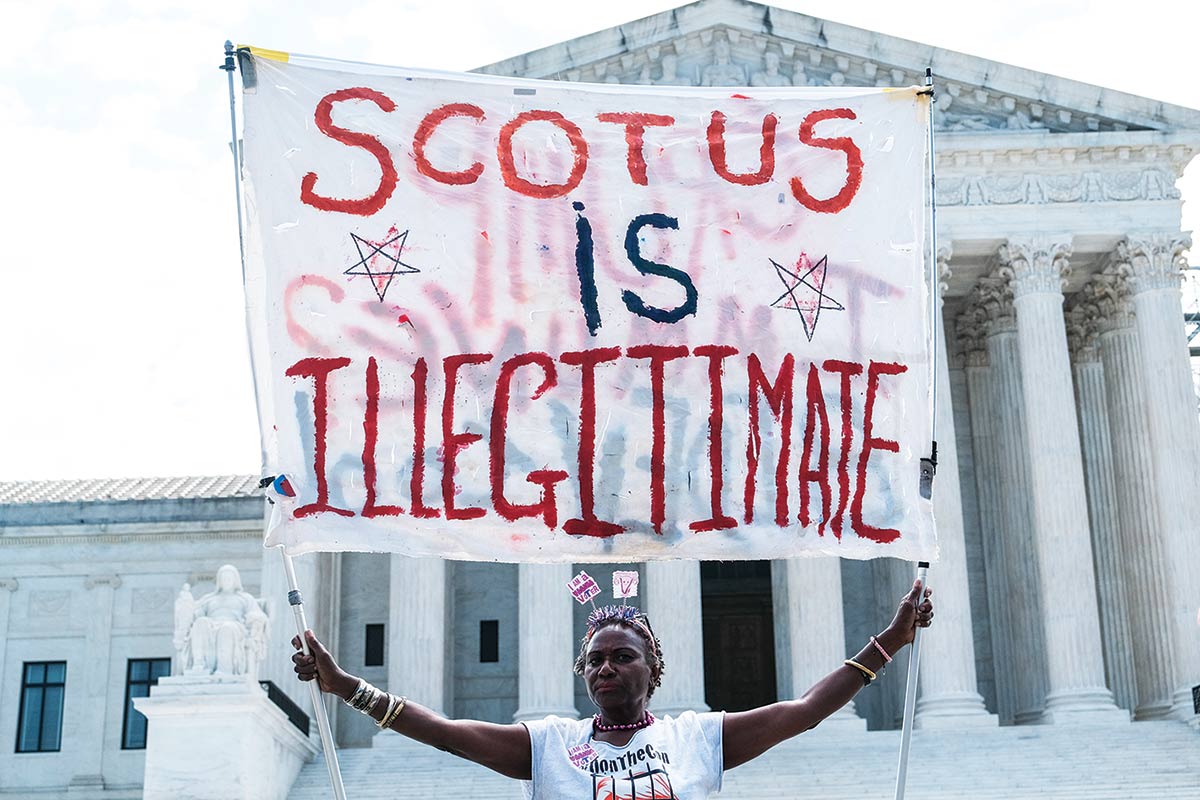
None of the likely decisions in the cases I’ve highlighted will be popular. Republicans would never be able to overturn popular laws like the National Voter Registration Act or Title IX at the ballot box. People in Washington State voted to protect runaways, while people in Chicago voted to ban assault weapons. And the fossil-fuel industry counts among the least-popular mustache-twirling capitalists in our society.
The fact that none of these Republican-aligned cases could win in front of the people is the reason they’re in front of the Supreme Court. The court is where Republicans go to do what the people reject.
The Supreme Court would have us believe that we’re powerless to stop them. That feeling, of course, is amplified by elected politicians, who unleash a mighty shrug every time a Supreme Court decision doesn’t go their way but then do nothing—and, more devastatingly, act like there’s nothing they can do.
But we are not powerless. While the political branches will never buck the Supreme Court on their own, we can demand it—and push and push until they rein in this rogue branch of government.
There’s a lot that our elected leaders can do, much of it through simple legislation. They can change the number of justices on the Supreme Court. They can cut its funding. And, at the end of the day, they can strip its jurisdiction over laws passed by Congress. Indeed, all of these things can be done without the need of a constitutional amendment.
Increasing the number of Supreme Court justices is the easiest thing to do, legislatively speaking: just pass a bill adding justices and appoint new ones who oppose the court’s various power grabs. Failing that, cutting the Supreme Court’s funding would be a good way to send a message to the current justices to get back in their lane. Congress controls the funding of the court: The justices can make their pronouncements from a park bench instead of a courthouse bench, if Congress ever decides to play hardball. Finally, the Constitution does not give the Supreme Court the final say on what is constitutional. Congress could pass a law prohibiting the court from ruling on a given law’s constitutionality. The justices would object, but at least some states would follow the rules as laid down by the people’s representatives instead of the ones decreed by the unelected Supreme Court.
But none of this will happen unless the people demand it. Congress will not take back power for the people unless the people recognize how much power they’ve lost. Even though the Supreme Court is unpopular, people still think it’s unassailable, and until that changes, the court will continue to act against the popular will. As Frederick Douglass once said: “Power concedes nothing without a demand.”
I choose to remain hopeful that one day we will remember that nobody elected these nine petty kings and queens. Power in a democracy flows from the people, and if the people ever remember that, this Supreme Court can be stopped.