
The Reality Today Is That Foreign Policy Hawks Are a Minority in the Democratic Party
It is damn time we all started acting like it.
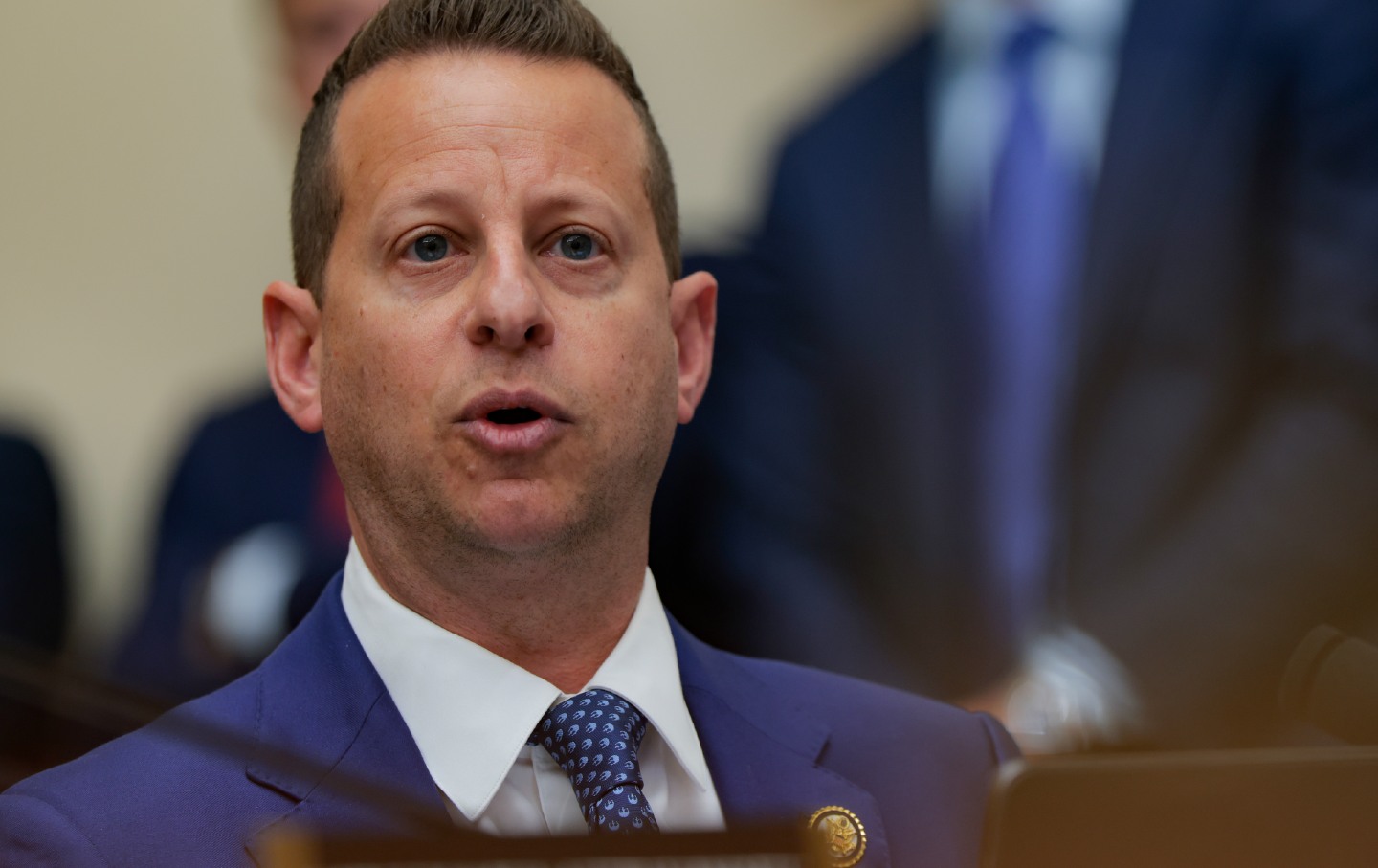
What do you do after you’ve just been handed your party’s top position on a key House foreign affairs committee? Obviously, run to the nearest reporter and complain that you’re being treated unfairly.
If that sounds weird, that’s because it is weird. But that’s exactly what Florida Representative Jared Moskowitz, one of the most stridently hawkish members of the House Democratic caucus, did shortly after being elevated to the position of ranking member on the House Foreign Affairs’ Middle East subcommittee. In an interview with the right-wing pro-Israel tabloid Jewish Insider, Moskowitz complained of “bullying” and claimed, “There’s no doubt that the Democrats that are super pro-Israel, in general, feel somewhat ostracized, and how could you not?”
Yes, how could you not indeed, having just received a major promotion?
In addition to Moskowitz, House Democratic leadership also added two other Middle East hawks to the House Foreign Affairs Committee: Florida Representative Debbie Wasserman Schultz and Missouri Representative Wesley Bell, who was the pro-Israel lobby’s chosen candidate to unseat progressive champion Cori Bush in 2024. Progressive Wisconsin Representative Mark Pocan was also named to the committee.
If this slate of new members accurately reflected the expressed views of Democratic voters, these numbers would be reversed: Instead of three foreign policy hawks and one progressive, we would’ve gotten three progressives and one hawk (if even that).
Opinion polls have been very consistent on this. A March 2026 Marist poll found 86 percent of Democrats opposed to war with Iran. By June, Quinnipiac found that number had risen to 93 percent of Democrats. A July 2026 AP-NORC poll found that 58 percent of Democrats, including 51 percent of Jewish Democrats, say the United States is “too supportive” of Israel, with 62 percent of Democrats saying the US is “not supportive enough” of the Palestinians. And an August 2026 poll in early primary states by the Institute for Middle East Understanding Policy Project (where I am currently a fellow) found that Democratic voters “overwhelmingly want to sanction and cut off all weapons to Israel.”
And yet when Democrat Ro Khanna introduced a resolution against the Iran War shortly after it began, Moskowitz derided it as “the Ayatollah Protection Act.” The problem here is the opposite of what Moskowitz claims: Hawkish Democrats aren’t being marginalized enough in the Democratic Party.
The problem isn’t just in the House. Back in April, a record number of Senate Democrats voted for Bernie Sanders’s resolutions blocking arms to Israel. One of the few Democrats to vote against a supermajority of his own caucus was Delaware’s Chris Coons, who is in line to head the Senate Foreign Relations Committee.
In September 2025, Coons told Axios, “If there is no change in direction from the Israeli administration, for the first time I would seriously consider” voting to withhold weapons from Israel, adding that he had never done that. (I’m sorry, but “No change…” nearly two years into a genocide?) Since then, Israel’s behavior, both in the occupied territories and across the region, has only gotten worse, and yet Coons still stubbornly refuses to move.
Coons has also been on the hawkish side of the Iran debate. Shortly after Joe Biden won the 2020 presidential election, Coons was asked if he would support a return to the Iran nuclear agreement, something to which Biden had unequivocally committed. Coons said he would not, unless the agreement was made stronger and addressed a broader set of regional issues. Unfortunately, the Biden administration listened to such advice, squandering an early opportunity to rejoin the agreement and putting us on the path to the current war.
This isn’t just a “right now” problem; it’s also a future problem. Committee chairs and ranking members have considerable power to set the party’s direction in their policy areas. Hopefully Democrats will retake the White House in 2029, but it would be extremely frustrating, and political malpractice, if yet another Democratic president had to expend valuable time and energy fighting with his or her own party leadership to execute popular international initiatives, as Barack Obama did with the 2015 Iran deal, among other diplomatic efforts. Top Democratic leaders shouldn’t have to be dragged along into backing an ambitious pro-diplomacy agenda; they should be at the frontlines of it.
The Democratic coalition is diverse, with a range of views on policy. We should constructively address those differences and debate those views as we work to grow the coalition to win the majority. But that doesn’t mean that members of the coalition with increasingly marginal views should be entitled to continue to speak for and lead it. The reality today is that foreign policy hawks are a minority in the Democratic Party. It is damn time we all started acting like it.
More from The Nation

How the Serbian Student Movement Is a Victory for Organizing Power How the Serbian Student Movement Is a Victory for Organizing Power
In Serbia, the students may have discovered a formula for rescuing democracy through nonviolence and commitment to collectivism. Students everywhere should take note.

Dispatch From Post-Election Israel Dispatch From Post-Election Israel
The real story in this election is the extraordinary and uplifting strength of the vote of Arab citizens in Israel.

Ukraine: Time to End the War Ukraine: Time to End the War
For both Russia and Ukraine, the war has taken a staggering toll and poses an ever-greater danger of spreading.

“This Election Was a Defeat for Lies”: Read Lula’s Inspiring Victory Speech “This Election Was a Defeat for Lies”: Read Lula’s Inspiring Victory Speech
“I doubt that Russia, China, or the United States has an army as victorious as the army of democracy of this country,” the president told his supporters.

Lessons From Lula’s Historic Victory Lessons From Lula’s Historic Victory
The Brazilian left has stopped the right-wing wave in Latin America. Now it has four years to work out a succession plan.

France’s Permanent State of Emergency France’s Permanent State of Emergency
The bad habits Emmanuel Macron will pass on to his successor.

