Lessons From Lula’s Historic Victory
The Brazilian left has stopped the right-wing wave in Latin America. Now it has four years to work out a succession plan.
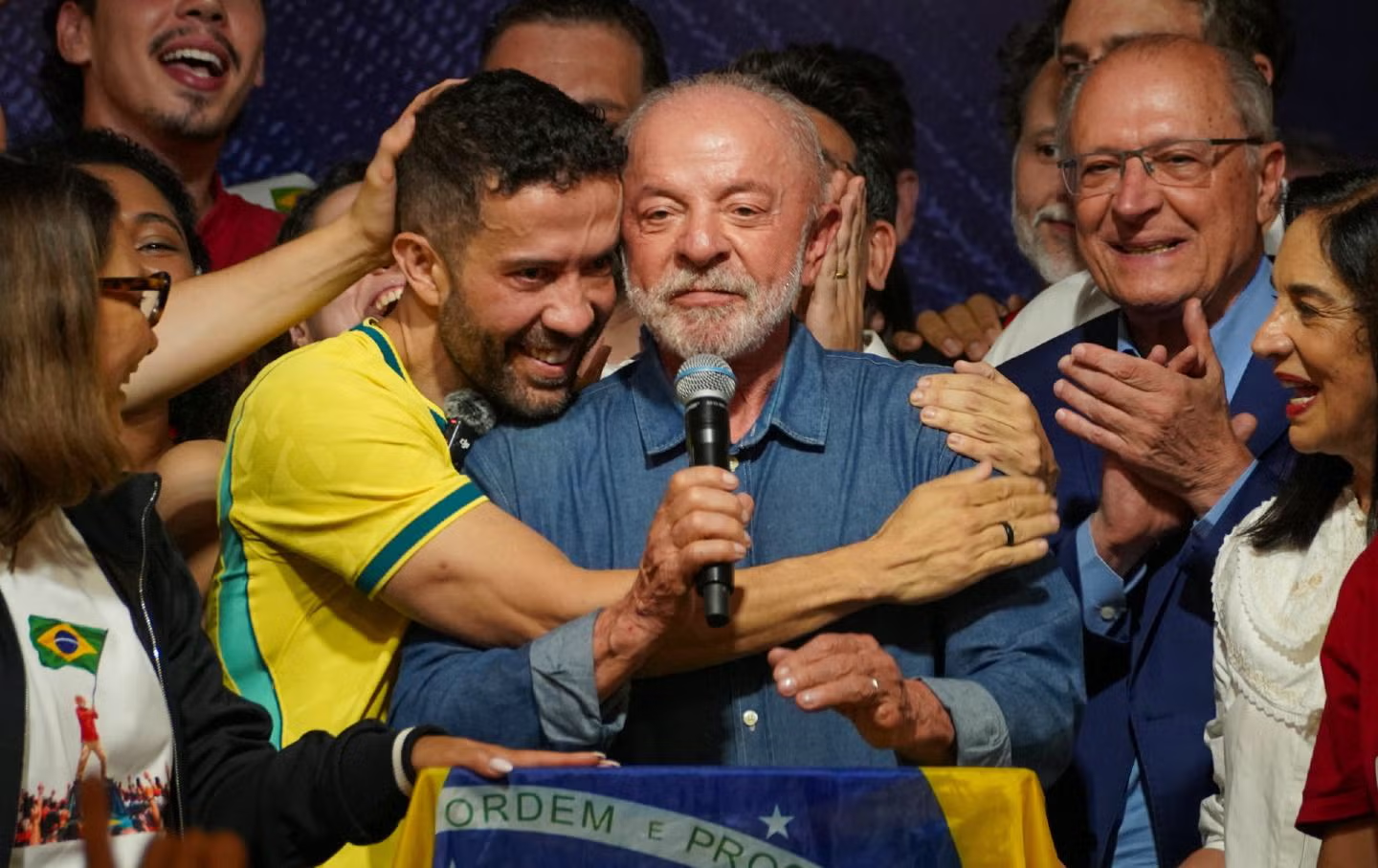
After three of the most intense weeks in the history of Brazilian politics, Luiz Inácio “Lula” da Silva will be president again. Though he lost the first round of the presidential election earlier this month, he went on to win a historic fourth term, finishing 4.4 million votes ahead of Flávio Bolsonaro, the crooked oldest son of former president and convicted coup plotter Jair (the final tally was 51.79 to 48.21 percent). If it wasn’t clear before, it is now: Lula is the greatest popular leader of his generation and one of history’s most gifted politicians.
Flávio has predictably refused to concede, but Lula’s margin of victory was twice as large as his 2022 margin over Jair—and unlike his father in 2022, Flávio does not have the power of the presidency to try to stop Lula from taking office. Some of his closest allies have already fled to Miami, and his brother Eduardo, a former federal deputy who exiled himself to Texas a few years ago, suggested on a podcast last week that Flávio should join him in the United States.
Flávio ran a weak second-round campaign, as scandal after scandal broke almost daily. Together, they tied him and his closest allies to organized crime, money laundering, social security fraud, the gambling lobby, and the largest banking fraud in Brazilian history. He also alienated many voters by acting as if he were already in government, announcing bizarre cabinet appointments and unpopular policies. During the debates, his attempts to first troll Lula and then to pose as a statesman both backfired.
Lula’s victory has not only stopped the wave of right-wing victories crashing across Latin America, but it also marks a major setback to Imperial Miami’s project for the region, encapsulated in the so-called Donroe Doctrine. Indeed, it is the most significant defeat for the far right internationally since Donald Trump won a second term in 2024. It was a victory against the odds: Lula won an astonishing 10 million–plus new votes in the runoff after losing to Flávio by 2.2 million votes on October 4 (47.03 percent to Lula’s 45.16). And he did it despite coordinated attempts to sabotage his campaign by Big Tech, the United States, the president of Brazil’s Electoral Court, elements of legacy media, and one of the most powerful online disinformation machines ever assembled.
Lessons From Brazil
The result will reverberate well beyond Brazil’s borders. The country has the largest economy and population in Latin America, and it has often been credited with the potential to become a major power—not only because it is blessed with critical minerals but also because it has the capacity to withstand bullying, tariffs, and economic warfare from the United States. That power is why even the right-wing governments of its neighbors—with the exception of the increasingly delusional Javier Milei—have already acknowledged Lula’s victory. Trump has so far stayed silent.
What, then, can the left elsewhere learn from Brazil? First, we now have an answer to the question I posed in a piece for Jacobin before the second round: whether “the politics of the street are enough to counter some of the effects of social disintegration.” The answer is a resounding yes: The politics of the street still matter.
The day before the October 25 runoff saw perhaps the two largest rallies in the history of Brazil: Close to a million people, myself included, joined Lula on Copacabana Beach in Rio, and likely well over a million occupied the entirety of Avenida Paulista, the main thoroughfare in São Paulo, the most populous city in the Americas. There were also significant rallies in all of Brazil’s other major cities, midsize cities, and even small towns. Getting people on the street doesn’t just provide an antidote to the virus of political despair; it can still mobilize voters.
Second, this is the first election I have witnessed in which the left won the online battle—despite Big Tech, particularly Meta, tilting the algorithm toward the far right. Credit for that goes mostly to a centralized online army—Lula’s Army—of 10.8 million people, organized through a WhatsApp channel in less than three weeks and commanded by the Julius Caesar of Brazilian social media, Minas Gerais Federal Deputy André Janones. The general not only turned the algorithm against the far right but also reclaimed symbols of Brazil such as the national football team’s jersey (by sending his followers on missions like posting a selfie on Instagram on a Saturday at 9 am wearing it) and made the trademarked “L” hand sign for Lula.
In this war, Janones had help from a new generation of Brazilian left-wing politicians who launched their own offensives on social media. Among them were Homeless Workers’ Movement leader Guilherme Boulos, who also serves in Lula’s cabinet as minister for the presidency; Brazil’s Marxist-Leninist answer to Hasan Piker, Pernambuco Federal Deputy Jones Manoel; and the 21-year-old Minas Gerais Workers’ Party Federal Deputy Ana Elisa Silva.
The contrast with the right is instructive. Bolsonarismo’s Militant Digital Party—as political scientist Marcos Nobre describes it, drawing on the work of Paolo Gerbaudo—is largely organic and decentralized, led by a host of political entrepreneurs who run their own online pyramid schemes (as the philosopher Rodrigo Nunes outlines in his new book Anatomy of Disintegration). It operates largely out of public view, through covert networks and individualized algorithms, and is flush with dirty money from the online gambling industry, organized crime, and various other scams.
According to Nobre, it has a hard-line base of around 25 percent of voters and has swallowed up the old rent-seeking parties of the centrão (big center) by way of a conventional party apparatus. Bolsonaro’s Liberal Party is now the dominant force in both the Chamber of Deputies and the Senate. Those gains have come not at the expense of the left, which actually increased its representation in Congress, but of old-school authoritarian, center-right, and slightly more democratic machine parties.
Popular
“swipe left below to view more authors”Swipe →The left took the opposite approach. By centralizing communications and messaging, it reached not only undecideds but also those who abstained in the first round or cast null ballots, and even more than a few Flávio supporters. The result was a historic jump in turnout. The upshot is that if the left is to launch a digital counterattack against the far right, it needs to centralize communications and create a welcoming online space for alienated and isolated people looking to do more than shout into the void.
While Lula is a generational leader produced by a world-historic movement of the working class—and Janones is a digital commander who could only have emerged in Brazil—this victory still offers invaluable lessons for a left that wants not just to play defense against the far right but to go on the counterattack, combining the politics of the street with a centralized online army.
None of this will make Lula’s job easy. Governing Brazil with a Congress controlled by the far right will be an enormous task, and we can expect repeated attempts, backed by the United States, to contest the results. After all, Jair Bolsonaro was convicted of plotting a failed coup after the last election—a plot that, among other things, would have involved the assassination of Lula.
The Brazilian left has stopped the right-wing wave in Latin America. Now it has four years to work out a succession plan.
More from The Nation
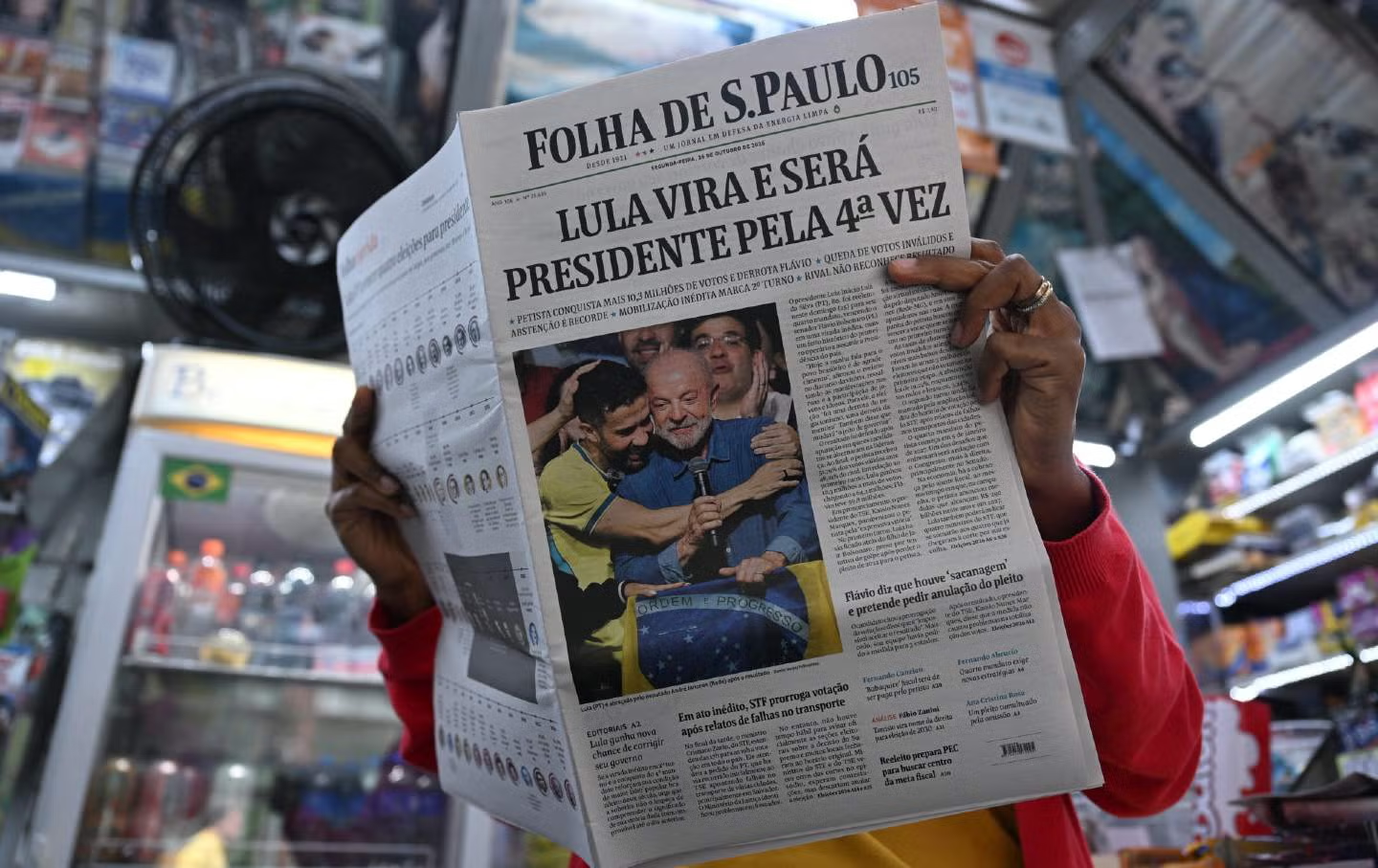
What We Can Learn From Lula’s Seismic Win What We Can Learn From Lula’s Seismic Win
The Brazilian president looked headed for defeat. The Brazilian people had other ideas.
Pope Leo Goes to War—Against the Department of War Pope Leo Goes to War—Against the Department of War
The growing divide between Rome and Washington.
France’s Left, Divided at the Worst Possible Time France’s Left, Divided at the Worst Possible Time
Years of progressive infighting weigh on Jean-Luc Mélenchon’s presidential ambitions.
The Fugitive From Brazil The Fugitive From Brazil
The implications of Trump’s red-carpet rollout for Flávio Bolsonaro.
Inside France’s Biggest Uprising Since 1968 Inside France’s Biggest Uprising Since 1968
Despite harsh reprisal from the government, students show no sign of stopping.
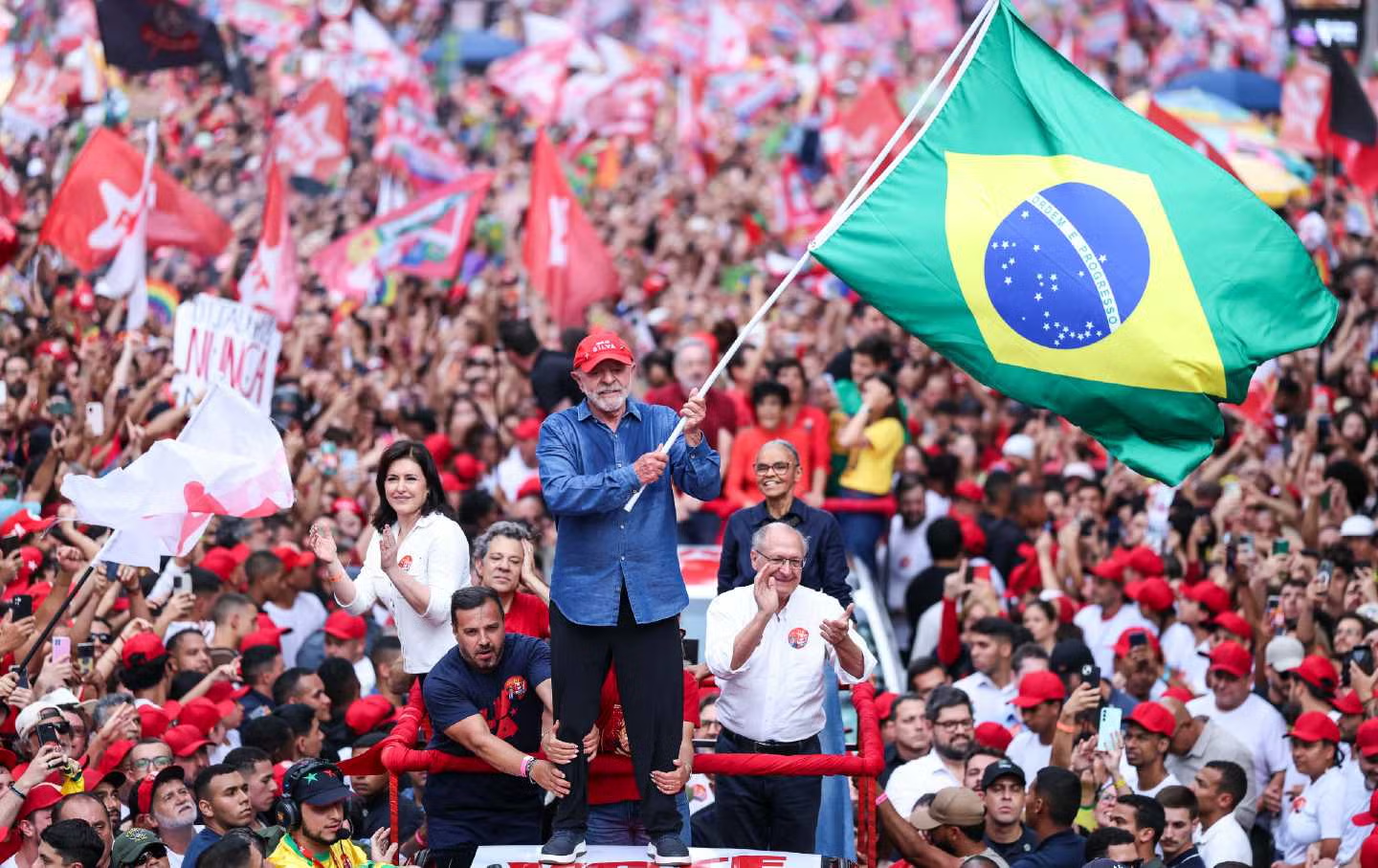
Lula’s Victory! Bolsonaro’s Defeat! What’s Next for Brazil? Lula’s Victory! Bolsonaro’s Defeat! What’s Next for Brazil?
A leading Brazil scholar predicts that Trump will continue to meddle in Brazilian politics.

