
Ukraine and Our Wildly Reckless Flirtation With a Nuclear War
For the first time in the lifetime of most of us, there are no remaining US-Russian arms control agreements.
By late 2022, Ukraine had rallied, with Western backing, and Russia’s invasion had wavered. The war was only several months old, but it already appeared that Russians might be abruptly routed. Which was terrifying—because US intelligence intercepts made clear that, long before they’d allow that, the Russians would use battlefield nuclear weapons against CIA-Ukrainian positions.
That October, President Joe Biden admitted to rich campaign donors that we were flirting with “Armageddon,” and hadn’t been this close to it since the Cuban missile crisis of 1962. His comments were spun then as not supported by any particular intel, just the president spitballing. But that was not true.
Two years later, The New York Times offered a report based on 18 months of interviews “with administration officials, diplomats…and military officials who recounted the depth of their fear in those weeks” [emphasis mine] that Russia, on the ropes, was about to use nuclear weapons.
Biden apparently asked Russia’s Vladimir Putin for “an urgent meeting of emissaries,” and in November 2022 our spy chiefs met. The Russian spy chief “apparently thought the CIA director had been sent to negotiate…[to] end the war,” reported The New York Times. “It took some time for Mr. Burns to disabuse Mr. Naryshkin of the idea that the United States was ready [to talk peace terms].”
How tragicomic. As has been exhaustively documented, the US government vetoed Ukrainian-Russian peace agreements that would have ended the war within the first few weeks. (Think of how much death and destruction could have been averted.) Now, with time-consuming effort, we convinced the Russian side one more time that, no, we still weren’t interested in peace. Apparently the Russians couldn’t believe it!
We’ve learned little since.
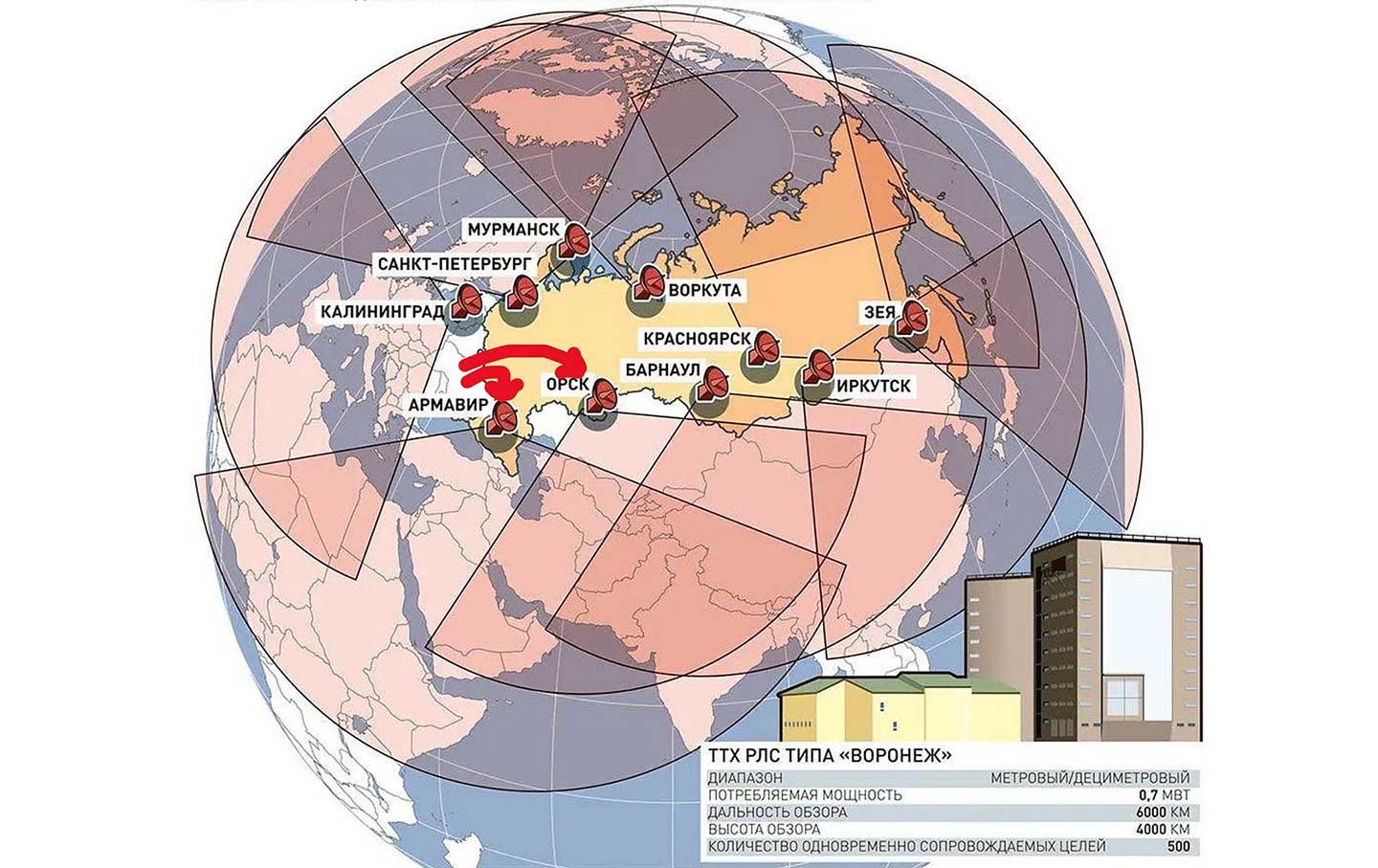
Despite the incredible danger of provoking a world-ending nuclear war, Ukraine’s more recent CIA/NATO-supported strikes have targeted Russia’s nuclear weapons systems. In May 2024, Ukrainian drones repeatedly attacked, and briefly disabled, Russian early-warning-system radars. Those radars are used to detect incoming nuclear attack. In nuclear war game scenarios, such radars are often taken out as a “blinding” tactic ahead of a nuclear first strike. So, to attempt to cripple these radars (which had little to nothing to do with the Ukraine war itself) was wildly reckless. Theodore Postol, a physicist and professor at MIT, called it “the dumbest thing Ukraine can do.”
The same goes for Operation Spider’s Web, in which Ukrainian drones secretly shipped in trucks across Russia deployed last June to attack airfields as far off as Murmansk in the far north and Irkutsk in the Siberian east. Ukraine claimed to have destroyed up to a third of the Russian strategic nuclear bombing fleet. This summer, Ukraine marked the anniversary of that triumph by releasing dramatically scored video footage of this likely CIA-conceived-and-guided operation. Again: Attacking Russia’s nuclear warning radars one year, and their nuclear weapons-armed strategic bombers the next, is incredibly provocative.
This winter, the Ukrainians escalated even further, with the ultimate attack on nuclear command and control: They made an apparent attempt to blow up Putin’s home at the Russian resort of Lake Valdai.
The Russians expressed rage, and Putin called Donald Trump to complain, as Trump discussed with journalists later that day. “President Putin told me about [a drone attack on his residence]. Early in the morning he said he was attacked. It’s no good,” said Trump then. “I was very angry about it.”
Ukraine’s Volodymyr Zelensky initially dismissed reports of an attack on Putin’s Lake Valdai home as a Russian “fabrication,” and after a CIA briefing, Trump also reversed himself and said he now disbelieved Putin. But six months later, Zelensky seemed to confirm the attack, taunting Putin about it in an open letter.
“We often hear that you are comfortable with this war. Of course, not in those cases when it comes to the security of your residence in Valdai,” Zelensky wrote then to Putin. “Your own life is valuable to you.”
What would have happened if weapons guided to target by the CIA had killed the Russian president, and/or his wife and two young sons?
For context: America and Russia have hundreds of nuclear weapons aimed at each other, poised for launch after just several minutes of consideration. France and Britain, who have been startlingly bellicose against Russia of late, also have nuclear weapons. For the first time in the lifetime of most of us, there are also no remaining US-Russian arms control agreements: They’ve all either been torn up or allowed to expire. And nuclear war games consistently show that once even a single nuclear weapon is used in anger, it’s very hard to prevent an inevitable, rapid escalation into full-on nuclear war.
Popular
“swipe left below to view more authors”Swipe →What would such a war mean? Well, if Russia and NATO were to start exchanging nuclear strikes, we could see millions of people killed in an afternoon, and billions more in coming years by a so-called “nuclear winter” of climate, agricultural, and civilizational collapse.
These cold hard facts have occasionally inspired protesters to interrupt ho-hum political events in recent years, like Representative Alexandria Ocasio-Cortez’s neighborhood town hall, to demand something be done.
“You’re playing with our lives!” yells one, after accusing Ocasio-Cortez and the Democrats of pouring gasoline onto a conflagration in Ukraine and risking a worldwide nuclear war. Another takes up the argument, yelling, “Are you going to stop nuclear war? Yes or no?” The congresswoman tells him he needs to get into the line to ask his questions, to which he replies, “There is no line, because this is bullshit! None of this matters if we’re all dead! None of it!”
Put the Ukraine war itself aside, and consider: We need to be able to work with the Russians on reviving nuclear arms control talks. We urgently need to get weapons off of hair-trigger alert everywhere, and to remember and honor our treaty commitments to work for global nuclear disarmament—preferably before America or Israel rage-nuke Iran.
Eventually, we need the American and Russian governments to join the majority of the world’s nations in signing the UN Treaty on the Prohibition of Nuclear Weapons.
We can’t do any of that critical work in this environment—and for many in Washington, that is itself a good enough reason for continued war in Ukraine.
Conversely, a rededication to good-faith peace in Ukraine could open the door to truly ambitious nuclear disarmament efforts. That would be quite an achievement for a president who styles himself a deal-making artist, and who in fact has had a long-standing interest in global nuclear abolition. Of course, in recent months, Donald Trump seems more likely to get us all killed with nuclear weapons than to save us from them. Perhaps we’ll be lucky enough, one last time, to escape such a fate, for a little longer—long enough, one hopes and prays, for commonsense, win-win international politics to finally be forced upon Washington, if only by citizen-led political change.
More from The Nation
Has France’s Government Overplayed Its Hand? Has France’s Government Overplayed Its Hand?
The speed and scale of the police response mark a dangerous new normal.
This Is Not an Anniversary This Is Not an Anniversary
Does remembering the date of October 7 make it easier to name?
Are Europe and Russia Slow-Walking to World War III? Are Europe and Russia Slow-Walking to World War III?
Dangerous rhetoric has been escalating on both sides for some time now.

This Village Has Been Fighting Israel’s Demolition Orders for Years. It May Be on Its Last Stand. This Village Has Been Fighting Israel’s Demolition Orders for Years. It May Be on Its Last Stand.
A new order for Khan al-Ahmar’s destruction failed to attract the international attention that had protected it in the past, and residents fear they can no longer stop the bulldoz...

The Year I Taught in a Former Coal Mining Town The Year I Taught in a Former Coal Mining Town
Teaching in the South of France, I learned that equality was just a story teachers told about themselves.
Why French Students Are Revolting Why French Students Are Revolting
France’s education system is stretched to its limits, as student anger kicks off a hot fall protest season.

