No, Woke 1.0 Was Not Crazy
AOC and others are laughing off 2020 as a wild, isolated moment. None of that is true.
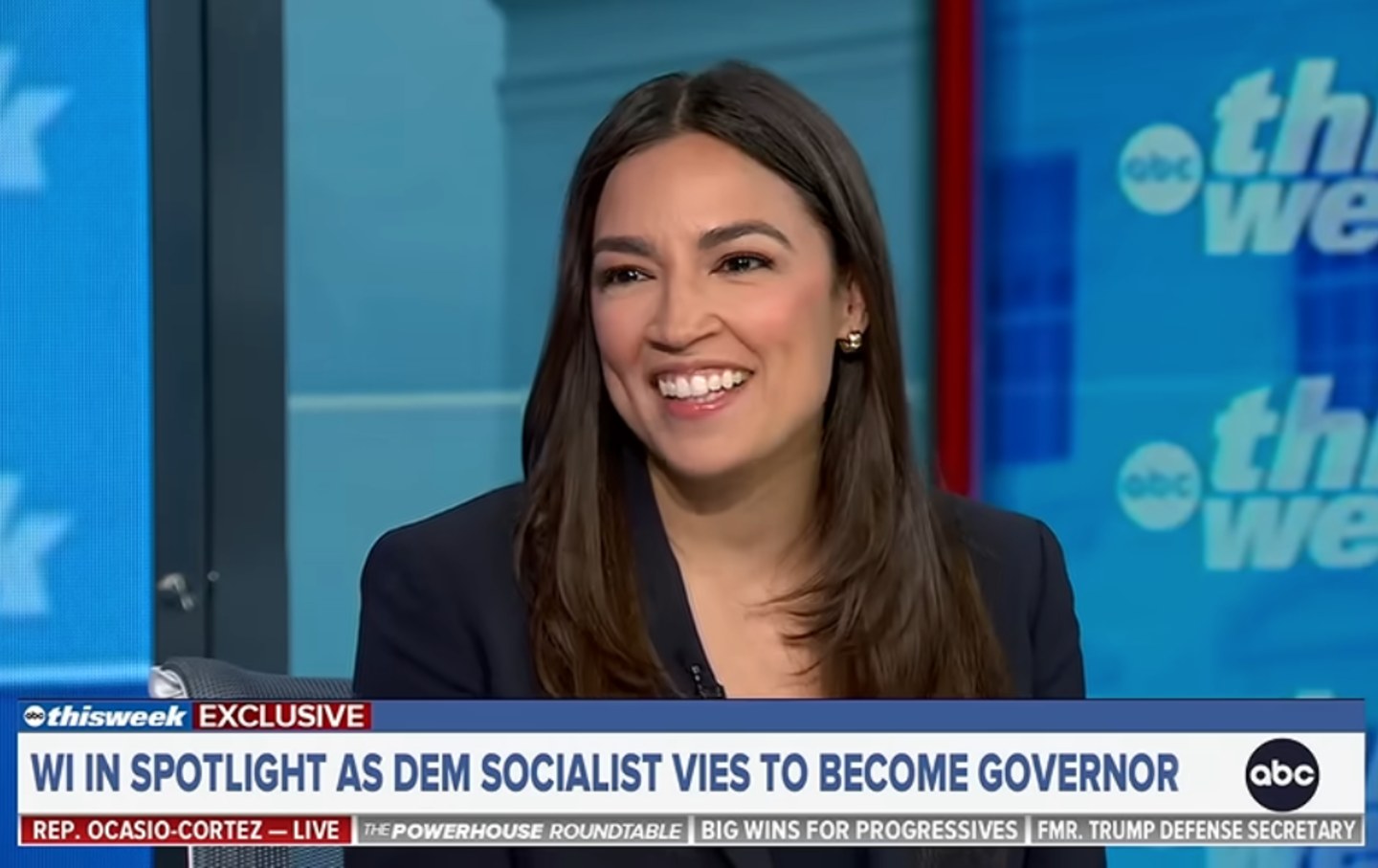
Alexandria Ocasio-Cortez on ABC’s This Week, on August 9, 2026.
(ABC News)It’s far too late now to bemoan how the meaning and sentiment behind “stay woke,” which originally pertained to the recognition of the racist structures that condition Black life in the United States, was stolen from Black Americans and caricatured into the ultimate symbol of political correctness run amok. But that notion of a crazed population seeking to punish anyone who doesn’t bend the knee to the new social rules and demand absurd changes to the social and political world is at the heart of the current discourse around so-called “Woke 1.0”—a term that is now quickly coming to define the seminal year of 2020, when the Covid pandemic and the murder of George Floyd fueled one of the biggest social justice movements in American history and popularized concepts like abolishing prisons and defunding the police.
The conversation started after Alexandria Ocasio-Cortez invoked the phrase in a recent ABC News interview. Asked about Wisconsin gubernatorial candidate Francesca Hong’s onetime support for prison abolition and police defunding, Ocasio-Cortez quoted New York City Councilman Chi Ossé’s declaration that “Woke 1.0 was crazyyyy.” She did say that there had been a “huge opening of the Overton Window” in 2020, and that “the discussions that were had in that time were quite fruitful.” But she concluded that “rhetoric in that time is not rhetoric that we would use today.”
Centrists and conservatives immediately pounced—after all, here was one of the most prominent leftists in America seeming to agree with them that the left had gone, well, a little nuts back in 2020. The implication from Ocasio-Cortez and Ossé is obvious: The 2020 protests against police violence and the rhetoric that came from that time produced a kind of frenzy that led people, including themselves, astray. Now, with their heads clear, they’re focused on serious and mature politics.
The people who stand against the caricature of wokeness will never stop telling you about the evils of its manifestation in elite liberal institutions and political circles. You know what I’m talking about: racial awareness training, pronouns, reading books like White Fragility, land acknowledgements. (Even worse, these people were forced to entertain police abolition and defunding as serious intellectual ideas.)
Not to say that some of these things aren’t annoying. But the irony is that they are examples of the urgent material demands of the movement being siphoned away by elites, not evidence of what organizers actually wanted. Land acknowledgements are easier than reparations. Asking for more representation in elite colleges is necessary, but it is not as important as addressing overpolicing and racial profiling. The Democrats kneeling in supposed solidarity while wearing kente cloths were making a symbolic gesture meant to distract from actual police reform—the physical equivalent of pushing for more body cameras, despite endless evidence that they are ineffective. But no, it was all crazy.
You’d think that millions of people in 2020 just woke up and demanded that everyone needed to make land acknowledgements and call people by their correct pronouns or otherwise face a firing line. You could also be forgiven for feeling insane yourself for remembering that the protests of 2020 started because the world saw a long video of George Floyd being slowly killed by a police officer while another stood guard—and that the killing was another one in a long history of police killing Black people, then justifying their actions through the often-used excuses that allowed them to escape accountability. (Maybe they felt threatened because the Black person reached for an invisible gun, or moved toward them threateningly. Maybe the guy was just big, and thus automatically scary. And even if none of that was true, maybe the person did something bad in their past and got what was coming to them.)
In 2020, in the middle of a pandemic where people also saw and heard very clearly how little the government cared for their lives, many people around the country declared that they wanted society to be different. Black people have consistently protested and spoken up about police violence, and often the rest of the public goes on about their day, seeing police violence as a Black issue. Not this time. Through the work of organizers—not the academics, pundits, and media personalities, who would go on to dominate the conversation—many others from the country joined them in the streets.
The status quo was clearly untenable. And for the first time in a long time, many different kinds of people saw the ways that the violence against Black people was connected to the wider oppression of all marginalized people. Protests spread from city to city, state to state, and soon, people around the world joined in, started their own protests, and spoke up about their oppressions.
For once, politicians couldn’t dismiss this as Black people being angry again. They were forced to confront how much of their city and state budgets were being eaten up by police and ask whether sending officers to do traffic stops and mental welfare checks was the best option. They were asked to explain to the public why paying police so much overtime was more worthwhile than putting that money into public services that would help people live better lives.
Police abolition is the big boogeyman for a lot of the people who see woke 1.0 as crazy. Though it has a long academic and social history, 2020 was the first time that many people had encountered it, and the gravity of the proposal felt unimaginable to them. But underneath that was the related but more minimalist concept of defunding the police.
The defund movement stems from an obvious truth: that the more contact people have with police over nonviolent offenses, the higher the chance those interactions could potentially become deadly. It’s not a matter of whether a police officer is a good or bad apple, but whether someone with a gun should be handling problems like stopping drivers for expired tags or petty theft. Because once that stop or call is made, there’s a real possibility that the person who is being stopped is killed. And every time police kill a person over a small issue, we collectively make and defend the argument that a human life is worth whatever offense that was. Defunding the police was an idea that stemmed from valuing human life more than a candy bar or a broken taillight.
The way such an idea was dismissed and characterized as an absurd attack on sensible society and politics, you’d think it was actually enacted and led to the unraveling of the paradise that we lived in. But it wasn’t. Not in any real way. Not even close. It was a vision for a different order of things, one more aligned with an appreciation of human life, and specifically Black life. Yet many saw this new order as so absurd, so extreme, that the backlash not only entrenched the original problem but further stripped away the rights of those marginalized groups who had the audacity to complain.
This was the latest in a long cycle of white backlash that has been constant since at least the civil rights era. And since we have allowed the right to dominate the structure of discourse for so long—whether in defining what “woke” is, or what extremism is, or what free speech is—we’re now in a stage where the supposedly sensible thing is to disavow one of the biggest protest movements in modern history because those that saw police violence against Black people as routine are now framing that movement as a time of lunacy.
Police funding has increased across the board since 2020. Police departments have been given more and newer technology to surveil people. Police killings barely make any noise now because even politicians on the left have accepted that confronting that violence is silly and divorced from sensible politics. ICE has also grown exponentially and inherited the police’s immunity and power to attack and kill anyone it wants with no consequence. ICE agents work in tandem with police across the country, and resistance is left up to those organizers and individual actors who have the courage to put their bodies on the line still, while their politicians laugh on social media and ABC News.
Popular
“swipe left below to view more authors”Swipe →Beyond the disappointment of seeing Ossé and AOC dismiss such an important time and the real grievances that gave birth to that movement—a movement that benefited their careers as well as larger Democratic victories around the country—I’ve also been disappointed in their framing their current lack of imagination as maturity. It seems like the natural cycle for inspiring young politicians on the left to get elected and slowly be transformed into the liberals that they used to criticize, even to the point of lending political cover to people carrying out a genocide, but it’s no less dispiriting to watch them accept this current iteration of the world as the less absurd one.
This is a society that keeps being pulled to the right, one where the president and his cronies are so brazenly corrupt that each day comes with another scandal that could have ended anyone else’s presidency but for him barely makes the news, a world where this current administration can go after left-wing organizations with the combined powers of the courts and federal agencies, strip civil rights from vulnerable groups, openly declare and enact their project of purging the country of non-white people, a world in where police are even more emboldened, more present in everyday life, more confident that they can kill and escape accountability, and we’re supposed to think that this is the normal world. And the suggestion that maybe things shouldn’t be this way, even approached imperfectly and annoyingly, was just so crazyyyy.
More from The Nation
How Occupy Wall Street Still Explains Politics Today How Occupy Wall Street Still Explains Politics Today
It sowed the seeds for a new era of social movements—but its politics of powerlessness should act as a cautionary tale.
Abdul El-Sayed’s Win Is a Landmark. But the Fight Is Far From Over. Abdul El-Sayed’s Win Is a Landmark. But the Fight Is Far From Over.
Even though the Palestine movement is on the march, we can’t afford any complacency.
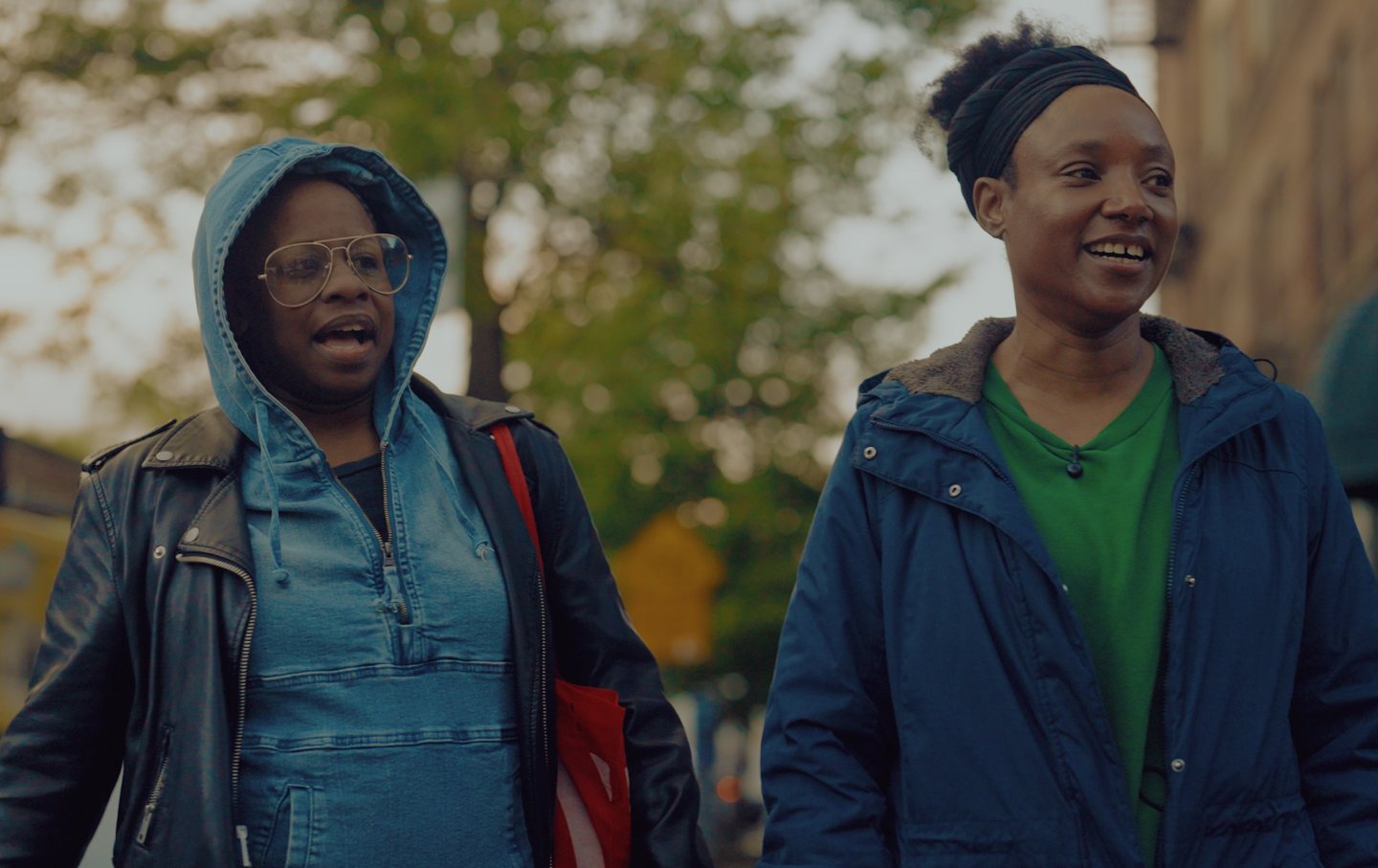
Mamdani’s Team Redefined Political Video. Now They’re Betting on Short Films. Mamdani’s Team Redefined Political Video. Now They’re Betting on Short Films.
Premiering exclusively in The Nation, a new short film produced by City Hall and narrated by Morgan Spector highlights the efforts of the biggest tenant-led union in New York City...
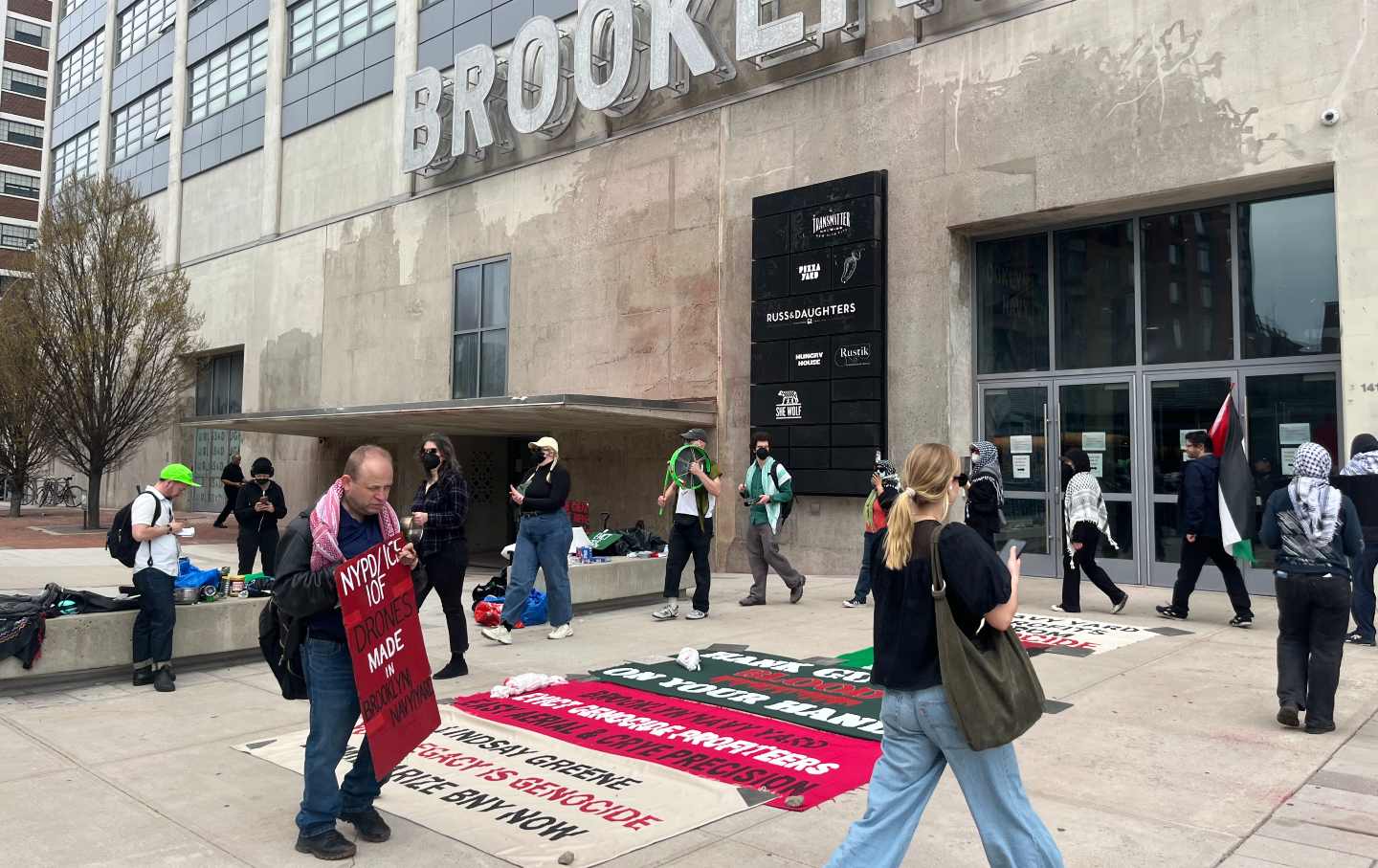
The Weapons Manufacturer Next Door The Weapons Manufacturer Next Door
It’s been six years since I began attending pro-Palestine demonstrations. The most recent campaign at the Brooklyn Navy Yard feels different.
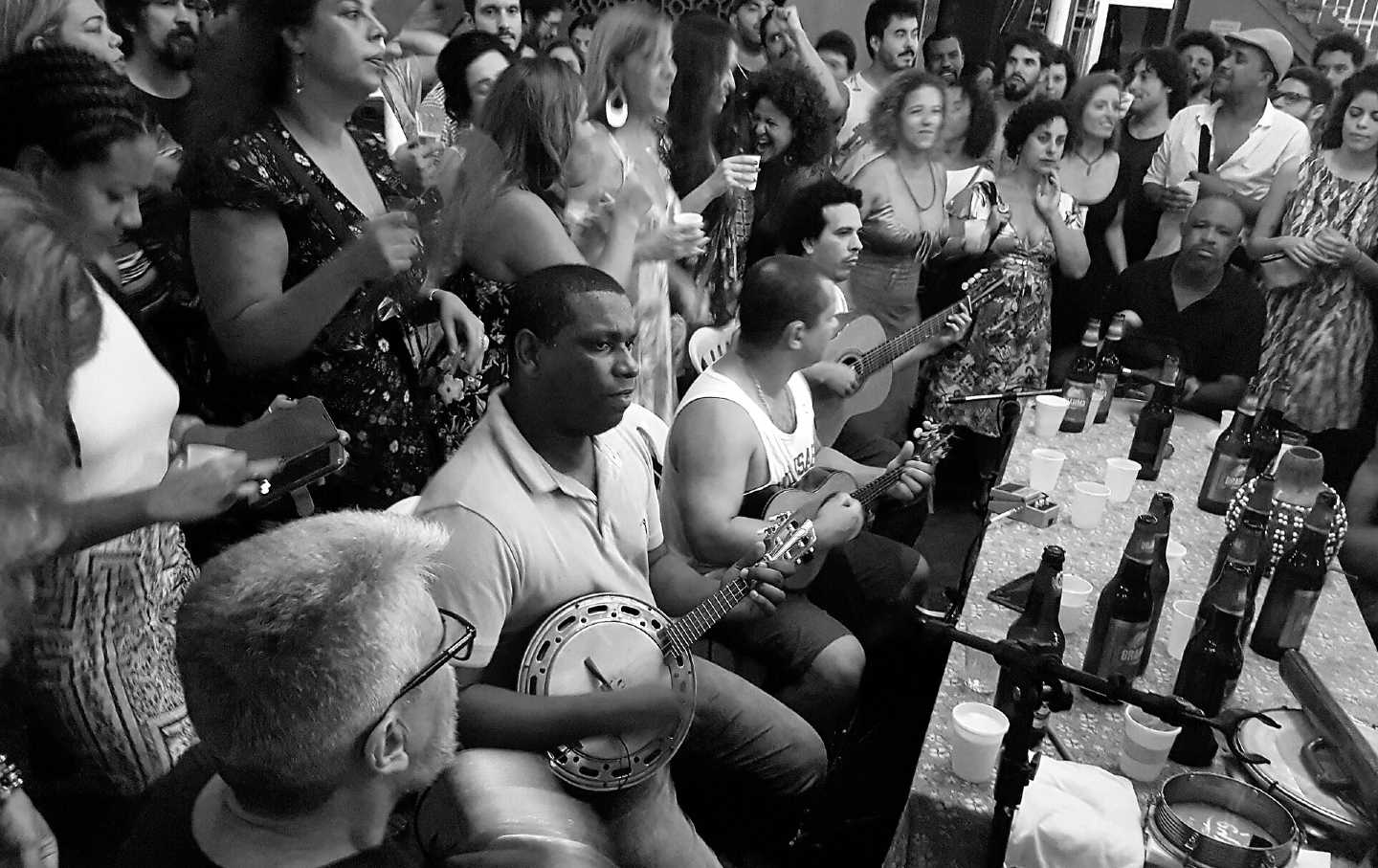
Slavery’s Musical Threads Slavery’s Musical Threads
As ICE violence resurges in the US, the musical history of black Brazil offers lessons in resistance.
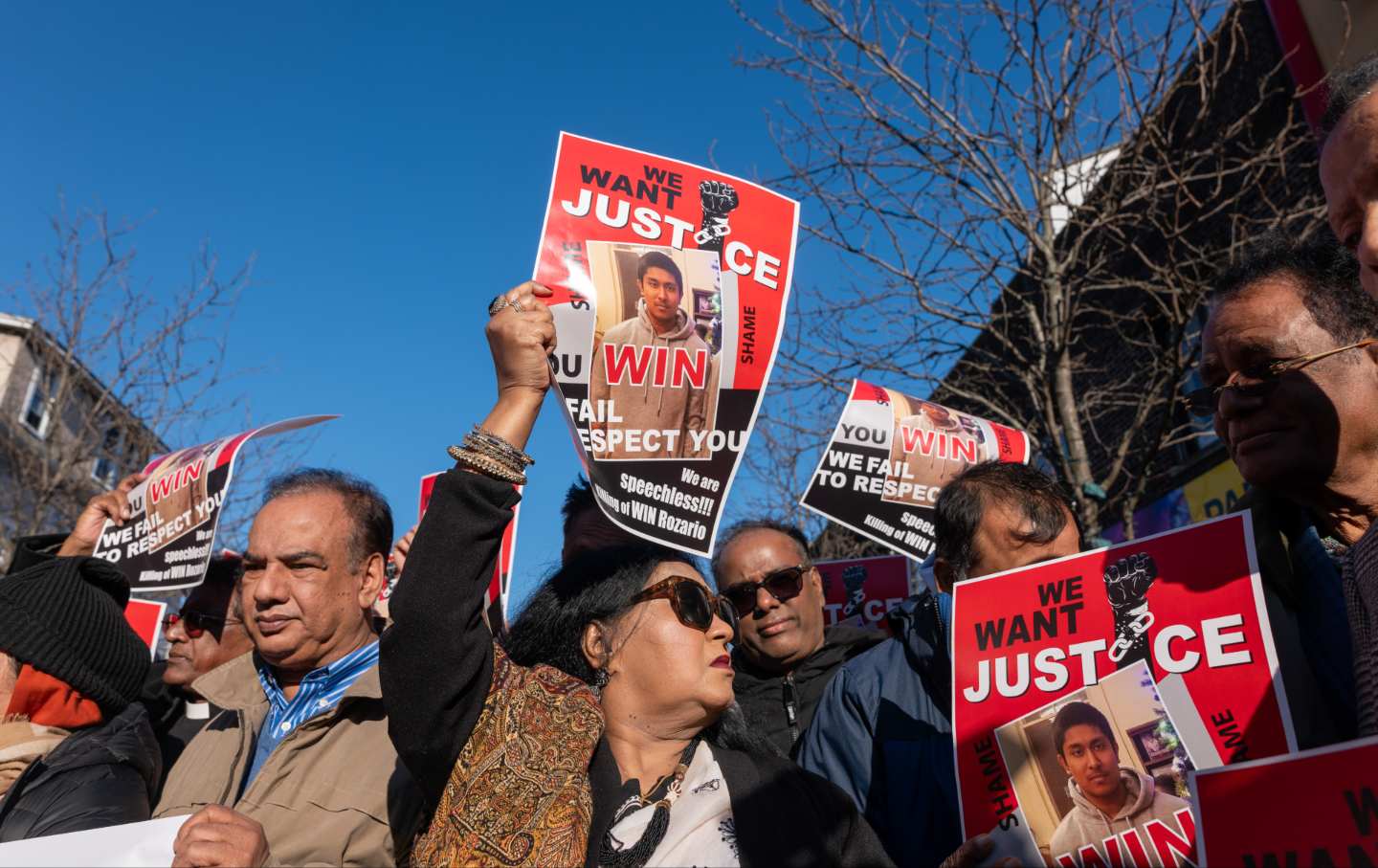
The Police Shootings Haunting New York’s South Asian Community The Police Shootings Haunting New York’s South Asian Community
Two young Bangladeshi American men were shot by the NYPD. One of them died. Their families are demanding justice and reform.

