
Why the Park Slope Food Coop’s BDS Battle Is So Important
Organizers trying to get the iconic store to ban Israeli goods believe in the power of tangible collective action at a moment when doing so feels increasingly difficult.
Ask anyone these days, and they’ll probably agree that we’re living in a time of unprecedented uncertainty.
Wars in Iran and Ukraine, genocide in Gaza, a climate emergency rearing its head across the globe, and creeping inflation making more and more of life feel out of reach—and all the while, AI is churning out an endless flood of disorienting slop and threatens to render many of our careers obsolete.
It can be easy to feel helpless, like we have no control over the tides of change that are leaving us in the dust.
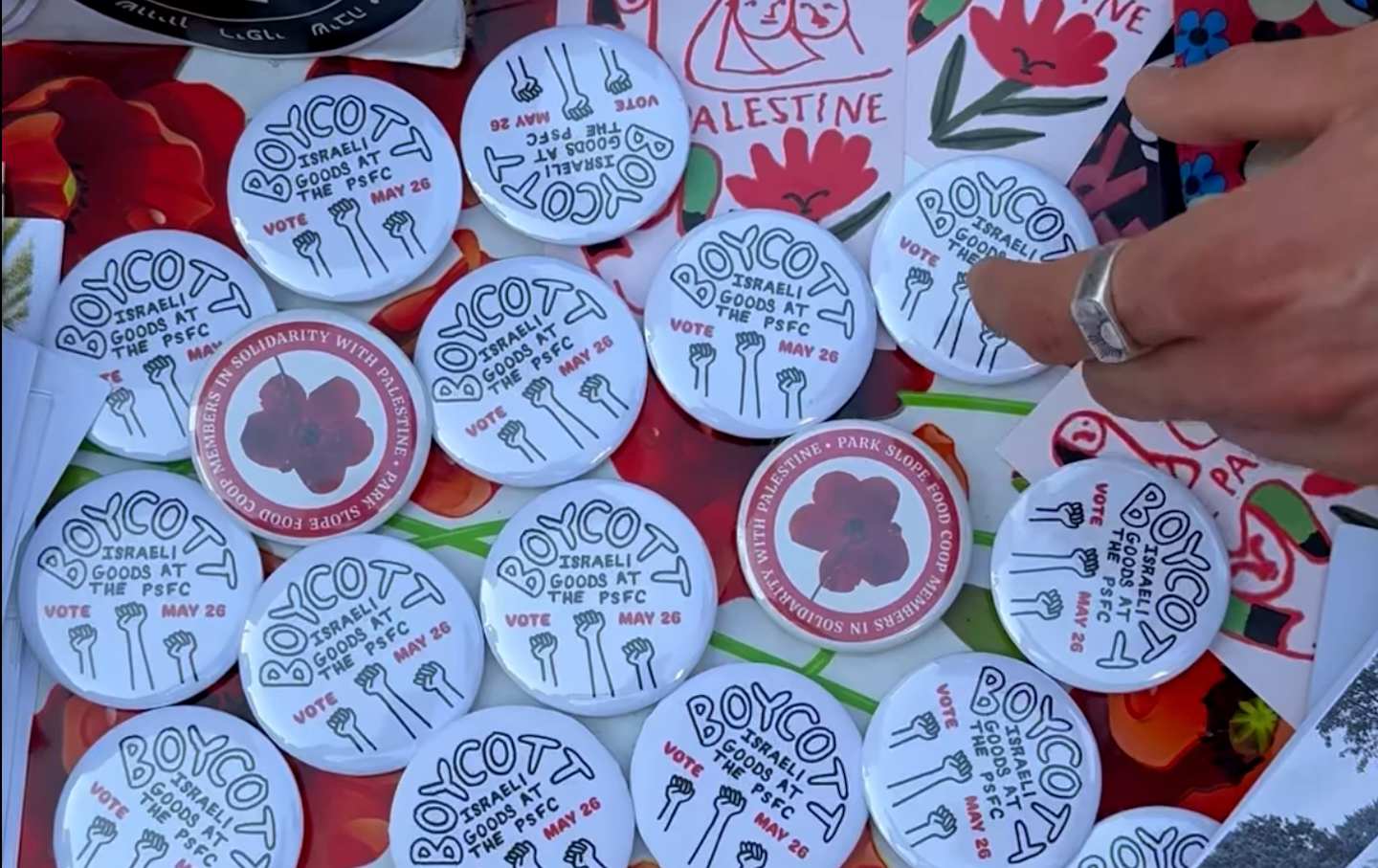
But even amid this atmosphere of tumult, people continue searching for places to exercise their own political agency and cultivate democratic power. And one place that search is playing out is in the aisles of the Park Slope Food Coop, a member-owned neighborhood grocery store in Brooklyn. This coming Tuesday, the coop is holding a series of crucial votes about an issue that has dogged it for years: whether or not to boycott Israeli products in protest of Israel’s ongoing policies of apartheid and genocide.
For the members of Park Slope Food Coop Members for Palestine (PSFC4Palestine) who have organized around this issue for years, the campaign is about more than just holding Israel accountable. It is also about translating widespread moral outrage and a longing for democratic community into tangible collective action at a moment when doing so feels increasingly difficult. And it could serve as a model for those who continue to feel as if they are careening toward a less democratic future.
The Park Slope Food Coop has never been just a grocery store. Since its founding in 1973, it has grown into an actual democratic institution with political responsibilities. The coop’s 16,700 members each volunteer to work a two-hour-and-45-minute shift every six weeks in exchange for discounted groceries and a vote on store policies. And for many coop members, the opportunity to collectively decide everything from what type of music should be played in the store to whether to stock alcohol is even more appealing than cheaper produce and healthier organic snacks.
As coop member, board member, and PSFC4Palestine organizer Tess Brown-Lavoie put it, the coop functions almost like “a small city”—large enough to reflect broader public opinion trends, but small enough for members to still feel that their participation matters.
It should come as no surprise, then, that a trip to the coop does not always feel like an escape from politics. That communal ethos—and the reality that economic choices carry moral and political weight—has long shaped what does, and does not, appear on the coop’s shelves. From its early years, members treated the store as a site of intersectional, global solidarity. In the 1970s and ’80s, the coop joined broader international efforts to boycott South African goods in protest of apartheid. Members also voted to boycott Chilean products under Augusto Pinochet’s dictatorship, and later took aim at corporations like Coca-Cola over allegations of complicity in violence against Colombian union organizers.
These were not symbolic gestures so much as extensions of the coop’s core philosophy: that a democratic institution, however small, has a responsibility to reflect the values of its members in practice. Boycotts were debated, sometimes vigorously contested, but they were never treated as out of bounds.
In this context, PSFC4Palestine’s years-long effort to bring about a boycott of Israeli products is neither novel nor particularly radical. Rather, it represented a continuation of a long tradition aimed at aligning the coop’s stated values with its everyday practices. But Israel’s defenders—as they so often do—insisted from the beginning that Israel should be treated as an exception.
Calls for the coop to join the Boycott, Divestment, and Sanctions (BDS) movement first emerged in the wake of Israel’s 2008–09 assault on Gaza, which killed more than 1,400 Palestinians. Within a few years, the issue had sparked one of the most contentious political battles in the coop’s history, culminating in a 2012 meeting that drew thousands of members to debate a possible referendum on boycotting Israeli goods. While members in attendance ultimately voted down the call for a referendum, the explosion of interest made clear that the debate over a boycott of Israeli goods was far from over.
In the years that followed, pro-Israel coop members adopted a new strategy. Rather than simply trying to win the argument over whether to boycott Israeli goods, they focused on restructuring the procedural terrain on which the argument itself could be fought. In 2015, four coop members interrupted and derailed a presentation by members who were calling for a boycott of SodaStream, the Israeli seltzer-machine company that operated a factory in a West Bank settlement. They reportedly unplugged the projector, stormed the stage, and shouted “antisemite Jew haters!” until the presentation had to be called off. They were later suspended from the coop for one year. (This was all detailed in the coop’s in-house newsletter, the Linewaiters’ Gazette.)
In 2016, the coop adopted a new rule requiring any boycott to pass with a 75 percent supermajority at a general meeting, rather than the simple majority that was required for previous boycott votes. The rule was framed by its supporters as a way to preserve “community and cooperation” within a deeply divided membership.
But in practice, the new rule ensured that any future boycott effort would need overwhelming support—an extraordinarily high bar in a community where even the volume of the store’s music can cause tensions.
Keyian Vafai, another coop board member and organizer with PSFC4Palestine, helped put the absurdity of that threshold into perspective.
“You could propose an agenda item that says, let’s dissolve the coop and close its doors forever, and that would take 66 percent of the vote,” Vafai said. “Or you can look at the US Congress. There’s nothing that requires that level of support. It’s very obvious why they did that.”
For boycott supporters, it seemed clear that the coop was reproducing yet another example of the “Palestine exception”: the tendency to treat Israel as uniquely exempt from the moral and political standards routinely applied to other states, and Palestinians as uniquely exempt from the rights afforded to others. The principle of boycotts was not being challenged—after all, members had long embraced them as legitimate tools for opposing apartheid, dictatorship, labor abuses, and other injustices. But the rules suddenly had to change—because now, the target was Israel.
When Israel’s genocide in Gaza began, old fault lines within the coop reemerged with new urgency. Now, though, boycott proponents faced a procedural terrain that many felt was effectively rigged. At an October 31, 2023, general meeting, a member raised the possibility of revisiting the boycott in light of Israel’s unfolding assault on Gaza. Boycott supporters said that the reaction inside the room was immediate.
“There was a huge resonance,” Vafai recalled. “A bunch of hands shot up.”
But before the conversation could meaningfully develop, Joe Holtz—then the coop’s general manager—abruptly shut it down, citing unexplained “time constraints.”
“I was genuinely amazed,” he said. “Only two of the allotted 15 minutes had passed. I was like, ‘What are you talking about? There’s hands in the air.’”
For Vafai, the moment felt clarifying. And the attempt to stifle conversation had the opposite effect that coop leadership intended.
“It was that immediate censorship that actually caused us all to meet each other,” Vafai said.
Within days, organizers were approaching fellow members at protests and outside the coop, asking a simple question: Are you a member, and do you support a boycott of Israeli goods? What began as a small gathering soon evolved into a much larger organizing group of over 200 activists and 50 core organizers that has met nearly weekly. Since then, organizers have gathered thousands of signatures, canvassed members across Brooklyn, and built support for two upcoming votes: one to restore the coop’s previous simple-majority standard for boycotts, and another to finally allow members to directly decide whether Israeli goods belong on the coop’s shelves.
But just as support for the campaign multiplied, so too did the procedural and political obstacles placed in its path. One of the greatest challenges organizers faced was not persuading ordinary members to support the boycott but navigating what Brown-Lavoie described as “systematic obstruction” by both coop leadership and anti-boycott members.
Discussions were repeatedly delayed by coop leadership’s refusal to move meetings into larger venues and its continued resistance to holding them virtually or in hybrid form, despite the coop’s having used Zoom extensively during the pandemic. Anti-boycott supporters, who also formed their own organizing group, told reporters that they opposed hybrid meetings because it would make it easier for a BDS vote to pass.
It got so bad that during their successful runs for the coop board, Vafai and Brown-Lavoie were targeted by ads from the pro-Israel social-media group Israel War Room, which circulated caricatured images of the two organizers online and labeled them “Jew-hating” and antisemitic. The coop had rapidly become a microcosm of the broader contours of the debate around Israel and Palestine.
As sympathy for Palestinians continues to grow and views on Israel plummet, the narrative battle has increasingly shifted away from the substance of Israel’s actions themselves and toward the mechanisms governing whether criticism of Israel can be publicly expressed at all. Israel’s supporters no longer behave like people confident that they can win a free and open debate. Increasingly, they behave like people trying to prevent one from happening at all.
This dynamic has become impossible to ignore across American political life. University administrations continue to crack down on students who criticize Israel or express support for Palestinians. Many campuses across the country remain on effective lockdown in hopes of preventing the reemergence of pro-Palestine encampments. Congress overwhelmingly acts to sanction pro-Palestinian student activists while continuing to fund the destruction of Gaza. Critics of Israel are routinely accused of antisemitism, fired from jobs, hauled before disciplinary committees, or subjected to coordinated harassment campaigns.
Popular
“swipe left below to view more authors”Swipe →But more than that, the anti-boycott movement reflects the state of US democracy itself, mired by the growing contradictions between public opinion and actual policy. The vast majority of Americans might support a policy, whether increased gun restrictions or cutting US military funding to Israel, but never see those policies enacted. And it is precisely because of that crisis of mass politics, that gap between what increasing numbers of Americans want and what their institutions continue to do, that campaigns like the one at the Park Slope Food Coop are so important.
Tuesday’s meeting will feature two votes: one on whether to lower the threshold for a boycott back to a simple majority, and another to determine whether to boycott Israeli goods.
For Brown-Lavoie, the significance of the campaign extends far beyond the handful of Israeli products on the coop’s shelves. “The Park Slope Food Coop is a bellwether,” she told me. “It’s a political entity. There’s different perspectives, different relationships to Palestine. And we’ve had to actually learn how to listen to each other and collaborate across differences.”
For her, the campaign became about more than a boycott vote. “It’s been incredibly frustrating, edifying, empowering at different turns,” she said. “To understand the coop as a site where I can actually express political agency.”
Vafai framed it similarly. “I don’t think the point of it is necessarily the grand economic impact that it’ll have alone,” he said. “We’re offering a blueprint of what it looks like for a democratic organization to stand up for justice against this genocide in a way that involves organizing members, having conversations, and not doing anything unilaterally.”
This is part of why the backlash to the boycott effort has been so intense. Organizers understand something the campaign’s skeptics often miss: local democratic actions can punch far above their weight.
The boycott of apartheid South Africa did not begin with government action. It began with churches, unions, student groups, and grocery stores willing to transform moral outrage into collective refusal. In fact, it was workers at Dunnes Stores in Ireland who refused to handle the sale of grapefruit from apartheid South Africa that sparked a campaign in 1984 that eventually generated enough public pressure to convince the Irish government to officially ban the importation of South African goods. Those campaigns mattered not only because of their direct cumulative economic impact but also because they normalized the idea that it was possible for ordinary people to withdraw their complicity from seemingly ubiquitous systems of oppression.
No one involved in the Park Slope Food Coop campaign believes that removing a handful of Israeli products from a Brooklyn grocery store will, on its own, stop a genocide. But it is about more than that. The point is what people do when the institutions that claim to represent them actively enable the very atrocities they spent decades insisting the world must “never again” tolerate. The point is whether democracy remains something people can actively engage in together, or nothing more than a spectacle that is ultimately secondary to the interests of power.
At the Park Slope Food Coop, members are still trying to answer that question for themselves.
More from The Nation
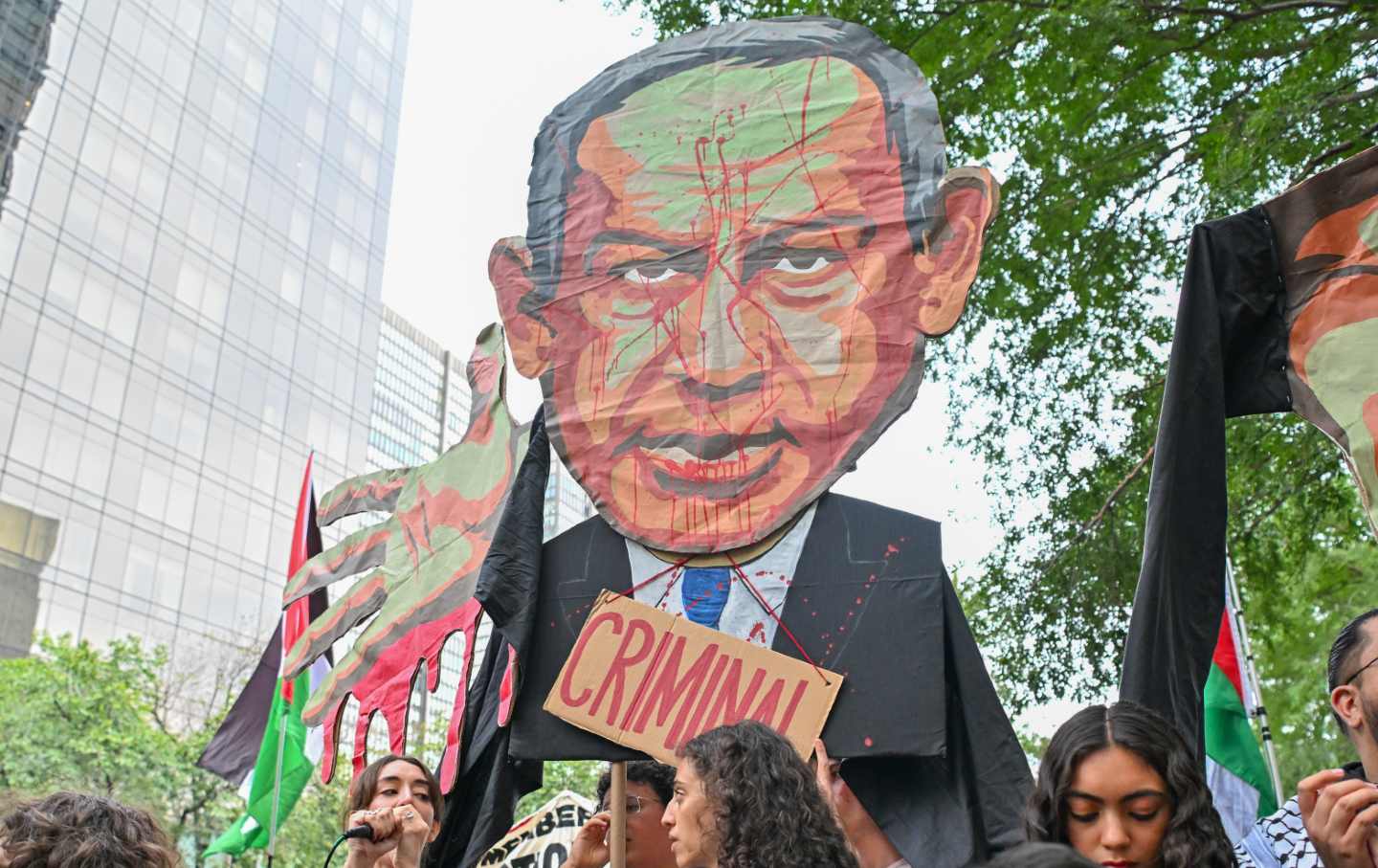
Netanyahu Came to New York. New Yorkers Were Ready for Him. Netanyahu Came to New York. New Yorkers Were Ready for Him.
Scenes from the defiant protest against the genocidal leader’s UN speech.
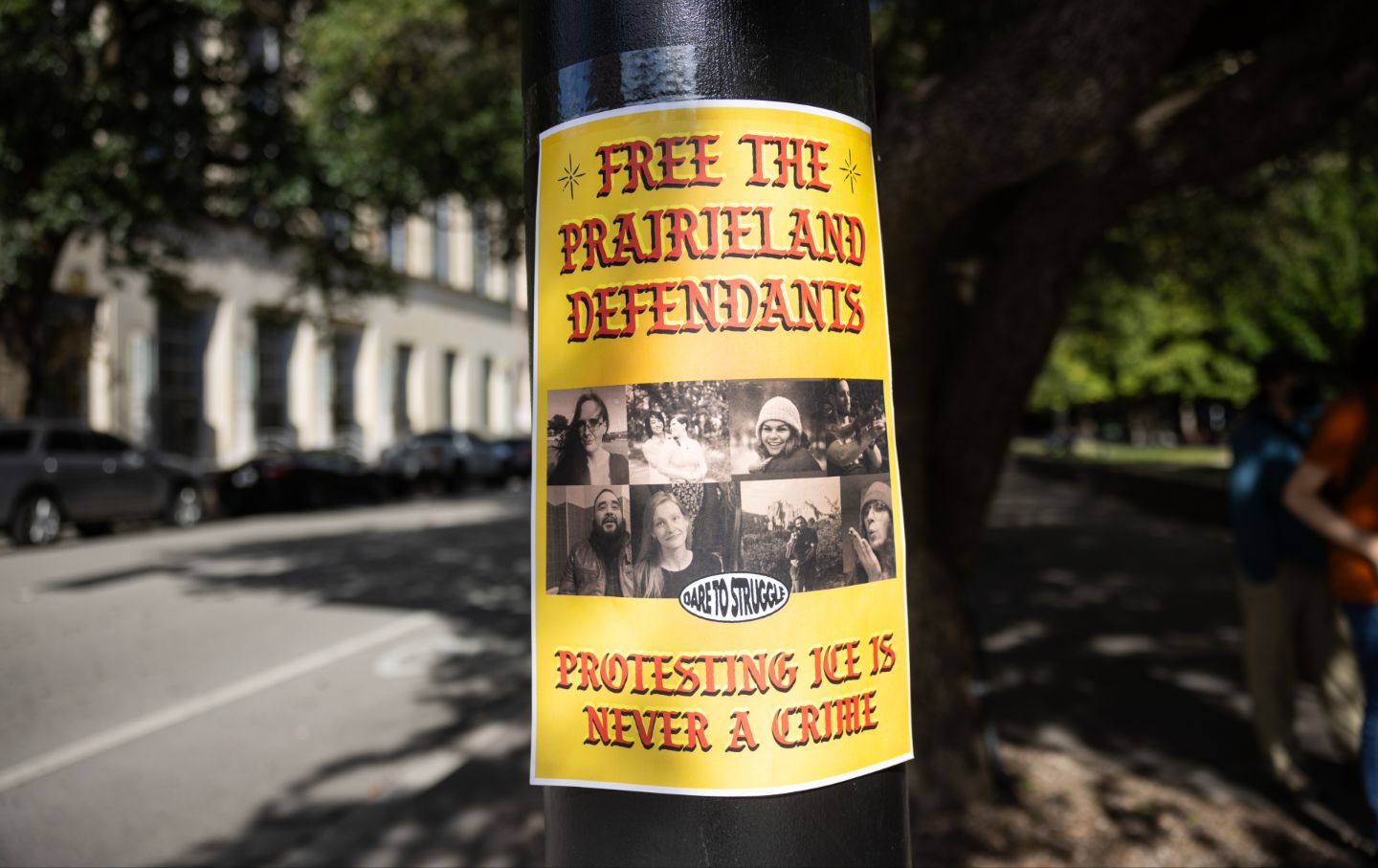
A Message From Prairieland Prisoner Autumn Hill: “Don’t Be Afraid” A Message From Prairieland Prisoner Autumn Hill: “Don’t Be Afraid”
I talked to the political prisoner about the politics of love, her case, surviving as a trans woman in a men’s prison, and how she makes it through the day.
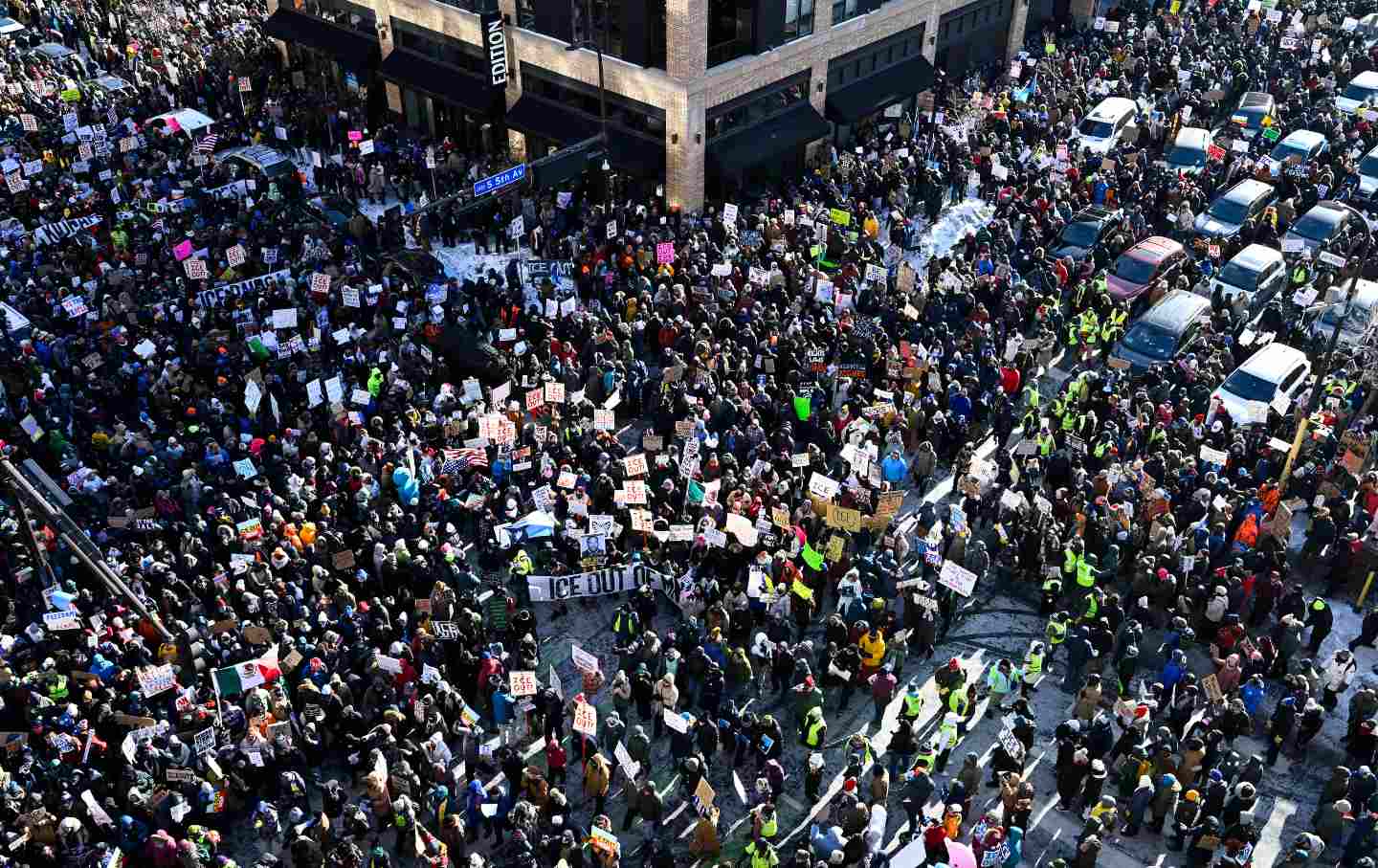
The Impossible Will Take a Little While: The Power of Persistence The Impossible Will Take a Little While: The Power of Persistence
In troubled times, history offers a lesson: Seemingly impossible change can begin with ordinary people who refuse to give up.
Gloria Steinem’s Many-Splendored Feminist Life Gloria Steinem’s Many-Splendored Feminist Life
The feminist icon lived the struggle for gender equality and always found time to lend support and solidarity to other women leaders, even in her final days.
No, Woke 1 Was Not Crazy No, Woke 1 Was Not Crazy
AOC and others are laughing off 2020 as a wild, isolated moment. None of that is true.
How Occupy Wall Street Still Explains Politics Today How Occupy Wall Street Still Explains Politics Today
It sowed the seeds for a new era of social movements—but its politics of powerlessness should act as a cautionary tale.

